“It is an immutable law in the forty-eight states that what a man has earned is his to keep.”
— Early in the novel, describing the American way of life under the Japanese and German occupation.

Philip K. Dick (2012)
Genre
Fantasy / Historical Fiction / Science Fiction
Reading Time
250 min
Key Themes
See below
Sign in to track this book
In an alternate 1962 where the Axis powers won WWII, an antique dealer, a resistance fighter, and a mysterious author's forbidden novel ignite a dangerous search for truth across a divided America.
The story begins in 1962, fifteen years after the Axis powers won World War II. The former United States is divided: the Japanese Pacific States (JPS) govern the West Coast, and the Greater Nazi Reich (GNR) controls the East. A neutral Rocky Mountain States buffer zone separates them. Frank Frink, a war veteran, works at Wyndam-Matson Corporation in San Francisco, making reproduction antique firearms. He is a skilled craftsman but struggles with being Jewish in a society that persecutes his people. Juliana Frink, his ex-wife, lives in Cañon City, Colorado, in the neutral zone, teaching judo. Robert Childan, a San Francisco antique dealer, handles the complex social rules of selling authentic American artifacts to wealthy Japanese collectors, often struggling with their different cultural ideas about authenticity and value.
Frank Frink, tired of the bad working conditions at Wyndam-Matson, quits his job. He convinces his coworker, Ed McCarthy, to join him in a new business: making original, American-designed jewelry. They put their small savings into tools and materials, hoping to create something truly authentic and valuable, not just copies. Meanwhile, Juliana Frink, feeling restless, decides to leave Cañon City. She accepts a ride from Joe Cinnadella, a charming Italian truck driver heading east to Denver. Her journey moves her from the safety of her familiar life into the unknown.
Nobusuke Tagomi, the Japanese Trade Minister in San Francisco, is involved in a sensitive negotiation with a Swedish industrialist, Baynes, and a high-ranking Nazi official, Wegener (secretly an Abwehr agent named Rudolf Wegener). Baynes' visit is meant to be about trade, but his real mission, coordinated with Wegener, is to warn a Japanese official about a Nazi plan to attack the Japanese Home Islands. Tagomi, who uses the 'I Ching,' often consults the ancient Chinese oracle for guidance in his life, relying on its wisdom to navigate the dangerous political world and his own moral choices.
Many characters in the story read 'The Grasshopper Lies Heavy,' a very popular and controversial novel by Hawthorne Abendsen. The book shows an alternate reality where the Allies won World War II. The GNR has banned the book, fearing its message, while the Japanese tolerate it with some worry. Juliana Frink is deeply interested in the novel, finding its vision of an Allied victory both fascinating and unsettling. Tagomi also reads it, struggling with what it means for his own reality. The book makes characters question their reality and the nature of truth, hinting at deeper levels of existence.
Frank Frink, wanting authenticity and dealing with his heritage, tells Ed McCarthy he is Jewish. This is a big risk in a society where Jews are persecuted. Soon after, the police raid Frank and Ed's jewelry workshop. They are both arrested, and all their new jewelry is taken. The arrest happens because Frank's former employer, Wyndam-Matson, found out about Frank's Jewish identity and his new business, then reported him to the authorities to get rid of a competitor and use racial laws for profit. Frank faces an uncertain and scary future.
Rudolf Wegener, disguised as the Swedish industrialist Baynes, meets with Nobusuke Tagomi to give a crucial warning about the Nazi plan for 'Operation Dandelion' – a surprise nuclear attack on the Japanese Home Islands. The meeting takes place in Tagomi's office. During their talk, two Nazi assassins, sent to kill Wegener before he can share the information, burst into the office. Tagomi, despite his peaceful nature, draws his antique Colt .44 pistol and, in a moment of violence, shoots and kills both assassins. This event deeply affects Tagomi, changing how he sees himself and the world.
Juliana Frink continues her trip to Denver with Joe Cinnadella. During their travels, Joe's behavior becomes more erratic and controlling. He says he plans to meet Hawthorne Abendsen, the author of 'The Grasshopper Lies Heavy,' in Cheyenne, Wyoming. Joe's true identity slowly comes out: he is a Nazi assassin, sent to kill Abendsen. Juliana, realizing the danger she is in and the sinister nature of Joe's mission, becomes terrified. She understands that she has accidentally become involved in a dangerous plot directly connected to the controversial book she has been reading.
After Frank Frink's arrest, his brother-in-law, Paul Kasoura, a respected Japanese attorney, helps him. He uses his connections to get Frank released, arguing that Frank's jewelry is not just Jewish but a unique form of American art. Meanwhile, the trauma of killing the assassins, combined with his thoughts on the 'I Ching' and 'The Grasshopper Lies Heavy,' causes Nobusuke Tagomi to have a strong hallucination. He briefly sees San Francisco as it is in Abendsen's novel, a world where the Allies won the war and the Japanese are not conquerors. This vision shatters his understanding of reality.
As Juliana and Joe arrive in Cheyenne, Wyoming, and are about to meet Hawthorne Abendsen, Juliana understands the immediate danger to the author. Joe shows a pistol and says he plans to murder Abendsen for writing 'The Grasshopper Lies Heavy.' In a desperate act of self-preservation and to protect Abendsen, Juliana grabs a razor blade from Joe's toiletry kit and slashes his throat, killing him. This violent act is a turning point for Juliana, forcing her to face the brutal realities of her world and her own ability for extreme action. She then goes to meet Abendsen, alone.
Juliana Frink finally meets Hawthorne Abendsen, the author of 'The Grasshopper Lies Heavy,' at his fortified home, 'The High Castle.' She expresses her confusion about his novel, especially its depiction of an Allied victory. Abendsen tells Juliana that the entire plot of 'The Grasshopper Lies Heavy' was not created through typical writing, but by consulting the 'I Ching' for every major plot point. He explains that the oracle showed the 'truth' of an alternate reality where the Axis lost. This suggests that the 'I Ching' is not just a tool for guidance, but a way to understand reality itself, hinting at a meta-narrative about truth and fiction.
The Protagonist
Frank evolves from a passive worker into an entrepreneur, then a persecuted Jew, ultimately finding a fragile sense of identity through his art and the support of his community.
The Protagonist
Juliana transforms from a restless, curious woman into an active participant in preventing an assassination, confronting her own capacity for violence and truth.
The Protagonist/Supporting
Tagomi's journey is one of profound moral crisis and existential doubt, leading to a breakdown of his perception of reality and a re-evaluation of his values.
The Supporting
Wegener maintains his moral stance and executes his dangerous mission, remaining a consistent force for peace and intelligence.
The Supporting
Childan grapples with his identity and the nature of authenticity, eventually finding a fragile sense of self-worth through his business, albeit still tied to the Japanese.
The Supporting/Mentioned
Abendsen remains a mysterious figure throughout, his arc culminating in the revelation of his unique writing process, which fundamentally alters the characters' understanding of reality.
The Antagonist
Joe's arc is one of escalating menace and deceit, culminating in his violent death at Juliana's hands, exposing the direct threat posed by the Nazi regime.
The Supporting
Ed supports Frank through his venture and arrest, remaining a loyal friend despite the personal risks.
The novel constantly questions what is real and true in a world where history has been rewritten. 'The Grasshopper Lies Heavy' acts as a mirror, showing an alternative reality that feels more 'true' to many characters. Tagomi's vision of an Allied-won San Francisco directly challenges his perception, while Abendsen's revelation about the 'I Ching' suggests multiple, equally valid realities. The theme explores how individual and group consciousness shapes our understanding of existence, and how deeply held societal stories can be challenged by art and ancient wisdom.
“Truth, she thought. As terrible as death. But harder to find.”
This theme is central, especially through Frank Frink's jewelry and Robert Childan's antique business. Frank wants to create authentic American art, contrasting with the mass-produced 'reproductions' that first define his world. Childan's effort to find and sell 'authentic' American artifacts to Japanese collectors shows the cultural and commercial value placed on perceived originality, often without true understanding. The debate extends to human identity: is Frank's Jewish identity 'authentic' if hidden? Is the Axis victory 'authentic' history, or a made-up reality?
“What is authentic? What is imitation? What is a fake?”
Many characters deal with their identities in a world that denies or suppresses them. Frank Frink struggles with his hidden Jewish heritage and his wish to express himself through original art. Juliana Frink seeks meaning beyond her ordinary life, going on a journey that forces her to confront her own ability for violence and truth. Tagomi, a Japanese official, struggles with his role in an oppressive regime and his own moral compass. The characters' internal journeys are often started by external events and the influence of 'The Grasshopper Lies Heavy,' pushing them to redefine themselves.
“You're a Jew. That's a fact, like your arms and legs. But it's not a fact like a table or a chair. It's a fact for you, not for the world.”
'The Grasshopper Lies Heavy' is the main way this theme is shown. Abendsen's novel, a work of fiction, greatly impacts the characters, making them question their reality and even inspiring action. It represents a form of resistance and a channel for alternative truths. The book's existence, and the Nazi regime's fear of it, shows how stories can shape political landscapes and individual consciousness. Frank's jewelry also shows this, as his authentic creations challenge the manufactured reality around him.
“The book, she thought. The book has done this. It has changed my life.”
The novel explores the moral dilemmas faced by people living under an oppressive government. Tagomi, as a Japanese official, deals with his involvement in the occupation, even as he tries to act ethically. Rudolf Wegener risks his life to prevent a greater atrocity, showing active resistance. Even ordinary citizens like Frank Frink and Robert Childan navigate the moral compromises needed to survive. The theme asks questions about personal choice and the decisions individuals make when faced with injustice and the possibility of war.
“I will not be the one to unleash this horror.”
A novel-within-a-novel that depicts an alternate history where the Allies won WWII.
This fictional book serves as the central plot device, driving much of the character motivation and thematic exploration. It acts as a counter-narrative to the established reality, making characters question the 'truth' of their world. Its existence is forbidden by the Nazis and tolerated with unease by the Japanese, highlighting its subversive power. The book is not merely a story but a philosophical tool, revealing the possibility of alternate realities and ultimately linking to the 'I Ching' as a source of truth.
An ancient Chinese oracle used by several characters for guidance and revelation.
The 'I Ching' is frequently consulted by Nobusuke Tagomi for decision-making and by Hawthorne Abendsen for writing 'The Grasshopper Lies Heavy.' It functions as a source of wisdom, prophecy, and, most importantly, a conduit to understanding different realities. Its ambiguous nature allows for multiple interpretations, but its ultimate revelation regarding the novel's plot suggests it's a more profound tool for accessing universal truths than simple divination, blurring the lines between fate, chance, and alternate dimensions.
A buffer region between the Japanese Pacific States and the Greater Nazi Reich.
The neutral zone serves as both a geographical and metaphorical plot device. Geographically, it's where characters like Juliana Frink reside, providing a brief respite from the direct control of either Axis power, yet still subject to their influence. Metaphorically, it represents a space of ambiguity, uncertainty, and a lack of clear allegiance. It's a place where the rules are less rigid, allowing for the free circulation of 'The Grasshopper Lies Heavy' and providing a meeting point for characters from different territories, facilitating plot developments and character interactions.
Physical objects that symbolize lost American identity and cultural value.
The antique firearms, jewelry, and other artifacts sold by Robert Childan and created by Frank Frink are more than mere objects. They represent the lost American culture and identity under Axis rule. Their 'authenticity' is a constant point of debate and a source of both pride and shame for the Americans. The Japanese collectors' desire for these items, often without fully understanding their cultural significance, highlights the power dynamics and cultural clashes within the narrative, while Frank's original jewelry represents a defiant act of cultural reclamation.
“It is an immutable law in the forty-eight states that what a man has earned is his to keep.”
— Early in the novel, describing the American way of life under the Japanese and German occupation.
“The past is a phantom, a story that some one tells. What we have in common with it is this, and this only: that we can never make it come back.”
— Tagomi reflecting on the nature of history and its unchangeable quality.
“There are some things you can't learn from others. You have to pass through the fire yourself.”
— Childan contemplating the necessity of personal experience.
“The dead talk to us. They tell us about the future. They tell us to be careful.”
— Frank Frink discussing the I Ching and its perceived ability to offer guidance.
“It is a principle of the I Ching not to be too attached to one's own desires.”
— Characters frequently consult the I Ching, and this quote reflects its philosophical underpinnings.
“What do you want to be when you grow up? A Nazi. Everyone wants to be a Nazi.”
— A chilling exchange highlighting the normalization of Nazi ideology in the alternate reality.
“The world is an enigma; space, time, and matter are its components.”
— Tagomi's philosophical musings on the nature of reality.
“There was a reason for the war, and it wasn't because of the Japanese or the Germans. It was because of the American people.”
— A character expressing a revisionist view of the war's origins.
“He knew that what he was doing was wrong, but he couldn't help himself. He was a man of his time.”
— Describing a character's complicity in the oppressive regime.
“Truth is a thing of this world, not of the next.”
— An observation about the tangible and immediate nature of truth.
“What is the I Ching? It is a book of wisdom, a book of changes.”
— A concise explanation of the central philosophical text in the novel.
“The past is an illusion. The future is an illusion. Only the present is real.”
— A character contemplating the transient nature of time.
“He felt as if he were living in a dream, a dream from which he could not awaken.”
— A character's sense of unreality and detachment from the world around him.
“The world is what you make of it. If it isn't to your liking, you can change it.”
— A hopeful, albeit challenging, sentiment about personal agency.
“History is not what happened. History is what is written.”
— A profound statement on the subjective and constructed nature of historical narratives.
Ready to see how well you understood this book? Take our interactive quiz with 10 questions.
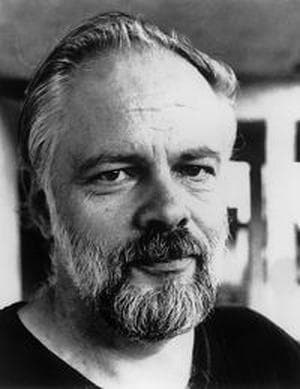
Philip Kindred Dick, often referred to by his initials PKD, was an American science fiction writer. He wrote 44 novels and about 121 short stories, most of which appeared in science fiction magazines during his lifetime. His fiction explored varied philosophical and social questions such as the nature of reality, perception, human nature, and identity, and commonly featured characters struggling against elements such as alternate realities, illusory environments, monopolistic corporations, drug abuse, authoritarian governments, and altered states of consciousness.







