“Adventure is the salt of life.”
— Anne Beddingfeld reflects on her desire for excitement.


Agatha Christie (1924)
Genre
Thriller / Mystery / Romance
Reading Time
360 min
Key Themes
See below
Sign in to track this book
An English girl named Anne is caught in a web of stolen diamonds, international plots, and a hunt for a killer called 'The Colonel,' after a deadly fall in a London tube station, a strangled ballerina, and a dangerous trip to Africa.
Newly orphaned Anne Beddingfeld is bored with her quiet life in Little Paddocks and moves to London for adventure. At Hyde Park Corner tube station, she sees a man fall onto the live rail and die. A doctor, Dr. Curtis, examines the body and drops a paper. Anne picks up the note, which says: '17.1 22 Kilmorden Castle.' This incident, along with her desire for excitement, makes Anne want to investigate. She soon learns that the dead man was Sir Eustace Pedler's secretary, and a famous dancer, Anna the Gypsy, has been found strangled at a house called Kilmorden Castle, which Sir Eustace owns. These two events start to seem connected to Anne.
Following the clue from the note, Anne decides to book passage on the Kilmorden Castle, a ship going to South Africa. She uses some of her small inheritance to get a cabin. Onboard, she meets Harry Lucas, a charming and rich American, who quickly shows interest in her. Harry's easy manner and apparent concern make him a good companion. However, Anne also sees a mysterious man, later identified as Colonel Race, on the ship. Someone ransacks Anne's cabin, and she barely escapes an attempt on her life, suggesting she is now a target in the mystery. She starts to think the events are connected to stolen diamonds.
After arriving in South Africa, Anne's investigations lead her to a remote house called 'The Mill House.' Believing it is connected to 'The Colonel,' Anne enters the property. Inside, she overhears a secret meeting of conspirators, confirming her suspicions about a dangerous organization. She learns about their plans and a hidden treasure. However, she is discovered and makes a daring escape, leaping from a window and running into the countryside. This close call strengthens her resolve to expose 'The Colonel' and his network, despite the extreme danger.
Anne finds herself in a difficult and vulnerable situation. She is pressured into marrying Harry Lucas, who, despite his earlier charm, shows a more sinister side, hinting at his involvement with the criminal group. This forced marriage is a desperate attempt by 'The Colonel's' network to control Anne and keep her from telling what she knows. During this time, Anne meets Race, who has been investigating the same criminal ring. She manages to tell him her situation, subtly showing her danger and need for help. Race, seeing her courage and the truth in her distress, begins to plan her rescue and to solve the conspiracy.
Working together, Anne and Race start to put the complex puzzle together. They realize that the man Anne married, Harry Lucas, is an impostor working for 'The Colonel.' The real Harry Lucas, a good man, has been replaced. The true identity of 'The Colonel' is a master of disguise, always changing his appearance and using different names. Anne and Race eventually discover that 'The Colonel' is Sir Eustace Pedler, the respected Member of Parliament, who has been planning the entire criminal operation, including the diamond theft and the murders. His public image was a perfect cover for his illegal activities.
Anne and Race confront Sir Eustace Pedler. When exposed, he tries to escape. A tense chase follows, ending in a dramatic confrontation where Sir Eustace's crimes are fully revealed. The stolen diamonds, the reason for much of the plot, are recovered. It is revealed that the man who died at Hyde Park Corner tube station was a member of Sir Eustace's gang who had betrayed him, and Anna the Gypsy was murdered because she had information. The entire network of spies and criminals, built by Sir Eustace, starts to fall apart under Anne and Race's efforts.
With Sir Eustace Pedler's true identity and crimes exposed, he and his accomplices are arrested and brought to justice. The large criminal organization, which had been operating secretly for years, is finally broken up. Anne, having survived many attempts on her life and played an important role in solving the mystery, is a changed woman. Her initial desire for adventure was met beyond her expectations, but at a significant personal cost. The experience, however, has made her resilient and capable. Afterward, Anne's forced marriage to the impostor Harry Lucas is canceled, leaving her free to choose her own path.
After everything settles, Anne finally meets the real Harry Lucas, the man whose identity was stolen by the criminal network. He is a genuine, kind person, very different from the impostor she was forced to marry. There is an immediate connection between them. Having shared a common enemy and a strange, intertwined fate, they are drawn to each other. Their shared experiences and the unusual way they met create the beginning of a romance. The adventure that started with a body on the tracks ends with Anne finding not only justice, but also love and a true partner in the real Harry Lucas, fulfilling her desire for a meaningful life.
The Protagonist
From a bored, naive orphan, Anne transforms into a courageous, resourceful, and self-assured young woman who actively participates in solving a complex international crime.
The Antagonist
Initially appearing as a benign, supportive figure, his true nature as the cunning and ruthless 'Colonel' is gradually revealed, culminating in his exposure and downfall.
The Supporting
Race's arc involves his methodical investigation leading to the exposure of 'The Colonel' and his collaboration with Anne.
The Supporting
His initial charm gives way to his true, villainous nature as an accomplice in the criminal conspiracy, ultimately leading to his exposure.
The Supporting
His identity is stolen and impersonated, but he eventually emerges to claim his rightful place and find love with Anne.
The Mentioned
Her murder serves as a catalyst for Anne's investigation and reveals the deadly stakes of the criminal conspiracy.
The Supporting
Initially appearing as a helpful bystander, his true nature as a deceitful agent of 'The Colonel' is gradually uncovered.
The Mentioned
His death sets the entire plot in motion, serving as the initial mystery Anne must unravel.
This theme is about Anne Beddingfeld's desire for adventure and how it leads her into a dangerous international mystery. Her initial boredom with village life and her move to London are to find excitement. The incident at the tube station, instead of stopping her, makes her want to investigate, leading her to follow clues and travel to South Africa. This theme shows the excitement of the chase and the unexpected results of seeking the unknown, changing Anne from a passive observer to an active part of a thrilling, high-stakes drama.
“What Anne wanted was adventure. She had always wanted adventure.”
This theme is important to the plot, as many characters use false identities or appear to be something they are not. 'The Colonel' is a master of disguise and false names, with Sir Eustace Pedler being his true hidden identity. The character of Harry Lucas is also split between an impostor and the real man, causing confusion and danger for Anne. The widespread use of deception forces Anne to always question what she sees and trust her instincts, showing how easily truth can be hidden and how dangerous it is to judge only by appearances in the criminal world.
“It was difficult to believe that the smooth, urbane Sir Eustace Pedler was the ruthless, sinister Colonel.”
Anne's strong curiosity is both her greatest strength and her biggest risk. Her decision to pick up the dropped note and then follow the 'Kilmorden Castle' clue directly puts her in mortal danger. This theme explores the line between bravery and recklessness, as Anne repeatedly risks her life, facing attempts on her life and a forced marriage. Her courage in the face of great odds is admirable, but the story constantly emphasizes the dangerous consequences of her adventurous spirit, showing that her search for excitement comes with a real cost.
“Curiosity, that fatal feminine attribute, was Anne's undoing and her salvation.”
The novel explores a world of international spying and criminal networks, reaching from England to South Africa. 'The Colonel' runs a large organization involved in diamond smuggling and other illegal activities, suggesting a larger global crime web. The involvement of Colonel Race, a British Secret Service agent, further supports this theme, showing the broader international effects of the criminal operation. This theme adds complexity and high stakes to the mystery, making it more than a simple whodunit and into a thriller with international consequences.
“This wasn't just a murder. This was something bigger, something that stretched across continents.”
This theme is central to the mystery, as many characters and situations are not what they seem. Sir Eustace Pedler, a respected public figure, is secretly a ruthless criminal. The charming Harry Lucas is an impostor. The initial 'accidental' death at the tube station is revealed to be murder. This constant reversal of expectations moves the plot forward and keeps the reader guessing. Anne's journey involves uncovering layers of deception to find the harsh truths underneath, showing that appearances can be misleading, especially in the world of crime.
“Things are seldom what they seem, Miss Beddingfeld, especially when diamonds are involved.”
A seemingly innocuous piece of paper that serves as the inciting incident and central clue.
The note '17.1 22 Kilmorden Castle,' dropped by Dr. Curtis, acts as the primary catalyst for Anne's adventure. It's a classic Christie device: a small, seemingly random piece of information that, through the protagonist's curiosity, unlocks a much larger mystery. It directs Anne to the Kilmorden Castle and subsequently to the ship of the same name, propelling her into the heart of the international conspiracy. Without this note, Anne would likely never have become involved, making it the essential starting point for the entire plot.
The use of characters assuming false identities to deceive and manipulate.
This device is crucial, especially with the character of Harry Lucas, where an impostor takes the place of the real man. This creates confusion, danger, and a romantic entanglement for Anne. Furthermore, 'The Colonel' himself, Sir Eustace Pedler, is a master of disguise and operates under various aliases, making him elusive and difficult to identify. This device highlights the theme of deception and adds layers of complexity to the mystery, forcing both Anne and the reader to constantly question who is truly who they claim to be.
Misleading clues and characters designed to divert suspicion from the true culprit.
Christie expertly employs red herrings throughout the novel to obscure the true identity of 'The Colonel' and the full scope of the conspiracy. Various characters and events are presented in a way that makes them appear suspicious, diverting Anne's (and the reader's) attention from Sir Eustace Pedler, the actual mastermind. For instance, the initial focus on the man who fell on the tracks and Anna the Gypsy's murder provides specific, yet ultimately partial, truths that lead Anne down several false or incomplete paths before the full picture emerges.
An ordinary person, not a professional, who takes on the role of investigator.
Anne Beddingfeld embodies the amateur detective trope. She is not a police officer or a trained spy, but an ordinary young woman driven by boredom and curiosity. Her lack of formal training often puts her in dangerous situations, yet her fresh perspective, keen observations, and sheer pluck enable her to uncover clues that professionals might miss. This device allows for a more relatable protagonist and emphasizes the idea that anyone can stumble upon and contribute to solving a great mystery, often with surprising effectiveness.
“Adventure is the salt of life.”
— Anne Beddingfeld reflects on her desire for excitement.
“I have always believed in the power of coincidence.”
— Anne discusses her theory about mysterious events.
“There is nothing so dangerous for anyone who has something to hide as conversation!”
— A character warns about the risks of talking too much.
“The truth is always the same, but lies are many.”
— Observation during the investigation of the murder.
“Love is like a ghost; everyone talks about it, but few have seen it.”
— Anne muses on romance amidst the mystery.
“In this world, you must be the hunter or the hunted.”
— A tense moment highlighting the thriller aspect.
“A woman's intuition is often better than a man's reason.”
— Anne defends her instincts in solving the case.
“The past is a shadow that follows us everywhere.”
— Reflection on how history affects the present events.
“Courage is not the absence of fear, but the triumph over it.”
— Anne shows bravery in a dangerous situation.
“Every mystery has its key; you just have to find it.”
— Encouragement during the detective work.
“Sometimes the most ordinary things conceal the most extraordinary secrets.”
— Noting how clues are hidden in plain sight.
“In love and war, all is fair, but in mystery, nothing is as it seems.”
— A playful twist on the classic saying, applied to the plot.
“The heart has its reasons, which reason does not know.”
— Anne contemplates her romantic feelings.
“To solve a puzzle, you must first understand the pieces.”
— Advice on approaching the complex mystery.
Ready to see how well you understood this book? Take our interactive quiz with 10 questions.
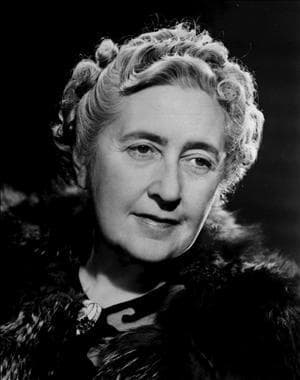
Dame Agatha Mary Clarissa Christie, Lady Mallowan, was an English writer known for her 66 detective novels and 14 short story collections, particularly those revolving around fictional detectives Hercule Poirot and Miss Marple. She also wrote the world's longest-running play, the murder mystery The Mousetrap, which has been performed in the West End since 1952. A writer during the "Golden Age of Detective Fiction", Christie has been called the "Queen of Crime". She also wrote six novels under the pseudonym Mary Westmacott. In 1971, she was made a Dame (DBE) by Queen Elizabeth II for her contributions to literature. Guinness World Records lists Christie as the best-selling fiction writer of all time, her novels having sold more than two billion copies.







