“It is a great thing to be a human being, and a greater thing to be a woman, and the greatest thing to be a woman with a purpose.”
— Emily's internal reflection on her new life and responsibilities.

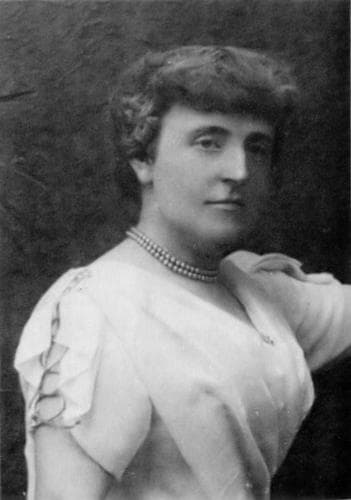
Frances Hodgson Burnett (1901)
Genre
Historical Fiction / Romance
Reading Time
198 min
Key Themes
See below
Sign in to track this book
An overlooked spinster's quiet life changes when a powerful marquis notices her, altering her world and challenging Edwardian social norms.
Emily Fox-Seton, a kind woman in her early thirties, lives a quiet, independent life in a small London flat with a modest income. Despite her own financial limits, her wealthier, more self-absorbed acquaintances constantly ask her to run errands, provide company, or help with practical matters. She gladly agrees, often at her own cost of time and money, without getting much in return. Her days are full of small tasks for others, like visiting Mrs. Brunt's sick child, delivering messages for Lady Maria, or helping Mrs. Dawson with her household accounts. She shows her selfless nature and quiet ability, though her efforts largely go unnoticed.
One day, Emily receives an unexpected and rather vague invitation from Lady Maria, a distant relative, to spend a few weeks at Walderhurst, the home of the very wealthy Marquess of Walderhurst. Emily is surprised, as she has never been a guest at such a grand estate before. She suspects Lady Maria's reasons are more about needing a companion than genuine affection. Despite her worry about fitting into such an opulent world, and the slightly awkward wording of the invitation, Emily decides to accept. She sees it as a new experience and a change from her usual routine. She carefully prepares her limited wardrobe for the visit.
Upon her arrival at Walderhurst, Emily is overwhelmed by the estate's size and luxury. The house is grand, filled with servants and an atmosphere of old-world splendor. Lady Maria, her hostess, is her usual self-absorbed self, but Emily finds herself drawn to the Marquess of Walderhurst. The Marquess, a fifty-year-old man with a reserved manner, unexpectedly takes an interest in Emily. He notices her quiet grace, her unassuming kindness, and her genuine nature, which differs greatly from the superficiality of many women in his social circle. His attention, though subtle, is new to Emily.
During her stay, the Marquess of Walderhurst continues to watch Emily closely. He is impressed by her cheerful mood, practical common sense, and refreshing lack of pretense. He sees a true goodness and calm strength in her that he has long wanted in a companion. One afternoon, to Emily's surprise, the Marquess proposes marriage. He explains his decision as a reasoned choice, not a passionate declaration. He expresses his admiration for her character and his wish for a stable, comfortable partnership in his later years. Emily, initially stunned, is deeply moved by his sincerity and accepts, overwhelmed by how suddenly her life has changed.
News of Emily Fox-Seton's engagement to the Marquess of Walderhurst shocks her former social circle. Her acquaintances, who had previously treated her as a convenient but unremarkable person, are now filled with envy, disbelief, and sudden, fawning respect. Lady Maria is particularly annoyed, having expected the Marquess to propose to a woman of higher social standing, or perhaps even herself. Emily, however, remains largely unchanged by her new status. She handles the sudden attention with her usual calm and good humor, though she is aware of how others now see her. Her simple nature remains intact amidst the luxury.
As the wedding nears, Emily begins to adjust to the many changes in her life. She is introduced to the responsibilities and expectations that come with being the future Marchioness of Walderhurst. She learns about managing a grand household, navigating social rules, and understanding aristocratic life. Despite the luxurious surroundings and the respect shown to her, Emily keeps her grounded perspective. She approaches her new duties with the same practical ability and kindness she used in her humble life, earning the quiet respect of the household staff and further strengthening the Marquess's belief in his choice.
Emily and the Marquess of Walderhurst marry in a quiet but elegant ceremony. Emily, now the Marchioness of Walderhurst, steps into her new life with grace and purpose. She quickly takes to her role, showing an innate ability to manage the large estate and interact with its many staff and tenants. Her kindness and genuine interest in others' well-being win her affection and respect, a sharp contrast to the more detached approach of previous Marchionesses. She finds quiet happiness in her marriage, appreciating the Marquess's steady companionship and his trust in her abilities.
Lady Maria, still resentful of Emily's new position, tries to cause trouble and undermine the new Marchioness. She makes subtle digs, questions Emily's judgment, and tries to influence the household. Lady Maria believes Emily is not suited for the role and attempts to subtly manipulate situations to prove her point or lessen Emily's standing with the Marquess. However, Emily, with her quiet strength and the Marquess's steady trust, largely ignores these attempts. Her genuine nature and practical approach continue to win over those around her, making Lady Maria's schemes mostly ineffective.
Despite challenges and occasional snobbery from some in society, Emily's character remains strong. She continues to be kind, practical, and unassuming. Her genuine interest in people, from the lowest servant to the highest guest, makes many fond of her. The Marquess of Walderhurst grows increasingly fond and proud of his wife, recognizing her rare spirit. He values her judgment and calming presence, finding true companionship and happiness in their marriage, which began as a practical decision. Emily's quiet strength proves to be the foundation of their successful union.
By the novel's end, Emily has fully embraced her role as the Marchioness of Walderhurst, not just in title, but as someone who brings warmth, order, and true care to the grand estate. She finds a deep sense of purpose and contentment in her new life, managing the household, engaging with the community, and providing loving companionship to her husband. Her journey from an overlooked, humble woman to a respected and beloved Marchioness is complete, showing how character can triumph over social standing and how genuine goodness can prevail.
The Protagonist
Emily transforms from an overlooked, humble woman into a respected and beloved Marchioness, while retaining her core virtues and finding true happiness and purpose.
The Love Interest / Supporting
The Marquess finds unexpected happiness and companionship in a marriage he initially approached with practicality, learning to deeply value Emily's genuine nature.
The Antagonist / Supporting
Lady Maria remains largely unchanged, continuing her self-serving ways and failing to truly understand or appreciate Emily's virtues.
The Mentioned
Not applicable as a fully developed character; serves to illustrate Emily's pre-marriage life.
The Mentioned
Not applicable as a fully developed character; serves to illustrate Emily's pre-marriage life.
The novel shows that true goodness, kindness, and practical common sense are more valuable than wealth, beauty, or aristocratic connections. Emily's modest character is what wins the Marquess's affection and respect, despite her lack of social standing. Her ability to gracefully manage the grand estate and earn the loyalty of its people further proves her worth, a sharp contrast to the superficiality of characters like Lady Maria. The Marquess chooses Emily precisely because she lacks the pretense of others, seeing her true self.
“"He had seen enough of beautiful, brilliant, and well-connected women; what he wanted was a sensible, good-tempered, and trustworthy companion."”
The main theme involves Emily's dramatic and unexpected rise from a humble, overlooked life to the top of aristocratic society. Her transformation from Emily Fox-Seton to the Marchioness of Walderhurst is a classic Cinderella story. This theme explores how a person's life can change entirely through unforeseen events and how they adapt to a new world. It highlights that sometimes, the most deserving individuals are elevated not through ambition, but through sheer virtue, questioning rigid social hierarchies.
“"And so it came about that Emily Fox-Seton, who had never expected to marry at all, found herself about to become a Marchioness."”
Emily's defining trait is her constant kindness and selflessness. Before her marriage, she spends her time and limited money helping others, often getting little thanks in return. This inherent generosity is not planned but a basic part of who she is. Even after becoming a Marchioness, she keeps her compassionate nature, showing true care for her household staff and tenants. Her kindness is shown as a powerful force that disarms critics and strengthens her position, proving that true benevolence is a strength.
“"She was one of those women who are always doing things for other people, and who are always taken for granted."”
The novel explores a marriage built not on passionate romance, but on mutual respect, shared values, and comfortable companionship. The Marquess chooses Emily for her character and the promise of a stable, harmonious life, rather than for intense romantic love. Their relationship grows into a deep and affectionate bond, showing that a marriage founded on practical considerations and genuine esteem can be very fulfilling. It suggests that a quiet, steady love can be as strong, if not stronger, than a fiery one.
“"He liked her, he trusted her, he thought her a thoroughly good and sensible woman, and that was enough for him."”
A humble, overlooked protagonist is dramatically elevated to a position of power and status.
The entire narrative of 'The Making of a Marchioness' is built upon the Cinderella archetype. Emily Fox-Seton, a kind and selfless woman living a modest, often taken-for-granted existence, is suddenly discovered and elevated to a position of immense wealth and social standing through marriage to the Marquess. This device creates immediate sympathy for Emily and generates a sense of wonder and satisfaction as her virtues are recognized and rewarded, fulfilling a classic wish-fulfillment fantasy for the reader. It highlights the transformation from obscurity to prominence.
The stark differences between Emily's humble background and the aristocratic world she enters.
The novel effectively uses the contrast between social classes to highlight Emily's unique qualities and the superficiality of the upper echelons of society. Emily's simple, practical life and genuine kindness stand in stark opposition to the grand, often frivolous, and self-absorbed world of the aristocracy, particularly as embodied by characters like Lady Maria. This contrast serves to emphasize Emily's inherent worth and the Marquess's discerning choice, demonstrating that true value is not dictated by birth or wealth but by character.
A powerful figure who recognizes the protagonist's worth and facilitates their advancement.
The Marquess of Walderhurst functions as the benevolent patron in Emily's story. He is the powerful, influential figure who, through his keen observation and appreciation of Emily's genuine character, chooses to elevate her from obscurity. His decision to propose marriage is not based on societal expectations but on his personal assessment of her worth, making him the catalyst for her transformation. This device allows for Emily's social mobility without her having to actively strive for it, reinforcing her passive, good-natured character.
“It is a great thing to be a human being, and a greater thing to be a woman, and the greatest thing to be a woman with a purpose.”
— Emily's internal reflection on her new life and responsibilities.
“One does not live for oneself alone, but for the good one can do to others.”
— A sentiment expressed by Emily as she embraces her role as Marchioness.
“The world is full of interesting things, if only one has the eyes to see them.”
— Emily's perspective on finding joy and engagement in her surroundings.
“Happiness is not a thing to be waited for, but a thing to be made.”
— Emily's proactive approach to her own contentment amidst challenges.
“There are some people who can make a sunshine out of a very little.”
— A character observing Emily's optimistic nature.
“It is not the title that makes the person, but the person who makes the title.”
— Emily's understanding of true nobility.
“A good heart is worth more than all the jewels in the world.”
— A reflection on the true value of kindness and compassion.
“To be truly alive is to feel, to observe, to understand, and to act.”
— Emily's philosophy on living a fulfilling life.
“One must learn to stand on one's own feet, no matter how soft the carpet.”
— Emily's emphasis on independence even within a privileged life.
“The greatest adventures are often found within the confines of one's own mind.”
— Emily's rich inner life and imagination.
“It is always possible to find something to be grateful for, even in the darkest of times.”
— Emily's enduring sense of gratitude.
“Love is not merely a feeling, but a choice and a commitment.”
— Emily's evolving understanding of her relationship with Lord Walderhurst.
“The strength of a woman lies not in her gentleness, but in her unwavering spirit.”
— A powerful statement about female fortitude.
“Every day is an opportunity to learn something new, to grow, and to become a better version of oneself.”
— Emily's continuous pursuit of personal development.
Ready to see how well you understood this book? Take our interactive quiz with 10 questions.
Biography coming soon.







