“We all have to suffer to be beautiful.”
— Lily/Julie to Nicholas, early in his time on the island.


John Fowles (1965)
Genre
Literary Fiction / Fantasy / Mystery
Reading Time
15-20 hours (approx. 656 pages at 40 pages/hour)
Key Themes
See below
Sign in to track this book
On a secluded Greek isle, a young teacher's escape from boredom turns into a dangerous psychological game run by a reclusive millionaire, blurring reality and threatening his sanity.
Nicholas Urfe, an Oxford graduate from a respectable but emotionally distant family, drifts through life in London, having a short, unsatisfying affair with Alison Kelly. Wanting to escape and find purpose, he takes a teaching job at the Lord Byron School for Boys on the isolated Greek island of Phraxos. At first, the island offers a temporary break, but Nicholas soon becomes deeply bored and feels a growing sense of despair, thinking about suicide. He feels dissatisfied with his own superficiality and the perceived meaninglessness of his life, wishing for something truly meaningful.
One day, during a long walk into the island's interior, seeking refuge from his overwhelming boredom, Nicholas finds a secluded and clearly very wealthy estate called the Bourani. The property is grand and seems abandoned, yet it is carefully kept, hinting at a hidden presence. Curious about the luxury and mystery, Nicholas starts visiting the estate regularly, drawn by its strange appeal and the unsettling feeling that he is being watched. He finds a strange, almost theatrical atmosphere, with classical statues and an unusual garden design, sparking his curiosity about its elusive owner.
Nicholas eventually meets Maurice Conchis, the reclusive and wealthy owner of the Bourani. Conchis is an elderly, cultured, and highly mysterious figure who immediately fascinates Nicholas with his intelligence and peculiar charm. Conchis begins to tell Nicholas increasingly elaborate and often contradictory stories about his life, his past, and his experiences during World War II, including his time in German-occupied Greece and his supposed collaboration. These stories are full of philosophical thoughts, historical anecdotes, and personal confessions, meant to intrigue and mystify Nicholas, drawing him deeper into Conchis's world.
Conchis introduces Nicholas to a beautiful young woman named Lily Montgomery, or sometimes Julie Holmes, a strikingly beautiful and almost ethereal presence. Conchis first presents her as a former patient, a muse, or even a ghost, constantly changing her identity and background. Nicholas is immediately drawn to her, and she becomes a central figure in the increasingly elaborate 'masque' Conchis creates. The interactions with Lily are always unclear, theatrical, and emotionally charged, further blurring the lines between reality and illusion for Nicholas, who becomes infatuated with her.
The 'masque' at Bourani grows more intense, becoming a complex series of psychological games, theatrical performances, and historical reenactments. Conchis uses a group of actors, including a sinister figure named Demetriades, to play various roles and stage elaborate scenarios that often reflect Nicholas's own life, fears, and desires. These events range from seances and mythological scenes to re-creations of Conchis's wartime experiences. Nicholas is constantly manipulated, his emotions exploited, and his perceptions challenged, as Conchis aims to break down his preconceived notions of reality and self.
Alison Kelly, feeling neglected and worried about Nicholas, unexpectedly arrives on Phraxos. She senses the deep change in him and the strange, unsettling influence of Conchis. Alison tries to warn Nicholas about the dangers of the Bourani and the manipulative nature of Conchis's games, urging him to leave the island with her. However, Nicholas, deeply involved in the masque and infatuated with Lily, dismisses her concerns, treating her with indifference and even cruelty. His rejection devastates Alison, showing his growing self-absorption and detachment from real human connection.
Driven by his obsession with Lily and the captivating world of the masque, Nicholas cruelly rejects Alison, telling her he no longer loves her. Heartbroken and desperate, Alison seemingly drowns herself in the sea. This event plunges Nicholas into deep guilt and despair, forcing him to face the devastating results of his actions and his emotional recklessness. Her death, though later revealed to be another staged event by Conchis, acts as a powerful trigger, forcing Nicholas to experience genuine regret and the weight of his moral failures.
After Alison's 'death,' Nicholas undergoes a difficult mock trial organized by Conchis and his actors. During this 'trial,' all his past actions, his emotional failures, and his moral shortcomings are exposed and judged. Lily, Alison (revealed to be alive and an actress in the masque), and other characters confront him with his cruelty and self-deception. Conchis finally reveals the true nature of the masque: it was a therapeutic exercise, a psychological experiment meant to force Nicholas to understand himself and grow morally, to teach him empathy and responsibility.
After the masque ends, Nicholas leaves Phraxos, a deeply changed man. The experience has removed his cynicism and forced him to confront his true self. He feels a deep sense of responsibility and love for Alison, realizing the extent of his past cruelty. He begins a quest to find the real Alison Kelly, driven by a desire for redemption and genuine connection. His search takes him back to London, where he tries to piece together her whereabouts, dealing with the trauma of the masque and the lingering uncertainty of what was real and what was illusion.
After a period of searching and self-reflection, Nicholas eventually finds Alison in London. Their reunion is full of tension, pain, and lingering mistrust. Alison, deeply hurt by his past actions, is hesitant to forgive him. The novel ends with an ambiguous and open-ended scene in a park, where Nicholas tries to reconcile with her. The future of their relationship remains uncertain, emphasizing the lasting impact of the masque and the difficult path to real understanding and forgiveness. Nicholas has grown, but the scars of his experience and his past choices remain.
The Protagonist
Nicholas transforms from a cynical, emotionally stunted individual into a self-aware, empathetic man capable of genuine love and remorse, albeit through a traumatic and manipulative process.
The Antagonist/Mentor
Conchis remains largely static, his role is to instigate change in Nicholas; his past reveals a man deeply affected by the horrors of war and the nature of human choice.
The Supporting/Love Interest
Alison's character is less about her own development and more about her role in Nicholas's arc, serving as both victim and eventual hope for his redemption.
The Supporting
Lily's arc is tied to her role in the masque; her 'true' identity as an actress is revealed, highlighting the illusory nature of her initial interactions with Nicholas.
The Supporting
Demetriades remains a static character, serving as a tool for Conchis's manipulations.
The Mentioned
Maria's character does not have a significant arc; she serves as a contrast to Nicholas's later, more profound emotional experiences.
The Mentioned
Jojo is a static character, providing context to Nicholas's initial environment.
The novel constantly blurs the lines between what is real and what is staged, making Nicholas and the reader question the nature of truth and perception. Conchis's masque is an example of illusion, using actors, elaborate sets, and psychological manipulation to create a subjective reality for Nicholas. Scenes like Alison's 'suicide' or Lily's constantly changing identity show this, highlighting how easily one's perception can be manipulated and how difficult it is to tell objective truth when emotions are involved. This theme challenges the very foundation of Nicholas's understanding of the world.
“What Conchis was doing was not sane, not sane by any standard that I knew. But then, what sane standard did I know?”
A main theme is the burden of existential freedom and the responsibility that comes with it. Nicholas initially abuses his freedom through cynicism, apathy, and emotional recklessness. Conchis's masque, though manipulative, is meant to force Nicholas to face the consequences of his choices and to understand that freedom is not just the absence of limits but the need to make meaningful, ethical decisions. The 'trial' scene directly addresses Nicholas's moral failures, pushing him toward an understanding of his responsibility for his impact on others, particularly Alison.
“We are all of us, in the end, alone. Alone in the sense that we must choose, and there is no God to choose for us.”
The novel explores different forms of love – from superficial infatuation and casual sex to genuine, selfless affection and the painful process of reconciliation. Nicholas's journey begins with a detached affair with Alison and an infatuation with the illusory Lily. Through the masque, he is forced to confront his inability to love truly and the devastating impact of his emotional coldness. Alison's 'death' acts as a brutal trigger, prompting him to understand the depth of his feelings for her and the importance of real human connection over intellectual games or self-serving desires. The ending, though unclear, suggests the difficult path toward authentic love.
“There are some people who are born to give out love, and others to take it in. It is not always a fair exchange.”
Conchis represents the artist or 'magus' as someone who manipulates reality for a higher purpose, like a god creating and shaping a world. He orchestrates the masque as a grand theatrical production, using human lives as his canvas and Nicholas as his subject. This raises questions about the ethics of such manipulation, even if the stated goal is enlightenment. Conchis's power, his ability to control events and perceptions, positions him as a demiurge, challenging common ideas of morality and artistic responsibility. His methods are extreme, reflecting a belief that deep change requires radical intervention.
“I was a god. I was a god in my own theatre. And you, Nicholas, were my puppet.”
Nicholas begins the novel aimless, lacking purpose or a stable identity. His initial cynicism is a defense against a world he sees as meaningless. The masque is a brutal process meant to strip away his false self and force him to build a new, more authentic identity. Through the constant questioning of his perceptions and the confrontation with his moral failings, Nicholas is compelled to define himself not by intellectual superiority or detachment, but by his capacity for empathy, responsibility, and real human connection. The ending leaves him with a developing, but hard-earned, sense of self.
“The only way to get rid of a temptation is to yield to it. Resist it, and your soul grows sick with longing for the things it has forbidden to itself.”
An elaborate, immersive psychological game orchestrated by Maurice Conchis.
The 'masque' is the central plot device of the novel, a complex, multi-layered series of staged events, performances, and manipulations designed by Conchis to psychologically 'cure' or enlighten Nicholas. It involves a troupe of actors, shifting identities, historical reenactments, and the blurring of reality and illusion. The masque serves as a therapeutic, albeit traumatic, tool to strip away Nicholas's cynicism, force him to confront his moral failings, and ultimately lead him to self-awareness and empathy. It is an extended metaphor for the human condition, where perception is often subjective and truth is elusive.
Nicholas Urfe's first-person narration is frequently clouded by his own biases, confusion, and the manipulations he experiences.
Nicholas Urfe serves as an unreliable narrator, constantly questioning his own perceptions and interpretations of events. His initial arrogance and later his emotional distress and confusion make it difficult for the reader to fully trust his account. This unreliability is exacerbated by Conchis's deliberate manipulations, which aim to disorient Nicholas and make him doubt his own sanity. The device forces the reader to engage critically with the narrative, mirroring Nicholas's own struggle to discern truth from illusion and adding to the novel's pervasive sense of mystery and psychological tension.
The novel frequently comments on its own artificiality and the nature of storytelling.
The Magus employs metafiction through Conchis's role as a 'magus' or 'god' who self-consciously constructs a narrative around Nicholas. Conchis often discusses the nature of illusion, art, and storytelling, directly addressing the fictionality of the experiences Nicholas undergoes. The 'masque' itself is a theatrical production, highlighting the constructed nature of reality. This device encourages the reader to consider the novel as an artifact, a deliberate creation, and to reflect on the power of narrative to shape perception, both within the story and in the act of reading itself. It blurs the lines between the story and its telling.
References to Greek myths and classical archetypes enrich the 'masque' and character dynamics.
Throughout the novel, Conchis and the masque frequently draw upon figures and narratives from Greek mythology. Lily is often presented in various archetypal roles, such as a goddess or a nymph, and the events at Bourani sometimes mirror ancient Greek dramas or rituals. This symbolism adds layers of meaning to the narrative, suggesting that Nicholas's journey is a modern retelling of ancient quests for self-discovery or encounters with divine tricksters. It elevates the personal drama to a more universal, archetypal level, connecting Nicholas's individual struggle to timeless human experiences and mythological patterns.
“We all have to suffer to be beautiful.”
— Lily/Julie to Nicholas, early in his time on the island.
“The greatest freedom is the freedom from the need for freedom.”
— Conchis, explaining a paradoxical philosophy to Nicholas.
“You are like all young men. You think you are unique. You are not.”
— Conchis, challenging Nicholas's self-perception.
“We are all prisoners, but some of us are in cells with windows.”
— A reflection on human condition and perception of reality.
“Every man has his own hell.”
— Conchis, discussing personal struggles and internal demons.
“The only way to get rid of a temptation is to yield to it.”
— A mischievous remark, possibly from Conchis or one of the women.
“The past is a foreign country; they do things differently there.”
— A general observation on the nature of memory and time.
“What is real? And what is not?”
— Nicholas's recurring internal question throughout the 'godgame'.
“Love is a game, and the more you play it, the better you get.”
— A cynical or playful view on relationships, possibly from Conchis.
“Man is condemned to be free.”
— An existentialist theme echoed through Conchis's teachings.
“To be truly free, one must be prepared to lose everything.”
— Conchis, pushing Nicholas to confront his attachments.
“You must learn to distinguish between the mask and the face.”
— Conchis, advising Nicholas on discerning truth from performance.
“The world is full of signs and wonders, if only you know how to read them.”
— Conchis, encouraging Nicholas to see deeper meaning in events.
“There are no solutions, only choices.”
— A stark realization or teaching about life's complexities.
Ready to see how well you understood this book? Take our interactive quiz with 10 questions.
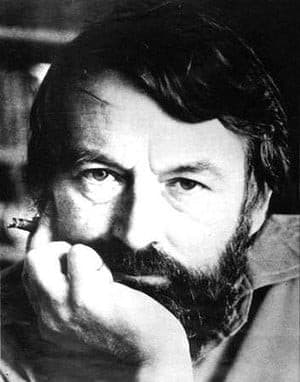
John Robert Fowles was an English novelist of international renown, critically positioned between modernism and postmodernism. His work was influenced by Jean-Paul Sartre and Albert Camus, among others.







