“The past is a story we tell ourselves. The future is a story yet untold. The present is the only truth.”
— A philosophical reflection on time and existence.

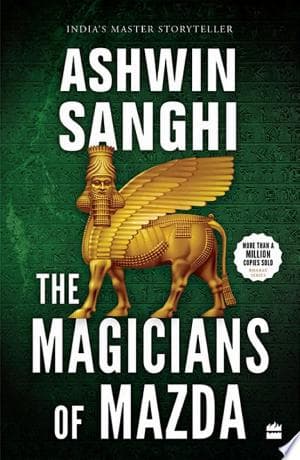
Ashwin Sanghi (2022)
Genre
Fantasy
Reading Time
12-15 hours (based on 720 pages estimate)
Key Themes
See below
Sign in to track this book
Centuries after 18,000 Zoroastrians escape persecution to India, a Parsi scientist is taken to Tehran. He and his wife are pulled into a global chase to find the Athravan Star, a relic tied to their ancestors' journey.
In 720 CE, a large fleet carrying eighteen thousand Zoroastrian refugees arrives at Sanjan in Gujarat, India. They are escaping persecution from the Umayyad Caliphate in Iran. Led by their high priest, who chants prayers like Sanskrit, they consecrate a sacred fire, the Iranshah, to thank Ahura Mazda for their safe passage and new beginning. A mysterious, ancient substance lights this eternal flame, its origins known only to a few. This event establishes the Parsi community in India, setting the stage for a rich cultural and religious heritage that will last for centuries, preserving their traditions in a new land.
Centuries later, in modern-day Seattle, Parsi scientist Jim Dastoor is taken from his laboratory. He is forcibly transported to Tehran, Iran, by agents of the Ayatollah. The Iranian regime believes Jim holds the key to finding the ancient and powerful Athravan Star, a fabled object with historical and spiritual meaning for the Zoroastrian faith. The Ayatollah's men are ruthless, willing to use any means, including murder, to get information from Jim and acquire the Star. This abduction pulls Jim into a dangerous international conspiracy, far from his peaceful academic life.
When Jim disappears, his wife, Linda Dastoor, a historian, starts a frantic search. Using her knowledge of ancient history and sharp mind, Linda begins to put together clues related to Jim's work and the Athravan Star's history. Her investigation leads her to forgotten texts, ancient symbols, and Zoroastrian history. As she finds more information, Linda realizes the great danger Jim is in and the implications of the artifact the Iranians are seeking. Her historical expertise is now essential for his survival.
The story often mixes modern events with historical flashbacks, showing the Athravan Star's ancient origin and legendary power. This relic is not just an artifact but a source of great energy, possibly a weapon, tied to early Zoroastrianism and its sacred fires. Its origins are mythical, involving ancient rituals and Ahura Mazda's blessings. The Star's power is said to be capable of great creation or destruction, making it a desired item for those seeking ultimate control. Understanding its history becomes important for both Jim's captors and Linda's mission.
Under pressure from his Iranian captors, Jim is taken to the ancient ruins of Persepolis, the ceremonial capital of the Achaemenid Empire. Here, he must use his scientific and historical knowledge to decode clues in the ancient architecture and inscriptions, believed to point to the Athravan Star's location or its secrets. The majestic yet desolate landscape of Persepolis reminds him of past glories and fallen empires, highlighting history's lasting power and the pursuit of forgotten knowledge. Jim's expertise in ancient languages and symbols becomes critical in this high-stakes archaeological hunt.
The search for the Athravan Star leads Jim and Linda, separately at first, into Afghanistan's volatile territories. The narrative shows the region's harsh realities, including encounters with Taliban camps. This part shows the geopolitical complexities and lawless nature of certain areas, where ancient artifacts can be used for modern political and extremist goals. The constant threat of violence and the challenging environment push both Jim and Linda to their physical and mental limits, forcing them to navigate dangerous landscapes and ideologies in their quest.
The Udvada fire temple in Gujarat, India, which holds the Iranshah fire, becomes a key location in the mystery. This ancient Parsi sanctuary has spiritual meaning and hidden knowledge about the Athravan Star. The high priests and guardians of the temple have ancient texts and oral traditions that offer clues to the artifact's true nature and protection. Linda, searching for answers, seeks guidance and information from the temple elders, revealing the deep connection between the Parsi community's history and the artifact's fate.
The search for the Athravan Star's secrets leads characters into Kashmir's remote, icy mountains. This challenging terrain, with its treacherous paths and extreme weather, adds more difficulty and danger to the already high-stakes quest. The desolate beauty of the Himalayas hides ancient secrets and perhaps hidden locations related to the Star. The journey through these unforgiving landscapes tests the characters' resilience and determination, forcing them to confront external threats and their own inner fears in a majestic yet dangerous natural world.
Throughout his captivity, Jim endures horrific conditions and brutal interrogation in Tehran's 'coffin cells.' These small, claustrophobic prison cells are designed to break prisoners' spirits, and Jim faces relentless pressure to reveal information about the Athravan Star. The psychological and physical torture he undergoes shows his captors' ruthlessness and the extreme lengths they will go to achieve their goals. Jim's resilience is severely tested as he tries to protect his knowledge and sanity against overwhelming odds, clinging to hope for his rescue.
The climax of the story takes place at the Tower of Silence in Diu, a traditional Parsi dakhma where the dead are exposed. This ancient site, full of Zoroastrian ritual and solemnity, becomes the final battleground for control over the Athravan Star. The 'deathly calm' of the location hides the intense struggle that takes place, as Jim, Linda, and their allies confront the Ayatollah's agents. Here, ancient prophecies mix with modern conflict, and the Athravan Star's true purpose and power are finally revealed, deciding the relic's fate and its implications.
As the plot climaxes, the Athravan Star's true nature and miraculous origin are finally revealed. The mysterious substance used to spark the sacred Iranshah fire centuries ago is linked to the Star. The artifact is not just a historical relic but a source of immense, possibly cosmic, energy. Its power can be used for extraordinary purposes, both constructive and destructive. The revelation of its capabilities changes the understanding of its significance, explaining why so many groups want to control it and highlighting its role in Zoroastrian mythology and modern geopolitics.
Jim and Linda, having endured countless trials and traveled vast distances, finally face their adversaries, including the Ayatollah's ruthless agents. The confrontation is tense and violent, involving a clash of wits, strength, and conviction. The Athravan Star's fate, and potentially the balance of power, is uncertain. Through their combined efforts, using Jim's scientific knowledge and Linda's historical insights, they outmaneuver their enemies. The resolution brings closure to their harrowing journey, though with lingering questions about the future implications of the Star's existence and power.
The Protagonist
Jim transforms from an unwilling participant into a determined survivor, using his intellect and heritage to protect the Athravan Star.
The Protagonist/Supporting
Linda evolves from a concerned wife to a courageous adventurer and historical detective, proving instrumental in the quest.
The Antagonist
The Ayatollah remains a static, unwavering antagonist, driven solely by his desire for power.
The Supporting/Historical
A static, foundational character who establishes the historical context and spiritual lineage of the Athravan Star.
The Antagonist/Supporting
They remain consistently menacing and driven by their mission, serving as a constant external threat.
The Supporting
They serve as static founts of wisdom, providing historical and spiritual guidance.
The novel explores the theme of preserving cultural and religious heritage during persecution and modernity. The Parsis' escape from Iran in 720 CE to establish a new home in Sanjan shows this, as they carefully carry their sacred fire and traditions. In the present, Jim and Linda Dastoor, though in a modern world, are drawn back to their Parsi roots, fighting to protect an ancient artifact that embodies their people's history and spiritual essence. The Udvada fire temple symbolizes this lasting commitment to identity, showing how ancient beliefs continue to shape contemporary lives and conflicts.
“Chanting prayers in what sounds like Sanskrit, the high priest consecrates a sacred fire to thank their god, Ahura Mazda, for leading them to a new home and to hope.”
A central theme is the conflict between ancient, often spiritual, knowledge and modern geopolitical power struggles. The Athravan Star, an artifact of historical and perhaps mystical significance, becomes a target for the Ayatollah's regime, which seeks to use its power for political gain. Jim Dastoor, a scientist, must reconcile his scientific understanding with the ancient myths and legends surrounding the Star. This theme highlights how historical artifacts and their hidden powers can become flashpoints in contemporary conflicts, blurring the lines between science, faith, and power.
“The Ayatollah believes Jim is the key to uncovering the ancient relic known as the Athravan Star, and his men will do anything to possess it, even murder.”
The book explores the nature of faith and what a 'miracle' is. The initial sparking of the Iranshah fire with a 'mysterious substance' and the Athravan Star's 'miraculous origin' challenge conventional understanding. Characters like Jim, a scientist, encounter phenomena that defy purely rational explanation, making them consider the boundaries of science and spirituality. The Parsi community's unwavering faith, both ancient and modern, acts as a guiding force, suggesting that some truths go beyond empirical proof and reside in belief and tradition.
“A mysterious substance is used to spark the flame, but few know of its miraculous provenance.”
The story begins with the historical persecution of Zoroastrians by the Umayyad Caliphate, forcing them to flee Iran. This displacement and the subsequent new life in India show the theme of resilience in the face of hardship. In the present, Jim Dastoor's abduction and torture by the Iranian regime echo this historical persecution, showing that threats to identity and freedom can last for centuries. The Parsi community's lasting presence and commitment to their faith, despite historical and contemporary challenges, embody remarkable resilience.
“They carry eighteen thousand frightened souls fleeing the cruelty of Iran's Umayyad Caliphate.”
An ancient, powerful relic that drives the entire plot.
The Athravan Star functions as the primary MacGuffin of the story. Its exact nature and full capabilities are initially shrouded in mystery, but its immense power and historical significance make it the ultimate prize sought by all factions, especially the Ayatollah. The pursuit of the Star propels Jim and Linda through various dangerous locations and historical investigations. While its true provenance and power are eventually revealed, its primary role is to set the plot in motion and provide a tangible goal for the characters, uniting the ancient past with the modern conflict.
Segments set in ancient times provide crucial context for present-day events.
The novel frequently employs historical flashbacks, particularly to 720 CE with the Parsi exodus, to provide essential context and background for the modern-day mystery. These interweaving narratives connect the origins of the Parsi community and the sacred Iranshah fire to the Athravan Star's legendary power. This device enriches the plot by revealing ancient prophecies, rituals, and historical events that directly impact the characters' actions and motivations in the present, making the historical stakes as high as the contemporary ones.
An ordinary scientist thrust into extraordinary, dangerous circumstances.
Jim Dastoor embodies the 'unlikely hero' trope. He is not a spy or an adventurer but a Parsi scientist living a relatively normal academic life in Seattle. His abduction and subsequent involvement in a global conspiracy force him to adapt and utilize his intellect and scientific knowledge in life-or-death situations. This device creates a sense of relatability and emphasizes the extraordinary nature of the circumstances, as an ordinary individual is compelled to rise to an incredible challenge, highlighting themes of resilience and latent heroism.
A perilous journey undertaken to find and protect a sacred artifact.
The entire novel is structured around a multi-faceted quest. Jim's quest is to survive his captivity and prevent the Athravan Star from falling into the wrong hands, while Linda's quest is to find her husband and uncover the Star's secrets. This quest takes them across diverse and dangerous landscapes, from ancient ruins to modern conflict zones, involving deciphering clues, evading enemies, and seeking aid from allies. The quest format provides a clear narrative drive and allows for the exploration of various cultural and historical settings.
“The past is a story we tell ourselves. The future is a story yet untold. The present is the only truth.”
— A philosophical reflection on time and existence.
“For every truth revealed, a thousand lies take root in the shadows.”
— Discussing the nature of truth and deception in the world.
“Power is not in the hands that wield it, but in the minds that believe in it.”
— An observation on the true source of power and influence.
“To conquer fear is to conquer death itself.”
— A profound statement about overcoming one's deepest anxieties.
“Sometimes, the greatest magic is simply seeing what others refuse to see.”
— Highlighting the importance of perception and observation.
“The world is a tapestry woven with threads of good and evil, and it is in their intertwining that true beauty lies.”
— Describing the duality of existence and its inherent complexity.
“Secrets are like seeds; once planted, they grow and twist, often choking the very ground they were meant to enrich.”
— A metaphor for the destructive nature of hidden truths.
“Destiny is not a road we follow, but a path we forge with every choice we make.”
— Emphasizing free will over predetermined fate.
“The greatest battles are not fought with swords and shields, but within the confines of one's own mind.”
— Reflecting on internal struggles and mental fortitude.
“Knowledge without wisdom is a weapon in the hands of a fool.”
— Warning against the misuse of information without proper understanding.
“The illusion of control is often more comforting than the reality of chaos.”
— Pondering human desire for order in an unpredictable world.
“Every legend has a kernel of truth, buried beneath layers of embellishment and time.”
— Discussing the origins and evolution of myths and stories.
“True strength is not in never falling, but in rising every time you fall.”
— A timeless message about resilience and perseverance.
“The universe whispers its secrets to those who are patient enough to listen.”
— Encouraging a contemplative and observant approach to understanding the world.
Ready to see how well you understood this book? Take our interactive quiz with 10 questions.

Ashwin Sanghi is a critically acclaimed Indian author known for his bestselling thriller novels. His works, including "The Krishna Key," "The Rozabal Line," and "The Sialkot Saga," blend mythology, history, and suspense. Sanghi's ability to weave intricate plots with ancient Indian lore has earned him a significant readership in the Indian fiction scene and beyond.







