“Fillory is real. It's a real place. The books are true.”
— Quentin's realization upon discovering the truth about his beloved childhood fantasy world.

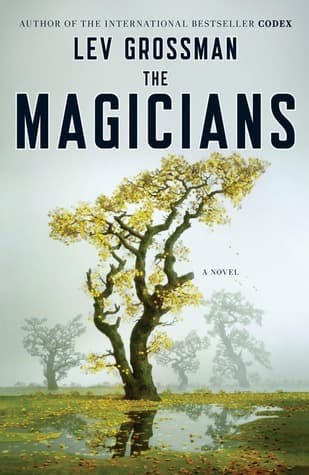
Lev Grossman (2009)
Genre
Fantasy / Young Adult
Reading Time
10-12 hours
Key Themes
See below
Sign in to track this book
A disillusioned prodigy discovers that the magical world from his childhood books is real, but actual sorcery is more complex, dangerous, and emotionally draining than any fantasy.
Quentin Coldwater is a smart but unhappy high school senior, obsessed with his childhood fantasy series 'Fillory and Further.' On his way to a Princeton interview, he and his friends James and Julia find a mysterious, abandoned house. Inside, Quentin is taken to Brakebills University for Magical Pedagogy, a secret college in upstate New York where magic is real. He takes an entrance exam, shows his magical skill, and gets in. His friend Julia also finds her way to Brakebills but is rejected, a fact that affects her deeply and starts her own darker journey into magic outside the school. Quentin, despite his initial wonder, remains somewhat skeptical about magic's reality.
At Brakebills, Quentin is placed with the Physical Kids, a group focused on battle magic and practical spells. He forms a close, though often difficult, group of friends: Alice Quinn, a shy but very talented magician; Eliot Waugh, an eccentric and charming older student; Josh Hoberman, a relaxed student; and Janet Pluchard, a practical and sarcastic woman. Their education is hard, involving complex spellcasting, ancient languages, and advanced magic theory. Despite learning spells and living in a magical world, Quentin feels increasingly bored and let down, realizing that magic, like ordinary life, does not automatically bring happiness or solve his underlying boredom. He struggles with his studies and his relationships, especially with Alice.
During their third year at Brakebills, a terrifying, evil entity called 'The Beast' attacks the university. It is a creature made of leaves and twigs, capable of great destruction. The Beast attacks the students, killing Professor Mayakovsky's assistant, Fogg, and nearly killing Quentin and his friends. Alice, to save herself and Quentin, does a forbidden and dangerous magic act: she temporarily becomes a Niffin, a being of pure magic, to fight off The Beast. Her transformation saves them but leaves her permanently changed, unable to become human again, and she is banished to the spirit world. This is a devastating loss for Quentin and the group.
After graduating from Brakebills, Quentin and his friends (Eliot, Josh, and Janet) feel lost. Magic has become normal, and the real world feels even more ordinary and pointless. They spend their days in a Brooklyn brownstone, pursuing pleasure and doing aimless magic, feeling a lack of purpose. During this time, Julia, Quentin's childhood friend, reappears. She explains that after being rejected by Brakebills, she found underground, illegal magic groups and learned forbidden spells, becoming very powerful but also deeply traumatized and tough. Her presence brings a darker, more dangerous element to their lives, contrasting sharply with the structured world of Brakebills.
While at a party at Penny's apartment, Quentin and his friends find a hidden message in a magical object. This message, with Penny's research, makes them believe that Fillory, the magical land from the children's books, is real. The chance of finding Fillory sparks hope and purpose in Quentin, who has been wanting the adventure and meaning he always thought magic should provide. The group, now including Penny and Julia, decides to go on a quest to find the portal to Fillory, believing it holds the key to the ultimate magical experience and an escape from their current disappointment.
Their journey takes them through a series of 'in-between' worlds, dangerous and unpredictable spaces between known realities. They meet various magical creatures and face many challenges. During a dangerous encounter with a monster, Penny, who can travel between worlds, is badly hurt. His hands are cut off, making him unable to cast spells or move between spaces, effectively stranding him and ending his direct part in the quest. This loss is a brutal reminder of the real dangers in their pursuit of Fillory, and it affects Quentin deeply, though he struggles to fully process the trauma.
After further trials, the remaining group – Quentin, Eliot, Josh, Janet, and Julia – finally find and enter Fillory. Their childhood fantasies are immediately broken. Fillory is not the perfect, bright land from the books; instead, it is a decaying, dangerous, and somewhat empty world. They meet the Watcherwoman, a mysterious and old being who guards the path to Fillory's true heart. The Watcherwoman gives them cryptic prophecies and tests their determination, making it clear that their journey will be much harder and less heroic than they imagined. She guides them to the next stage of their quest, hinting at Fillory's deeper, darker truths.
The Watcherwoman tells them that Fillory is dying and that to save it, they must find seven Golden Keys, each hidden in a different, dangerous part of the realm. These keys are tied to Fillory's essence and its magic. The quest is full of danger, forcing the friends to confront their weaknesses, fears, and the harsh realities of this magical world. They face treacherous places, cunning creatures, and moral choices, slowly gathering the keys while the true nature of Fillory and its creators, the gods Ember and Umber, becomes clear. The journey tests their bonds and their understanding of heroism.
As they gather the keys, the friends eventually confront Ember and Umber, the ram and goat gods who created Fillory. The gods are not kind; they are unpredictable, cruel, and flawed. They reveal that Fillory itself is just a plaything, a story they created and can unmake. The 'Fillory and Further' books, it turns out, were not just stories but a twisted, cleaned-up version of a real world, written by Ember and Umber themselves to lure children into their realm. This discovery shatters Quentin's last illusions about his childhood fantasy, showing the manipulative and dangerous nature of the gods and their creation.
The final key leads them to confront The Beast, who is Martin Chatwin, one of the original children from the 'Fillory and Further' books. Martin, disappointed with Fillory, sought ultimate power and became the monster. In the final battle, Julia, using her vast and dark magic knowledge, performs a powerful ritual to weaken Martin. This act requires a great sacrifice, and she is consumed by the magic, dying. With Julia's sacrifice, the Beast is defeated, but the victory is not joyful, marked by the loss of their friend and the lasting trauma of the battle. The remaining friends are left to deal with the aftermath of their hard quest.
After The Beast's defeat and gathering all seven keys, Quentin, Eliot, Josh, and Janet are crowned the new kings and queens of Fillory. They rule for several years, trying to restore the land and bring peace. However, their reign is far from the heroic adventures they once dreamed of. It is mostly administrative, filled with ordinary political duties, bureaucratic struggles, and the constant challenge of governing a broken world. The newness of being royalty fades, and the initial excitement gives way to a familiar sense of boredom and disappointment, mirroring Quentin's experience at Brakebills. Even as rulers of a magical land, true happiness and fulfillment remain hard to find.
Despite their royal status, Quentin and his friends are not satisfied. Eliot, especially restless, convinces the others to go on a new quest: to find the 'end of the world' within Fillory itself, a mythical boundary that promises to go beyond their current reality. This final adventure shows their desperate search for something more, a true great purpose or ultimate meaning that has escaped them throughout their lives. They leave their thrones and journey into the unknown parts of Fillory, hoping to discover what lies beyond the known limits of their magical kingdom, seeking a true end to their constant existential discomfort.
The Protagonist
From a disillusioned high schooler, Quentin becomes a powerful magician and king of Fillory, yet remains fundamentally unfulfilled, constantly searching for meaning.
The Supporting
Alice evolves from a shy, gifted student into a powerful, self-sacrificing magician, ultimately transforming into a Niffin, a being of pure magic, losing her humanity.
The Supporting
Eliot transitions from a jaded, party-loving student to a responsible, yet still world-weary, king of Fillory, always seeking something more meaningful.
The Supporting
Rejected from Brakebills, Julia embarks on a dark, self-taught magical journey, becoming incredibly powerful but traumatized, ultimately sacrificing herself for her friends.
The Supporting
Janet evolves from a witty, ambitious student to a pragmatic queen of Fillory, providing grounded leadership while still seeking personal fulfillment.
The Supporting
Josh remains largely consistent in his good-natured hedonism, becoming a king of Fillory who still prioritizes enjoyment and loyalty over grand ambition.
The Supporting
Penny, a powerful but ostracized Traveler, seeks to understand his unique abilities, but his journey is tragically cut short by a debilitating injury.
The Antagonist
Martin Chatwin, once a child hero of Fillory, transforms into the monstrous Beast, seeking ultimate power and immortality, becoming the primary antagonist who must be defeated.
The Supporting
The gods are revealed to be less benevolent creators and more capricious, manipulative entities who view Fillory as a personal story, ultimately needing to be confronted for the truth of their creation.
A main theme is that fulfilling one's deepest desires (like going to a magic school or finding a fantasy world) does not guarantee happiness or meaning. Quentin, and to a lesser extent, his friends, constantly feel bored despite living in a world of magic. Brakebills is a demanding academic place, and Fillory is a dangerous, decaying realm different from the idyllic books. This theme explores the difference between romanticized fantasy and harsh reality, and the internal struggle to find purpose when outside circumstances do not provide it.
“What was the point of it, then? If it was just going to be like this, then what was the point of anything?”
The novel directly addresses the relationship between fantasy literature and the real world. Quentin's obsession with 'Fillory and Further' shapes his entire view, making him believe that true happiness lies in a magical, adventurous realm. However, finding that Fillory is real only shows the clear difference between the idealized story of the books and the dangerous, morally unclear reality. The story explores how our views are shaped by the stories we consume and the possible disappointment when those stories do not match truth.
“It turned out that the greatest adventure of his life was just like the previous one, and the one before that: a disappointment.”
Quentin's journey is about finding out who he is, separate from his obsession with Fillory and his magic. He deals with depression, anxiety, and a constant feeling of being lost. His relationships, his academic struggles, and his adventures in Fillory all force him to confront his character flaws, his capacity for both selfishness and loyalty, and the hard truth that identity is not simply given by magical circumstances but built through experience and internal struggle. The other characters also deal with their identities, especially Julia who rebuilds herself through dark magic.
“He didn’t want to be a hero. He wanted to be a person.”
Throughout the book, magic comes with significant costs, both personal and ethical. Julia's pursuit of forbidden magic leads to trauma and a hardened personality, ending in her tragic sacrifice. Alice's great power leads to her becoming a Niffin. Even Fillory's gods are shown as flawed and dangerous, their creative power tainted by cruelty and indifference. The story consistently shows that magic, while appealing, often demands sacrifices, has unforeseen consequences, and can corrupt or destroy those who use it without wisdom or control.
“Magic always, always, always has a price. Always.”
Despite Quentin's often solitary and self-absorbed nature, his relationships with his friends at Brakebills – Alice, Eliot, Josh, and Janet – form the emotional center of the story. These friendships are complicated, often strained by jealousy, resentment, and personal struggles, yet they last. The group's shared experiences, from college routines to the dangerous quest for Fillory, create deep bonds. The tragic loss of Alice and Penny, and Julia's ultimate sacrifice, show the profound impact these relationships have on Quentin and the others, highlighting the human need for connection even in a magical world.
“They were a family, Quentin thought, a fucked-up, broken, complicated family, but a family nonetheless.”
A fictional fantasy series that serves as both inspiration and a source of disillusionment.
This series of children's fantasy novels is Quentin's childhood obsession and the driving force behind his desire for magic. It acts as a meta-narrative device, providing an idealized version of a magical world that is later contrasted sharply with the harsh reality of the actual Fillory. The books serve as a symbol of escapism and the romanticized view of magic, whose eventual deconstruction highlights the theme of disillusionment and the nature of fantasy itself. Their origin, revealed to be created by the gods Ember and Umber, adds another layer of manipulation to the narrative.
A secret magical college that grounds magic in a realistic, academic setting.
Brakebills serves as the primary setting for the first part of the novel, functioning as a magical equivalent of a prestigious, rigorous university. It grounds the concept of magic in a tangible, academic framework, making it feel less fantastical and more like a difficult, specialized field of study. As a plot device, it introduces the rules and limitations of magic, establishes the core group of characters, and allows for the exploration of themes like the challenges of learning, social dynamics, and the initial disillusionment that magic isn't an instant solution to life's problems. It is a stepping stone to the 'real' magic of Fillory.
A monstrous antagonist who embodies the corruption of childhood fantasy.
The Beast is more than just a monster; it is a former child hero of Fillory, Martin Chatwin, who became corrupted by his desire for power and immortality. As a plot device, The Beast serves as a recurring threat, first attacking Brakebills and later becoming the primary antagonist in Fillory. Its true identity reveals the dark underbelly of the beloved fantasy world and directly challenges Quentin's idealized view of heroism and Fillory itself. The Beast's existence underscores the theme that even the purest fantasies can be twisted into nightmares.
A forbidden magical state representing the ultimate sacrifice of humanity for power.
The Niffin state is a dangerous and rarely achieved magical transformation where a magician sheds their humanity to become a being of pure magical energy. Alice's transformation into a Niffin to save Quentin and her friends is a pivotal plot point and a powerful symbol. It represents the ultimate price of magic, the sacrifice of self for power or for others, and the point of no return. It introduces a profound element of tragedy and loss, demonstrating that some magical acts have irreversible and devastating consequences, further fueling the theme of the price of power.
A classic quest item driving the narrative in Fillory, symbolizing the path to saving the world.
The quest for the seven Golden Keys is a classic fantasy trope used to structure the latter half of the novel. It provides the characters with a tangible goal and propels them through the various dangers and revelations of Fillory. Each key is hidden in a different, perilous location, forcing the characters to confront different challenges and learn more about themselves and the true nature of Fillory. This device gives the narrative a clear objective, even as the characters' internal struggles and disillusionment remain complex, leading them to the ultimate confrontation with The Beast and the gods.
“Fillory is real. It's a real place. The books are true.”
— Quentin's realization upon discovering the truth about his beloved childhood fantasy world.
“He didn't want to be happy. He wanted to be a magician.”
— Quentin reflecting on his desires versus what he believes he should want.
“The problem with Fillory wasn't that it was a lie. The problem with Fillory was that it was true.”
— Quentin's disillusionment with Fillory once he experiences its harsh realities.
“Magic didn't make you happy. It just made you a magician.”
— A recurring theme about the limitations of magic to solve personal problems.
“Maybe the secret to magic was that it was all an act, and the secret to the act was that it wasn't.”
— Quentin pondering the nature of magic and performance.
“The world was full of magic, but it wasn't the kind of magic they'd dreamed of.”
— The students at Brakebills facing the gritty, unglamorous side of magic.
“Being a magician meant you could do things, but it didn't mean you knew what to do with them.”
— The characters struggling with purpose despite their magical abilities.
“You don't get to choose your quest. You just get to go on it.”
— A mentor figure explaining the unpredictable nature of magical adventures.
“The real world was what kept trying to kill them.”
— The group facing dangers both mundane and magical.
“He wasn't going to be a hero. He was going to be a magician, and that was good enough.”
— Quentin accepting his role and identity without the need for grand heroism.
“Sometimes you just had to be alive, and that was enough.”
— A moment of simple contentment amidst complex magical struggles.
“The thing about magic was that it was always a trick, even when it wasn't.”
— Another reflection on the deceptive nature and underlying reality of magic.
“What was the point of all that power if you couldn't use it to fix things?”
— Quentin's frustration with magic's inability to solve emotional or personal problems.
“He knew, with a certainty that chilled him to the bone, that the world was not a friendly place.”
— A harsh realization about the indifferent or hostile nature of the universe.
Ready to see how well you understood this book? Take our interactive quiz with 10 questions.

Biography coming soon.







