“The world was full of mysteries, and the greatest mystery was man himself.”
— Yasha reflects on the nature of existence and humanity's place within it.

Isaac Bashevis Singer (1979)
Genre
Historical Fiction
Reading Time
240 min
Key Themes
See below
Sign in to track this book
In 19th-century Poland, a Jewish-Gentile magician known for his escapes and illicit affairs grapples with the ultimate trick: shedding his past, his faith, and his many loves to find true freedom.
Yasha Mazur, the famous magician, returns to his hometown of Lublin after a successful tour. He is greeted by his devoted but barren wife, Esther, with whom he shares a simple, pious life. However, Yasha's return is complicated by his ongoing affair with Emilia, a beautiful, non-Jewish widow who lives nearby. Yasha is deeply involved with Emilia, promising her marriage and a new life in Warsaw, despite his marital vows and Jewish heritage. He feels suffocated by his religious community and his responsibilities, always seeking escape and novelty. His assistant, Zeftel, who is also his lover, travels with him, adding another layer to his complex personal life. Yasha's internal conflict between his worldly desires and his spiritual obligations is clear.
Yasha travels to Warsaw for a series of performances, accompanied by Zeftel. His main intention, however, is to finalize his plans to elope with Emilia. He imagines a new life in the bustling city, leaving behind the provincialism of Lublin and the rules of his Jewish faith. In Warsaw, Yasha meets various figures who embody the secular, modern world he longs for, further fueling his desire for freedom and self-reinvention. He arranges for Emilia to join him, promising to secure their future together, even thinking about converting to Christianity to marry her. This journey is a critical point where Yasha seeks to fully embrace a life defined by his own desires, rather than by tradition or obligation.
In Warsaw, Yasha's financial situation becomes a pressing concern for his plans with Emilia. He tries to borrow money from various acquaintances, including his former mistress, Magda, and a wealthy Jewish merchant, Mr. Koppel. His efforts are met with resistance and suspicion. Desperate, Yasha attempts to rob Mr. Koppel's safe, but his usually flawless skills fail him, and he is nearly caught. This humiliating failure shatters his self-perception as an infallible master of illusion and escape. The incident shows his moral decline and the consequences of his deceptive lifestyle, as his carefully constructed world of lies begins to unravel, leaving him vulnerable and exposed.
Emilia arrives in Warsaw, full of hope for her future with Yasha. However, she soon learns of his financial problems and his past mistakes, including his relationship with Zeftel and his failed robbery attempt. The truth about Yasha's life, his multiple lovers, and his inability to provide for her shatters Emilia's idealized image of him. Distraught and disillusioned, she confronts him, leading to a bitter and definitive breakup. Emilia, feeling betrayed and used, leaves Yasha, abandoning their plans for a life together. This event is a significant turning point for Yasha, as his dreams of a new life with Emilia crumble, forcing him to confront the emptiness of his pursuit of worldly pleasures.
Following Yasha's break with Emilia and his general decline, Zeftel, his loyal assistant and lover, finds herself increasingly neglected and eventually abandoned by him. With no means of support and her hope in Yasha gone, Zeftel falls into a life of poverty and desperation in Warsaw. She is forced into prostitution to survive, experiencing the harsh realities of a woman without protection or status in society. Her descent into destitution reflects Yasha's own moral and spiritual decline, showing the collateral damage of his selfish pursuits. Zeftel's tragic fate is a reminder of the consequences of Yasha's irresponsible and exploitative behavior towards those who cared for him.
During his time in Warsaw, Yasha reconnects with Magda, another of his former lovers. Magda, still deeply infatuated with him, hopes for a rekindling of their romance. However, Yasha, consumed by his own troubles and his pursuit of Emilia, cruelly rejects her advances. Devastated by his rejection and feeling utterly hopeless, Magda commits suicide. Her death is a shock to Yasha, forcing him to confront the devastating impact of his actions and his callous disregard for the feelings of others. Magda's tragic end is a symbol of the destruction Yasha leaves in his wake, intensifying his guilt and contributing to his growing spiritual crisis.
Following the successive failures in Warsaw – the failed robbery, Emilia's departure, Zeftel's ruin, and Magda's suicide – Yasha reaches a breaking point. He experiences a spiritual crisis, overwhelmed by guilt, despair, and the realization of the emptiness of his worldly pursuits. He sees his life as a series of deceptions and betrayals, a stark contrast to the piety and tradition of his Jewish upbringing. In a moment of intense introspection and self-loathing, Yasha decides to abandon his life as a magician and return to Lublin, seeking repentance and a path back to God. This marks a shift from his secular aspirations to a deep yearning for spiritual redemption.
Upon his return to Lublin, Yasha is a changed man. He seeks forgiveness from his wife, Esther, and begins a radical transformation of his life. As an act of extreme repentance, Yasha decides to isolate himself from the world. He constructs a small, bricked-up cell in his backyard, with only a small opening for food and light. Inside this self-imposed prison, he dedicates himself to prayer, study, and asceticism, renouncing all worldly pleasures and connections. This extreme act symbolizes his desire to atone for his sins and to escape the temptations that led him astray, hoping to achieve spiritual purity and a deeper connection with God.
Yasha lives for years in his bricked-up cell, becoming known as 'the Penitent of Lublin.' His extreme act of repentance earns him a reputation for holiness and wisdom among the local community, both Jewish and Gentile. People come from far and wide to seek his advice, blessings, and prayers, believing him to be a holy man. Despite his physical confinement, Yasha finds a new kind of freedom and purpose in his spiritual devotion. He is no longer the trickster magician but a figure of faith and humility, having truly escaped the prison of his own desires and deceptions, finding peace in his spiritual solitude and service to God.
Years after their painful separation, Emilia, now a respectable married woman with children, visits Yasha in his cell. She has built a stable and conventional life for herself, something she once sought with Yasha. Their meeting is brief but significant. Emilia recounts her life, expressing a sense of peace and contentment, and Yasha, though physically confined, conveys a sense of spiritual peace. This encounter highlights the divergent paths their lives have taken and the transformation Yasha has undergone. It offers a sense of closure and demonstrates that both characters, in their own ways, have found a form of redemption and fulfillment, though through vastly different means.
The Protagonist
Yasha begins as a worldly, deceptive man seeking freedom through hedonism and secular ambition, but ultimately finds redemption and true freedom through extreme spiritual penance and self-confinement.
The Supporting
Esther remains largely static in her unwavering faith and love, serving as a beacon of stability and tradition for Yasha's eventual return and repentance.
The Supporting
Emilia starts as Yasha's romantic ideal of a secular life, but becomes disillusioned by his deceit, ultimately finding stability and happiness in a conventional marriage with another man.
The Supporting
Zeftel begins as Yasha's trusting assistant and lover, but is abandoned by him and descends into destitution and prostitution, symbolizing the destructive impact of Yasha's actions.
The Supporting
Magda's arc is brief and tragic, ending in suicide after Yasha's final rejection, serving as a catalyst for Yasha's spiritual crisis.
The Mentioned
N/A (static character, primarily a plot device)
The Mentioned
N/A (static character, primarily symbolic)
This is the central theme of the novel, seen in Yasha's struggle. He is constantly torn between his desire for freedom, sensual pleasure, and worldly acclaim as a magician (represented by his affairs with Emilia and Zeftel, and his ambition in Warsaw) and the call of his traditional Jewish faith and spiritual life (represented by Esther and his eventual repentance). The novel explores the consequences of unchecked worldly desires, leading to betrayal, despair, and death (Magda's suicide, Zeftel's ruin), before Yasha finds liberation through extreme spiritual asceticism and a return to God. His bricked-up cell symbolizes his final escape from the 'prison' of his own desires. For example, his failed robbery attempt in Warsaw is a low point, contrasting sharply with his later spiritual clarity.
“He wanted to escape. Escape from himself, from his body, from his desires.”
Yasha is a master of illusion, both on stage and in his personal life. He deceives his wife, his lovers, and himself about his true intentions and capabilities. His magic acts, with their tricks and escapes, mirror the deceptions he weaves in his relationships and his attempts to escape his responsibilities. The novel suggests that while illusions can entertain, they ultimately lead to emptiness and pain when applied to real life. His inability to truly 'escape' his moral failings through trickery, as seen in the botched robbery, highlights the limits of his craft when faced with human and spiritual dilemmas.
“A magician is a liar by profession.”
Yasha's life is a constant pursuit of freedom, initially defined by breaking societal and religious conventions, traveling, and having multiple lovers. He feels confined by his marriage, his Jewish heritage, and the provincialism of Lublin. However, this pursuit of worldly freedom leads him to a different kind of confinement: a 'prison' of guilt, deception, and despair. Ironically, he finds true freedom and peace only when he chooses extreme physical confinement in his bricked-up cell, embracing a spiritual liberation from his desires. This paradox shows that true freedom is not external but internal, found in self-mastery and spiritual devotion rather than worldly escape.
“He had always dreamed of freedom, but now he understood that true freedom lay in chains.”
Yasha struggles with a fragmented identity, being 'half-Jewish, half-Gentile' in spirit. He tries to shed his Jewish identity to embrace a modern, secular European persona, particularly through his relationship with Emilia and his aspirations in Warsaw. However, he finds that he cannot fully escape his roots or the moral framework instilled by his upbringing. His journey is a quest to reconcile these conflicting aspects of himself, ultimately leading him to reaffirm a profound, though unconventional, Jewish identity through repentance and spiritual devotion. His transformation from a flamboyant performer to a humble penitent illustrates the evolving nature of his self-perception.
“He was a Jew, but he felt like a Gentile. He was a Gentile, but he knew he was a Jew.”
Hints at future events, especially Yasha's eventual downfall and repentance.
The novel employs subtle hints throughout Yasha's early life that suggest his eventual spiritual crisis and transformation. His constant restlessness, his dissatisfaction even with success, and his recurring guilt after his betrayals all foreshadow his eventual rejection of his worldly life. For instance, his early, fleeting moments of spiritual longing, even amidst his debauchery, hint at the path he will ultimately take. This device builds anticipation and makes Yasha's radical change feel earned rather than abrupt.
The bricked-up cell represents both physical confinement and spiritual liberation.
Yasha's self-imposed, bricked-up cell is a potent symbol. Initially, it represents extreme physical confinement and an act of penance, a 'prison' for his sins. However, it paradoxically becomes a space of profound spiritual freedom and liberation for Yasha. By enclosing himself, he escapes the temptations and deceptions of the outside world and finds true peace, purpose, and connection with God. The small opening for food and light symbolizes his continued connection to the world, but on his own terms, having mastered his desires. This inversion of freedom and confinement is central to the novel's message.
The contrast between Yasha's perceived freedom and his eventual spiritual confinement.
The novel is rich in irony, particularly concerning Yasha's pursuit of freedom. He believes that by shedding his religious and marital obligations and embracing a secular, hedonistic life, he will achieve ultimate freedom. However, this path leads him to a 'prison' of guilt, despair, and moral degradation. The ultimate irony is that he finds true freedom and peace only when he chooses extreme physical confinement in his bricked-up cell, where he liberates himself from the tyranny of his own desires and the deceptions of the world. This stark contrast highlights the novel's philosophical core.
The contrasting lives of Yasha and Emilia, and Yasha and Esther.
The novel uses parallel lives to highlight Yasha's choices and their consequences. Emilia, who also seeks a new life, eventually finds stability and conventional happiness through marriage and family, a path Yasha initially promised but failed to deliver. Esther, Yasha's pious wife, remains steadfast in her traditional life, representing the spiritual anchor Yasha initially rejects but eventually returns to. These contrasting paths underscore the different forms of fulfillment and the consequences of the choices made by the characters, providing a foil for Yasha's radical transformation.
“The world was full of mysteries, and the greatest mystery was man himself.”
— Yasha reflects on the nature of existence and humanity's place within it.
“Freedom meant nothing if one could not choose what was good.”
— Yasha struggles with his desires and the moral implications of his choices.
“A man's will is a fragile thing, easily broken by the body's demands.”
— Yasha succumbs to temptation despite his intentions to live a more righteous life.
“God's truth is not always comfortable, but it is always true.”
— Yasha grapples with religious doctrine and his own spiritual journey.
“Every man is a magician, performing tricks for himself and for others, but ultimately deceiving only himself.”
— A reflection on Yasha's profession and the broader human tendency for self-deception.
“The greatest trick of all was to be truly invisible, to disappear from the world and its temptations.”
— Yasha contemplates withdrawing from society and its allurements.
“Love was a great fire, burning both pure and impure, consuming everything in its path.”
— Yasha's many romantic entanglements and their destructive power.
“One could not escape one's past, no matter how far one traveled or how much one changed.”
— Yasha's past actions and relationships continually haunt him.
“The world was a stage, and all the men and women merely players.”
— A philosophical observation on the performative nature of life, especially relevant to Yasha's profession.
“To be truly pious was to be constantly aware of one's own sinfulness.”
— Yasha's understanding of piety evolves as he seeks redemption.
“Money was a necessary evil, a tool that could build or destroy, depending on the hand that wielded it.”
— Yasha's experiences with wealth and poverty, and their impact on his choices.
“There was no such thing as a small sin; every transgression opened the door to greater ones.”
— Yasha's internal struggle with his moral failings and the slippery slope of sin.
“The human heart was a maze, full of secret passages and hidden chambers.”
— A metaphor for the complexity and unpredictability of human emotions and motivations.
“Even a magician, who could walk on ropes and unlock any door, could not escape himself.”
— Yasha's realization that his physical prowess and trickery cannot solve his inner turmoil.
Ready to see how well you understood this book? Take our interactive quiz with 10 questions.
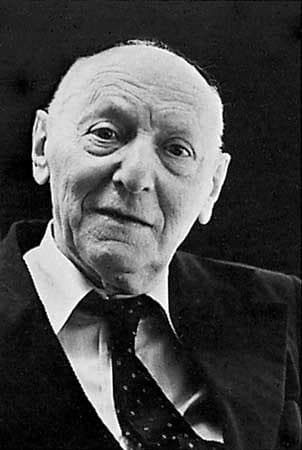
Isaac Bashevis Singer was a Polish-born Jewish-American novelist, short-story writer, memoirist, essayist, and translator. Some of his works were adapted for the theater. He wrote and published first in Yiddish and later translated his own works into English with the help of editors and collaborators. He was awarded the Nobel Prize for Literature in 1978. A leading figure in the Yiddish literary movement, he was awarded two U.S. National Book Awards, one in Children's Literature for his memoir A Day of Pleasure: Stories of a Boy Growing Up in Warsaw (1970) and one in Fiction for his collection A Crown of Feathers and Other Stories (1974).







