“Magic is a language, and like any language, it can be used to tell lies.”
— Quentin reflects on the nature of magic and its potential for deception.

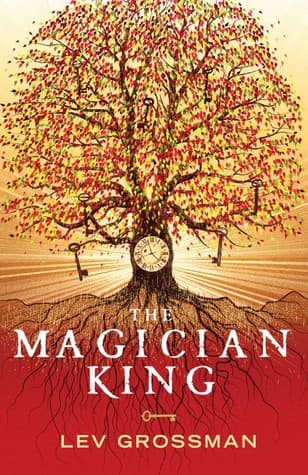
Lev Grossman (2011)
Genre
Fantasy / Young Adult
Reading Time
10-12 hours
Key Themes
See below
Sign in to track this book
Thrust back into the mundane world they desperately escaped, the royal magicians of Fillory must confront the dark, street-honed magic of an outcast to reclaim their glittering kingdom.
Years have passed since Quentin Coldwater, Eliot Waugh, Janet Way, and Josh Hoberman became Kings and Queens of Fillory. They live in Castle Whitespire, enjoying feasts, magic, and their subjects' admiration. However, the initial excitement has gone, replaced by boredom and a feeling of not being fulfilled. Quentin, especially, feels a deep sadness, wanting a new quest or purpose beyond their luxurious but aimless life. Eliot and Janet constantly try to outdo each other, while Josh mostly remains unaware, happy with simple pleasures. Fillory's magic, once amazing, now feels routine, and the four rulers find themselves lost in their own paradise.
During a ceremonial hunt, a magic stag appears, speaking to Quentin and saying that Fillory is dying because a golden key is missing. This news makes Quentin want adventure again. Soon after, Julia Wicker, Quentin's childhood friend who was not allowed into Brakebills and found magic through illegal ways, suddenly appears in Fillory. She is no longer the innocent girl Quentin knew but a strong magician, changed by her experiences. Julia explains her journey, saying she has been to Fillory before, through a different, darker path. Together, Quentin and Julia decide to go on a quest to find the golden key, hoping it will bring Fillory and their own spirits back to life.
Quentin and Julia hire a magic sailing ship, the Muntjac, to travel to Fillory's outer islands to find clues about the golden key. Their journey suddenly stops when, during a storm, a strong magic force takes them not to another part of Fillory, but back to Earth. They find themselves in Chesterton, Massachusetts, right outside Quentin's parents' house – the place he had desperately tried to leave. Without their Fillorian clothes and most of their direct magic, they must face the everyday world they had left, a sharp difference from the magic kingdom they ruled.
While stuck on Earth, Julia starts to tell Quentin her full past. After failing the Brakebills entrance exam, she became obsessed with learning magic. She joined a hidden group of street magicians, or 'hedge witches,' who practiced dangerous, forbidden magic. This path led her through increasingly dark and risky rituals, including sacrifices, dealing with small gods, and finally, a terrible meeting with a bad entity called 'the Shade.' Julia’s story is an honest look at the cost of magic when pursued outside regular schools, showing her strength but also the deep scars she carries from her experiences.
Julia's story ends with her group's desperate attempt to summon a small god, Our Lady of the Evergreens, hoping to get strong magic. The ritual goes very wrong, leading to many of her friends' deaths and Julia herself being hurt by a powerful magic entity, who is revealed to be the Beast, Martin Chatwin, in a weak state. During this traumatic event, Julia briefly sees Fillory, understanding that it is a real place. This experience fundamentally changes her, making her more determined and fueling her search for power and understanding, putting her on a path that would eventually lead her back to Fillory and Quentin.
Back in Fillory, Eliot, Janet, and Josh are struggling to manage the kingdom without Quentin. The prophecy of the seven golden keys becomes more urgent as Fillory's magic weakens. Quentin and Julia, having returned to Fillory through a Narnia-like portal in a clock, learn that there isn't just one missing key, but seven, and they already have two. Their quest leads them to the Neitherlands, a place connecting all magic worlds, and then to the Library at the End of the World. This large, magic library holds all knowledge and is a central place for their search, revealing more about Fillory's true nature and its magic.
Inside the Library's endless shelves, Quentin and Julia find old books telling Fillory's history, how the keys were made, and the quest's true goal. They learn that the keys are not just objects but basic parts of Fillory's existence. Their search for the third key leads them to a dragon, a powerful guardian of one of the keys. This meeting tests their magic skills and courage, making them work together and use Julia's darker, more practical magic knowledge to succeed. They eventually get the third key, but the quest's true meaning remains hidden.
The clues for the remaining keys lead Quentin and Julia, now with a librarian named Poppy, on a dangerous trip to Fillory's very edge. This journey takes them through dangerous seas and meetings with strange, mythical creatures. They eventually reach the 'End of the World,' a huge waterfall where Fillory's waters fall into nothing. To go on, they must pass through a magic barrier, a gate to another realm. This passage is full of danger and needs a leap of faith, testing their determination and pushing them further into Fillory's unknown mysteries.
Beyond the waterfall, Quentin, Julia, and Poppy find themselves in a hidden underworld, a realm of the dead and forgotten within Fillory. Here, they meet the Watcher, a powerful, old being who has been guarding the remaining keys. The Watcher reveals the deeper truth about the keys: they are not just for Fillory, but for all magic, and getting them back is tied to existence itself. The Watcher challenges them, making them prove they are worthy and understand magic. This meeting is a turning point, as Quentin and Julia realize the true size of their mission and the huge power they are dealing with.
The journey ends with a meeting with Umber and Ember, the goat-gods who made Fillory. They say that Fillory is dying because they themselves are dying, and the keys are not to save Fillory, but to open a door to the 'real' Fillory, a new, untouched world. To use the keys and open this door, a big sacrifice is needed. Julia, driven by her past trauma and her deep understanding of magic's cost, makes the ultimate sacrifice: she offers herself to become a goddess, a Dryad, to give the necessary power. This act changes her, cutting her ties to humanity but saving Fillory.
With Julia's sacrifice, the seven keys activate, and a new, thriving Fillory is born, free from the old one's decay. Quentin, Eliot, Janet, and Josh are offered the chance to rule this new kingdom. However, Quentin, greatly changed by his experiences and Julia's sacrifice, chooses a different path. He decides to stay in the old, dying Fillory, now a desolate but still magic place, to protect Julia's new form as a Dryad and ensure the old world's peaceful end. He takes on a role as a guardian, finding a quiet purpose that he had not found as king, finally accepting his place in the magic world with new maturity and understanding.
The Protagonist
Quentin evolves from a bored, aimless king to a selfless guardian, finding purpose in protecting the magical world and honoring Julia's sacrifice.
The Co-protagonist/Supporting
Julia's arc is one of survival and transformation, from a desperate hedge witch to a powerful, sacrificing deity, finding ultimate purpose through immense personal cost.
The Supporting
Eliot maintains his cynical but loyal nature, adapting to the challenges of leadership and eventually embracing a new Fillory with his friends.
The Supporting
Janet remains a strong, independent ruler, adjusting to the changes in Fillory and her role within it.
The Supporting
Josh largely remains true to his hedonistic but kind nature, finding joy in the simpler aspects of Fillory.
The Supporting
Poppy aids the protagonists in their quest, contributing her knowledge and magical skills to their success.
The Supporting/Antagonists
The gods reveal their dying state and the true purpose of the keys, orchestrating Fillory's rebirth.
The Supporting
The Watcher serves as a gatekeeper and revealer of truths, guiding the protagonists towards the final stages of their quest.
The novel looks at how even getting one's ultimate fantasy, like ruling Fillory, can lead to boredom and a lack of purpose. Quentin and his friends find that endless luxury and easy magic do not mean happiness, leading to a deep feeling of sadness. This idea is clear in Quentin's constant search for new quests and Eliot's sarcastic humor, showing that true happiness comes from meaningful challenge and growth, not unchanging perfection. The first joy of Fillory gives way to the understanding that paradise without purpose is its own kind of prison.
“"We'd won. We were Kings and Queens. And it turned out that being a king or queen in Fillory was a lot like being a rich kid in a major metropolitan city: You had a lot of stuff and a lot of time and very little to do."”
Through Julia's detailed past, the novel explores the darker, more dangerous parts of magic when practiced without rules. Her journey as a hedge witch shows the sacrifices, physical and mental costs, and moral compromises needed to get magic power without proper guidance. This is a sharp contrast to Brakebills' relatively safe and structured magic. The theme looks at whether magic is naturally good or bad, or simply a force that shows its users' intentions and strength, often at a terrible price. Julia's change into a goddess is the strongest example of this cost and power.
“"Magic was a gift. It was a power. But it was also a burden, a responsibility, and a curse. And if you didn't know what you were doing, it would eat you alive."”
Both Quentin and Julia go through big journeys of self-discovery. Quentin, at first defined by his obsession with Fillory and his feelings of not being good enough, struggles to find his place and purpose even after getting his dream. His quest for the keys makes him face his passivity and finally take on a selfless role as a guardian. Julia's journey is even more life-changing, as she takes back control after trauma and gives up her humanity to become a god, finding a powerful new identity. The novel suggests that true identity is made through hardship, choice, and often, big change.
“"He hadn't found himself, not really. He'd just found a place where he could be himself, which was almost the same thing."”
The novel continues to look at the tension between avoiding reality and facing it. Fillory at first represents the ultimate escape for Quentin, but he learns that even a perfect fantasy world needs active involvement and responsibility. His being sent back to Earth makes him face the everyday world he ran from, while Julia's story shows the painful reality of trying to force magic into existence when it's denied. The final solution suggests that true fulfillment is not in escaping, but in actively shaping and protecting the world, whether magic or everyday, and accepting its challenges.
“"Fillory wasn't just a place. It was an idea. And sometimes ideas were more powerful than places."”
Sacrifice is a repeated idea, most clearly seen in Julia's change into a Dryad goddess to save Fillory. Her act is not just a physical change but a spiritual one, making up for her past trauma and giving her a new, powerful purpose. Quentin's choice to stay in the old Fillory to protect Julia's new form is also a sacrifice, giving up a new paradise for a lonely guardianship. The novel suggests that true love and purpose often require a big personal cost, leading to a kind of redemption or higher calling.
“"The only way to truly save anything, she realized, was to give something up for it."”
Alternating chapters between Quentin's current quest and Julia's past experiences.
The novel expertly employs a dual narrative structure, switching between Quentin's present-day quest for the golden keys in Fillory and Julia's extensive flashback narrative detailing her harrowing journey through underground magic. This device not only provides crucial backstory for Julia, explaining her transformed character and formidable magical abilities, but also offers a contrasting perspective on the nature of magic – the institutional vs. the illicit. It builds suspense and deepens character understanding by revealing the parallel, yet vastly different, paths two childhood friends took to magic.
A magical MacGuffin driving the primary quest and revealing deeper truths about Fillory.
The seven golden keys serve as the central MacGuffin of the plot, initially presented as a means to save Fillory from decay. As the quest progresses, their true nature and purpose are gradually revealed to be far more profound than simple magical artifacts. They are not merely objects but fundamental components of Fillory's existence, capable of opening the door to a new, untainted version of the world. This device propels the narrative forward, uncovers deeper lore, and forces the characters to confront the true stakes of their magical world.
A liminal, inter-dimensional space connecting all magical worlds.
The Neitherlands is a crucial plot device that functions as a magical hub or crossroads, allowing travel between different magical worlds, including Earth and Fillory. It is depicted as a vast, grey, empty space containing millions of 'pools' that serve as portals. This device facilitates the characters' movements across realms, particularly when Quentin and Julia are unexpectedly banished from Fillory to Earth and need a way back. It also houses the Library at the End of the World, which serves as a repository of knowledge vital to the quest.
A vast, magical library containing all knowledge, serving as a source of exposition and clues.
Located within the Neitherlands, the Library at the End of the World is an immense, magical repository containing every book ever written and those yet to be written, spanning all magical worlds. This device functions as a crucial source of exposition and plot advancement, as Quentin and Julia consult its vast archives to uncover clues about the golden keys, the history of Fillory, and the nature of the gods. It is also where they encounter Poppy, a key supporting character, and gain access to vital information that shapes the remainder of their quest.
“Magic is a language, and like any language, it can be used to tell lies.”
— Quentin reflects on the nature of magic and its potential for deception.
“You don't get to choose what you are. You only get to choose what you do with it.”
— Julia discusses destiny and personal agency with Quentin.
“The world is full of obvious things which nobody by any chance ever observes.”
— A character remarks on human perception and overlooked details.
“There are no happy endings, because nothing ends.”
— Quentin contemplates the cyclical nature of stories and life.
“You can't go back and change the beginning, but you can start where you are and change the ending.”
— A moment of introspection about past mistakes and future possibilities.
“The only way to deal with an unfree world is to become so absolutely free that your very existence is an act of rebellion.”
— A philosophical insight on freedom and resistance.
“Magic doesn't come from talent. It comes from pain.”
— Julia explains the source of her magical abilities.
“We are all stories in the end. Just make it a good one.”
— A reflection on life's narrative and legacy.
“The price of getting what you want is getting what you once wanted.”
— Quentin realizes the consequences of achieving his desires.
“You have to break a few eggs to make an omelet. But what if you're the egg?”
— A character questions the cost of progress and sacrifice.
“The world is not a wish-granting factory.”
— A blunt reminder of reality's limitations.
“Sometimes the only way to stay sane is to go a little crazy.”
— A coping mechanism discussed in the face of overwhelming events.
“Adventure is just hardship with an inflated sense of self-importance.”
— A cynical take on the glamorization of difficult journeys.
“The truth is a mirror in the hands of God. It falls, and breaks, and everybody picks up a piece and thinks they have the whole thing.”
— A metaphorical discussion about truth and perspective.
Ready to see how well you understood this book? Take our interactive quiz with 10 questions.

Biography coming soon.







