“The summer she was fifteen, Melanie discovered she was made of flesh and blood.”
— Opening line introducing Melanie's awakening to her own body and sexuality.

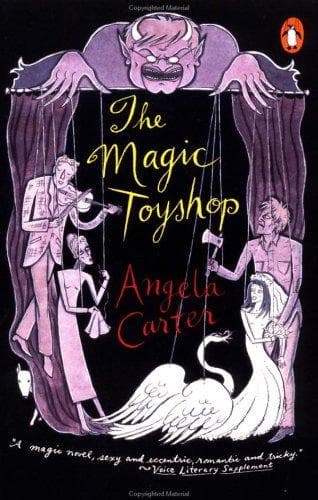
Angela Carter (2015)
Genre
Literary Fiction / Fantasy
Reading Time
240 min
Key Themes
See below
Sign in to track this book
After her childhood is shattered, Melanie is thrust into a bizarre, puppet-filled world ruled by her toy-making uncle, where she must navigate a grotesque coming-of-age among life-sized dolls and mechanical birds.
Fifteen-year-old Melanie, living a sheltered life in a comfortable suburban home, indulges in a forbidden fantasy one summer night. She secretly puts on her mother's elaborate wedding dress and wanders through the garden. The next morning, her idyllic world shatters: her parents are killed in an airplane crash. This sudden tragedy uproots Melanie and her younger siblings, Victoria and Jonathan, from their familiar surroundings. They are sent to London to live with their mother's estranged brother, Uncle Philip, a man they have never met. This abrupt change ends Melanie's childhood innocence and plunges her into an unfamiliar and unsettling new life.
The three children arrive at Uncle Philip's house, which is also his toyshop, located in a rundown part of London. The atmosphere is immediately oppressive and peculiar. The house is dark, dusty, and filled with an unsettling array of puppets, dolls, and clockwork mechanisms. They meet their gentle, almost ethereal Aunt Margaret, who is mute, having lost her voice on her wedding day. Her brothers, Francie and Finn, also live there. Uncle Philip himself is a formidable, authoritarian figure, obsessed with his craft, treating his family with a detached cruelty. Melanie is particularly disturbed by his intense, scrutinizing gaze and the strange, lifelike quality of his creations.
Life under Uncle Philip's roof is one of strict rules, deprivation, and emotional coldness. The children's possessions are confiscated, and they are given drab clothes. Melanie, in particular, clashes with Uncle Philip's rigid control and his almost perverse fascination with her. She is assigned chores, including helping in the toyshop, where she witnesses his meticulous, almost fanatical dedication to his craft. Aunt Margaret remains a silent, sympathetic presence, often communicating through gestures or her brother Francie. Melanie begins to observe the strange, almost theatrical existence of Francie and Finn, who seem trapped in their uncle's world, participating in his puppet shows.
As Melanie navigates her new life, she finds herself increasingly drawn to Finn, the younger of Aunt Margaret's brothers. He is artistic, sensitive, and rebellious, often clashing with Uncle Philip. Their relationship is complex, marked by a growing attraction but also by a sense of unease and manipulation from Finn's side. Finn recognizes Melanie's spirit and intelligence, and they share moments of intimacy and shared understanding, often in secret. However, Finn also has a dark, predatory edge, and his interactions with Melanie are often tinged with a power dynamic that reflects the controlling environment of the toyshop. He introduces her to a different side of the house, away from Philip's direct gaze.
Uncle Philip's obsession with his puppets deepens, and he begins to create elaborate, life-sized figures that blur the line between toy and human. He stages increasingly complex and unsettling puppet shows, often featuring themes of innocence, corruption, and control. Melanie, Finn, and Francie are forced to participate, either by manipulating the puppets or by being present as an audience. These performances are not mere entertainment; they are extensions of Uncle Philip's twisted vision, often reflecting his psychological control over the household. Melanie feels increasingly like a puppet herself, her life being orchestrated by her uncle's will, especially as he begins to focus his creative energy on a new 'bride' puppet.
Driven by her growing discomfort and a burgeoning sense of self, Melanie starts to rebel against Uncle Philip's tyranny. She chafes under his rules and his controlling gaze, which seems to strip her of her individuality. Her relationship with Finn intensifies, becoming more explicitly sexual, a defiant act against the suffocating atmosphere of the toyshop. These encounters, while providing a sense of agency, are also fraught with the complexities of her vulnerable position. Melanie begins to understand that she must escape her uncle's psychological and physical hold, and she starts to actively seek ways to reclaim her identity and freedom from the puppet-master's control.
Uncle Philip's greatest work is a life-sized puppet bride, a realistic creation that Melanie finds disturbingly familiar. He begins to stage a 'wedding' play, casting Melanie as the reluctant bride to the puppet groom. This 'rehearsal' is a grotesque parody of a real wedding, imbued with Uncle Philip's perverse control and artistic vision. During this process, Melanie is dressed in a white gown, mirroring the dress she wore on the night her parents died, creating a sense of déjà vu and entrapment. The experience is humiliating and psychologically scarring, solidifying her resolve to break free from his grasp.
In a rare moment of communication, Aunt Margaret, through gestures and perhaps a whispered word, reveals the traumatic event that stole her voice: on her wedding day, Uncle Philip, driven by jealousy or madness, orchestrated a cruel trick involving a puppet to shame her, silencing her forever. This revelation affects Melanie, solidifying her understanding of her uncle's cruelty and the extent of his psychological damage. Inspired by Margaret's tragic story and her own desperate need for freedom, Melanie resolves to escape the toyshop, not just for herself but also for her younger siblings, Victoria and Jonathan, who are also trapped in this bizarre world.
The tension in the toyshop reaches its breaking point. During a particularly intense 'performance' or perhaps in a fit of rage or desperation, Melanie, Finn, or a combination of events leads to the toyshop catching fire. The fire quickly spreads, engulfing the puppets, the mechanisms, and the very structure that has imprisoned them. The blaze is a symbolic act of destruction, consuming Uncle Philip's creations and, by extension, his oppressive control. In the chaos, there is a frantic struggle for survival, a desperate attempt to escape the burning building and the psychological prison it represents. The fire consumes everything, leaving behind only ashes and the possibility of a new beginning.
Melanie, Finn, Victoria, and Jonathan manage to escape the burning toyshop, leaving behind the ruins of their confinement. The fire has destroyed the physical embodiment of Uncle Philip's tyranny, but the psychological scars remain. Uncle Philip's fate is left ambiguous, perhaps perishing in the flames, or simply disappearing from their lives. Aunt Margaret's fate is also uncertain, adding to the somber aftermath. As they emerge into the night, free but disoriented, Melanie holds onto her siblings, facing an uncertain future. The experience has irrevocably changed her, stripping away her innocence but also forging a stronger, more resilient self, ready to navigate a world beyond the confines of the magic toyshop.
The Protagonist
Melanie transforms from a passive, innocent girl into a resilient and self-aware young woman who defies her oppressor and reclaims her identity.
The Antagonist
Philip remains a static, tyrannical figure, his obsession and cruelty escalating until his ultimate downfall.
The Supporting
Finn moves from being an accomplice in his uncle's world to an uneasy ally in Melanie's rebellion, though his own motivations remain complex.
The Supporting
Margaret remains largely static, a symbolic figure whose past trauma is eventually revealed, impacting Melanie's journey.
The Supporting
Francie remains largely static, a symbol of unquestioning obedience within the toyshop's hierarchy.
The Supporting
Victoria endures the toyshop's strangeness, remaining largely innocent but dependent on Melanie.
The Supporting
Jonathan remains a symbol of pure innocence, largely untouched by the direct malice of the toyshop.
The central theme revolves around Uncle Philip's tyrannical control over his family, particularly Melanie, and her struggle for freedom. Philip's toyshop is a microcosm of his oppressive regime, where he orchestrates lives like puppets. Melanie's journey is one of breaking free from these metaphorical strings, asserting her individuality, and reclaiming agency over her body and mind. The mute Aunt Margaret is a warning of the consequences of yielding to such control, while Melanie's sexual awakening and eventual defiance are acts of liberation against patriarchal dominance.
“She was in the night once again, and the doll was herself.”
Melanie's transition from a sheltered child to a self-aware young woman is a core aspect of the novel. Stripped of her former life and forced into a bizarre new environment, she grapples with who she is. Uncle Philip's attempts to mold her into his 'puppet bride' force her to confront and define her own identity. Her sexual awakening with Finn, though complicated, is a part of her self-discovery, allowing her to explore her desires and agency outside of her uncle's imposed roles. The burning of the toyshop ultimately symbolizes the destruction of the false identity imposed upon her.
“She felt herself to be nothing more than a doll, a puppet, pulled by strings.”
The novel constantly blurs the lines between artifice and reality, particularly through Uncle Philip's lifelike puppets and the theatricality of the toyshop. The puppets are so realistic they are unsettling, making the human characters seem less real by comparison. The world inside the toyshop operates on its own set of rules, creating an artificial reality that imprisons its inhabitants. Melanie struggles to distinguish genuine emotions and experiences from the staged performances and manipulations within this world, questioning what is real and what is merely a construct of her uncle's twisted imagination. The ultimate destruction of the toyshop forces a return to a harsher, yet more authentic, reality.
“This crazy world whirled around her, men and women dwarfed by toys and puppets, where even the birds are mechanical and the few human figures went masked . . .”
Melanie's burgeoning sexuality is a theme, explored amidst the oppressive and often perverse atmosphere of the toyshop. Her initial innocence is challenged by Uncle Philip's unsettling gaze and his 'puppet bride' fantasy. Her relationship with Finn becomes a complex exploration of desire, power dynamics, and rebellion. This awakening is not purely romantic; it's a vital part of her assertion of self and a defiant act against her uncle's attempts to control her body and spirit. It represents a raw, human reality that stands in stark contrast to the sterile, mechanical world of the puppets.
“She had to learn to live in her own skin, and that was a new and frightening thing.”
The physical setting symbolizes Uncle Philip's mind and the characters' entrapment.
The toyshop is more than just a setting; it is a potent metaphor for Uncle Philip's psyche and the oppressive world he creates for his family. Filled with lifelike puppets, clockwork mechanisms, and a pervasive sense of artifice, it represents a place where life is manufactured, controlled, and manipulated. The characters, especially Melanie, feel like puppets within this space, their lives orchestrated by the master toy-maker. Its claustrophobic atmosphere and the constant presence of the uncanny reflect the psychological imprisonment of its inhabitants, making its eventual destruction a powerful act of liberation.
Symbols of control, objectification, and the blurring of human and inanimate.
The puppets and dolls are central to the novel's symbolism. They represent Uncle Philip's desire for absolute control, as he meticulously crafts and manipulates them, mirroring his treatment of his family. For Melanie, they symbolize her own objectification and the feeling of being stripped of her humanity, reduced to a mere plaything. The lifelike quality of the puppets blurs the line between human and inanimate, creating an uncanny and disturbing atmosphere that questions the nature of reality and consciousness. They are a constant reminder of the artifice and manipulation pervading the toyshop.
A living symbol of silenced female agency and past trauma.
Aunt Margaret's muteness is a powerful symbol of silenced female agency and the devastating impact of malevolent control. Her inability to speak is the direct result of Uncle Philip's cruelty on her wedding day, making her a living testament to his past abuses and a warning of his potential for further harm. Her silence is not merely a physical condition but a metaphor for her suppressed voice and spirit. Her eventual, albeit indirect, revelation of her trauma serves as a catalyst for Melanie, empowering her to find her own voice and break free from the cycle of oppression.
A recurring motif signifying lost innocence, forbidden desire, and cyclical entrapment.
The wedding dress initially appears as a symbol of Melanie's innocent, forbidden play and a connection to her lost mother. Its reappearance when Uncle Philip forces Melanie into the role of the 'puppet bride' transforms it into a symbol of entrapment, objectification, and a grotesque parody of marriage. It links Melanie's initial trauma (her parents' death) with her current subjugation, suggesting a cyclical pattern of female vulnerability and patriarchal control. The dress represents both the allure of conventional femininity and the restrictive, often suffocating, expectations placed upon women.
“The summer she was fifteen, Melanie discovered she was made of flesh and blood.”
— Opening line introducing Melanie's awakening to her own body and sexuality.
“She would be a bride; she would marry a phantom bridegroom and live in a house of air.”
— Melanie's romantic fantasies before her parents' death.
“The toyshop was a place of mystery and dread, full of the sinister creations of Uncle Philip.”
— Description of the oppressive toyshop where Melanie and her siblings are sent to live.
“He was a maker of monsters, and she was his prisoner.”
— Melanie's perception of Uncle Philip's tyrannical rule over the household.
“The swan was huge, white, and cruel, with a neck like a question mark.”
— Description of the mechanical swan in Uncle Philip's puppet show, symbolizing violation.
“She felt as if she were turning into wood, like one of his puppets.”
— Melanie's sense of dehumanization under Uncle Philip's influence.
“Love is a kind of hunger, and I am starving.”
— Melanie's reflection on her longing for connection and escape.
“The house was full of whispers, like the sea in a shell.”
— Atmospheric description of the eerie, repressed household.
“He had made a world of clockwork and paint, and they were all trapped in it.”
— Melanie's realization of Uncle Philip's artistic control over their lives.
“She would not be a puppet; she would be a woman, with a woman's power.”
— Melanie's determination to assert her autonomy and sexuality.
“The toys were not for play; they were for punishment.”
— Insight into the sinister purpose behind Uncle Philip's creations.
“In the end, the magic was all a trick of the light, and the toyshop was just a room full of dust.”
— Melanie's disillusionment as she sees through the illusions of her new life.
“She had learned that flesh could be as unyielding as wood, and wood as tender as flesh.”
— Melanie's evolved understanding of humanity and artifice after her experiences.
“The fire that consumed the toyshop was a fire of liberation, burning away the past.”
— Symbolic destruction of the oppressive toyshop at the novel's climax.
Ready to see how well you understood this book? Take our interactive quiz with 10 questions.

Angela Olive Pearce, who published under the name Angela Carter, was an English novelist, short story writer, poet, and journalist, known for her feminist, magical realism, and picaresque works. She is best known for her book The Bloody Chamber, which was published in 1979. In 2008, The Times ranked Carter tenth in their list of "The 50 greatest British writers since 1945". In 2012, Nights at the Circus was selected as the best ever winner of the James Tait Black Memorial Prize.







