“For what is freedom? The ability to choose good and evil. But what is good? What is evil? And what is man?”
— Hans Castorp's internal musings on the nature of morality and humanity.

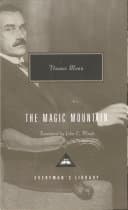
Thomas Mann (2005)
Genre
Literary Fiction / Philosophy
Reading Time
1800 min
Key Themes
See below
Sign in to track this book
In a Swiss Alps sanatorium, a young engineer's quest for health becomes a philosophical journey, reflecting Europe's pre-war introspection.
Hans Castorp, a young marine engineer from Hamburg, travels to the Berghof sanatorium in Davos, Switzerland. He plans a three-week visit to his cousin, Joachim Ziemßen, who is being treated for pulmonary tuberculosis. Hans is immediately struck by the strange, dreamlike atmosphere of the sanatorium, its strict routines, and the peculiar behavior of its long-term residents. He sees the contrast between the healthy world he left and the fascinating 'half-life' within Berghof's walls, where time flows differently and illness controls existence. He quickly meets the eccentric residents and staff, including the chief physician, Hofrat Behrens, and the intellectual, Ludovico Settembrini.
Soon after arriving, Hans Castorp becomes friends with Ludovico Settembrini, an Italian humanist and Freemason. Settembrini, a supporter of reason, progress, and democratic ideals, tries to 'educate' Hans. He warns Hans against the morbid appeal of the sanatorium and its inhabitants, especially the seductive Russian patient, Clavdia Chauchat. Settembrini sees Berghof as a place of intellectual stagnation and disease, a symbol of Europe's decline. He tries to guide Hans toward an active, healthy life, engaging him in long philosophical debates that introduce Hans to a broader intellectual world than his sheltered upbringing allowed. These early conversations begin Hans's intellectual awakening.
Despite Settembrini's warnings, Hans Castorp finds himself drawn to Berghof's charm and its patients' lives. He develops an intense, almost obsessive, platonic interest in the enigmatic Russian patient, Clavdia Chauchat. Her slanting eyes and casual manner remind him of a childhood crush. He watches her constantly, projecting his desires onto her. The daily routines of rest cures, meals, and social interactions, combined with talks about illness and death, begin to distort his perception of time and reality. His initial three-week visit extends as he starts to experience minor, then more noticeable, symptoms of illness himself, eventually leading to his own tuberculosis diagnosis.
Hofrat Behrens, the chief physician, examines Hans Castorp. To Hans's surprise and secret satisfaction, Behrens finds a 'moist spot' in his lung, diagnosing him with tuberculosis. This diagnosis gives Hans a legitimate reason to extend his stay at Berghof, changing him from a visitor to a patient. The news, while medically serious, also gives him a sense of belonging and confirms his growing attachment to the sanatorium's unique world. He fully adopts the patient's routine, participating in daily temperature checks, rest cures, and the shared experiences of illness. This marks a turning point, as Hans fully commits to the 'magic mountain' and its isolated existence, much to Settembrini's dismay.
The intellectual environment of Berghof becomes more complex with the arrival of Leo Naphta, a brilliant but fanatical Jewish Jesuit. Naphta, a supporter of totalitarianism, mysticism, and the spiritual over the material, quickly becomes Settembrini's ideological rival. Their intense, often harsh debates on politics, religion, art, and philosophy become central to Hans's intellectual development. Hans finds himself caught between Settembrini's humanistic rationalism and Naphta's radical, anti-Enlightenment views, absorbing both perspectives without fully committing to either. These debates expose Hans to the full range of European intellectual thought, reflecting the ideological conflicts in the wider world.
After a long period of flirtation and unspoken desire, Hans Castorp finally tells Clavdia Chauchat he loves her during a Mardi Gras celebration. Their brief, passionate encounter ends with Clavdia's departure from Berghof, leaving Hans longing for her. Hans continues his sanatorium life, engaging in his studies and philosophical debates. Years later, Clavdia returns to Berghof with a new lover, Mynheer Peeperkorn, a wealthy and charismatic Dutch planter. Peeperkorn's magnetic personality and large presence impress Hans, and even temporarily silence the usually talkative Settembrini and Naphta. This highlights the power of pure life force over intellectualism.
Mynheer Peeperkorn, Clavdia Chauchat's new companion, is a larger-than-life figure who commands attention through his presence and will, despite his often broken speech. He hosts lavish parties and engages the Berghof community with his powerful, though sometimes confusing, statements. Hans Castorp is impressed by Peeperkorn's vitality and his ability to experience life with such intensity. Hans sees him as a contrast to the intellectual posturing of Settembrini and Naphta. However, Peeperkorn, frustrated by his diminishing virility and the limitations of aging, commits suicide by poisoning himself. His death leaves a mark on Hans, forcing him to confront life's fragility and the nature of human suffering.
Joachim Ziemßen, Hans Castorp's cousin, represents duty and discipline. Driven by his desire to rejoin the military, Joachim initially leaves Berghof against medical advice, believing he is cured. He tries to re-enter the 'flatland' world, but his health quickly worsens, forcing him to return to the sanatorium. His second stay is marked by a rapid decline. Despite his stoic resolve, he eventually dies from his illness. Joachim's death affects Hans deeply, reminding him of the futility of fighting the disease and the constant presence of death within the 'magic mountain.' His passing reinforces the sanatorium's role as a place where life and death are intertwined.
As years pass, the intellectual sparring between Ludovico Settembrini and Leo Naphta becomes more bitter and personal. Their debates, initially stimulating, turn into hostile confrontations, reflecting the escalating political and ideological tensions in Europe. Hans Castorp, having learned much from both, observes their growing animosity with fascination and unease. Their rivalry culminates when Naphta, in despair and ideological fervor, challenges Settembrini to a duel. Settembrini, a humanist who opposes violence, fires into the air. Naphta, however, shoots himself in the head, ending their intellectual battle violently and tragically. This leaves Hans shaken by the destructive power of radical thought.
During a terrifying blizzard, Hans Castorp gets lost in the mountains. Exhausted and near death from exposure, he experiences a hallucinatory vision. He sees a beautiful, idyllic scene of humanity, followed by a gruesome ritual sacrifice. This vision affects him deeply, leading to a momentary realization about the duality of life and death, beauty and horror. He recognizes the need for both light and darkness, and the importance of choosing love and humanity in the face of suffering and nihilism. This experience, though brief, represents a peak of his spiritual and intellectual journey, offering a glimpse of a potential synthesis beyond the extremes of Settembrini and Naphta.
After seven years on the 'magic mountain,' the tranquility and isolation of Berghof are shattered by the outbreak of World War I. The conflict, which had been in the background of philosophical debates, finally erupts, bringing the outside world's chaos into the sanatorium. The international community of patients disperses, and Berghof itself begins to empty. Hans Castorp, like many others, is swept up by nationalistic fervor and the call to arms. He is seen marching off to war, a rifle on his shoulder, his fate uncertain. His departure marks the end of his long stay in the timeless world of the sanatorium and his forced return to the brutal reality of historical events, leaving his ultimate destiny unresolved.
The Protagonist
Hans transforms from a naive visitor into a deeply contemplative individual, exposed to the full spectrum of European thought and human experience, culminating in a profound, if temporary, philosophical synthesis before being swept into war.
The Supporting
Settembrini remains steadfast in his humanistic ideals, serving as a consistent, though ultimately limited, voice of reason against the sanatorium's allure and Naphta's radicalism.
The Supporting
Joachim struggles valiantly against his illness and the sanatorium's pull, briefly returning to the 'flatland' before succumbing to his disease, highlighting the tragic power of fate.
The Supporting
Clavdia serves as a catalyst for Hans's emotional and sexual awakening, her presence and absence driving much of his personal development and understanding of love.
The Supporting
Naphta intensifies his radical ideological stance, ultimately demonstrating the destructive power of his beliefs through his own violent end.
The Supporting
Behrens remains a constant, pragmatic figure overseeing the sanatorium, embodying the medical authority and a certain detached acceptance of the patients' fate.
The Supporting
Peeperkorn arrives as a powerful embodiment of life force and experience, but his decline and suicide underscore the tragic limitations of human vitality.
The Mentioned
Kleefeld remains a static background character, her distinctive laugh a recurring detail in Hans's observations of sanatorium life.
The novel explores how illness distorts and stretches the perception of time. Within the Berghof sanatorium, time loses its conventional meaning, becoming a 'magic' or 'timeless' realm where days blend into weeks and years. Patients live by the rhythm of their illness, their temperature charts, and prescribed rest cures. This altered time allows for deep introspection and intellectual growth, but also creates stagnation and detachment from the 'flatland' world. Hans Castorp's seven-year stay, initially planned for three weeks, shows this distortion. His identity becomes tied to the sanatorium's unique chronology. The constant presence of illness and death creates a heightened awareness of life's fragility, yet also a sense of removed contemplation.
“For as a matter of fact, time is the medium of narration, as it is the medium of life. And as we are living, our life is time, so we say, and we know no other definition of it.”
Mann builds the novel around dualities and conflicts. The most prominent is the intellectual battle between Ludovico Settembrini (representing reason, progress, humanism, the 'flatland') and Leo Naphta (representing mysticism, totalitarianism, the spiritual, the 'magic mountain'). Hans Castorp constantly encounters these opposing viewpoints, embodying the struggle to combine or choose between them. Other dualities include illness vs. health, life vs. death, spirit vs. flesh (Clavdia Chauchat), active vs. contemplative life, and the individual vs. society. The novel suggests that truth often lies in the tension between these poles, and that human experience is richer when grappling with them, as seen in Hans's vision in the snow.
“For the sake of goodness and love, man shall allow death to have no sovereignty over his thoughts.”
The Berghof sanatorium is a microcosm of pre-World War I European society. It reflects the intellectual ferment, moral ambiguities, and impending collapse of the time. The diverse international patients, engaging in endless philosophical debates and living a life of leisure and self-absorption, mirror the intellectual and political climate of a continent on the brink of catastrophe. The arguments between Settembrini and Naphta, covering liberalism, conservatism, humanism, and radicalism, directly foreshadow the ideological conflicts that would lead to war. The sanatorium's isolation and its inhabitants' detachment from practical life symbolize Europe's own insularity and its inability to confront its underlying societal 'illnesses,' ultimately leading to its violent awakening with the outbreak of war.
“For what is a man without a country? He is nothing, a mere abstraction, a ghost.”
Hans Castorp's seven-year stay at Berghof is a journey of self-discovery and intellectual awakening. Initially a blank slate, he is shaped by his environment and the powerful personalities around him. Through long exposure to illness, death, love, and philosophical debates, Hans gradually sheds his naive identity. He learns about the human condition, the nature of good and evil, and the complexities of existence. His interest in Clavdia Chauchat, his cousin's death, and the intellectual sparring of Settembrini and Naphta all contribute to his inner change. While his ultimate fate is left open, his time on the 'magic mountain' deeply alters his understanding of himself and the world.
“A man lives not only his personal life, as an individual, but also, consciously or unconsciously, the life of his epoch and his contemporaries.”
Berghof serves as a self-contained world reflecting broader societal trends.
The Berghof sanatorium is not merely a setting but a crucial plot device that functions as a microcosm of pre-World War I European society. Its isolated nature allows Mann to gather a diverse international cast of characters, each representing different nations, ideologies, and societal ills. The contained environment intensifies their interactions and philosophical debates, making them stand in for larger European conflicts and intellectual currents. The 'illness' within the sanatorium can be seen as a metaphor for the 'sickness' of Europe, allowing Mann to explore themes of decadence, intellectualism, and the impending collapse of an era without directly depicting the 'flatland' world until the very end.
A novel deeply concerned with the concept of time and its philosophical implications.
The Magic Mountain is a 'Zeitroman,' a novel that directly engages with the concept of time. The distorted perception of time within Berghof, where years pass with an unsettling fluidity, is a central element. This device allows Mann to explore the philosophical and psychological effects of prolonged isolation and illness on human consciousness. It emphasizes how time can be subjective, elastic, and profoundly influential on identity and worldview. The narrative's slow, contemplative pace mirrors this altered temporality, inviting the reader to experience time as Hans Castorp does, detached from the urgency of external events.
Extended discussions between characters that drive intellectual and thematic exploration.
The prolonged philosophical debates, primarily between Ludovico Settembrini and Leo Naphta (with Hans Castorp as the receptive listener), are a key plot device. These discussions are not mere digressions but are integral to the novel's structure and thematic development. They serve to present the major ideological conflicts of the early 20th century – humanism vs. mysticism, liberalism vs. totalitarianism, reason vs. irrationality – in a highly intellectualized form. These debates educate Hans, shape his worldview, and allow Mann to explore complex ideas directly, making the novel as much a work of philosophy as it is a narrative.
Recurring words, phrases, or symbols that deepen meaning and create cohesion.
Mann employs numerous leitmotifs throughout the novel to create thematic depth and structural cohesion. Examples include Clavdia Chauchat's 'Kirghiz eyes,' Hans Castorp's 'moist spot' in his lung, the recurring phrase 'a long, long time,' and the symbolism of the snow and mountains. These recurring elements act as mnemonic devices, reminding the reader of previous events or ideas, and subtly reinforcing the novel's core themes. They also contribute to the dreamlike, cyclical nature of time within the sanatorium, blurring the lines between past and present and emphasizing the enduring nature of certain ideas and observations.
“For what is freedom? The ability to choose good and evil. But what is good? What is evil? And what is man?”
— Hans Castorp's internal musings on the nature of morality and humanity.
“Time has no divisions to mark its passage, there is never a thunder-storm or blare of trumpets to announce the beginning of a new month or year. Even when a new century begins it is only we mortals who ring bells and fire off pistols.”
— A reflection on the subjective and human-imposed nature of time.
“Man lives not only his personal life, as an individual, but also, consciously or unconsciously, the life of his epoch and his contemporaries.”
— Observing how individuals are shaped by their historical and social environment.
“For the sake of goodness and love, man shall not suffer to be led into temptation.”
— A moral assertion, perhaps with a touch of irony given the setting.
“A man's dying is more the survivor's affair than his own.”
— Considering the impact of death on those left behind.
“Only the sick man is truly free. The healthy man is a slave to his health.”
— A provocative statement from Settembrini, challenging conventional notions of freedom and health.
“Order and form are the beginning of all things, and disorder and chaos their end.”
— A philosophical observation on the fundamental principles of existence.
“Sleep is good, death is better; but of course, to have never been born is best of all.”
— A darkly humorous, nihilistic musing, reflecting some of the characters' world-weariness.
“Disease is a kind of spiritualization. It purifies, it refines, it elevates.”
— Peeperkorn's unusual perspective on the transformative power of illness.
“The greatest enemy of any good is the desire for the better.”
— A pragmatic view on contentment versus perpetual striving.
“For it is love, not reason, that is stronger than death.”
— Hans Castorp's realization about the enduring power of love.
“What is life? A dream within a dream.”
— A classic philosophical question about the nature of reality and consciousness.
“Humanity must be educated to the point where it recognizes that the only reality is the subjective reality.”
— A statement reflecting a highly subjective and individualistic worldview.
“There are two roads to life: a direct one, and a roundabout one.”
— A metaphorical reflection on different paths and approaches to living.
Ready to see how well you understood this book? Take our interactive quiz with 10 questions.
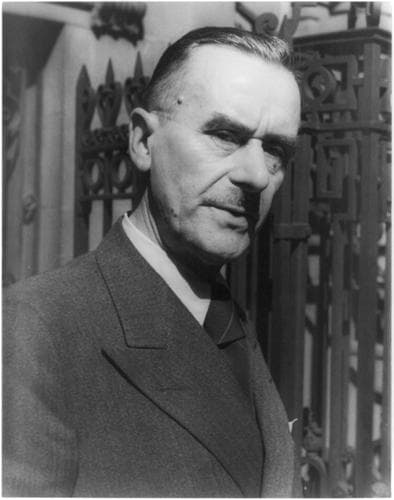
Paul Thomas Mann was a German novelist, short story writer, social critic, philanthropist, essayist, and the 1929 Nobel Prize in Literature laureate. His highly symbolic and ironic epic novels and novellas are noted for their insight into the psychology of the artist and the intellectual. His analysis and critique of the European and German soul used modernized versions of German and Biblical stories, as well as the ideas of Johann Wolfgang von Goethe, Friedrich Nietzsche, and Arthur Schopenhauer.