“He was a widower with a, to him, grown-up daughter he had to support, and if he had a son he would have been a rabbi.”
— About Leo Finkle, a rabbinical student.


Bernard Malamud (2017)
Genre
Literary Fiction
Reading Time
240 min
Key Themes
See below
Sign in to track this book
In post-war Jewish New York, Bernard Malamud turns the daily struggles of lonely matchmakers, desperate shopkeepers, and grieving tailors into a strange, beautiful story of human endurance and the search for grace.
Leo Finkle, a celibate rabbinical student, believes marriage will help him get a good synagogue. He hires Pinye Salzman, a disheveled, mysterious matchmaker. Salzman shows Leo various women, but Leo finds them unappealing, often for minor reasons. He grows frustrated with Salzman's methods and evasiveness. When Salzman accidentally drops a photo of his daughter, Stella, Leo is drawn to her image, which shows beauty and sadness. Despite Salzman's reluctance and warnings about Stella's past, Leo feels a strong pull toward her, seeing in her a reflection of his own spiritual longing and a possible way to a deeper understanding of love and suffering.
Feld, a Jewish shoemaker, wants a better life for his daughter, Miriam. He admires Max, a diligent, educated young man who works in a shoe store and studies law. Feld tries to set Max up with Miriam, believing Max's education and ambition will raise her status. Miriam, however, prefers books and intellectual pursuits over Max's conventional goals. She finds Max boring, preferring Sobel, Feld's uneducated but devoted Polish-Jewish assistant. Sobel, secretly in love with Miriam, endures Feld's harsh treatment for seven years, driven by his silent passion. When Miriam rejects Max, Feld learns of Sobel's long-standing affection and Miriam's feelings for him, forcing Feld to accept their unconventional bond.
Arthur Fidelman, an American Jewish artist and self-proclaimed 'critic of art,' arrives in Rome to write a study of Giotto. He is soon approached by Shimon Susskind, a poor, elderly Jewish refugee who claims to be a scholar but constantly begs for food, money, and clothes. Susskind becomes a persistent, intrusive presence in Fidelman's life, disrupting his work. Despite Fidelman's attempts to get rid of him, Susskind always reappears, often stealing items, including Fidelman's only suit and, most importantly, his Giotto essay manuscript. Fidelman chases Susskind through Rome, eventually confronting him, only to find Susskind has destroyed the manuscript, calling it 'full of lies.' This encounter makes Fidelman question his artistic goals and his own Jewish identity.
Rubin, a middle-aged, unhappily married man, feels stuck in his monotonous life and loveless marriage. On a business trip, he meets Bessie, a lively, uninhibited woman. He is immediately drawn to her energy and how different she is from his own restricted life. Bessie, a dancer or performer, embodies a freedom and sensuality Rubin desperately wants. They spend an evening together, sharing a meal and intimate conversation, during which Rubin expresses his loneliness and regret. The encounter is brief but deeply impactful, offering Rubin a glimpse of an alternative life and a connection he rarely experiences. Though it leads to no lasting change, the memory of Bessie gives him a fragile hope and a new awareness of his own desires.
Liev, a census taker, tells the haunting story of David Rosen, a Jewish refugee who came to America after losing his family in the Holocaust. Rosen opens a small dry goods store, but his business fails, and his wife, Eva, leaves him. Distraught and poor, Rosen struggles to care for his two young daughters. Liev, tasked with documenting Rosen's life, offers him money and emotional support, but Rosen, consumed by despair and pride, refuses help. As Rosen's mental state worsens, he becomes increasingly paranoid. Liev, despite his efforts, feels unable to stop Rosen's descent into madness. The story is Liev's confession to a mysterious 'Dr. Morris,' as he grapples with the guilt of witnessing such suffering.
Mendel Bok, a poor, elderly man, grieves deeply after his wife, Lena, dies. He is upset that he cannot afford a proper tombstone for her grave, feeling it is a final act of love and respect he owes her. He asks his old friend, Lieb, a wealthy and stingy furniture store owner, for a loan of three hundred dollars. Lieb, despite his wealth, is reluctant to lend money, citing past debts and his own financial worries. The two men have a tense, long negotiation, full of veiled accusations, emotional manipulation, and a deep sense of their shared past. Bok’s desperation clashes with Lieb’s stinginess, showing the damaging power of poverty and the complexities of friendship when money is involved.
Mendel, an elderly and ailing man, desperately needs to buy a train ticket for his simple-minded adult son, Isaac, to travel to California, where Isaac's uncle can care for him. Mendel knows his own death is near and fears for Isaac's future. He tries to borrow money from a wealthy, cold relative but is repeatedly turned down. Throughout the night, Mendel is pursued by a mysterious, threatening figure named Ginzburg, who represents Death. Mendel, with failing strength, races against Ginzburg, trying to gather the remaining funds. In a struggle at the train station, Mendel manages to give Isaac the ticket and a small amount of money just as Ginzburg claims him, ensuring Isaac's departure and a chance at survival.
George Stoyonovich, a nineteen-year-old living in a poor, hot New York neighborhood, is unemployed and lacks ambition. Feeling pressure from his neighbors, he tells them he plans to spend the summer reading one hundred classic books to improve himself. His neighbors, especially Mr. Cattanzara, a former librarian, admire his supposed intellectual pursuit. However, George spends his days doing nothing, rarely opening a book. As summer goes on, his lie becomes harder to keep up. Mr. Cattanzara, aware of George's deception, confronts him subtly but firmly, expressing disappointment. Ashamed, George finally buys a stack of used books and retreats into his room, but the story ends ambiguously, suggesting his gesture is more about appearances than real self-improvement, leaving his future uncertain.
Willy Schickel, a small, independent grocer, struggles to keep his business open in a changing neighborhood. He is a kind but ineffective man, burdened by debt and a lack of customers. His hypochondriac wife adds to his worries. Willy tries various plans to attract business, including giving credit to customers who rarely pay, but his efforts fail. He becomes increasingly isolated and desperate, unable to pay suppliers or his doctor's bill. The story ends with his death from a heart attack, blamed on his inability to pay for adequate medical care. His death shows the harsh realities of poverty and the impersonal nature of society, where a man's life can be reduced to his unpaid bills.
Manischevitz, an elderly Jewish tailor, suffers greatly: his wife, Fanny, is very ill; his business is failing; and he has lost his faith in God. One night, a black man named Alexander Levine appears, claiming to be a Jewish angel sent to help him. Manischevitz, a traditionalist, struggles to accept a black man as an angel, questioning his authenticity and the nature of divine intervention. Levine, despite his angelic status, is clumsy, human-like, and faces his own problems. He eventually loses his wings and falls into disrepute. Manischevitz, initially skeptical and dismissive, eventually seeks out Levine in Harlem, finding him in despair. By showing compassion and believing in Levine, Manischevitz helps the angel regain his wings and, in doing so, restores his own faith and his wife's health.
Cassirer, a German-Jewish refugee, is stuck in bureaucratic limbo in Italy, trying to get a visa to America. He faces endless paperwork, unhelpful officials, and lingering anti-Semitism. He carries a metaphorical 'key' – a symbol of his hope for a new life – but finds every door closed. He meets other refugees, each with stories of loss, and struggles with powerlessness. The process is dehumanizing, taking away his dignity and identity. Despite the huge obstacles, Cassirer holds onto the hope of emigration, representing the universal longing for a safe place and a fresh start after deep trauma.
Kessler, an elderly, poor Jewish man, lives in a squalid rooming house. He mourns his own life, constantly grieving his past and perceived injustices. His landlord, Gruber, a gruff, unsympathetic man, wants to evict Kessler due to his age, perceived messiness, and general air of sadness. Kessler refuses to leave, seeing his room as his last refuge. A silent, intense battle of wills happens between the two men. Kessler's constant, ritualistic mourning and his refusal to conform challenge Gruber's authority and his desire for order. The story ends with a surprising act of empathy from Gruber.
The Protagonist
Leo evolves from a spiritually detached, calculating individual to someone capable of profound empathy and a more authentic, less intellectualized understanding of love and faith.
The Supporting
Salzman remains largely static, serving as a catalyst for Leo's transformation, but his actions reveal a hidden depth of paternal love and sorrow.
The Protagonist
Feld reluctantly learns to accept his daughter's unconventional choices and the true nature of love, moving beyond his class-based judgments.
The Supporting
Sobel's unwavering devotion is eventually rewarded, solidifying his role as a patient and true lover.
The Protagonist
Fidelman is stripped of his intellectual pretensions and forced to confront the deeper, more human aspects of his identity and artistry.
The Antagonist/Catalyst
Susskind remains an enigmatic force, a constant, unsettling presence that catalyses Fidelman's transformation.
The Protagonist
Mendel achieves his final, selfless goal, sacrificing himself to ensure his son's future, thus finding peace in his last moments.
The Protagonist
Manischevitz moves from a state of profound despair and lost faith to one of renewed hope and compassion, accepting the unconventional nature of divine intervention.
The Supporting
Levine's fall and redemption are intertwined with Manischevitz's renewed faith, highlighting the reciprocal nature of help and belief.
The Protagonist
Kessler's unwavering commitment to his 'mourning' ultimately evokes an unexpected act of compassion from his antagonist, affirming his dignity.
Many characters deal with a loss of faith or a struggle to find meaning in their suffering. Leo Finkle, at first seeking a wife for practical reasons, finds a deeper, more spiritual connection through Stella's perceived suffering. Manischevitz, having lost his faith due to his wife's illness, has it restored through the unlikely appearance and redemption of Alexander Levine, a black Jewish angel. Fidelman's intellectual pursuits are shown as empty when confronted by Susskind's raw, existential problems, forcing him to re-evaluate his own Jewish identity and purpose. The stories suggest that true faith and meaning are often found not in traditional institutions or intellectualism, but in unexpected, often painful, human encounters and acts of compassion.
“He knew he was in love with Stella and all she was, in love with her suffering and with himself suffering for her.”
Malamud's characters often carry immense suffering – poverty, loss, illness, and displacement. This suffering is not just personal but often reflects the collective historical trauma of the Jewish people. However, the stories also explore the capacity for compassion, even in unexpected places. Liev, the census taker, is tormented by Rosen's tragic fate, showing the burden of witnessing another's pain. Mendel's entire existence is defined by his selfless suffering for his simple-minded son. Even Gruber, the harsh landlord, eventually shows a moment of deep empathy for Kessler's mourning. The theme suggests that human connection and moral responsibility are found in acknowledging and responding to others' suffering.
“Nobody suffers but you? Is that what you mean?”
Many stories explore the tension between old traditions and the challenges of modern life, especially for Jewish immigrants in America. Feld in 'The First Seven Years' struggles to reconcile his traditional hopes for Miriam with her modern, intellectual desires and her love for his uneducated assistant. Manischevitz's struggle to accept a black angel comes from his rigid, traditional understanding of faith. The matchmaker, Salzman, represents an ancient tradition, yet he works in a contemporary, though mysterious, urban setting. This theme highlights the difficulties of keeping cultural identity and values in a changing world, and the need for adaptation and broader understanding.
“What do you want to be a lawyer for? You got a good job. You're a shoemaker. Stay a shoemaker.”
Malamud makes the struggles of ordinary, often poor and marginalized individuals deeply significant. Characters like Willy Schickel, the struggling grocer, or Mendel Bok, desperate for a tombstone, are given dignity despite their humble lives. Kessler, the 'mourner,' asserts his right to his sorrow against an indifferent landlord. The stories celebrate the resilience, quiet heroism, and moral integrity found in those on the edges of society. Their daily struggles become epic battles against fate, poverty, and existential despair, reminding readers of the inherent worth and complexity of every human life.
“An old man is a life. He is not a scrap of paper.”
Supernatural or highly improbable elements are woven into realistic settings.
Malamud frequently introduces elements of the fantastic or miraculous into otherwise gritty, realistic urban settings. Examples include the appearance of Alexander Levine, a black Jewish angel, in 'Angel Levine,' or the personification of Death as Ginzburg in 'Idiots First.' These elements are not explained rationally but are accepted within the story's logic, serving to heighten the emotional and symbolic weight of the characters' struggles. They often represent externalizations of internal states or spiritual forces, pushing the narrative beyond mere realism to explore deeper truths about faith, suffering, and the human condition.
Narrative perspective that questions the absolute truth of events or character motivations.
Some stories employ an unreliable narrator or maintain a deliberate ambiguity about events, forcing the reader to interpret meaning. 'Take Pity' is presented as Liev's confession to an unseen 'Dr. Morris,' leaving the exact nature of his story and his guilt open to interpretation. Salzman's background and motives in 'The Magic Barrel' remain mysterious, and his 'magic barrel' of photos suggests a power beyond the mundane. This device creates a sense of unease and invites deeper engagement, suggesting that truth is often subjective and multifaceted, especially when dealing with profound human experiences like suffering and faith.
Characters' names or specific objects carry significant symbolic weight.
Malamud often uses names and objects to convey deeper meaning. 'Finkle' (meaning 'finch') suggests a small, perhaps caged, creature longing for freedom. 'Salzman' (salt man) implies wisdom, preservative qualities, or even a connection to ancient covenants. The 'magic barrel' itself symbolizes fate, hidden depths, and the unexpected sources of connection. The 'key' in 'Behold the Key' represents hope and access to a new life. These symbols enrich the narratives, adding layers of interpretation and connecting the individual stories to broader cultural, religious, and existential themes.
Contradictions and unexpected outcomes that reveal deeper truths.
Malamud frequently employs irony and paradox. Leo Finkle, a rabbinical student, finds spiritual awakening not in a 'pure' or traditional match, but in a 'fallen' woman like Stella. Fidelman, the intellectual art critic, has his manuscript destroyed by an uneducated beggar, yet this act leads him to a more authentic artistic understanding. Manischevitz's faith is restored not by a glorious, conventional angel, but by a struggling, human-like one. These ironic twists highlight the unpredictable nature of life, the often-contrarian paths to truth, and the idea that wisdom and grace can be found in the most unexpected and often messy places.
“He was a widower with a, to him, grown-up daughter he had to support, and if he had a son he would have been a rabbi.”
— About Leo Finkle, a rabbinical student.
“I can't marry a woman I don't love, Leo said. He wanted to marry, he knew, to have children, to be a man.”
— Leo Finkle's internal conflict about finding a wife.
“Love is the only thing that saves us, Leo thought. He became aware of a profound and troubling emotion that was new to him.”
— Leo's realization about love, prompted by his search for a wife.
“What do I know about love? The only love I have known is for God.”
— Leo Finkle reflecting on his lack of worldly love.
“For six years I studied in the seminary in a great loneliness. I do not understand why God has made it so difficult for me to find a wife.”
— Leo Finkle lamenting his struggle to find a partner.
“He was an old man, small and thin, with a bald head and a stubble of white beard.”
— Description of Pinye Salzman, the matchmaker.
“I am a broken man, a widower. I have no money, no connections. Only God.”
— Salzman's self-description, emphasizing his reliance on faith.
“He was a schlemiel, a fool. He had wasted his life.”
— Leo's harsh self-assessment.
“The world is full of beautiful women. But how many are good?”
— Salzman's cynical view on women.
“He felt in his soul a deep, almost inexpressible yearning to be loved, to love.”
— Leo Finkle's profound desire for connection and affection.
“He saw in her face a hunger he had known, a hunger for life, for love, for meaning.”
— Leo's recognition of shared longing in Stella, Salzman's daughter.
“Around the corner, Salzman, leaning against a lamppost, smoked a cigarette and waited.”
— The ambiguous and watchful presence of Salzman at the story's end.
“He had a feeling that he had been in a dream and was now awake, but the dream was not entirely gone.”
— Leo's state of mind after his encounter with Stella.
“To be a Jew is to be a man, and to be a man is to suffer.”
— A broader reflection on identity and suffering, echoing themes in Malamud's work.
Ready to see how well you understood this book? Take our interactive quiz with 10 questions.
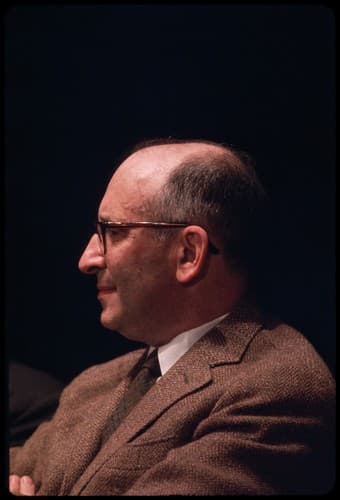
Bernard Malamud was an American novelist and short story writer. Along with Saul Bellow, Joseph Heller, Norman Mailer and Philip Roth, he was one of the best known American Jewish authors of the 20th century. His baseball novel, The Natural, was adapted into a 1984 film starring Robert Redford. His 1966 novel The Fixer, about antisemitism in the Russian Empire, won both the National Book Award and the Pulitzer Prize.







