“Every tattoo tells a story, and every story has a beginning, a middle, and an end, even if the end is just the beginning of another story.”
— Gloria's reflections on tattoos and their significance.

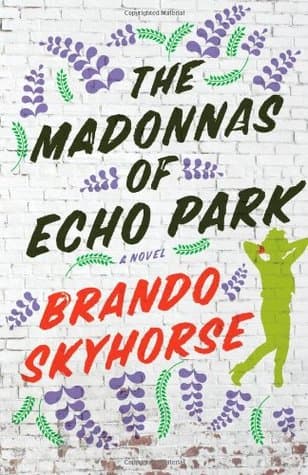
Brando Skyhorse (2010)
Genre
Literary Fiction / Historical Fiction
Reading Time
240 min
Key Themes
See below
Sign in to track this book
In Echo Park's unseen corners, a drive-by shooting affects Mexican-American housekeepers, day laborers, and dreamers, making them face who they are and their place in a land both taken and desired.
In Echo Park, Mexican-American women and girls gather to film a Madonna music video. Felicia Esperanza and her daughter, Aurora, are among them. A drive-by shooting suddenly breaks the joyful scene, injuring several people and killing Guadalupe. This event deeply affects the community and changes Felicia and Aurora's relationship. Aurora becomes quiet and questions her identity and connection to her heritage. Felicia, looking for stability and an escape from the trauma, focuses more on her work as a housekeeper in the Hollywood Hills, creating distance from her daughter.
After the shooting, Felicia Esperanza, already a housekeeper, spends more time in the Hollywood Hills, cleaning for Mrs. Caldwell, a rich but distant woman. Felicia finds an unexpected friend in Mrs. Caldwell, who, despite her wealth, feels very isolated. Their relationship, though employer-employee, becomes more personal than Felicia's strained connection with Aurora. Felicia is drawn into Mrs. Caldwell's world of quiet sadness and comfort, finding a temporary escape from her Echo Park anxieties, further widening the gap with her family.
Hector, an older Mexican day laborer, struggles to find work alongside younger men in Echo Park. He keeps his dignity despite the difficulties of being undocumented. One day, while looking for work, he sees a brutal murder. The victim is a young man known in the community. Hector faces a choice: report the crime and risk deportation due to his undocumented status, or stay silent and carry the weight of what he knows. His decision shows the uncertain life of undocumented immigrants, where justice is often a luxury they cannot afford, and silence is a way to survive.
An older, outwardly religious woman, known for gossiping and judging, waits at a bus stop on Sunset Boulevard. She is proud of her faith, often criticizing others. To her surprise, she sees the Virgin Mary at the bus stop. This event challenges her strict beliefs and makes her face her own hypocrisy. The Virgin Mary's message is not what she expects, causing her to rethink her faith and how she treats others, suggesting a path to real spiritual understanding beyond just following religious rules.
A normal bus ride through Echo Park one night turns into a violent fight. Various passengers from different backgrounds and social classes are on board. Tensions build and eventually explode as misunderstandings, biases, and egos clash. The conflict shows the wider cultural and class divisions in Los Angeles. The incident leaves several passengers injured and shaken, showing how small interactions can become disastrous when fueled by hidden societal pressures and a lack of empathy. The bus becomes a small example of the city's complex social makeup.
Years after the drive-by shooting and her separation from her mother, Aurora Esperanza explores her childhood neighborhood of Echo Park. The area has changed a lot, with new businesses and residents replacing the familiar faces and places of her youth. Aurora feels more and more disconnected from her past and her Mexican-American heritage. Her goal is to understand her history and her place in a quickly changing world, especially in 'the land that belongs to us again,' a symbolic home for Mexican Americans. She tries to connect her personal identity with the changing look of her community.
As Aurora walks through Echo Park, she sees the deep impact of gentrification. The small, family-owned businesses she remembers are gone, replaced by trendy cafes and shops for a new, wealthier group. Her childhood home might still be there, but its surroundings are unrecognizable. This change reflects her own inner struggle with identity; just as the neighborhood loses its original feel, Aurora feels her own connection to her heritage fading. She struggles to find stability in a place that no longer feels like home, showing the displacement felt by long-term residents in quickly gentrifying areas.
Through her journey, Aurora meets different people who offer parts of stories and memories, helping her put together not only the details of the drive-by shooting but also her family's history and the larger story of the Mexican-American community in Echo Park. She learns about her mother's struggles and sacrifices, and her people's strength. This exploration helps her start to make peace with her past, including her difficult relationship with Felicia. Aurora begins to understand the complexities of her heritage and the sacrifices made by previous generations, leading to a deeper sense of self and belonging.
After years of working for Mrs. Caldwell and keeping her distance from Aurora, Felicia Esperanza starts to face the results of her choices. The quiet emptiness of her life in the Hills, despite its comforts, no longer satisfies her. She realizes the emotional cost her detachment has had on Aurora and herself. Felicia starts to think about her own desire for assimilation and the compromises she made. Her eventual return, both physically and emotionally, to Echo Park and to her daughter, shows her attempt to fix their broken relationship and to reconnect with her roots, acknowledging the cost of seeking the 'American dream' at the expense of family.
Aurora's journey ends with a deeper understanding and acceptance of her Mexican-American identity. She sees the strength of her community, despite the challenges of displacement and discrimination. The phrase 'the land that once was ours,' first said by a day laborer, deeply resonates with her. It means not just a historical claim but a spiritual and cultural reclaiming of identity and belonging in a country that often tries to erase it. Aurora finds a sense of home and purpose, embracing her heritage and the ongoing fight for recognition and justice for her people in Echo Park and beyond.
The Protagonist
Aurora transforms from a confused and alienated girl into a self-aware woman who embraces her Mexican-American heritage and understands the complex history of her community.
The Supporting
Felicia initially distances herself from her heritage and daughter but eventually recognizes the emotional cost of her choices and seeks to reconnect with her family and roots.
The Supporting
Hector remains steadfast in his dignity despite his precarious situation, choosing to carry the burden of his knowledge rather than risk his livelihood and freedom.
The Supporting
Mrs. Caldwell remains largely static, serving as a catalyst for Felicia's choices and highlighting the universality of isolation across class lines.
The Mentioned
Guadalupe's death is a static event that serves as a pivotal point for the plot and other characters' development.
The Supporting
She undergoes a spiritual awakening, moving from superficial piety to a more genuine and introspective understanding of faith.
The novel explores the struggle for identity, especially for Mexican Americans in Los Angeles. Characters like Aurora deal with their heritage in a changing Echo Park, feeling caught between their cultural roots and the pressure to fit in. The phrase 'the land that once was ours' captures the desire for a reclaimed identity and a sense of belonging in a country that often sees them as outsiders. Felicia's choices to move away from Echo Park for a different life also highlight the complex negotiations of identity.
“We slipped into this country like thieves, onto the land that once was ours.”
The American Dream is a main theme, often shown with its hidden costs. Felicia's choice to work in the Hollywood Hills and distance herself from her community, while giving her financial stability, leads to emotional separation from her daughter. Hector's struggle as an undocumented day laborer, risking everything for a chance at work, shows the dream's harsh realities and the uncertainty of life for those on the edges. The novel questions if the dream is truly reachable or if it demands too great a sacrifice of identity and connection.
“They cook the meals, clean the homes, and struggle to lose their ethnic identity in the pursuit of the American dream.”
The change of Echo Park through gentrification is a strong background for the characters' personal journeys. Aurora's return to her childhood neighborhood shows a drastically changed area, with familiar places replaced by new businesses. This physical displacement reflects the emotional and cultural displacement felt by long-term residents, especially the Mexican-American community. The theme highlights how economic development can erase history and cultural identity, making people feel disconnected from their roots and their sense of home.
“Aurora goes on a journey through her gentrified childhood neighborhood in a quest to discover her own history and her place in the land that all Mexican Americans dream of, 'the land that belongs to us again.'”
The drive-by shooting is a central traumatic event that affects Aurora, Felicia, and the entire community. The characters' reactions to this and other hardships, like Hector's moral problem, show their strength. Despite violence, loss, and daily struggles, the community shows lasting spirit. The novel looks at how people cope with trauma, sometimes by distancing themselves, sometimes by trying to understand and reclaim their past, ultimately showing the strength needed to survive and thrive amidst hardship.
“In the aftermath, Aurora Esperanza grows distant from her mother, Felicia, who as a housekeeper in the Hollywood Hills establishes a unique relationship with a detached housewife.”
The stories of various characters are woven together to form a larger community portrait.
The novel employs a fragmented narrative structure, presenting the stories of different characters (Felicia, Aurora, Hector, the religious woman, etc.) in seemingly disconnected chapters. However, these individual narratives are subtly linked by their shared setting of Echo Park, the lingering effects of the drive-by shooting, and the overarching themes of identity, struggle, and community. This device allows for a multifaceted exploration of the Mexican-American experience, offering diverse perspectives that collectively paint a comprehensive portrait of the neighborhood and its inhabitants.
A recurring phrase symbolizing historical ownership, cultural heritage, and the yearning for belonging.
This phrase, introduced early by an illegal day laborer, acts as a powerful motif throughout the novel. It initially refers to the historical Mexican ownership of the land now known as Los Angeles. More broadly, it symbolizes the Mexican-American community's deep-seated connection to their heritage, their sense of displacement in their own country, and their longing for a place where their identity is recognized and valued. For Aurora, it becomes a personal quest to reclaim her own history and belonging within this contested landscape, transcending a literal interpretation to represent cultural and spiritual reclamation.
A catalytic event that initiates plot developments and character transformations.
The drive-by shooting at the novel's outset serves as a critical plot device. It is not merely an incident but a traumatic catalyst that propels much of the subsequent narrative. It directly impacts Aurora's emotional state and her relationship with Felicia, leading to their estrangement. It also highlights the fragility of life and the ever-present threat of violence in the community. The event's aftermath forces characters to make difficult choices and confront their identities, setting the stage for their individual and collective journeys throughout the story.
“Every tattoo tells a story, and every story has a beginning, a middle, and an end, even if the end is just the beginning of another story.”
— Gloria's reflections on tattoos and their significance.
“Echo Park was a place where dreams went to die, but sometimes, just sometimes, they came back to life, stitched together with new scars and old memories.”
— A general observation about the nature of Echo Park and its inhabitants.
“The past isn't dead. It's not even past. It's right here, in the lines on our faces, the scars on our bodies, the ghosts in our heads.”
— Hector's internal thoughts about the pervasive influence of history.
“You can leave Echo Park, but Echo Park never leaves you.”
— A common sentiment among characters who have moved away.
“Love was a battlefield, and in Echo Park, the battles were fought with switchblades and broken promises.”
— A character's cynical view on relationships in their neighborhood.
“Some people collect stamps, some people collect coins. We collected grudges.”
— A character describing the long-held resentments within the community.
“The city was a palimpsest, each generation writing its own story over the faded script of the last.”
— A descriptive passage about the layers of history in Los Angeles.
“There's a difference between remembering and living in the past. One keeps you human, the other keeps you a ghost.”
— A piece of advice given about dealing with past traumas.
“We were all Madonnas in our own way, carrying burdens and blessings, sometimes indistinguishable from each other.”
— Reflections on the book's title and the roles of women in the community.
“Gangs were like families, only with more rules and deadlier consequences.”
— A character's perspective on the nature of gang life.
“The silence in the house was heavy, filled with all the things left unsaid, all the apologies never made.”
— Describing the atmosphere after a family argument or unresolved conflict.
“Hope was a dangerous thing in Echo Park. It had a way of getting crushed, leaving behind sharper edges.”
— A character's cynical view on optimism in their challenging environment.
“We were all just trying to make sense of the chaos, to find a pattern in the spilled paint of our lives.”
— A general reflection on the human condition amidst life's complexities.
Ready to see how well you understood this book? Take our interactive quiz with 10 questions.

Brando Skyhorse is an enrolled member of the Muscogee (Creek) Nation and the author of the novel "The Madonnas of Echo Park." His work often explores themes of identity, family, and the Native American experience. Skyhorse is also the recipient of a Whiting Foundation Creative Nonfiction Grant.







