“The greatest truths are often hidden in plain sight, disguised as myth or legend.”
— A recurring theme explored by the protagonist, Thomas Lourds, as he deciphers ancient texts.

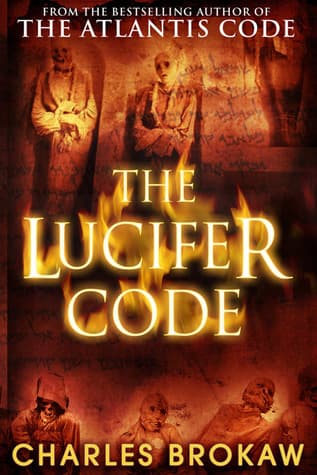
Charles Brokaw (2010)
Genre
Thriller / Fantasy / Mystery
Reading Time
736 min
Key Themes
See below
Sign in to track this book
Dr. Thomas Lourds, a linguist, must decode an ancient, apocalyptic manuscript guarded by a secret brotherhood before a shadowy organization unleashes its power.
The novel begins with a precise heist in the Vatican's secret archives. A skilled team, led by 'The Scholar,' bypasses security to steal an ancient codex—the Codex Gigas, or a hidden part of it. This codex is believed to hold a secret protected for centuries by a brotherhood. The theft alerts guardians of the secret that a prophecy might be coming true. The Scholar's reasons are unclear, but their efficiency suggests strong backing and knowledge of the codex's importance.
Dr. Thomas Lourds, a linguist and scholar of ancient languages, lives a quiet life, trying to avoid past dangers. However, his skills are needed. Father Michael, a Vatican official and old friend, asks for his urgent help with the stolen codex. Father Michael explains the seriousness of the situation, hinting at global disaster if the codex's secrets are misused. Despite wanting a normal life, Lourds's curiosity and sense of duty make him accept the challenge, knowing he is re-entering a world of old conspiracies and dangerous enemies.
As Lourds starts his research, members of the 'Guardians of the Light,' the ancient brotherhood protecting the codex, contact him. They give him incomplete information and warnings about the manuscript's power and the disaster if its hidden message is fully revealed. They warn that the codex is more than a text; it is a key to a dangerous force. Lourds, using his linguistic skills, finds inconsistencies and hidden layers in the known parts of the Codex Gigas, realizing the stolen section likely contains a highly encrypted message. He understands the language itself is a puzzle.
The Scholar, aware of Lourds's involvement and his ability to decipher the codex, starts hunting him. Lourds is constantly on the run, avoiding assassination attempts and surveillance from The Scholar's operatives. A chase through Rome shows the immediate danger he faces. He narrowly escapes capture multiple times, using his intellect and quick thinking. These encounters confirm to Lourds the extreme measures his enemies will take to get his knowledge, making him realize he is a crucial part of the puzzle, not just a translator but also bait.
Through research, Lourds discovers that the stolen section of the Codex Gigas contains 'The Lucifer Code.' This is not a direct text, but a complex series of ciphers, astronomical alignments, and theological paradoxes in the ancient script. He realizes the code points to a specific date and location, hinting at a convergence of cosmic and terrestrial events. The code suggests a way to access a destructive power, perhaps an ancient scientific or alchemical secret. The implications of this discovery are terrifying, confirming the brotherhood's fears.
Lourds, with help from the Guardians, identifies The Scholar's true allegiance: an ancient cult called the 'Serpent's Eye.' This cult believes humanity has strayed and that a cataclysmic event, triggered by The Lucifer Code, is needed to 'purify' the world. They see the code as a divine tool for global reset. Their leader, a charismatic zealot, is the mastermind behind the theft and the pursuit of Lourds. The cult has vast resources and influence, having infiltrated global institutions.
With the cult's intentions clear, Lourds and his allies—Father Michael and an agent from the Guardians—begin a race against time. The Lucifer Code requires not just translation, but the precise execution of a ritual at a specific location and time, linked to an astronomical event. Lourds must decipher the final, complex layers of the code to understand the ritual's exact details, hoping to find a way to stop it. The cult is also close to their goal, preparing for their plan. The tension grows as the date approaches.
The deciphered code leads Lourds and his team to an ancient, significant site—perhaps a temple, observatory, or geological anomaly with unique energy. This is where the Serpent's Eye plans to perform their ritual, believing it to be the point for unleashing the code's power. The site is heavily guarded by the cult's operatives, leading to intense fighting. The astronomical alignment is beginning, and the cult leader is preparing the final stages of the ritual, convinced of their success in reshaping the world. Lourds understands the scale of the cult's ambition and how close they are to succeeding.
In a confrontation, Lourds reaches the ritual's center. He does not physically fight, but uses his understanding of the code to exploit a flaw or counter-sequence in the ritual. He realizes the code has a failsafe or an 'undo' command, or that the cult misinterpreted a key element. By manipulating specific symbols, sounds, or alignments at the precise moment, Lourds disrupts the ritual's energy flow, causing it to fail. The cult leader is defeated, captured, or dies in the chaos, their plan stopped.
With the ritual disrupted, the immediate global threat is gone. The remaining members of the Serpent's Eye cult are rounded up or scattered, their organization broken. The Codex Gigas, or its critical section, is recovered and again protected by the Guardians of the Light. Lourds ensures his knowledge of the code's true nature and failsafes is documented and secured, so future attempts to use it can be stopped. Though tired, Lourds feels accomplished, but also burdened by the existence of such a dangerous secret.
Afterward, Lourds thinks about The Lucifer Code. He understands it represents not just an ancient secret, but a basic truth about power and humanity's capacity for creation and destruction. He knows that while this threat is gone, the appeal of such power will always exist, and new groups will seek it. The Guardians reaffirm their commitment to their watch, acknowledging their work is ongoing. Lourds, though wanting a normal life, knows his skills will likely be needed again, forever linked to history's shadows and dangerous secrets.
The Protagonist
Lourds initially resists involvement but ultimately embraces his role as humanity's intellectual protector, reaffirming his commitment to combating ancient evils.
The Antagonist
From a shadowy figure orchestrating a heist, The Scholar is revealed as a zealous cult leader whose grand plan ultimately crumbles due to misinterpretation.
The Supporting
Father Michael's faith is tested by the dark secrets revealed, but he emerges with a renewed commitment to his duties and protecting the world.
The Supporting
The Guardians, initially a cryptic warning, become active allies, their ancient mission reaffirmed and strengthened by the immediate threat.
The Supporting
Elena evolves from a skeptical protector to a trusting, indispensable partner for Lourds, her practical skills proving vital to their success.
The Mentioned
Their collective arc is one of initial unwavering conviction that crumbles with the failure of their leader's ultimate plan.
This theme explores the idea that some knowledge is too dangerous for humans to use, and seeking it can lead to disaster. The Lucifer Code itself shows this, as its discovery and misinterpretation threaten global destruction. The Guardians of the Light protect humanity from itself, illustrating the danger of power without wisdom. The cult's belief in using this knowledge for 'purification' highlights the arrogance and destructive potential when ancient secrets are twisted for a fanatical purpose, as seen when The Scholar thinks they can control the ritual's outcome.
“There are some doors best left unopened, some truths that humanity is not yet ready to bear.”
The novel contrasts Dr. Lourds's scientific and linguistic reasoning with the faith of characters like Father Michael and the cult's misguided faith. Lourds approaches the code as a puzzle to solve with logic, while the cult sees it as a divine command for destruction. Father Michael struggles with the code's scientific implications within his spiritual beliefs. This theme explores how different ways of understanding ancient texts and prophecies can lead to vastly different, and sometimes dangerous, results, and how both faith and reason can be corrupted or enlightened.
“To believe without understanding is a path to folly; to understand without belief is a path to despair.”
Dr. Thomas Lourds repeatedly finds himself with the responsibility of saving the world, a task he often accepts reluctantly. His language skills place him in a unique position where only he can decipher critical information. This theme explores the psychological cost of carrying such a burden, the personal sacrifices required, and the moral dilemmas faced when one's actions decide the fate of millions. The Guardians also embody this theme, having protected their secret for centuries, understanding the constant watch needed to protect humanity from itself and from those who seek ultimate power.
“The greatest gifts often come with the heaviest chains.”
The novel examines the nature of evil, showing it not just as bad intent but also as misguided zealotry and the corrupting effect of power. The Serpent's Eye cult believes they are acting for a 'greater good,' yet their methods are destructive and their vision catastrophic. This suggests evil can come from a twisted sense of righteousness. The Lucifer Code itself, while a tool, represents the potential for both creation and devastation, showing that true evil often lies in the intent of those who use such power. The story questions whether evil is an inherent force or a human idea.
“Evil is not always a monstrous face, but often a beautiful lie whispered in the ear of the desperate.”
The central object of desire and conflict, driving the entire plot.
The Lucifer Code, hidden within the stolen section of the Codex Gigas, serves as the primary MacGuffin. It is the object that everyone in the story is either trying to obtain, decipher, or protect. Its exact nature and power are initially mysterious, gradually revealed to be a complex series of ciphers and instructions for unleashing immense power. The code itself is not fully understood until Lourds deciphers it, making its 'contents' the driving force for both the antagonist's goals and the protagonist's desperate efforts to stop them. It is the catalyst for all the action and revelations.
The ambiguity and multiple interpretations of ancient texts create suspense and misdirection.
The ancient texts, prophecies, and the very structure of the Lucifer Code itself serve as a form of unreliable narrative. Their cryptic nature allows for multiple interpretations – a divine mandate for the cult, a warning for the Guardians, and a complex puzzle for Lourds. This ambiguity creates suspense and forces Lourds to constantly question his own understanding, preventing easy solutions and heightening the stakes. The cult's misinterpretation of a crucial element of the code is ultimately what allows Lourds to disrupt their plan, demonstrating how the 'text' itself can be misleading.
A fixed deadline that increases tension and urgency.
The plot is driven by a relentless ticking clock, primarily the approaching astronomical alignment and the specific date and time required for the Serpent's Eye cult to perform their ritual. This deadline creates immense urgency for Lourds and his allies, as they must decipher the code, locate the cult, and intervene before the critical moment passes. Every setback and delay amplifies the tension, making the race against time a central element of the thriller genre, pushing the characters to their limits and compressing the narrative into a high-stakes, action-packed sequence of events.
The hero possesses unique, indispensable knowledge crucial to solving the crisis.
Dr. Thomas Lourds embodies the 'expert protagonist' device. His unparalleled knowledge of ancient languages and decipherment is not merely a character trait but the singular skill essential for resolving the central conflict. Without Lourds, the Lucifer Code cannot be understood, and the cult's plan cannot be effectively countered. This device establishes him as indispensable, justifying why he is targeted by the antagonist and sought out by the allies. It elevates intellectual prowess to the level of a superpower, making his mental battles as critical as any physical confrontation.
“The greatest truths are often hidden in plain sight, disguised as myth or legend.”
— A recurring theme explored by the protagonist, Thomas Lourds, as he deciphers ancient texts.
“History is not a simple linear progression, but a tangled web of influences, some seen, many unseen.”
— Lourds' reflection on the hidden forces shaping human events and the secrets buried within history.
“Faith, even when misplaced, can move mountains. Or destroy them.”
— A contemplation on the powerful, dual nature of belief, often in the context of religious zealotry.
“The devil, my friend, is not a creature of horns and pitchforks, but an idea, a corruption that resides within the human heart.”
— A character's philosophical take on the nature of evil, moving beyond simplistic supernatural portrayals.
“Sometimes, the most profound knowledge comes not from what is written, but from what is deliberately omitted.”
— Lourds analyzing ancient texts, looking for gaps and deliberate erasures that might hide critical information.
“Power corrupts, but absolute power, especially when wielded in the name of a 'greater good,' corrupts absolutely and with terrifying justification.”
— Observation about the dangers of unchecked power, particularly when rationalized by noble intentions.
“The past is never truly dead; it echoes in our present, often demanding to be heard.”
— A recurring idea as characters uncover ancient conspiracies and their modern-day ramifications.
“For every truth revealed, a thousand more secrets remain, waiting for the right key.”
— Lourds' ongoing challenge in his quest for knowledge, understanding the vastness of what remains unknown.
“Fear is the oldest weapon, and often the most effective, for it turns us against ourselves.”
— A villain's understanding of human psychology, and how they manipulate others.
“The line between genius and madness is often blurred, especially when one dares to peer into the abyss of forbidden knowledge.”
— Reflection on the psychological toll of pursuing dangerous or unconventional truths.
“Symbols are more than mere images; they are condensed wisdom, keys to unlocking ancient understanding.”
— Lourds' approach to deciphering ancient symbols and their profound meanings.
“Even the most impenetrable fortress has a weakness, if only you know where to look, or have the patience to find it.”
— A metaphor for problem-solving, applied to deciphering codes or infiltrating secure locations.
“The greatest deceptions are not outright lies, but truths twisted, subtly altered until they serve a different master.”
— Understanding how ancient texts or historical narratives can be manipulated over time.
“Some burdens are meant to be carried alone, for their weight would crush anyone else.”
— Lourds' internal struggle and sense of isolation in his dangerous pursuit of truth.
Ready to see how well you understood this book? Take our interactive quiz with 10 questions.







