“Death is the only thing that’s not a joke.”
— Whispered by Mr. Joyboy to Dennis Barlow at the Happier Hunting Ground.

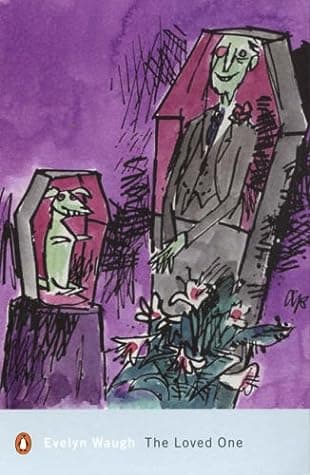
Evelyn Waugh (1948)
Genre
Literary Fiction
Reading Time
120 min
Key Themes
See below
Sign in to track this book
In the opulent, bizarre world of Whispering Glades, a British poet navigates American death, love, and embalming, revealing the commercialism beneath Hollywood's polished surface.
Dennis Barlow, a young English poet and pet mortician in Hollywood, learns his mentor, Sir Francis Hinsley, has been fired from his film studio job. Distraught, Sir Francis hangs himself. Dennis, as the only friend present, is asked by the local British community, specifically the Cricket Club, to arrange the funeral. He receives a large sum of money and instructions to ensure Sir Francis gets a dignified burial. This unexpected duty pushes Dennis into the unfamiliar world of American death rituals, starting with the opulent Whispering Glades Memorial Park.
Looking for a place for Sir Francis, Dennis visits Whispering Glades Memorial Park. He is immediately struck by its manicured grounds, themed sections like 'Slumberlake' and 'The Lake Isle of Innisfree,' and the constant artificial serenity. The park's staff present death as a luxurious, customizable experience, with various 'interment packages.' Dennis is overwhelmed by the scale and commercialism, a sharp contrast to his own reserved British feelings about death. He finds himself in a world where grief is packaged and sold, and the dead are 'loved ones' instead of simply dead.
During his visit to Whispering Glades, Dennis meets Aimée Thanatogenos, a young, impressionable cosmetician who beautifies the deceased. Aimée, whose name means 'death-born,' is naive and romantic, living in a world shaped by the park's sentimental brochures. Dennis is intrigued by her innocent yet strange job and her belief in the sanctity and artistry of her work. He begins a relationship with her, at first wanting to use her for his own ends, but soon finds himself captivated by her unique view of life and death.
Aimée is not only the focus of Dennis's attention but also the silent obsession of Mr. Joyboy, the park's senior embalmer. Mr. Joyboy is a lonely, meticulous man who sees Aimée as his ideal partner. He shows his affection in odd ways, such as bringing her a parrot as a gift and, more disturbingly, secretly visiting the body of an old woman he once embalmed perfectly. His attempts to win Aimée are clumsy and often unsettling, showing his social awkwardness and his inability to connect with her normally, viewing her through his profession.
Knowing Aimée's romantic and idealistic nature, Dennis decides to hide his identity as a pet mortician. Instead, he presents himself as a distinguished poet. He reads her poems, some his own and some copied, which she finds profound and moving. Aimée, with little understanding of true literary merit, is easily swayed by his act. This deception lets Dennis gain her admiration and affection, as she believes him to be a sensitive, artistic soul, far from the commercialism she hates but is part of.
Dennis, having spent most of the money for Sir Francis's funeral on himself and gifts for Aimée, finds himself in a difficult spot. He arranges for Sir Francis to be buried in the cheapest plot at Whispering Glades, under a tree for 'unloved ones.' When the British Cricket Club learns of this, they are angry at his disrespect and his wasting of the funds. They hold a meeting, led by Mr. Slump, to condemn Dennis's actions and demand repayment, further isolating him from his community.
Aimée, deeply in love with Dennis's poetic persona, is torn between his artistic sensitivity and Mr. Joyboy's more stable, though morbid, affection. She asks Dennis for advice, presenting her dilemma as a choice between two suitors, unaware that Dennis is one of them. She tells him she wants a 'spiritual' love, a concept she learned from sentimental literature. Dennis, while keeping his poetic act, struggles to match her romantic fantasies with his own cynical reality, finding himself more and more caught in her emotional world.
The truth about Dennis's identity and his job as a pet mortician eventually comes out. Aimée overhears a conversation or sees evidence that exposes his deception. The revelation shatters her idealized image of him. She feels deeply betrayed, her romantic dreams crumbling as she realizes the man she admired is not the sensitive poet she believed, but someone who deals with the mundane and often grotesque realities of death, even if for animals. This discovery sends her into a deep emotional crisis, making her question her judgment and the nature of love.
Devastated by Dennis's betrayal and the collapse of her romantic views, Aimée feels a deep despair. She sees her life and work at Whispering Glades as meaningless without the spiritual love she wanted. In a tragic echo of Sir Francis Hinsley's suicide, Aimée takes her own life. Her death happens within the memorial park she beautified, a final, ironic statement on the artificiality she both embraced and was destroyed by. Her death further complicates Dennis's already uncertain situation.
Upon finding Aimée's body, Mr. Joyboy, in a macabre act of possessive love, embalms her. He carefully prepares her, aiming for a perfect preservation that will allow him to keep her with him forever. This act is the ultimate sign of his twisted affection, turning Aimée from a living woman into an object of his morbid art. He dresses her in a wedding gown, further showing his delusional desire for her, treating her death as a perverse fulfillment of his romantic fantasies.
Dennis finds himself involved in Aimée's death, as her suicide note mentions his deception. Mr. Joyboy, aware of Dennis's role and wanting to avoid scandal, blackmails Dennis. He offers to keep Dennis's involvement quiet if Dennis writes a eulogy for Aimée, implying she died by suicide out of unrequited love for Mr. Joyboy. Dennis agrees, seeing it as his only way out. Having fulfilled his duty and with the Cricket Club still pursuing him for the funeral funds, Dennis gets a ticket back to England, leaving the bizarre world of Hollywood and Whispering Glades behind, but forever changed by his experiences.
The Protagonist
Dennis begins as a detached observer and manipulator, but his experiences with Aimée and the consequences of his deceptions lead him to a brief moment of genuine confusion and perhaps even regret, ultimately culminating in his escape from the moral quagmire he created.
The Supporting Character / Tragic Figure
Aimée starts as an innocent idealist, becomes deeply infatuated with a false image of love, and ultimately succumbs to despair and suicide when her illusions are shattered.
The Antagonist / Supporting Character
Mr. Joyboy remains largely static, his morbid obsession with Aimée intensifying until her death allows him to fulfill his desire for 'possession' through embalming.
The Supporting Character / Catalyst
Sir Francis's arc is complete before the main narrative, serving as a tragic example of a character unable to adapt to or tolerate the artificiality of Hollywood.
The Supporting Character
Mr. Slump remains a static character, representing unchanging British moral codes.
The Mentioned / Supporting Character
The Guru remains a static caricature, embodying the superficiality of Hollywood spirituality.
Waugh satirizes the American funeral industry's change of death into a marketable product. Whispering Glades Memorial Park is a carefully curated, artificial paradise where grief is managed, and the dead are 'loved ones' rather than simply dead. This theme appears in the elaborate 'interment packages,' the sentimental language from park staff, and the aestheticization of burial plots into themed gardens. The park focuses on selling comfort and an illusion of eternal beauty, removing death's solemnity and replacing it with consumerism. The ultimate example is Mr. Joyboy's embalming of Aimée, treating her as a final, perfect product.
“'Loved ones' was the current American euphemism for corpses.”
The novel sharply contrasts British and American ways, especially regarding death, emotion, and social manners. Dennis Barlow and the British Cricket Club show a more reserved, often cynical, and traditional European view. Whispering Glades, Aimée, and the American characters embody a more open, sentimental, and commercial approach. The British find the American obsession with packaging grief and superficial optimism confusing and distasteful. This clash is clear in Dennis's reaction to Whispering Glades, the Cricket Club's anger at his handling of Sir Francis's funeral, and Aimée's naive romanticism, which Dennis, a cynical Englishman, uses.
“The British colony in Hollywood was a small, self-contained, and highly articulate group of exiles.”
A main theme is the constant presence of illusion and the devastating effect of its breakdown. Aimée lives in a world of manufactured sentiment, believing Dennis to be a sensitive poet, a stark contrast to his true job as a pet mortician. Whispering Glades itself is an elaborate illusion, designed to hide the grim reality of death with beauty and comfort. Dennis maintains illusions about himself to reach his goals, but the eventual truth shatters Aimée's fragile world, leading to her suicide. The novel constantly questions what is real and what is just a performance or a made-up fantasy.
“He had seen the world and found it a deception.”
Waugh explores various, often twisted, forms of love and obsession. Aimée's 'love' for Dennis is based entirely on a false image, a romantic ideal from popular culture. Mr. Joyboy's affection for Aimée is a morbid, possessive obsession, ending in his embalming of her. Dennis's interest in Aimée is at first manipulative, though he has brief moments of genuine, if confused, feeling. The novel suggests that in a superficial society, true, healthy love is rare, often replaced by infatuation, delusion, or a desire for possession, making real connection impossible.
“Love, it appeared, was a thing of the spirit, a spiritual communion.”
Waugh's primary tool for criticizing Hollywood culture and the American funeral industry.
Satire is the dominant plot device, used to expose and ridicule the follies and vices of Hollywood society and the commercialization of death. Waugh employs exaggeration, irony, and caricature to highlight the absurdities of Whispering Glades Memorial Park, the superficiality of its inhabitants, and the sentimentality that masks darker realities. The names of characters like Aimée Thanatogenos ('death-born') and Mr. Joyboy (a grim irony) are satirical in themselves. The novel's tone is consistently detached and cynical, allowing the reader to observe the grotesque humor in the characters' actions and beliefs.
The audience's knowledge of the truth contrasts with the characters' illusions.
Dramatic irony is frequently used, particularly in the interactions between Dennis and Aimée. The reader is aware of Dennis's true identity as a pet mortician and his manipulative intentions, while Aimée believes him to be a sensitive, struggling poet. This creates a sense of tension and often dark humor, as Aimée confides her romantic dilemmas to the very person deceiving her. The irony underscores the theme of illusion versus reality and highlights Aimée's profound naivety, making her eventual disillusionment and suicide all the more tragic.
The memorial park symbolizes artificiality, consumerism, and the denial of death.
Whispering Glades Memorial Park is a powerful symbol throughout the novel. It represents the ultimate triumph of artificiality and consumerism over genuine human emotion and the natural process of death. Its manicured lawns, themed sections ('Slumberlake'), and euphemistic language ('loved ones') symbolize a society that sanitizes, commodifies, and ultimately denies the grim reality of mortality. The park is a gilded cage, a false paradise where everything is beautiful but nothing is real, reflecting the superficiality of Hollywood itself and the characters who inhabit it.
Characters whose contrasting traits highlight each other's qualities.
Foil characters are used to emphasize key traits. Dennis Barlow and Mr. Joyboy serve as foils in their pursuit of Aimée: Dennis is cynical and manipulative, using intellect and deception, while Joyboy is morbidly obsessive and socially awkward, expressing his 'love' through his embalming craft. Similarly, the pragmatic, traditional British expatriates act as a foil to the sentimental, superficial Americans, highlighting the cultural divide. These contrasts underscore the novel's themes of authenticity, emotional expression, and cultural differences.
“Death is the only thing that’s not a joke.”
— Whispered by Mr. Joyboy to Dennis Barlow at the Happier Hunting Ground.
“A man’s life is his own business.”
— Dennis Barlow reflecting on his situation after Sir Francis Hinsley's death.
“It is a mistake to imagine that love is a matter of words.”
— Dennis Barlow's internal thought about the nature of love as he tries to woo Aimee Thanatogenos.
“The greater the sinner, the greater the saint.”
— A phrase Dennis recalls, perhaps ironically, in relation to the deceased.
“In a world of change, the Happier Hunting Ground is a haven of peace.”
— A promotional slogan or internal thought related to the pet cemetery.
“She was a priestess of the cult of the Beautiful Dead.”
— Description of Aimee Thanatogenos and her role at the Whispering Glades Memorial Park.
“The human heart is an organ of fire.”
— A poetic thought, possibly from a poem or a character's internal monologue, about passion.
“The English have a genius for understatement.”
— A general observation, possibly by an American character, contrasting cultures.
“It was impossible to feel anything but reverence for so much expense.”
— Dennis's reaction to the lavishness of Whispering Glades.
“Life is a brief spell of light between two eternities of darkness.”
— A morbid philosophical reflection, perhaps from a character at Whispering Glades.
“They had learned to speak the language of the grave.”
— Referring to the staff at Whispering Glades and their specialized vocabulary.
“Sentimentality is the most dangerous of all human weaknesses.”
— A cynical observation, possibly by Dennis or another character.
“The Loved One was no more than a parcel of corruptible clay.”
— Dennis's stark realization about the physical remains of the deceased.
“He had come to California to bury a friend and found himself digging his own grave.”
— Dennis Barlow's internal reflection on his increasingly complicated situation.
Ready to see how well you understood this book? Take our interactive quiz with 10 questions.
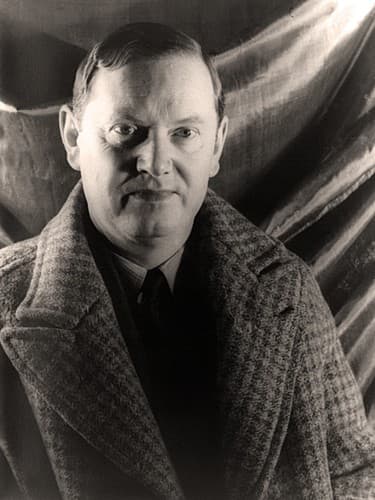
Arthur Evelyn St. John Waugh was an English writer of novels, biographies, and travel books; he was also a prolific journalist and book reviewer. His most famous works include the early satires Decline and Fall (1928) and A Handful of Dust (1934), the novel Brideshead Revisited (1945), and the Second World War trilogy Sword of Honour (1952–1961). He is recognised as one of the great prose stylists of the English language in the 20th century.







