“The thing about love, I’d learned, was that it wasn’t an emotion, it was a choice. It was a choice you made over and over again, every day, with the intention of making it forever.”
— Reflecting on the nature of love and commitment.

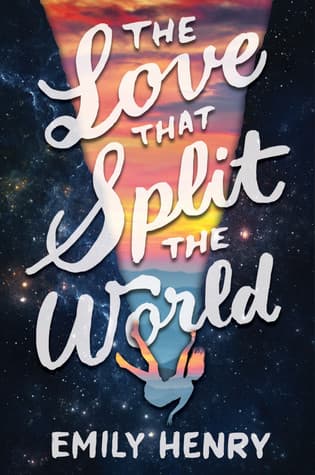
Emily Henry (2016)
Genre
Fantasy / Mystery / Science Fiction / Young Adult / Romance
Reading Time
7-8 hours
Key Themes
See below
Sign in to track this book
A Kentucky girl's last summer before college becomes a race against time to save the boy she just met from a disappearing world, forcing her to choose between the life she knows and a love that defies reality.
Natalie Cleary spends her last summer in Union, Kentucky, before college. Her best friend, Zach, is away, leaving her feeling a bit lost. One evening, she experiences her first 'shift': her green front door is briefly red, and a garden store becomes a preschool. These short, unsettling glitches grow until one night, her entire town disappears, replaced by a vast, empty landscape with buffalo. This deeply unsettles Natalie, making her question her sanity. During this time, she meets an elderly woman, whom she instinctively calls 'Grandmother,' who warns her that she has three months to 'save him,' though she doesn't say who 'he' is.
After Grandmother's warning, Natalie goes to a high school football game. There, she meets Beau, a charming and mysterious boy with striking green eyes. Their connection is instant and deep, feeling like an immediate love. Beau seems to be the only stable thing in Natalie's increasingly unstable world; when the world shifts around her, he stays constant. He appears to know more about the strange events than he admits, speaking in riddles that hint at a shared, forgotten past and a destiny they must fulfill together. Their relationship quickly deepens, becoming the anchor in Natalie's confusing reality.
Natalie keeps seeing the 'wrong things' – different versions of people, places, and events. Grandmother reappears, explaining that infinite parallel realities, or 'worlds,' exist, and Natalie can see them all at once. She reveals that these shifts are not random but happen because the 'threads' connecting these worlds are fraying, and Natalie is key to fixing them. Grandmother also suggests that Beau is deeply connected to this phenomenon and to Natalie's purpose, but she is vague, urging Natalie to trust her instincts and the love she feels for Beau.
As Natalie and Beau spend more time together, they discover they share fragmented memories of past lives and encounters across different realities. They realize their connection is not new but ancient, woven through existence. Beau explains that they are 'connectors,' people who, through their love, can stabilize the collapsing realities. He reveals that Grandmother is a version of Natalie from a future where they failed, and she is trying to guide them to a different outcome. Their task is to find a specific 'place between worlds' where they can mend the damaged threads of reality, but doing so will require a great sacrifice.
Natalie's best friend, Zach, returns to Union, adding another layer of complexity to her life. Zach notices Natalie's increasing preoccupation and the strange events, though he cannot see the shifts himself. He becomes concerned and somewhat jealous of Beau, whom he sees as a mysterious outsider. Natalie struggles to explain her situation to Zach, knowing he won't understand. Her loyalty is torn between her deep, familiar bond with Zach and the intense, fated love she shares with Beau, which feels like the most real thing in her life, despite its fantastical nature.
Grandmother takes Natalie to a hidden place, showing her the 'Loom' – a symbolic representation of the universe where all realities are woven. She explains that the Loom is overseen by a 'Loom-Keeper,' and the current one is failing, causing realities to unravel. Natalie and Beau are meant to become the new Loom-Keepers, but this requires them to 'leap' into the Loom, sacrificing their individual existence as they know it to merge with the fabric of reality. This revelation is daunting, forcing Natalie to face the immense responsibility and the ultimate cost of their love and purpose.
As the three months end, the shifts become more frequent and violent, threatening to erase Natalie's world entirely. Natalie realizes she must make a monumental choice: cling to her current life, her family, and her future, or embrace her destiny with Beau and leap into the unknown to save all realities. The decision is agonizing, as it means letting go of everything she knows. Beau reassures her, saying their love is the key, and their merging with the Loom will not be an end but a new beginning, a preservation of all the beautiful possibilities.
Knowing her time is short, Natalie spends her last days making peace with her past and present. She shares heartfelt goodbyes with her family, though she cannot explain why she is leaving. Her most difficult farewell is with Zach. She tries to convey her deep feelings for him and how much their friendship means, but she also has to accept that he will never fully understand her path. These goodbyes are sad but also filled with a sense of purpose and the deep love she carries for Beau and the worlds they are meant to save.
At the designated time and place – a location that exists 'between worlds' – Natalie and Beau prepare for their leap. The world around them is in chaos, realities threatening to collapse completely. Holding hands, they step into the void, a swirling vortex of light and possibility. Their individual consciousnesses begin to dissolve as they merge with the Loom, becoming one with the infinite threads of existence. This act is the ultimate expression of their love, not as a personal bond, but as a force that maintains the order and beauty of the multiverse, fulfilling their ancient prophecy.
After their leap, Natalie and Beau no longer exist as separate individuals in a conventional sense. They have become the Loom-Keepers, the consciousness that maintains the balance and flow of all realities. The novel ends with a sense of peace and continuity. While their personal story has ended, their love has become the very force that sustains the multiverse. They are everywhere and nowhere, a constant presence ensuring that all the 'wrong things' can coexist and that the delicate balance of existence is preserved.
The Protagonist
Natalie transforms from a typical teenager into a cosmic entity, sacrificing her individual life to become a Loom-Keeper and save all realities.
The Love Interest / Co-protagonist
Beau, already aware of their shared destiny, guides Natalie towards their ultimate sacrifice, transforming with her into a Loom-Keeper.
The Supporting / Mentor
Grandmother's arc is less about personal change and more about fulfilling her mission to guide her past self, ultimately ensuring the success of Natalie and Beau.
The Supporting
Zach remains largely unchanged, serving as a foil to Natalie's extraordinary journey and representing the life she sacrifices.
The Supporting
They serve as a static representation of Natalie's past life, remaining unaware of her true destiny.
The main theme is that love, especially the deep connection between Natalie and Beau, is not just an emotion but a basic force that can shape and sustain reality. Their love goes beyond individual lives and spans multiple dimensions, becoming the way the 'Loom' is fixed. This is clear when Grandmother explains that their love makes them 'connectors,' able to stabilize the unraveling worlds. Their final act of merging with the Loom is the ultimate expression of this theme, where their personal love transforms into a cosmic, unifying force.
““You have to understand, Natalie, that love is not just a feeling. It’s a mechanism. It’s how the universe connects things.””
The novel explores the idea of parallel realities and how our perception shapes what we believe is real. Natalie's ability to see 'wrong things' makes her, and the reader, question the stability and singularity of her world. The shifts, from minor changes like door colors to entire towns disappearing, show how fragile perceived reality is. This theme challenges the idea of a fixed truth, suggesting that countless possibilities exist at the same time, and what we experience is just one thread in a vast network. It highlights the subjective nature of existence.
““There are infinite worlds, Natalie. You’re just seeing the seams of them.””
Natalie and Beau's journey is one of deep sacrifice. They are meant to become the Loom-Keepers, a role that requires them to give up their individual lives, personal futures, and human identities. This theme explores the tension between personal desires and a greater, cosmic purpose. Natalie struggles with leaving her family, her best friend Zach, and the 'normal' life she imagined. Their choice to leap into the Loom signifies a complete surrender to their destiny, showing that true love and purpose can sometimes demand the ultimate personal cost for universal harmony.
““To save him, you have to save everything. And to save everything, you have to give up everything.””
Set during Natalie's last summer before college, the novel captures the universal experience of being on the edge of big change. This inherent bittersweetness is amplified by Natalie's extraordinary circumstances. She is not only moving from adolescence to adulthood but also from a human existence to a cosmic one. The theme explores the longing for what was and the apprehension of what is to come, mixed with the excitement of new possibilities. Her goodbyes to Zach and her family are filled with this sense of a beautiful, yet painful, letting go.
““It was the kind of summer that felt like a goodbye, even if you didn’t know what you were saying goodbye to.””
Momentary or prolonged changes in Natalie's perceived reality.
This device serves as the primary catalyst for the plot and the manifestation of the central conflict. The 'wrong things' – a red door instead of green, a preschool where a garden store should be, or an entire town disappearing – are visual and sensory cues that alert Natalie and the reader to the instability of her world. They are not hallucinations but glimpses into parallel realities, making Natalie question her sanity before she understands her unique perception. This device effectively introduces the fantasy/sci-fi elements and creates a sense of mystery and urgency.
Cryptic warnings and explanations from a mysterious, future version of Natalie.
Grandmother functions as a classic mentor figure, providing exposition and direction in a deliberately enigmatic way. Her appearances are always timely, offering just enough information to keep Natalie moving forward without revealing the entire truth too soon. Her prophecies, such as 'You have three months to save him,' create a ticking clock and a clear objective. The reveal of her true identity as Natalie's future self adds depth to the narrative and reinforces the theme of destiny and the consequences of choices.
A metaphorical representation of the multiverse and its interconnectedness.
The concept of the 'Loom' and the 'threads' of reality is a powerful metaphor that explains the mechanics of the multiverse and Natalie and Beau's role. It provides a tangible (albeit abstract) image for the complex idea of parallel dimensions and their delicate balance. The idea of fraying threads and the need for new 'Loom-Keepers' gives a clear purpose to the protagonists' sacrifice, elevating their personal love story to a cosmic scale. It grounds the fantastical elements in a comprehensible, albeit symbolic, system.
The idea that Natalie and Beau's love transcends time and multiple realities.
This plot device establishes the profound, instant connection between Natalie and Beau as something more than mere attraction. It suggests their love is preordained and essential to the cosmic order, not just a personal romance. Flashbacks or fragmented memories of their past lives together across different realities reinforce this, giving their relationship a mythic quality. This device justifies their ultimate sacrifice, as their bond is presented as a fundamental force necessary for the survival of the multiverse.
“The thing about love, I’d learned, was that it wasn’t an emotion, it was a choice. It was a choice you made over and over again, every day, with the intention of making it forever.”
— Reflecting on the nature of love and commitment.
“Maybe the universe wasn't trying to tell me something. Maybe the universe was just being the universe.”
— Considering the mysterious events happening around her.
“You can’t just stop loving someone. You can’t just turn it off. It’s not a light switch.”
— Struggling with her feelings for someone she can't easily forget.
“It’s funny how you can live your whole life thinking you know who you are, and then one day, you wake up and realize you don’t know anything at all.”
— As her perception of reality begins to shift dramatically.
“Every choice you make creates a new reality. A new path. And you never know which one is the right one until you’re already on it.”
— Grappling with the consequences of her decisions and the branching possibilities.
“Sometimes the most extraordinary things happen in the most ordinary places.”
— Observing the blend of magic and mundane in her life.
“We’re all just trying to make sense of a world that doesn’t always make sense.”
— A universal sentiment about the human condition amidst confusion.
“Maybe the point isn’t to understand everything, but to just… be. To experience it.”
— Finding acceptance in the inexplicable nature of her experiences.
“He looked at me like I was the only thing he’d ever wanted to see.”
— A romantic observation about a significant gaze.
“The future isn’t a straight line. It’s a million different paths, all tangled up together.”
— Considering the complex and interwoven nature of time and destiny.
“Fear is a funny thing. It can paralyze you, or it can make you stronger than you ever thought possible.”
— Reflecting on facing daunting challenges and personal growth.
“Sometimes, the only way to find yourself is to get a little lost.”
— Embracing disorientation as a path to self-discovery.
“What if every choice we make creates a different version of us, living a different life?”
— Pondering the multiverse theory and alternate realities.
“It was the kind of kiss that made you forget everything except the kiss itself.”
— Describing an intensely passionate and immersive romantic moment.
Ready to see how well you understood this book? Take our interactive quiz with 10 questions.

Biography coming soon.







