“Georgie didn't know what a mother was, but he knew what a witch was, and he knew that his mother was a witch.”
— Introducing Georgie's perception of his abusive mother.

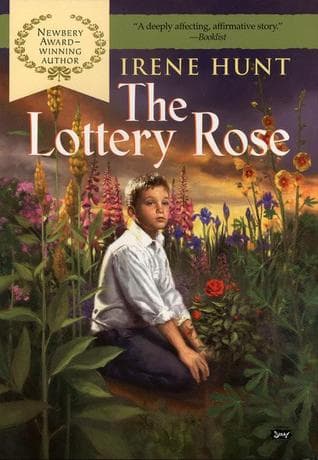
Irene Hunt (1976)
Genre
Children's / Young Adult
Reading Time
240 min
Key Themes
See below
Sign in to track this book
An abused young boy, escaping into a secret world of rose gardens, learns to give and receive love when a small rosebush and a new home help him blossom.
Georgie Burgess, a seven-year-old boy, lives in a dirty apartment with his alcoholic mother, Rennie, and her abusive boyfriend, Steve. He finds comfort in a library book with pictures of beautiful roses and dreams of his own garden. One evening, after Steve beats Rennie and then Georgie, the boy grabs a kitchen knife and stabs Steve in the shoulder. Terrified, Georgie runs away from his dangerous home.
After running away, Georgie walks the streets, hungry and alone. He finds a small grocery store holding a lottery. With sudden hope, he enters and wins the grand prize: a small, thorny rosebush. This plant becomes very important to Georgie, a real symbol of beauty and a secret world he can care for. He holds it tightly, determined to protect it, even as he faces homelessness and fear.
Authorities eventually find Georgie. After the incident with Steve comes out, the courts remove him from his mother's care. He is sent to a home for troubled boys run by Sister Mary Angela in rural Florida. Though initially scared, Georgie brings his cherished rosebush, seeing it as his only connection to something beautiful and his secret hope. The move is a forced but necessary new chapter, away from the immediate danger of his past.
At the home, Georgie remains guarded. He is quiet, suspicious, and struggles to connect with the other boys, especially the loud and sometimes cruel Robin. He holds onto his rosebush, finding comfort in it. Sister Mary Angela and the other nuns try to make him feel welcome, but Georgie's past trauma makes him wary of kindness. He finds the structure and communal living difficult, often retreating into himself to protect his fragile inner world.
Sister Mary Angela sees Georgie's love for plants and assigns him to care for a neglected rose garden on the property. The garden belongs to an elderly, reclusive woman named Mrs. Harper. Mrs. Harper, though stern at first, watches Georgie's careful work with growing interest. Georgie pours all his bottled-up love and care into the garden, especially his lottery rose, slowly turning the desolate space into a blooming haven. This shared love for roses begins to create a connection between the boy and the old woman.
As Georgie works in the garden, a bond slowly forms between him and Mrs. Harper. He learns she is a widow and her son, Walter, died many years ago as a young boy. Mrs. Harper's grief made her withdrawn and bitter. The garden, once a source of joy for her and Walter, became a painful reminder, which is why she let it fall apart. Georgie's innocent dedication to the roses begins to soften her heart, bringing back memories and emotions she had long hidden.
Despite Georgie's progress in the garden and with Mrs. Harper, he still struggles with the other boys, especially Robin, who is jealous of the attention Georgie receives and his special connection to Mrs. Harper. Robin often teases Georgie, calling him a 'baby' and trying to provoke him. Georgie's suppressed anger and fear from his past abuse often make him react violently or retreat, confirming Robin's view of him as weak. This bullying triggers Georgie's deep trauma, making it hard for him to trust and open up.
One day, Georgie finds Mrs. Harper crying in the garden, overwhelmed by memories of Walter. Instead of retreating, Georgie, for the first time, offers real comfort. He sits with her, sharing his own unspoken pain and understanding her grief. This moment changes their relationship. Mrs. Harper sees beyond Georgie's rough exterior to the sensitive and empathetic boy within. It also marks a big step in Georgie's ability to express his emotions, rather than hiding them.
Overcome by his secret, Georgie finally tells Mrs. Harper and Sister Mary Angela about stabbing Steve and running away. He fears he is a 'bad' boy and will never be truly loved. Both women listen with kindness, assuring him his actions were a desperate act to protect himself and that he is not defined by his past. This confession is a release for Georgie, allowing him to begin processing his trauma and accept their unconditional love and forgiveness.
Empowered by the love and acceptance he has received, Georgie finally confronts Robin, who has been teasing him. Instead of reacting with violence or withdrawal, Georgie calmly and firmly stands his ground, surprising both Robin and himself. This assertiveness calms the situation. Later, Georgie discovers Robin's own hidden vulnerability — a fear of being unloved. This shared moment of understanding begins to bridge the gap between them, hinting at a possible friendship.
As Georgie continues to thrive in the garden and at the home, Mrs. Harper realizes how much she cares for him. She sees in him the spirit of her lost son, Walter, and a chance to heal her own heart. She makes a decision: she asks Georgie to live with her permanently, to be her son. This offer of adoption gives Georgie the stable, loving family he has always wanted, a true home where he is cherished and safe. It is the end of his journey towards finding love and belonging.
Georgie accepts Mrs. Harper's offer, and his life blossoms. He continues to care for the rose garden, now not just his refuge but a shared space of joy and memory. His relationship with Robin also improves, becoming a tentative friendship. Georgie has found not only a home but also a sense of self-worth and belonging. The lottery rose, once a solitary symbol of hope, now thrives in a garden full of life, reflecting Georgie's own growth and the love he has learned to give and receive.
The Protagonist
From a fearful, abused boy who lashes out, Georgie transforms into a loving, empathetic child capable of giving and receiving affection, ultimately finding a true family.
The Supporting/Adoptive Mother
From a bitter, isolated widow, Mrs. Harper transforms into a nurturing, loving adoptive mother, finding solace and joy in Georgie's presence.
The Supporting
Remains a consistent source of wisdom and compassion, facilitating Georgie's healing and his connection with Mrs. Harper.
The Supporting/Antagonist (initially)
From a bully driven by insecurity, Robin gradually softens, revealing his own vulnerabilities and forming a tentative friendship with Georgie.
The Mentioned
Does not have an arc within the story; her role is to establish Georgie's traumatic past.
The Mentioned
Does not have an arc; his actions set the initial conflict.
This theme is central to Georgie's journey. His past is marked by a lack of love and constant abuse, leaving him emotionally scarred. The lottery rose, and later the entire garden, help him express and receive love. By caring for the roses, he begins to care for himself. Mrs. Harper's love, Sister Mary Angela's compassion, and even the hesitant friendship with Robin show how consistent, unconditional affection can heal deep wounds and transform a child's ability to connect and feel joy. This is clear in Georgie's gradual opening up, his ability to comfort Mrs. Harper, and his eventual acceptance of a new family.
“He knew what it was to love something, and he knew what it was to hurt. And the two things were strangely mixed up in his heart. But the roses, they just loved.”
Georgie's main goal is to find a safe, stable place where he is truly wanted. His first 'home' is a place of terror. The boys' home offers safety but not immediate belonging. He finds a true sense of 'home' in the neglected garden, and eventually with Mrs. Harper – a place where he is loved, understood, and can contribute. The garden's transformation mirrors Georgie's own journey from feeling like an unwanted weed to a cherished flower, ending with Mrs. Harper's adoption offer, which gives him the ultimate sense of belonging and family.
“He didn't have a home, but he had a rose. And the rose was more than a home; it was a promise.”
Nature, especially the rose garden, is a powerful symbol of redemption and healing in the novel. For Georgie, the library book of roses is an escape from his harsh reality, and the lottery rose becomes his first real connection to beauty and hope. Tending the neglected garden allows him to channel his pain and love into something productive, seeing life and beauty emerge from decay. For Mrs. Harper, the revitalized garden, through Georgie's efforts, helps her overcome her grief and reconnect with joyful memories of her son. The garden is a sanctuary where both characters find comfort and connection.
“The roses seemed to understand. They were tough, and they hurt sometimes, but they grew toward the sun.”
Georgie carries great trauma from his early childhood, shown as withdrawal, fear, and occasional violent outbursts. The story details his slow healing process. He learns to trust adults like Sister Mary Angela and Mrs. Harper, gradually talking about his past. His journey involves finding his 'voice' – not just speaking about his experiences, but asserting himself non-violently against Robin and expressing his emotions constructively. The acceptance he receives after confessing his past actions is important, helping him shed the burden of guilt and begin to define himself by his present actions and future potential, rather than his traumatic past.
“It was as if a great knot had been untied inside him, a knot of fear and shame and anger.”
A physical symbol of hope and Georgie's capacity for love.
The rosebush Georgie wins serves as a central symbol and plot device. It is his first tangible possession that represents beauty, hope, and the possibility of a better life. It becomes a focus for his suppressed love and nurturing instincts, a secret world he can control and cultivate. Its survival against odds mirrors Georgie's own resilience. It also acts as a bridge, connecting him to the larger rose garden and, by extension, to Mrs. Harper, facilitating their eventual bond.
A setting that mirrors the characters' emotional states and facilitates healing.
The neglected rose garden on Mrs. Harper's property is more than just a setting; it's a powerful metaphorical device. Its overgrown, thorny state reflects Mrs. Harper's grief and Georgie's own inner turmoil and past neglect. Georgie's task of restoring it directly parallels his own healing process and his efforts to bring beauty and order to his chaotic life. As the garden blooms, so too do the relationships within the story, particularly between Georgie and Mrs. Harper, symbolizing renewal and the triumph of life over despair.
Brief, painful recollections that reveal Georgie's traumatic past.
The author uses subtle flashbacks and Georgie's internal memories of his mother and Steve to reveal the extent of his past abuse. These are not always explicit, but rather brief, sharp images or feelings that surface when Georgie is scared, angry, or triggered by similar situations (like Robin's bullying). This device effectively communicates the depth of Georgie's trauma without dwelling on graphic details, making the reader understand his guarded nature and his struggle to trust, while also pacing the revelation of his 'secret' confession.
A character whose behavior highlights Georgie's struggles and growth.
Robin serves as a character foil to Georgie. His initial bullying and aggressive behavior highlight Georgie's own internal struggles with anger and his fear-induced reactions. Robin's jealousy of Georgie's connection with Mrs. Harper and the garden also underscores Georgie's unique capacity for love and nurturing. Later, when Robin's own vulnerabilities are revealed, he serves to show Georgie's growing empathy and ability to connect with others, demonstrating how both boys are products of their difficult pasts, but capable of change and connection.
“Georgie didn't know what a mother was, but he knew what a witch was, and he knew that his mother was a witch.”
— Introducing Georgie's perception of his abusive mother.
“The only good thing about the orphanage was that there were other children there.”
— Georgie's initial thoughts on arriving at the bleak orphanage.
“He knew about hate. He had lived with it all his life.”
— Georgie reflecting on his past experiences with his mother and her boyfriend.
“The garden was his secret, his refuge, his only beautiful thing.”
— Georgie's growing attachment to the rose garden at the 'new' home.
“He had never had a friend before, not a real one.”
— Georgie's realization about his bond with the elderly Miss Ames.
“It was as if the music opened up a place inside him he didn't know was there.”
— Georgie's reaction to hearing music for the first time at the convent.
“He had a secret, a wonderful, terrible secret.”
— Georgie's internal conflict about the lottery ticket and his wish.
“A rose. It was like a miracle, a promise.”
— Georgie's deep connection to the rose he finds and tends.
“Love was a thing that grew, like a plant, and it needed care.”
— Georgie's dawning understanding of love through his experiences.
“He wanted to be good. He really did.”
— Georgie's internal struggle with his past behaviors and desire for change.
“Sometimes, when you wish for something very hard, it comes true in a different way.”
— A wise observation about wishes and their unexpected fulfillment.
“The world was full of shadows, but there were lights too.”
— Georgie's developing worldview, acknowledging both hardship and hope.
“He was not alone anymore. He had a family, not of blood, but of heart.”
— Georgie's profound realization about his new connections at the convent.
Ready to see how well you understood this book? Take our interactive quiz with 10 questions.

Dan Gemeinhart
4.5

Kate O'Hearn
4.4

Jeanne Birdsall
4.4

Jen Wang
4.4

Wendelin Van Draanen
4.3

John Marsden
4.3

Chris Van Allsburg
4.3
Jennifer A. Nielsen
4.2