“The history of science is the history of accepted ideas being proven wrong.”
— Ian Malcolm discussing the nature of scientific progress and uncertainty.

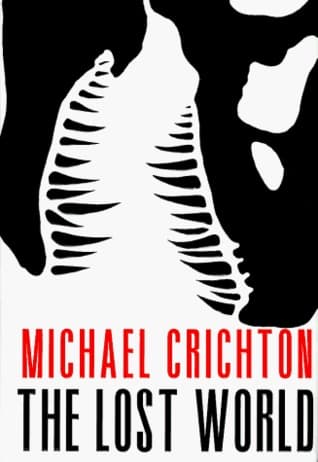
Michael Crichton (1995)
Genre
Fantasy / Mystery / Science Fiction
Reading Time
900 min
Key Themes
See below
Sign in to track this book
Six years after the Jurassic Park disaster, a new expedition goes to a hidden world where prehistoric predators have survived and evolved in terrifying ways.
Six years after the Jurassic Park disaster, strange animal mutilations and sightings of unknown creatures start happening on the Costa Rican mainland. Paleontologist Dr. Richard Levine, who believes in a 'lost world' where dinosaurs might still exist, investigates these reports. He finds a strange lizard body and thinks it is a young dinosaur. Levine tries to get Dr. Ian Malcolm, a mathematician and survivor of Isla Nublar, to join his trip to a rumored 'Site B' where dinosaurs supposedly bred. Malcolm, at first hesitant because of his Jurassic Park experience, agrees to help after Levine secretly leaves for the island, Isla Sorna, without him.
Worried about Levine and curious, Ian Malcolm, with engineer Doc Thorne and equipment specialist Eddie Carr, heads to Isla Sorna. They have a high-tech mobile research lab, called the 'Explorer,' designed by Thorne, and many tracking and observation tools. Their goal is to find Levine and understand what is happening on the island. They find signs of a complex, self-sustaining dinosaur ecosystem, much more complex and active than they thought, confirming 'Site B' where InGen bred and cared for dinosaurs before moving them to Jurassic Park.
Unknown to Malcolm's team, Kelly Curtis, a smart but rebellious teenager, and Arby Benton, a quiet, smart boy, both Levine's students, have hidden in the Explorer. Kelly wants to impress Levine, whom she looks up to, and Arby is interested in science. Soon after arriving on Isla Sorna, the group first meets dinosaurs. They see a pack of Compsognathus, small meat-eating dinosaurs, attacking a larger animal. This event shows how dangerous the island is and how unpredictable its animals are, making the whole team more tense.
Meanwhile, another group, led by geneticist Lewis Dodgson of Biosyn Corporation, arrives on Isla Sorna to steal dinosaur eggs and genetic material. Dodgson's team, which includes poacher George Baselton and computer expert Howard King, tries to get into a Tyrannosaurus rex nest. Their clumsy actions alert the adult T-rexes, and their use of a high-pitched sound device to attract a baby T-rex causes chaos. This also attracts Velociraptors, intelligent and aggressive predators, who attack Dodgson's team and accidentally trap Malcolm's group, forcing them to find shelter and showing the island's extreme danger.
During one intense night, two adult Tyrannosaurus rexes find the Explorer mobile lab, drawn by the cries of their injured baby, which Dodgson's team had captured and then left near the vehicle. The T-rexes attack the Explorer, pushing it over a cliff. Doc Thorne, showing great bravery, sacrifices himself to save the others. He tries to distract the attacking T-rexes, letting Malcolm, Eddie, and the children escape. His death is a reminder of the dinosaurs' power and how fragile human life is on Isla Sorna, deeply affecting the remaining members of the trip.
After the Explorer is destroyed and Thorne dies, the remaining members of Malcolm's group – Malcolm, Eddie Carr, Kelly, and Arby – have to run on foot. Velociraptors pursue them. Eddie, using his cleverness, builds a temporary, elevated shelter, called a 'high hide,' in the trees. This gives them a short break from the ground predators and a chance to plan. However, the high hide is not a lasting solution, and their supplies are running low, making their escape from the island more urgent.
Lewis Dodgson, having survived the raptor attack, keeps trying to steal eggs. However, he gets separated from his team and is cornered by a pack of Compsognathus, who swarm and kill him in a brutal attack. Meanwhile, Malcolm's group, still trying to reach the abandoned InGen worker village for communication, accidentally enters a large aviary with Pteranodons. These aggressive flying reptiles attack the group, carrying Arby away. Kelly, showing surprising courage, rescues Arby, but the event further uses up their resources and shows the danger across the island's different areas.
The survivors finally reach the abandoned InGen worker village, a run-down group of buildings that once held the scientists and technicians of Site B. They hope to find working communication equipment to call for help. While exploring, Arby, using his technical skills, gets a satellite phone working. However, their being in the village attracts a large pack of Velociraptors, who have made the buildings their hunting ground. The team finds themselves trapped inside the village, facing a new, intense attack from the intelligent and organized predators who are trying to get past their defenses.
As the raptors attack the village, Eddie Carr, showing great bravery, manages to hotwire a small, abandoned boat in the nearby harbor. However, the boat's battery is dead. In a desperate act, Eddie runs back to a generator in the village, with raptors chasing him, to get it running and send power to the boat. He succeeds, but raptors kill him as he tries to return. His sacrifice provides the power needed for Malcolm, Kelly, and Arby to start the boat and make their escape from Isla Sorna, leaving the 'lost world' behind.
Malcolm, Kelly, and Arby navigate the boat through rough waters and are rescued by a passing ship. Authorities question them, and their story confirms dinosaurs still exist on Isla Sorna. After this, the US government, with the Costa Rican government, declares Isla Sorna a protected preserve, strictly off-limits to all human activity. The island becomes a natural experiment, a 'lost world' where dinosaurs live and evolve without human involvement, leaving the creatures' final fate a mystery and a sign of nature's ability to recover.
The Protagonist
From a traumatized cynic, he becomes a reluctant hero, actively fighting for survival and protecting the children.
The Supporting
His initial recklessness is tempered by the harsh realities of the island, though his core driven nature remains.
The Supporting
A wise mentor who sacrifices himself for the survival of the group.
The Supporting
Develops from a nervous technician into a selfless hero, sacrificing himself for the team.
The Supporting
Transforms from a curious stowaway into a courageous survivor, proving her resilience and intelligence.
The Supporting
A quiet prodigy who uses his intelligence to contribute significantly to the group's survival.
The Antagonist
Driven by greed and incompetence, he meets a violent end, a victim of his own hubris.
The Mentioned
A ruthless opportunist who falls victim to his own cruelty.
The Supporting
Joins the desperate struggle for survival, using her expertise to aid the group.
The Mentioned
From ambitious visionary to repentant advocate for preservation, his influence is felt throughout.
The novel features Ian Malcolm's chaos theory, which says that complex systems like a dinosaur ecosystem are unpredictable and uncontrollable. Even when humans try to watch or manage them, unexpected things will always lead to chaotic results. This is shown by the constant, unexpected dangers faced by both expedition teams, from raptor attacks to T-rex rampages, showing that nature, once changed, cannot be contained or fully understood by human plans. The 'lost world' shows nature's chaotic, self-organizing power.
“Life breaks free. Life expands to new territories. Painfully, perhaps even dangerously. But life finds a way.”
A main theme is human arrogance in thinking they can control or use nature for their own good. Both InGen's original creation of the dinosaurs and Biosyn's attempt to steal them are acts of great pride. Isla Sorna, left alone, quickly creates a complex and dangerous ecosystem that completely overpowers human technology and intelligence. Characters like Dodgson, who show this pride, are punished by the natural order they try to control, showing how useless and dangerous it is to interfere with basic biological processes.
“You stood on the shoulders of geniuses to accomplish something as fast as you could, and before you even knew what you had, you patented it, and packaged it, and slapped it on a plastic lunchbox, and now you're selling it.”
The book looks at the ethical questions of genetic engineering and de-extinction. While creating dinosaurs was a scientific wonder, the results are bad. The novel explores whether humans have the right to bring extinct species back to life, especially when they cannot control what happens. Hammond's later regret and wish to protect Isla Sorna show a move towards not interfering. The story asks about the responsibility scientists have for their creations and how scientific progress can lead to ecological disaster if not balanced with caution and respect for life.
“The problem with the scientific power that you're using, it's like a kid that's found his dad's gun. He doesn't know what he's doing with it. He's pointing it around, pulling the trigger.”
On Isla Sorna, natural selection and survival of the fittest are clearly shown. The dinosaurs, free from human control, have adapted and evolved, forming complex social structures and hunting methods. Humans are no longer the top predators but struggle to survive against creatures perfectly suited to their environment. The novel shows how quickly life can return to basic instincts when away from civilization, and how only the most adaptable can last in such a harsh, wild world. Sacrifices, like Thorne's and Eddie's, show this theme.
“Nature will find a way.”
Despite focusing on dinosaurs, a strong human theme is the instinct to protect the young. Ian Malcolm, at first not wanting to be involved, acts like a father to Kelly and Arby, risking his life repeatedly to keep them safe. The adult Tyrannosaurus rexes also show strong parental instincts, constantly tracking their injured baby and attacking anything they see as a threat. This similarity between human and dinosaur protective behavior shows a basic biological drive that crosses species, adding an emotional part to the intense survival story.
“He knew that he would die on this island. He only hoped that the children would not.”
A hidden island where dinosaurs breed and live feral.
Isla Sorna, or 'Site B,' is the central setting and a key plot device. It's the undisclosed breeding ground for InGen's dinosaurs, untouched by the public and allowed to develop its own wild ecosystem after the Jurassic Park disaster. It functions as a natural experiment, showcasing how dinosaurs would thrive and evolve without human intervention, contrasting sharply with the controlled environment of Jurassic Park. The island itself is a character, a dangerous, unpredictable, and dynamic force that tests the limits of human survival and scientific understanding. Its existence fuels the entire narrative.
A custom-built, high-tech vehicle for field research and survival.
The Explorer is a sophisticated, self-sufficient mobile laboratory designed by Doc Thorne. It is a critical plot device, providing the protagonists with a base of operations, communication equipment, and a temporary safe haven. Its advanced technology, including cameras, sensors, and defensive capabilities, allows for detailed observation of the dinosaurs. The eventual destruction of the Explorer by the T-rexes marks a significant turning point in the narrative, stripping the characters of their technological advantages and forcing them into a more primal struggle for survival on foot.
A mathematical concept explaining unpredictability in complex systems.
Chaos theory, primarily expounded by Ian Malcolm, is both a philosophical theme and a plot device. It explains why the dinosaur ecosystem on Isla Sorna is inherently uncontrollable and unpredictable, directly driving the narrative's constant dangers. Malcolm's predictions of unforeseen consequences constantly come true, justifying the escalating peril. It serves as a scientific framework for the dangers faced, suggesting that any attempt to manage or exploit such a complex biological system will inevitably lead to chaotic and catastrophic results, thus shaping the characters' actions and the plot's trajectory.
Two opposing groups with conflicting motivations on the island.
The existence of two distinct human teams on Isla Sorna—Malcolm's scientific observation/rescue mission and Dodgson's corporate espionage/theft operation—creates significant narrative tension and drives much of the action. Dodgson's reckless attempts to capture dinosaurs directly lead to severe consequences, such as attracting the T-rexes and raptors, which then affect Malcolm's group. This dual narrative allows Crichton to explore contrasting ethical approaches to the 'lost world' and highlights how human greed and incompetence exacerbate the natural dangers of the island, accelerating the plot's descent into chaos.
A temporary elevated shelter providing refuge from ground predators.
The 'high hide' is a makeshift shelter constructed by Eddie Carr, elevated in the trees to provide temporary safety from ground-dwelling predators like Velociraptors. This device serves multiple functions: it offers a brief respite for the characters to regroup and plan, demonstrates Eddie's ingenuity, and physically represents the precariousness of human existence on the island. While it offers temporary safety, its fragility and limited resources constantly remind the characters of their vulnerability, emphasizing that no human structure can offer true security against the island's relentless dangers, thus maintaining high suspense.
“The history of science is the history of accepted ideas being proven wrong.”
— Ian Malcolm discussing the nature of scientific progress and uncertainty.
“Life finds a way.”
— Ian Malcolm's famous line about the unpredictability of life, especially in the context of dinosaurs.
“We are not dealing with scientific fact. We are dealing with a scientific possibility.”
— Richard Levine emphasizing the speculative nature of their expedition to the lost world.
“The dinosaurs were not failures. They ruled the earth for a hundred and fifty million years.”
— A reflection on the success and longevity of dinosaurs compared to humans.
“In the jungle, you are either predator or prey. There is no in-between.”
— Describing the harsh realities of survival in the prehistoric environment.
“Chaos theory teaches us that straight linearity, which we have come to take for granted in everything from physics to fiction, simply does not exist.”
— Ian Malcolm explaining chaos theory and its implications for understanding complex systems.
“The only way to discover the limits of the possible is to go beyond them into the impossible.”
— A motivational idea about pushing boundaries in exploration and science.
“Extinction is the rule. Survival is the exception.”
— A grim observation about the natural history of species on Earth.
“We are all just visitors to this time, this place. We are just passing through.”
— A philosophical musing on the transient nature of human existence.
“The world is not as we see it. It is as we understand it.”
— Highlighting the difference between perception and comprehension in science and life.
“Fear is the mind-killer. But in the jungle, it is also the life-saver.”
— Discussing the dual role of fear in survival situations.
“Every discovery is a rediscovery.”
— A comment on how new findings often echo past knowledge or phenomena.
“The lost world is not a place. It is a state of mind.”
— A metaphorical interpretation of the expedition and its deeper meaning.
“In nature, there are no rewards or punishments; there are consequences.”
— A reflection on the impartial and cause-and-effect nature of the natural world.
Ready to see how well you understood this book? Take our interactive quiz with 10 questions.
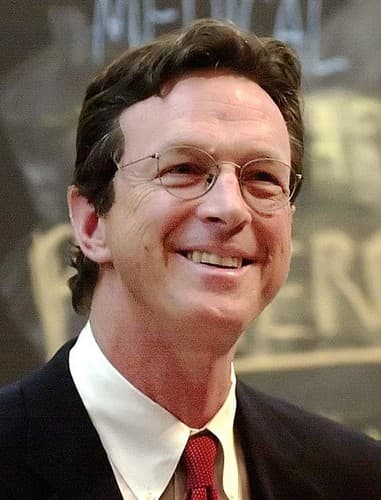
Biography coming soon.







