“The past is a place, a foreign country, but it is not a destination. It is a place from which to depart.”
— Lenka reflects on the past and moving forward after the war.

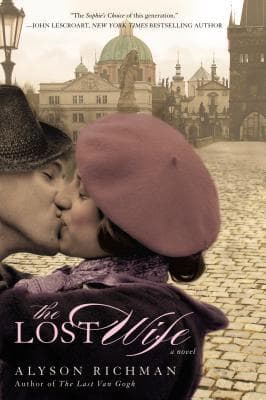
Alyson Richman (2011)
Genre
Historical Fiction / Romance
Reading Time
7-8 hours
Key Themes
See below
Sign in to track this book
Decades after the Holocaust separated them in Prague, a chance meeting in New York reunites a doctor with the artist wife he thought died in the camps, making them face their first love amid their past.
In Prague during the late 1930s, art student Lenka Maček meets medical student Josef Kaufmann. They meet at a café where Lenka sketches and Josef studies. Their shared interest in art and learning quickly brings them together. They spend their days exploring the city, visiting galleries, and talking about their future. Josef, a serious man, is drawn to Lenka's free spirit and artistic drive. Lenka, at first more quiet, falls for Josef's kindness and support for her art. Their romance grows as Europe's political situation becomes tense, though they try to stay hopeful about their future.
As Nazi Germany's influence grows over Czechoslovakia, Lenka and Josef secretly marry, fearing the coming war might separate them. Their families, while loving, do not fully know how committed they are, making their marriage a private act against the growing chaos. They exchange vows in a small ceremony, promising to find each other no matter what happens. This act of love is a desperate try to strengthen their bond before their world falls apart. Soon after their marriage, the Nazi occupation of Prague begins, bringing strict laws and persecution against Jewish citizens, including Josef's family. Their happy life quickly turns into fear and uncertainty.
With the Nazi regime tightening its hold on Prague, Josef's parents, seeing the danger to their son, arrange his escape. As a Jewish man, Josef's life is at risk. With heavy hearts, they get him passage to America, urging him to leave at once. Lenka and Josef's goodbye is heartbreaking, filled with promises to reunite but overshadowed by the reality of their separation. Josef must leave Lenka behind, as she cannot join him. He carries the painful belief that he might never see his wife again, a burden that will stay with him for decades. Lenka, left alone in occupied Prague, must now navigate a world without its former freedoms and full of danger.
Lenka, like many other Jewish citizens, is sent to the Terezín ghetto. Life there is hard, with overcrowding, hunger, and constant fear. However, Lenka finds a way to survive and keep her spirit through her art. She secretly sketches daily life in the ghetto — the suffering, the strength, the small acts of kindness — capturing the humanity amidst the dehumanization. These drawings become a form of resistance, a way to witness and keep the truth, even with great risk of being caught. She finds a small group of artists and thinkers, and their shared commitment to art provides some hope and purpose in the darkest times, helping her hold onto the memory of Josef and their life together.
The 'privilege' of Terezín ends for Lenka when she is moved to Auschwitz, the extermination camp. Here, she sees the full extent of Nazi cruelty. Conditions are terrible: forced labor, starvation, disease, and the constant threat of gas chambers. She witnesses terrible acts and suffers deep personal losses, including the deaths of friends from Terezín. Survival becomes a daily fight against huge odds. Her memories of Josef and their life in Prague become a fragile anchor, a secret inner world she clings to to stay sane and alive. She loses everything but her will to survive, bearing the lasting mark of the Holocaust.
After the war, Josef, now a successful obstetrician in America, tries to find news of Lenka. He searches lists, contacts aid groups, and holds onto a bit of hope, but all his efforts yield no results. Over time, he has to accept that Lenka died in the camps. With a heavy heart, he eventually marries another woman, a kind nurse named Hannah, and starts a new family, raising two children. While he loves his new family deeply, the memory of Lenka and the life they were meant to share never truly leaves him. He carries the trauma of his past and the memory of his first wife.
Lenka survives Auschwitz, though deeply scarred. After liberation, she spends time in displaced persons camps, slowly regaining her strength and processing the horrors she faced. She eventually goes to New York, where she tries to build a new life. She becomes an artist again, finding comfort and expression in her work, though her art now carries the weight of her past. She never remarries, believing Josef is dead and unable to imagine a future with anyone else. She carries the physical and emotional scars of the Holocaust, including the tattooed numbers on her arm, a constant reminder of what she endured. Her life is marked by quiet strength and a deep sense of loss.
Decades later, in the late 1970s, an elderly Lenka attends an art exhibition in a New York gallery, where her work is shown. By chance, Josef, now a respected doctor and a widower, is at the same gallery with his daughter. Their eyes meet across the room. At first, they both feel a flicker of recognition, a sense of familiarity that seems impossible. Josef, drawn by an unknown pull, approaches Lenka. He notices a small, familiar birthmark on her arm, and then, the numbers. He shakes as he asks if she remembers him, saying her name, 'Lenka,' and then his, 'Josef. Your husband.' The world stops for them both as the past meets the present.
The reunion is a rush of feelings for both Lenka and Josef: shock, disbelief, joy, sorrow, and a deep sense of wrong for the lost decades. They go to a quiet place to talk, trying to put together pieces of their separate lives. Lenka tells of the horrors of Terezín and Auschwitz, while Josef shares his journey to America, his new family, and his grief for the wife he thought was gone. Their talk has tears, silences, and the heavy weight of their shared history and different paths. They face the painful reality of Josef's new family and the life he built, a life Lenka could not be part of. Old wounds are reopened, needing acknowledgment and understanding.
Over the next days and weeks, Lenka and Josef keep meeting, trying to make sense of the two different lives they have lived since they separated. They visit places with memories for them, talk for hours, and slowly begin to understand each other's survival and choices. Josef learns about Lenka's strength in the camps, and Lenka deals with the reality of Josef's new family and the loving life he built. There is no easy way forward, as their past is deeply tied to their present. They know they cannot fully get back what was lost, but find comfort in just being together, sharing the unspoken burdens they both carried.
In a poignant end, Lenka and Josef accept that they cannot fully resume the life they once planned. Josef has a family, and both have been shaped by decades of separate experiences and traumas. They acknowledge the lasting love they still have for each other, a love that went beyond war and time. They share a final, tender goodbye, understanding that while their paths diverged, their souls remain connected. They part with a renewed sense of peace, knowing that the 'lost wife' has been found, and that their love, though sadly interrupted, was real and strong enough to survive.
The Protagonist
Lenka transforms from an innocent, hopeful artist into a hardened but resilient survivor, learning to find strength and purpose through her art even after profound loss.
The Protagonist
Josef moves from an idealistic young man to a successful but emotionally guarded doctor, eventually confronting his past and finding a measure of peace through reconciliation.
The Supporting
Hannah remains a steadfast and loving presence in Josef's life, representing the new chapter he built.
The Supporting
Remains a loving memory for Lenka, representing her lost past.
The Supporting
Their actions secure Josef's survival, becoming a foundational memory for him.
The Mentioned
His early influence shapes Lenka's artistic path.
The Supporting
Provides companionship and shared purpose for Lenka in Terezín.
The novel shows how the intense love between Lenka and Josef survives decades of separation, war, and new lives. Despite Josef building a new family and Lenka experiencing trauma, their bond remains a powerful force. The reunion scene, where they recognize each other after so many years, shows that their love was not just a youthful crush but a deep connection that time could not erase. Their final goodbye, full of tenderness and understanding, shows that this love, though unable to be fully rekindled, was a true and basic part of their lives.
“'Do you remember me now?' he asked, trembling. She looked at him again, as if giving weight and bone to a ghost. 'Lenka, it's me,' he said. 'Josef. Your husband.'”
Lenka's journey through Terezín and Auschwitz shows how people can survive against great odds. Stripped of everything, she holds onto her memories of Josef and her art. Her secret sketches in the ghetto, showing the grim reality and small acts of kindness, are not just resistance but a way for her to keep her identity and sanity. Her ability to rebuild a life and career as an artist in New York, despite her deep scars, shows great strength. The book emphasizes that survival is not just physical but also keeping one's inner world and humanity.
“Her art became both a shield and a weapon, a way to bear witness when the world refused to see.”
Both Lenka and Josef are shaped by their memories — of their love, of pre-war Prague, and of the Holocaust. Josef carries the memory of his 'lost wife' and the guilt of his escape, which affects his new life. Lenka's memories of Josef are a lifeline in the camps, and her post-war art is full of the trauma and loss she experienced. The tattooed numbers on her arm are a constant, physical reminder of a past that cannot be forgotten or escaped. The reunion forces them to confront these long-held memories, showing how the past, even when hidden, strongly influences the present.
“The past was not a country she had left behind; it was a landscape she carried within her, etched onto her soul.”
The novel shows how World War II and the Holocaust shatter individual lives, dreams, and relationships. Lenka and Josef's happy life in Prague is destroyed by the Nazi occupation, leading to their forced separation, Lenka's imprisonment, and Josef's move. The war does not just end their love story; it changes their entire lives, forcing them to build new identities and relationships under the shadow of great loss. The reunion, decades later, shows the lasting scars left by such a terrible event, proving that even survivors carry the marks of a stolen past.
“The war had not just taken their future; it had stolen their very selves, leaving behind two strangers in familiar bodies.”
A physical mark of Lenka's Holocaust survival and key to her recognition.
The six tattooed numbers on Lenka's forearm serve as a potent symbol of her survival in Auschwitz and a chilling reminder of the dehumanization she endured. More than a mere identification, this mark is the crucial element that allows Josef to recognize her decades later. It acts as a visceral link between her past trauma and her present identity, making the reunion undeniable and deeply impactful. The numbers are a constant, visible scar that she carries, representing the indelible mark the Holocaust left on her and countless others.
A coping mechanism, form of resistance, and means of expression.
Lenka's artistic talent is a central plot device, serving multiple functions throughout the narrative. In pre-war Prague, it's a source of joy and connection with Josef. In Terezín, her secret sketches become a vital coping mechanism, a way to bear witness, maintain her humanity, and resist the dehumanization of the ghetto. Post-war, her art provides a means of expression and healing, allowing her to process her trauma and communicate her experiences when words fail. Her art is what ultimately brings her to the gallery where she encounters Josef, making it instrumental in their reunion.
A highly improbable but pivotal moment of reunion.
The chance encounter in a New York art gallery, decades after their separation, is a classic plot device used to bring Lenka and Josef back together. While seemingly coincidental, it highlights the novel's themes of fate and the enduring power of their connection. This improbable reunion serves as the catalyst for the entire second half of the story, forcing both characters to confront their pasts, their lost love, and the complex realities of the lives they built in separation. It underscores the idea that some bonds are so strong they defy time and circumstance.
Interweaving past and present to reveal character development and historical context.
The novel effectively uses flashbacks and a dual narrative structure, alternating between Lenka and Josef's experiences in pre-war Prague and the Holocaust, and their lives decades later leading up to and after their reunion. This device allows the reader to fully understand the depth of their initial love, the horrors they endured separately, and the profound impact these experiences had on their adult lives. It builds suspense towards their eventual reunion while providing crucial historical context and character development for both protagonists.
“The past is a place, a foreign country, but it is not a destination. It is a place from which to depart.”
— Lenka reflects on the past and moving forward after the war.
“Love is not about possession. Love is about appreciation.”
— Josef's early thoughts on his feelings for Lenka.
“Sometimes, the only way to endure the present is to remember the past, not with sorrow, but with the knowledge that you survived it.”
— Lenka's internal monologue during a difficult period.
“Art, like love, knows no boundaries, no walls, no barbed wire.”
— Lenka finds solace and expression through her art, even in concentration camps.
“A photograph captures a moment, but it doesn't capture the entire story. It's just a whisper of what was.”
— Josef, a photographer, muses on the limitations of his art.
“Hope is a dangerous thing. It can keep you alive, but it can also break your heart.”
— Lenka's pragmatic view on hope during wartime.
“The greatest tragedy is not death, but life without love.”
— Josef's deep reflection on his enduring love for Lenka.
“Even in the darkest corners, beauty can be found if you know where to look, and if you're brave enough to see it.”
— Lenka's perspective on finding light amidst the horrors of war.
“To forget is to die twice.”
— A character emphasizes the importance of remembering historical atrocities.
“Time does not heal all wounds; it merely teaches us how to live with them.”
— Lenka's mature understanding of grief and loss.
“The quiet moments are often the most profound, the ones that truly shape us.”
— Josef reflects on the small, intimate moments that defined his relationship with Lenka.
“A shared past doesn't always guarantee a shared future, but it always connects you.”
— Lenka's thoughts on old relationships and the ties that bind.
“Sometimes, the greatest act of defiance is to simply survive.”
— A powerful statement about the will to live in the face of immense adversity.
Ready to see how well you understood this book? Take our interactive quiz with 10 questions.







