“Science and religion are not at odds. Science is simply too young to understand.”
— Katherine Solomon reflecting on the intersection of science and faith.

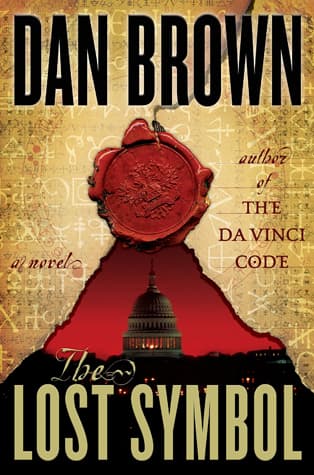
Dan Brown (2009)
Genre
Thriller / Historical Fiction / Mystery
Reading Time
10-12 hours
Key Themes
See below
Sign in to track this book
Harvard symbologist Robert Langdon races through Washington D.C.'s hidden Masonic underworld to decipher ancient symbols and save his kidnapped mentor from a terrifying villain obsessed with unlocking esoteric wisdom.
Harvard symbologist Robert Langdon is called to Washington D.C. by his mentor, Peter Solomon, to give a lecture at the U.S. Capitol Building. When he arrives, Langdon learns the lecture is canceled and he is sent to Peter's office. Instead of Peter, Langdon finds Peter Solomon's severed hand, tattooed and arranged to point towards a fresco in the Rotunda, the Apotheosis of Washington. The hand has Peter's Masonic ring, and Langdon recognizes it as an invitation to an ancient path of esoteric wisdom, a path Peter had often discussed.
A mysterious, tattooed man named Mal'akh contacts Langdon, revealing he kidnapped Peter. Mal'akh threatens to kill Peter unless Langdon deciphers the symbols on Peter's hand and finds the Masonic Pyramid, said to contain the Lost Symbol, a source of power. Mal'akh believes this symbol will give him god-like abilities. Langdon realizes he is being forced into a deadly treasure hunt, with Peter Solomon's life at stake, making him engage with the Masonic secrets Peter had protected.
Langdon seeks help from Dr. Katherine Solomon, Peter's sister, a noetic scientist studying the mind's ability to affect reality. Katherine is unaware of her brother's situation but soon becomes a target. Mal'akh tries to steal her research data, thinking it is key to unlocking the Lost Symbol's power. Langdon and Katherine realize their fates are connected, as Katherine's science and Peter's Masonic knowledge seem to be two parts of the truth Mal'akh seeks.
Following clues in the Capitol Building's architecture and art, Langdon and Katherine navigate hidden passages and rooms, deciphering Masonic codes and symbols. They are pursued by Mal'akh and CIA agents led by Director Inoue Sato, who believes Langdon is involved in Peter's kidnapping. The two find a hidden chamber beneath the Capitol, revealing riddles that point to the Masonic Pyramid and its ultimate secret.
The chase leads Langdon and Katherine to the Library of Congress, where they continue to decode Peter Solomon's clues. Here, they find clues related to alchemy and ancient wisdom, deepening the mystery. Mal'akh, using surveillance, stays one step ahead, twisting their efforts to his advantage. The historical and symbolic meaning of each location shows the deep roots of the secrets they uncover, linking the capital to ancient esoteric traditions.
Mal'akh corners Langdon and forces him to the House of the Temple, the headquarters of the Scottish Rite of Freemasonry. Here, Langdon must take part in Masonic rituals and decipher more clues, all under Mal'akh's watch. The rituals, meant to guide initiates through enlightenment, are twisted by Mal'akh into a performance to unlock the pyramid's final secrets. Langdon's knowledge of symbology is pushed to its limits as he navigates the layers of Masonic tradition.
Through shocking revelations, it is discovered that Mal'akh is Zachary Solomon, Peter Solomon's son, long thought dead. Zachary faked his death after an incident in Turkey and has undergone physical and psychological changes, driven by resentment towards his father and a desire for power. He believes his father abandoned him and now seeks to use the Lost Symbol to become god-like, convinced it will give him control and retribution.
The clues lead Langdon and Katherine to the Washington Monument. The monument itself is a Masonic obelisk, and its missing capstone, a pyramid-shaped object, is the key to finding the Masonic Pyramid. Mal'akh's plan relies on getting this capstone to complete his ritual. The monument, a symbol of American ideals, becomes a focal point for the clash between ancient wisdom and modern ambition, showing the symbolic layers in the capital's architecture.
At the climax, Zachary (Mal'akh) tries to complete his ritual atop the Washington Monument, aiming to use the Lost Symbol's power to ascend. Peter Solomon, having survived captivity, confronts his son. In an act of love and self-sacrifice, Peter prevents Zachary from gaining the full power he wants, leading to Zachary's death. Peter's sacrifice shows his commitment to protecting ancient wisdom and preventing its misuse, even at the cost of his own life and confronting his son.
After the confrontation, Langdon and Katherine uncover the true meaning of the Lost Symbol. It is not an artifact or a magical power, but humanity's collective wisdom and potential, the ability to create, to connect with higher consciousness, and to understand the universe through reason and faith. The 'lost symbol' is the realization of humanity's divine potential and the power of knowledge, a concept Peter Solomon had always tried to teach his son and Langdon.
Afterward, Langdon is led to the true cornerstone of the U.S. Capitol Building, a hidden, plain stone that symbolizes the foundation of American ideals and principles. This discovery reinforces the idea that important truths are often hidden in plain sight, overlooked amidst grander spectacles. It signifies the lasting power of foundational beliefs, echoing Masonic ideals of building a better society from the ground up.
With the mystery solved and Mal'akh defeated, Langdon and Katherine gain a new understanding. They realize that Peter Solomon's work, combining ancient Masonic wisdom with modern noetic science, pointed towards a unified theory of human potential and the universe. The events make Langdon re-evaluate his understanding of symbols, not just as historical markers, but as paths to deeper spiritual and scientific truths. The journey changes his view on the interconnectedness of all knowledge.
The Protagonist
Langdon starts as a reluctant participant but grows to embrace a deeper understanding of the spiritual and scientific power of symbols, moving beyond mere historical interpretation.
The Supporting/Catalyst
Though seemingly a victim, Peter reveals himself as a master manipulator, guiding the events towards a specific outcome, and ultimately makes a profound sacrifice for the greater good.
The Supporting/Protagonist
Katherine initially views noetics purely scientifically but comes to appreciate its intersection with ancient spiritual wisdom, embracing a broader understanding of consciousness and human potential.
The Antagonist
Mal'akh's arc is one of escalating delusion and self-destruction, driven by a twisted interpretation of ancient wisdom and a hunger for vengeance, culminating in his tragic downfall.
The Supporting
Sato begins as an antagonist to Langdon, but gradually shifts to an uneasy alliance as she uncovers the true nature of Mal'akh's threat and the deeper implications of the plot.
The Supporting
Bellamy acts as a guide and protector of Masonic secrets, helping Langdon navigate the labyrinthine clues within the Capitol, maintaining his steadfast commitment to the Brotherhood.
The Supporting
Anderson's arc is primarily functional, serving as Sato's reliable subordinate, reacting to the unfolding events as dictated by the CIA's directives.
The Mentioned
Galloway's role is largely static, serving as a pillar of spiritual guidance and a testament to Peter Solomon's character.
This theme explores the idea that the human mind, through intention and belief, can influence reality. Dr. Katherine Solomon's research into noetic science shows how thoughts, emotions, and consciousness might have measurable effects on the physical world. This theme questions the boundaries between science and spirituality, suggesting that ancient wisdom (like the Masonic quest for enlightenment) and science are converging towards a unified understanding of human potential. Mal'akh's pursuit of the Lost Symbol is an attempt to use this power for selfish gain, contrasting with Peter and Katherine's desire to understand and apply it for humanity's good.
“What the mind believes, the body perceives.”
The novel highlights the connection between ancient esoteric traditions, especially Freemasonry, and modern scientific and philosophical thought. The Masonic quest for enlightenment, represented by Peter Solomon, is presented not as superstition but as a path to understanding universal truths. Langdon's symbology connects these worlds, showing how symbols hold knowledge. The revelation of the Lost Symbol as human consciousness suggests that 'ancient wisdom' was always about unlocking humanity's inherent potential, a truth modern science is now beginning to quantify. The mix of historical sites with scientific labs reinforces this theme.
“The greatest secrets are always hidden in the most obvious places.”
A recurring theme is how knowledge, especially ancient wisdom, can be used for good or evil. The Lost Symbol, representing the power of the human mind, is sought by Mal'akh for selfish control, leading to violence. In contrast, Peter Solomon and the Masons protect and use this knowledge for enlightenment and societal improvement. This duality is presented through Zachary/Mal'akh, who, exposed to the same wisdom as his father, twists it into a path of revenge and self-importance. The story questions whether humanity is worthy of such knowledge.
“All knowledge is in the world. It is simply waiting to be discovered.”
At the story's emotional center is the fractured relationship between Peter Solomon and his son, Zachary (Mal'akh). Zachary's motivation comes from a sense of abandonment and betrayal by his father, leading to a twisted quest for revenge and validation. Peter, despite his love, struggled to connect with his son and communicate the true meaning of the ancient wisdom he held. The tragic climax involving Peter's sacrifice to save Zachary, despite his son's actions, highlights themes of parental love, the struggle for forgiveness, and the consequences of unresolved family conflict. It explores how perceived abandonment can warp a person's view of truth and purpose.
“Forgiveness is a gift you give yourself.”
Washington D.C. is not just a setting but an active character and a symbolic map. The city's landmarks – the U.S. Capitol, the Washington Monument, the Library of Congress, the House of the Temple – are shown to be designed with Masonic symbols and hidden clues. These structures, often taken for granted, become a labyrinth of ancient wisdom, guiding Langdon through the mystery. The architecture itself holds secrets, reinforcing the idea that truths are often hidden in plain sight, encoded within society's fabric and its monuments.
“Every structure tells a story.”
A series of clues, often symbolic, leading the protagonist through various locations.
The entire plot is driven by a symbolic scavenger hunt, initiated by Peter Solomon's severed hand and the cryptic messages embedded within it. Robert Langdon must decipher a complex sequence of Masonic symbols, historical references, and architectural clues that lead him from one iconic Washington D.C. landmark to another. This device creates a relentless pace and allows for the exploration of historical and symbolic details unique to each location, drawing the reader into the puzzle-solving process alongside Langdon. Each solved clue not only advances the plot but also reveals another layer of the overarching mystery.
An object or concept that drives the plot, but whose true nature is less important than its pursuit.
The 'Lost Symbol' itself functions as a MacGuffin for much of the novel. Initially presented as a physical object or a source of immense power that Mal'akh desperately seeks, its precise nature remains elusive, driving the characters' actions. The true significance of the Lost Symbol is revealed only at the very end: it is not a tangible artifact but rather the profound concept of human consciousness and its potential. This twist redefines the entire quest, shifting its focus from a physical object to an internal, philosophical truth, giving the MacGuffin a symbolic rather than literal importance.
Clues or plot points designed to mislead the reader and characters.
Dan Brown frequently employs red herrings to build suspense and surprise. A significant example is the initial belief that Langdon is a suspect or conspirator, perpetuated by Sato and the CIA. Another is the assumption that the Lost Symbol is a physical object of immense power, leading both Mal'akh and the reader down a specific path. Mal'akh's elaborate setup, including his fake identity and the carefully orchestrated 'kidnapping' of Peter, is designed to misdirect Langdon and the authorities, ensuring they follow his prescribed path, making the eventual reveal of his true identity and motives all the more shocking.
A wise, experienced character who guides the protagonist, often through indirect means.
Peter Solomon serves as the classic mentor figure, though his guidance is largely indirect and posthumous for much of the story. His initial 'kidnapping' and the subsequent trail of clues he meticulously left behind are all part of a larger plan to guide Robert Langdon to the truth of the Lost Symbol while simultaneously protecting it from Mal'akh. Peter's profound wisdom and deep understanding of both ancient traditions and human nature are evident in the intricate design of his 'game,' which ultimately leads to enlightenment rather than just a physical discovery. He orchestrates the entire journey from behind the scenes.
“Science and religion are not at odds. Science is simply too young to understand.”
— Katherine Solomon reflecting on the intersection of science and faith.
“The mind has a powerful way of attracting that which it continually thinks about.”
— Mal'akh's philosophy on manifestation and the power of thought.
“Knowledge is a tool, and like all tools, its impact is in the hands of the user.”
— Robert Langdon discussing the nature of knowledge.
“What the mind can conceive and believe, it can achieve.”
— A phrase often repeated by Mal'akh, reflecting his belief in human potential.
“Every secret has a price.”
— Mal'akh's chilling reminder of the cost of hidden truths.
“The greatest enemy of knowledge is not ignorance, it is the illusion of knowledge.”
— Langdon contemplating the dangers of perceived understanding.
“Symbols are the language of the soul.”
— Robert Langdon explaining the importance and power of symbols.
“Coincidence is a spiritual super glue.”
— Katherine Solomon's perspective on seemingly random events.
“The human mind has an almost infinite capacity for self-deception.”
— Langdon considering the psychological aspects of belief.
“The true measure of a man is not what he has, but what he gives.”
— Peter Solomon's philosophy on legacy and philanthropy.
“There is a vast difference between what we wish to be true and what is actually true.”
— Langdon reflecting on the distinction between desire and reality.
“The greatest power of all is the power to change one's own mind.”
— Katherine Solomon discussing adaptability and personal growth.
“The world is not as it appears. It is far more complex, far more mysterious, and far more beautiful.”
— Langdon's overarching view of the hidden layers of reality.
“Every journey begins with a single step, but it is the first step that is always the hardest.”
— A general observation on overcoming initial hurdles.
Ready to see how well you understood this book? Take our interactive quiz with 10 questions.
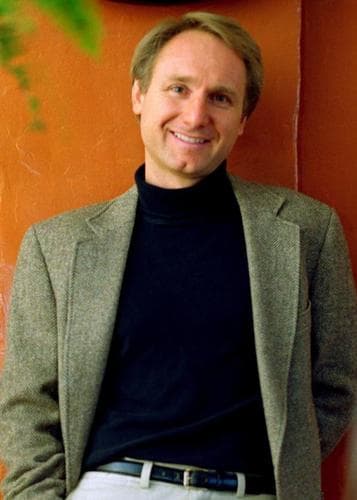
Daniel Gerhard Brown is an American author best known for his thriller novels, including the Robert Langdon novels Angels & Demons (2000), The Da Vinci Code (2003), The Lost Symbol (2009), Inferno (2013), and Origin (2017). His novels are treasure hunts that usually take place over a period of 24 hours. They feature recurring themes of cryptography, art, and conspiracy theories. His books have been translated into 57 languages and, as of 2012, have sold over 200 million copies. Three of them, Angels & Demons, The Da Vinci Code, and Inferno, have been adapted into films, while one of them, The Lost Symbol, was adapted into a television show.







