“Man has always been much better at killing than at living.”
— A reflection on human nature and its destructive tendencies throughout history.


Alejo Carpentier (1979)
Genre
Historical Fiction
Reading Time
360 min
Key Themes
See below
Sign in to track this book
A musicologist leaves modern Europe for the South American jungle, seeking primal rhythms and ancient mysteries, only to find he cannot truly escape time.
The unnamed protagonist, a composer and musicologist in New York, is unhappy with his life and career. He feels stuck in a commercial existence, his art reduced to advertising jingles. His marriage to Ruth, an actress, is also unfulfilling. When his patron, the Curator of the Museum, offers him a trip to a remote part of South America to find ancient musical instruments, he takes the chance. This quest offers an escape from his ordinary life and a way to reconnect with an authentic, primal form of art and existence, which he desperately craves.
The protagonist arrives in a bustling, unnamed South American capital, a city known for its constant rain and chaotic energy. He meets his contact, the Director of Culture, who helps him with his expedition. He also meets a variety of people, including an eccentric French botanist named Yannes and Rosario, a charming, free-spirited local woman. Rosario, with her natural beauty and unpretentious nature, immediately draws him in, a stark contrast to the sophisticated but superficial women he knows in New York. This first experience with a different culture begins to change his perspective.
The journey into the interior begins by plane, then by riverboat, taking the protagonist, Rosario, and their small crew deeper into the Amazon jungle. The landscape grows wilder, far different from the cities he knows. During this difficult journey, the protagonist feels increasingly drawn to Rosario. Her practical skills, resilience, and deep connection to nature are a revelation to him. Their relationship grows amidst the jungle's raw beauty, and he starts to feel a sense of belonging and authenticity he has never known. He begins to shed his Western inhibitions and embrace his surroundings.
As they go further, the expedition meets several indigenous tribes living in harmony with nature. The protagonist is fascinated by their ancient customs, their unwritten laws, and especially their music. He observes their rituals, daily lives, and their strong connection to the land and its spirits. He realizes their musical instruments are not just for entertainment but are essential parts of their spiritual and social life, full of meaning and history. These encounters deepen his understanding of music's origins and its place in human existence, making him question modern art and Western civilization.
After weeks of difficult travel, they reach a hidden, isolated community deep in the jungle, a place seemingly untouched by time. Here, the protagonist hopes to find truly primitive instruments. He discovers a unique, ancient instrument, a set of drums made from tree trunks, which he believes are the 'lost steps' of music—the original, elemental sounds from which all music evolved. The community lives a simple, communal life, embodying a purity that deeply moves him. He feels an overwhelming sense of belonging, as if he has finally found his true home and purpose.
The protagonist decides to stay in the village, abandoning his mission and his former life. He fully adopts the indigenous way of life, taking part in their daily rituals, hunting, and communal activities. He sheds his Western clothes, his watch, and his intellectual pretenses, finding satisfaction in the simplicity of existence. His relationship with Rosario becomes a deep bond, and he feels a spiritual and emotional completeness he never thought possible. He even starts composing music again, not for commercial gain, but as an expression of his soul, using the ancient instruments and inspired by the jungle sounds.
Just as the protagonist believes he has found his ultimate paradise and true self, his past life dramatically interferes. Ruth, his wife, unexpectedly appears in the village, having tracked him down with the Curator's help. Her arrival shatters his idyllic world. Ruth, representing the modern, commercialized world he tried to escape, cannot understand his change or his attachment to Rosario and the primitive life. Her presence forces him to face the stark contrast between his two lives, causing great internal conflict and threatening the peace he found.
The protagonist is torn between two worlds: the authentic, primal life with Rosario in the jungle and the sophisticated, intellectual life with Ruth in New York. He loves Rosario and the freedom he found, but Ruth's appearance reawakens old obligations and a sense of responsibility. He realizes he cannot have both. The choice is agonizing, representing a fundamental conflict between his desire for artistic purity and his former identity. The act of choosing means a loss, no matter the path, showing the impossibility of truly escaping one's past.
After much internal struggle, the protagonist makes the difficult decision to leave the village and Rosario. The reasons are complex: a sense of duty, the practical impossibility of fully blending his two lives, and perhaps a fear that his paradise, once touched by the outside world, is already tainted. He packs the ancient instrument he found, symbolizing his attempt to bring a piece of that authenticity back with him. The departure is full of sorrow and regret, a deep sense of loss for the life he is leaving, and a growing understanding that some 'lost steps' cannot be fully recovered or moved.
The protagonist returns to the capital city, and eventually to New York, with Ruth. The change is jarring. The sounds, sights, and demands of civilization now feel alien and suffocating. The ancient instrument he brought back quickly loses its meaning outside its natural context, becoming a mere artifact. He finds he cannot fully return to his old life, feeling a deep sense of displacement. His experiences in the jungle have changed him forever, making his former existence seem hollow, yet he cannot fully explain his transformation to others.
Back in New York, the protagonist tries to write about his experiences, to capture what he found and lost. He tries to compose music inspired by the jungle, but the creative spark he felt in the village is gone. He realizes that the 'lost steps' cannot be brought into civilization; they belong to their original context and are lost once removed. The novel ends with the protagonist's understanding that the search for an authentic, primitive past is a journey from which there is no full return. He is forever changed, but also forever exiled from the paradise he briefly lived in, left with only memories and a deep sense of an unattainable past.
The Protagonist
Transforms from a cynical, alienated urbanite into a man deeply connected to nature and primal existence, only to be forced back to civilization, leaving him forever changed but displaced.
The Supporting
Remains consistent in her natural authenticity, serving as a catalyst for the protagonist's transformation and a symbol of the unattainable paradise.
The Supporting
Remains largely unchanged, serving as a static representation of the protagonist's past life.
The Supporting
A relatively static character, focused on his scientific pursuits, he serves as a foil to the protagonist's more spiritual quest.
The Supporting
Static, representing the external force that initiates and later reclaims the protagonist's journey.
The Mentioned
A legendary figure, his story serves as a historical parallel and inspiration for the protagonist's own quest.
A central theme is the protagonist's quest for true authenticity in art and life. He seeks the 'lost steps' of music, believing Western civilization has corrupted art and human existence. This quest leads him to the jungle, where he hopes to reconnect with fundamental truths and a genuine way of being. His journey is a philosophical exploration of what it means to be human, free from societal constructs. His initial dissatisfaction with commercial music and his unfulfilling marriage highlight the emptiness he seeks to fill.
“What, then, had I come looking for? The lost steps, the lost steps of music, of man, of the species, the lost steps of the lost road, the lost names, the lost things...”
The novel vividly contrasts the wild, natural world of the Amazon with the sterile, artificial environment of modern cities like New York. The jungle represents freedom, authenticity, and a primal connection to existence. Civilization, in turn, embodies constraint, superficiality, and alienation. The protagonist's change in the jungle, as he sheds Western habits and embraces a simpler life, emphasizes this theme. His inability to fully bridge these two worlds, or to bring the 'lost steps' back to civilization, shows their fundamental incompatibility.
“I was experiencing the terrifying privilege of being a contemporary of the Stone Age.”
Carpentier explores time as fluid and cyclical, not linear. In the isolated jungle communities, the protagonist experiences a 'timeless' existence, where past, present, and future seem to merge. He meets people living in ways that reflect humanity's earliest stages, suggesting that all historical periods coexist. This challenges the Western linear view of progress. The 'lost steps' refer not just to musical origins, but to a return to a primordial state where time feels different. The cyclical narrative reinforces this theme.
“In this land, time was not a river that flowed, but a still pool where all epochs coexisted.”
The protagonist's initial despair comes from his art being commercialized; he composes jingles instead of meaningful music. His journey is a search for the pure source of creativity. In the jungle, he finds music that is integral to life, ritual, and community, not a product. This contrasts sharply with the art world he left. The novel questions if true art can exist within a commercial framework and suggests its deepest roots are in fundamental human experience, untouched by market demands. His struggle to compose after returning further emphasizes this.
“My music, once a language of the soul, had become a mere jingle for detergents.”
While the protagonist finds a temporary paradise in the primitive village, the novel suggests that such a state of pure authenticity is elusive for modern man. Once he has experienced civilization, a true, irreversible return to the primitive is impossible. Ruth's arrival and his decision to leave show that paradise, once found, is fragile and easily broken by outside forces or internal conflicts. The 'lost steps' remain lost, meaning they cannot be fully integrated into or recovered by the modern world, leaving the protagonist with a sense of longing and displacement.
“One does not return to the same river twice, nor to the same paradise.”
A physical and spiritual journey into the heart of the unknown.
The entire narrative is structured as a quest, both literal and metaphorical. The protagonist embarks on a physical journey into the remote Amazonian jungle to find primitive musical instruments. This external journey mirrors his internal quest for authenticity, meaning, and self-discovery. The arduous nature of the travel, the encounters with different cultures, and the gradual shedding of his civilized self are all integral to this device, driving his transformation and the novel's thematic explorations.
Highlights universality and allows readers to project themselves onto the character.
The protagonist is never given a name, which serves several functions. It universalizes his experience, making him an everyman figure representing modern humanity's existential angst and yearning for meaning. It also emphasizes his journey as an archetypal quest rather than a personal narrative tied to a specific identity. This anonymity invites readers to project themselves into his shoes, fostering a deeper engagement with his philosophical struggles and the novel's larger themes of identity and authenticity.
Blends realistic narrative with fantastical or mythical elements.
While not as overt as some magical realist works, Carpentier employs elements of this device, particularly in the way the jungle and its inhabitants are depicted. The 'timelessness' of the primitive village, the almost mythical quality of Rosario and the indigenous cultures, and the protagonist's heightened sensory experiences blur the lines between reality and the fantastic. This imbues the natural world with a spiritual and symbolic weight, making it a living, breathing entity that profoundly influences the protagonist's perception and transformation.
Represents the essence of humanity and lost origins.
Music is not merely a subject but a central symbol. The 'lost steps' refer to the origins of music, but also to the primordial essence of humanity, a connection to a more authentic, uncorrupted past. The protagonist's initial despair over commercial music and his quest for primitive instruments symbolize his yearning for a lost spiritual and artistic integrity. The ancient instrument he finds and then brings back represents his futile attempt to transplant this lost essence into the modern world, highlighting its inherent untranslatability.
“Man has always been much better at killing than at living.”
— A reflection on human nature and its destructive tendencies throughout history.
“The greatest tragedy is not to die, but to have lived without having fully lived.”
— The protagonist's internal musings on the importance of authentic experience.
“Time, for us, is a succession of events; for them, it is a single, eternal present.”
— Contrasting the Western linear perception of time with the cyclical, timeless view of indigenous cultures.
“Every journey is a return to a place we have never been.”
— A paradoxical thought about the nature of exploration and self-discovery.
“What is real is not the world, but the act of perceiving it.”
— Exploring the subjective nature of reality and the power of individual perception.
“The artist is a man who always carries his childhood with him.”
— A reflection on the sources of artistic inspiration and the enduring influence of early experiences.
“The true measure of a man is not where he stands in moments of comfort and convenience, but where he stands at times of challenge and controversy.”
— A classic moral statement about character revealed through adversity.
“Music is the most direct expression of the soul.”
— The protagonist, a musician, often reflects on the profound power and meaning of music.
“Civilization is a thin veneer, easily peeled away by the jungle's embrace.”
— Observing the rapid decay of modern constructs when confronted by raw nature.
“The search for origins is the most profound quest of all.”
— The protagonist's journey is fundamentally an archaeological and personal quest for beginnings.
“Silence is the only language that is universally understood.”
— Experiencing the profound quiet of the untouched wilderness, beyond human words.
“Every man carries within him the seeds of his own destruction and salvation.”
— A philosophical thought on free will and destiny, inherent in human nature.
“The past is not dead, it is not even past; it is a living presence that shapes us.”
— Reflecting on the enduring influence of history and memory on the present.
“There are places on earth where time seems to have forgotten its purpose.”
— Describing the timeless quality of the primeval jungle and its inhabitants.
Ready to see how well you understood this book? Take our interactive quiz with 10 questions.
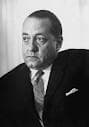
Alejo Carpentier y Valmont was a Cuban novelist, essayist, and musicologist who greatly influenced Latin American literature during its famous "boom" period. Born in Lausanne, Switzerland, of French and Russian parentage, Carpentier grew up in Havana, Cuba, and despite his European birthplace, he strongly identified as Cuban throughout his life. He traveled extensively, particularly in France, and to South America and Mexico, where he met prominent members of the Latin American cultural and artistic community. Carpentier took a keen interest in Latin American politics and often aligned himself with revolutionary movements, such as Fidel Castro's Communist Revolution in Cuba in the mid-20th century. Carpentier was jailed and exiled for his leftist political philosophies.







