“It was the only way to be safe, to pretend to be nothing.”
— Elara's early coping mechanism on the island.

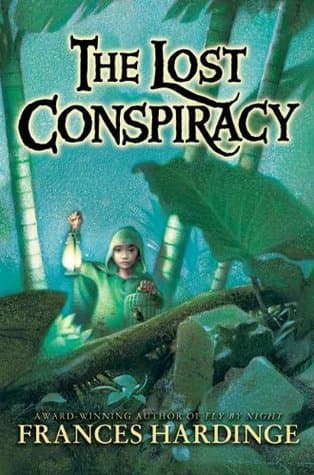
Frances Hardinge (2009)
Genre
Fantasy / Children's / Mystery / Young Adult
Reading Time
12-15 hours
Key Themes
See below
Sign in to track this book
In a land where prophets are revered and the dead are hunted for their ashes, a quiet attendant must unravel her sister's carefully constructed lies to expose a deadly island-wide conspiracy before it consumes them both.
On the island of the Forty-Nine, Hathin lives in the shadow of her older sister, Arilou, who is revered as a 'Lost' — a prophetess who speaks the words of the ancestors. Their village, the Smiling People, are ostracized and viewed with suspicion by the other tribes and the colonial settlers, known as the Forty-Niners, who follow strict, old laws. Hathin carefully tends to Arilou, making sure her prophetic pronouncements are believable, as their survival depends on this deception. Arilou is not truly a Lost; Hathin secretly provides her with information, fabricating the prophecies to maintain their status and protection within their community. This fragile balance is a constant source of tension and fear for Hathin.
The Forty-Niners impose severe laws on the island, particularly regarding the 'ash-gatherers' — individuals who seek out the ashes of the recently deceased. Their beliefs state that a person's ashes must be burned in a specific, sacred location within a strict timeframe for the soul to pass on. Failure to do so condemns the soul to wander. This creates a dangerous trade, as ash-gatherers often steal bodies or interfere with proper burials, leading to conflict and exploitation. Hathin observes these harsh realities, understanding the precarious position of her own people, the Smiling People, who are often victims of these predatory practices and colonial injustices, further highlighting the need for their deception to ensure safety.
A new Governor-General, Hamavel, arrives on the island, bringing a more aggressive and calculating approach to colonial rule. He is particularly interested in the Lost and their prophecies, seeing them as a tool for control and legitimacy. Hamavel's presence increases the scrutiny on Arilou and Hathin, forcing Hathin to be even more careful in orchestrating Arilou's 'visions.' The political climate grows more volatile, with Hamavel subtly manipulating the various factions on the island, including the indigenous tribes and the colonial settlers, for his own ends. Hathin senses that their carefully constructed world is becoming more fragile under his watchful eye, threatening to expose their secret.
The deception surrounding Arilou's prophecies eventually unravels, or perhaps is deliberately exposed. Arilou is captured by the Forty-Niners, specifically by Governor-General Hamavel's forces, who intend to use her as a political pawn. This event shatters Hathin's world and forces her out of her subservient, invisible role. She realizes the full extent of the danger they are in and that her sister's life is at stake. Hathin is left alone, grappling with the immediate need to rescue Arilou and the deeper implications of their long-held lie. This moment propels Hathin into a quest beyond her village, forcing her to rely on her own ingenuity and courage.
Determined to save Arilou, Hathin goes on a dangerous journey into the heart of the Forty-Niner colonial city, a place of alien customs and dangers. She navigates the bustling streets, the rigid social hierarchies, and the constant threat of discovery. Along the way, she meets a diverse cast of characters, some hostile, others surprisingly helpful. She forms an uneasy alliance with a pragmatic and cynical Forty-Niner named Kael, who is involved in the ash-gathering trade, and a resourceful young boy. These unexpected connections are important as Hathin begins to piece together the larger conspiracy, realizing Arilou's capture is part of a much grander scheme.
As Hathin investigates the conspiracy, she uncovers the true, terrifying nature of the Lost and the ancient secrets of the island. She learns that the Lost are not merely prophetesses but are connected to a powerful, sentient fungal network that spans the island, communicating through spores and influencing minds. This network, known as the 'Voice of the Island,' holds immense power and has been manipulated by various factions throughout history. Hathin realizes that the prophecies are not just human constructs but are influenced by this ancient entity, giving her a new, chilling perspective on Arilou's role and the dangers they face.
Hathin discovers Governor-General Hamavel's insidious plan. He is not merely interested in using Arilou as a political tool; he seeks to gain complete control over the Voice of the Island, the sentient fungal network, to solidify his power and ensure the Forty-Niners' dominance. He intends to exploit the Lost and their connection to this network to manipulate the island's inhabitants and resources. Hathin realizes that Hamavel's ambition is a threat to all the islanders, not just her sister, and that his actions could irrevocably alter the balance of power and the very essence of the island.
In a shocking revelation, Hathin discovers that she, not Arilou, has a genuine, though dormant, connection to the Voice of the Island. Her 'invisibility' and ability to observe without being noticed were not merely personal traits but subtle manifestations of this inherent link. This discovery complicates her mission significantly. She must now not only rescue Arilou but also come to terms with her own extraordinary abilities and responsibilities. The truth about her identity forces Hathin to re-evaluate everything she thought she knew about herself and her sister, adding a personal dimension to her already dangerous quest.
Hathin, armed with her new understanding and an unlikely band of allies, confronts Governor-General Hamavel in a climactic showdown. The confrontation takes place among the ancient, spore-laden chambers connected to the Voice of the Island. Hathin is forced to make difficult choices, risking her own life and the lives of those she cares about. She must decide whether to save Arilou at any cost or to prioritize the greater good of the island and its inhabitants, which means preventing Hamavel from seizing control of the Voice. This moment tests Hathin's courage, ingenuity, and moral compass to their limits.
After the confrontation, Hamavel's plans are stopped, though not without significant cost. The island's future remains uncertain, but the immediate threat of colonial domination through the Voice of the Island is averted. Hathin, having fully embraced her connection to the Voice, becomes a genuine Lost, no longer in her sister's shadow. The relationship between the sisters is irrevocably changed, built on a new foundation of honesty and shared understanding. Hathin now faces the task of guiding her people and the island towards a more equitable future, accepting her role as a true conduit for the Voice of the Island.
The Protagonist
Hathin transforms from a hidden manipulator into a powerful, self-aware individual who embraces her true identity and connection to the island's ancient power.
The Supporting
Arilou moves from being a figurehead to a more vulnerable, human character who must confront the truth of her identity and relationship with Hathin.
The Antagonist
Hamavel remains steadfast in his ambition, his character arc defined by the unraveling of his master plan.
The Supporting
Kael gradually shifts from a self-interested survivor to a loyal ally, showing a capacity for empathy and courage he initially suppressed.
The Supporting/Supernatural Force
The Voice of the Island's influence and nature are gradually revealed, becoming a crucial element in the narrative.
The Mentioned/Collective
The Smiling People endure hardship, their collective fate intertwined with Hathin's success in protecting the island.
The Collective
The Forty-Niners' power structure is challenged by Hathin's actions, leading to a re-evaluation of their colonial authority.
The novel explores deception, both as a tool for survival and a source of moral conflict. Hathin's entire life is built on a lie — her sister Arilou's prophetic abilities are fabricated to protect their village from colonial oppression and tribal prejudice. This theme is in the constant tension Hathin feels, the careful planning needed to maintain the illusion, and the eventual unraveling of the truth. The story questions whether a 'good' lie can exist and the devastating consequences when truth is revealed, as seen when Arilou is captured, forcing Hathin to confront the reality of their situation. Ultimately, Hathin discovers that true power is not in maintaining a lie, but in embracing an uncomfortable truth about herself and the island.
“"A lie is a small thing, but it is a thing that grows. It grows roots, and branches, and leaves, until it is a forest, and you are lost inside it."”
The conflict between the indigenous tribes and the colonial Forty-Niners is a central backdrop to the narrative. The Forty-Niners impose their old laws, exploit resources, and marginalize the native populations, particularly the Smiling People, who are seen as traitors. This theme is clear in the harsh 'ash-gathering' laws, the political maneuvering of Governor-General Hamavel, and the constant threat of violence and cultural erasure faced by the islanders. Hathin's journey is an act of resistance, not just to save her sister, but to protect her people and the island from colonial subjugation. The novel highlights the power dynamics, prejudice, and the struggle for self-determination against an oppressive regime.
“"The Forty-Niners brought their laws with them, like a disease, and they tried to make us sick with them too."”
Hathin's journey is one of self-discovery. Initially defined by her 'invisibility' and her role as Arilou's shadow, Hathin gradually uncovers her true potential and a deep connection to the island's ancient power. Her transformation from a quiet, unnoticed girl into a courageous and decisive protagonist is central to the story. The theme explores how external roles can hide internal strength and how confronting difficult truths about oneself can lead to liberation. The revelation of her own dormant connection to the Voice of the Island forces Hathin to redefine who she is, moving beyond the identity prescribed by her family and society to embrace her unique, powerful self.
“"She was not invisible. She had simply been looking in the wrong direction for herself."”
The novel emphasizes how stories, prophecies, and beliefs shape reality and power. Arilou's fabricated prophecies, carefully crafted by Hathin, show how narratives can influence communities, provide hope, and even dictate political actions. The Forty-Niners' strict adherence to their own ancestral laws and the legend of the Lost also highlight the power of collective belief. The story looks at the manipulation of these narratives, showing how Governor-General Hamavel tries to use the Lost's mythology for his own colonial agenda. Ultimately, it reveals that while stories can be manipulated, there is also an inherent, ancient 'story' — the Voice of the Island — that holds a deeper, more profound truth.
“"A story, once told, becomes as real as stone, even if it began as a whisper in the dark."”
The central deception that drives the initial plot and defines the sisters' lives.
The 'Lost' prophecies are the fabricated visions and pronouncements delivered by Arilou, secretly orchestrated by Hathin. This device establishes the sisters' precarious existence and their reliance on deception for survival. It creates immediate stakes, as any misstep could expose their lie and endanger their community. The prophecies serve as a narrative engine, influencing the actions of other characters and drawing the sisters into larger political conflicts. They also provide a framework for exploring themes of truth, belief, and manipulation, as characters react to what they believe are divine messages.
A sentient, ancient fungal network that is the true source of the Lost's power and a major plot catalyst.
The Voice of the Island is a critical plot device, serving as both a magical element and a hidden antagonist/protector. Initially hinted at through the Lost's abilities, its true nature as a sentient fungal network is gradually revealed. This device introduces a unique form of magic and biological intelligence into the world, allowing for mind-to-mind communication, shared visions, and subtle influence. It becomes the ultimate prize for Governor-General Hamavel and the ultimate responsibility for Hathin, elevating the conflict beyond personal stakes to the fate of the entire island. Its existence recontextualizes all previous 'prophecies' and 'visions'.
The colonial laws surrounding death and ashes, creating a dangerous economy and social stratification.
The ash-gathering laws and the resulting trade are a crucial plot device that illuminates the oppressive nature of the Forty-Niner colonizers and the desperation of the island's inhabitants. These laws dictate strict rules about the handling of the dead's ashes, creating a lucrative but morally corrupt industry for 'ash-gatherers' who exploit the bereaved. This device provides a tangible example of colonial control and its impact on indigenous culture and spirituality. It also introduces characters like Kael, who are entangled in this grim economy, and provides Hathin with a means to navigate the underworld of the colonial city and understand its harsh realities.
Hathin's perceived lack of presence, which is later revealed to be a manifestation of her latent powers.
Hathin's 'invisibility' is a key character trait that functions as a subtle plot device. Initially presented as a psychological characteristic – her quiet demeanor and tendency to be overlooked – it later gains a supernatural dimension. This device allows Hathin to observe and gather information without drawing attention, making her an effective orchestrator of Arilou's prophecies and a skilled spy during her quest. The eventual revelation that her 'invisibility' is a manifestation of her dormant connection to the Voice of the Island transforms it from a personal quirk into a crucial aspect of her identity and power, foreshadowing her true role.
“It was the only way to be safe, to pretend to be nothing.”
— Elara's early coping mechanism on the island.
“The island had always been hungry. It ate secrets, and it ate people.”
— A reflection on the dangerous nature of the island and its mysteries.
“Sometimes, the truth was a weapon. And sometimes, it was a shield.”
— Elara's evolving understanding of how to use information.
“We are all made of stories, and some of them are lies.”
— A philosophical observation about personal narratives and deception.
“Fear was a kind of hunger, too, gnawing at the edges of everything.”
— Elara's internal struggle with the pervasive fear on the island.
“The greatest prison is not built of stone, but of what you believe to be true.”
— A profound statement about the power of belief and perception.
“To be truly invisible, you had to be forgotten.”
— Elara considers the ultimate form of hiding.
“Children see what adults ignore, and sometimes, that's their greatest strength.”
— A commentary on the unique perspective of children in uncovering truths.
“Every secret kept has a shadow, and shadows grow.”
— Exploring the consequences and expansion of hidden truths.
“Some truths are like wild birds; they won't be caged.”
— A metaphorical description of the untamable nature of certain truths.
“The world was full of puzzles, and some of them were meant to be solved.”
— Elara's drive to understand the mysteries around her.
“Trust was a fragile thing, easily broken and rarely mended whole.”
— Elara's experience with betrayal and the difficulty of rebuilding trust.
“Even the smallest whisper can start an avalanche, if it falls on the right ear.”
— Highlighting the power of subtle information and its potential impact.
“Sometimes, the greatest bravery is not in fighting, but in enduring.”
— Elara's resilience in the face of ongoing challenges.
“The past was a ghost that haunted the present, whispering its old lies.”
— Reflecting on how historical deceptions continue to affect current events.
Ready to see how well you understood this book? Take our interactive quiz with 10 questions.







