“I am the Lorax. I speak for the trees. I speak for the trees, for the trees have no tongues.”
— The Lorax introduces himself to the Once-ler, establishing his role as protector of the forest.

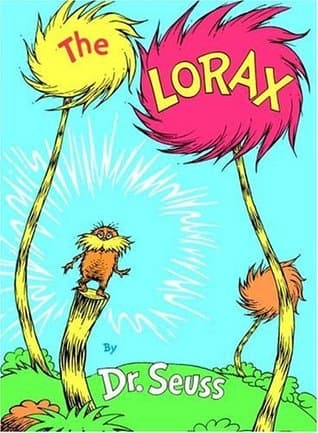
Dr. Seuss (1971)
Genre
Fantasy / Children's / Young Adult
Reading Time
15 min
Key Themes
See below
Sign in to track this book
A mustachioed, tree-loving creature fights a greedy industrialist to save the Truffula Trees, showing that individual action is the last hope for a ruined world.
A young boy lives in a desolate, polluted land where only 'dark, grickly grass' grows. He goes to the edge of town, to the home of the Once-ler, a mysterious, reclusive creature who lives in a rickety house on a 'Grickle-grass' hill. The boy pays the Once-ler fifteen cents, a nail, and the shell of a great-great-great-grandfather snail to hear the story of the Lorax and the vanished Truffula Trees. The Once-ler, speaking through a 'whispering-hole,' begins his tale, describing a time when the land was full of life.
The Once-ler tells of his arrival in a beautiful valley, a clean land filled with fluffy Truffula Trees. Their 'tuffts' were 'softer than silk' and smelled 'like fresh butterfly milk.' He was immediately taken by the valley's natural beauty and the creatures there: the Bar-ba-loots who ate Truffula Fruits, the Swomee-Swans who sang sweetly, and the Humming-Fish who hummed in the pond. Inspired by the Truffula Tree's unique qualities, the Once-ler, with a 'gleam' in his eye, cuts down his first Truffula Tree to knit a 'Thneed' – a peculiar, multi-purpose garment he believes everyone will need.
Right after the first Truffula Tree is cut down, a small, orange creature with a 'mossy, bossy, powerful voice' appears from the stump. This is the Lorax, who 'speaks for the trees, for the trees have no tongues.' The Lorax confronts the Once-ler, asking why he cut down a Truffula Tree. The Once-ler ignores the Lorax's worries, proudly showing his new Thneed, believing it to be a harmless and useful product. The Lorax, however, sees the broader effects of the Once-ler's actions and warns him about possible environmental harm, but his words are not heard.
Despite the Lorax's first warnings, the Thneed sells well. The Once-ler's relatives arrive, and his business quickly grows. He builds a large factory, inventing a 'Super-Axe-Hacker' to cut down Truffula Trees at a fast rate. The Once-ler's greed and desire for profit grow. He says he is creating jobs and providing a needed product, ignoring the Lorax's repeated requests to think about the environmental impact. The Lorax, increasingly upset, watches as more and more Truffula Trees are cut down.
The effects of the Once-ler's constant production soon become clear. The factory's operations create 'smogulous smoke' that pollutes the air, making it hard for the Swomee-Swans to sing or even breathe. More importantly, the Bar-ba-loots, who eat Truffula Fruits, start to get 'crummy tummies' because their food is scarce. The Lorax, his voice full of sadness, asks the Once-ler to stop, but the Once-ler stays focused on his profits. Eventually, the Bar-ba-loots have to leave the valley to find food.
The environmental destruction gets worse. The Once-ler's factory dumps its waste, 'gruvvulous gloop,' into the pond where the Humming-Fish live. The water gets so polluted that the Humming-Fish can no longer hum or swim. Their gills get 'gummed up' with the sludge. The Lorax, with 'tears' in his eyes, tells the Once-ler that the Humming-Fish, too, must leave the valley to find cleaner water. The Once-ler, though briefly bothered, continues his manufacturing, blinded by his desire for more production and profit.
The Once-ler's destructive business reaches its end. One day, the last Truffula Tree is cut down. With no more trees, there is no more raw material for Thneeds. The factory stops, and the Once-ler's relatives leave. The valley, once a lively ecosystem, is now a desolate wasteland, silent and empty. The Lorax, without a word, simply lifts himself by the 'seat of his pants' and 'silently, sadly, he lifted himself and he took to the sky.' He leaves behind only a small pile of rocks with the word 'UNLESS' carved into one of them.
The Once-ler, left alone in the ruined valley, finally understands his actions. He spends years alone, thinking about the Lorax and the lost beauty of the Truffula Valley. He considers the meaning of the 'UNLESS' left by the Lorax, slowly realizing its importance. He understands that 'UNLESS someone like you cares a whole awful lot, nothing is going to get better. It's not.' He sees that individual action and real care are needed for environmental protection and recovery.
Ending his long, warning story, the Once-ler, now an old, regretful figure, drops a single, precious Truffula Seed into the boy's hands. This seed is the last hope for the Truffula Trees and the valley's restoration. The Once-ler asks the boy to plant the seed, protect it, and care for it, saying that 'Truffula Trees are what everyone needs.' He places the job of bringing back the forest, and with it, the creatures and the Lorax, directly on the boy, telling him to learn from his own mistakes and make a difference.
The Antagonist/Narrator
Transforms from a greedy, indifferent industrialist to a remorseful old man who understands the consequences of his actions and seeks to inspire change.
The Protagonist/Environmental Advocate
Serves as a constant, unheeded voice of warning against environmental destruction, eventually vanishing when his mission fails.
The Supporting/Symbol of Hope
Begins as a seeker of knowledge and ends as the bearer of hope for environmental restoration.
The Supporting/Victims of Pollution
Forced to leave their home due to the destruction of their food source.
The Supporting/Victims of Pollution
Forced to leave their home due to air pollution.
The Supporting/Victims of Pollution
Forced to leave their home due to water pollution.
The Mentioned/Central Object
Systematically destroyed by the Once-ler, leading to ecological collapse, with one last seed remaining for potential rebirth.
The main theme of 'The Lorax' is a warning about environmental destruction and the urgent need for conservation. The Once-ler's constant pursuit of profit at nature's expense completely devastates the Truffula Valley, destroys its unique ecosystem, and causes the Lorax to disappear. The book clearly shows the results of deforestation, air pollution, and water contamination. It emphasizes that uncontrolled industry can ruin natural beauty and wildlife. The message 'UNLESS someone like you cares a whole awful lot, nothing is going to get better. It's not.' directly asks for individual responsibility in protecting the environment.
“UNLESS someone like you cares a whole awful lot, nothing is going to get better. It's not.”
The Once-ler shows the destructive power of unchecked greed and industry. His initial interest in the Truffula Trees quickly turns into a strong desire for profit through making many Thneeds. He ignores all warnings from the Lorax, putting economic growth before ecological health. The fast growth of his factory, the invention of the 'Super-Axe-Hacker,' and the resulting pollution are direct results of his greed. The story criticizes the business mindset that often puts short-term money over long-term environmental health and societal well-being.
“I meant no harm. I most truly did not. But I had to grow bigger. So bigger I got.”
Despite the large scale of environmental destruction, the story ends with a strong message about what individual action can do. The Once-ler, in his regret, gives the young boy the last Truffula Seed, putting the hope for restoration in his hands. This act means that even one person, motivated by care and understanding, can start positive change. The 'UNLESS' message highlights that group change comes from individual commitment and that personal responsibility is important in stopping and reversing environmental damage.
“And now, now that you're here, the word of the Lorax seems perfectly clear. UNLESS someone like you cares a whole awful lot, nothing is going to get better. It's not.”
The story has a deep sense of loss and longing for a clean past. The Once-ler's description of the Truffula Valley's original beauty, with its bright trees and happy creatures, sharply contrasts with the desolate, polluted present. This contrast creates a deep sadness for what has been lost due to human carelessness. The Once-ler himself lives with regret, thinking about the Lorax and the lost paradise. This theme shows the permanent results of environmental damage and the importance of valuing and protecting nature before it's gone.
“And all that the Lorax left here in this mess was a small pile of rocks, with one word... 'UNLESS.'”
The story of the Truffula Trees and the Lorax is told as a flashback by the Once-ler.
The narrative structure of 'The Lorax' employs a framing device. The present-day story features a curious young boy seeking answers from the reclusive Once-ler in a desolate, polluted landscape. The bulk of the book then unfolds as the Once-ler's flashback, recounting his arrival in the pristine Truffula Valley and the subsequent environmental destruction. This structure allows the reader to witness the stark contrast between the past and present, emphasizing the tragic consequences of the Once-ler's actions and lending a somber, cautionary tone to the tale.
The Truffula Trees symbolize natural resources and the beauty of nature.
The Truffula Trees are a central symbol in the story. With their vibrant colors, soft 'tuffts,' and sweet scent, they represent the inherent beauty, richness, and vitality of nature and natural resources. Their systematic destruction by the Once-ler symbolizes the exploitation and deforestation of Earth's forests for industrial gain. The last remaining Truffula Seed, entrusted to the boy, symbolizes hope, the potential for renewal, and the future of environmental conservation, highlighting that even a small seed can bring back life.
The story serves as an allegory for real-world environmental degradation and corporate greed.
'The Lorax' functions as an allegory, where the fictional world of Truffula Valley and its characters represent real-world concepts and issues. The Once-ler embodies unchecked industrialism, corporate greed, and human shortsightedness. The Lorax represents environmental activists and the voice of nature, often ignored in the pursuit of profit. The Bar-ba-loots, Swomee-Swans, and Humming-Fish symbolize various species affected by pollution and habitat loss. The Thneed represents consumerism and the creation of unnecessary products, making the story a powerful commentary on human impact on the environment.
A cryptic, single-word message left by the Lorax, symbolizing individual responsibility.
The word 'UNLESS' left behind by the Lorax is a powerful and pivotal plot device. Initially cryptic, its meaning is eventually revealed by the remorseful Once-ler: 'UNLESS someone like you cares a whole awful lot, nothing is going to get better. It's not.' This single word transforms the story from a mere cautionary tale into a call to action. It emphasizes the critical role of individual care, awareness, and proactive effort in environmental protection and restoration, shifting the responsibility from abstract entities to personal commitment.
“I am the Lorax. I speak for the trees. I speak for the trees, for the trees have no tongues.”
— The Lorax introduces himself to the Once-ler, establishing his role as protector of the forest.
“Unless someone like you cares a whole awful lot, nothing is going to get better. It's not.”
— The Once-ler gives the last Truffula seed to the boy, urging him to take responsibility.
“But now, says the Once-ler, now that you're here, the word of the Lorax seems perfectly clear.”
— The Once-ler reflects on the Lorax's warnings after the environmental destruction is complete.
“I meant no harm. I most truly did not. But I had to grow bigger. So bigger I got.”
— The Once-ler justifies his expansion of the Thneed business despite the environmental cost.
“The Lorax said nothing. Just gave me a glance... just gave me a very sad, backward glance.”
— The Lorax silently departs after the last Truffula tree is cut down, leaving the polluted wasteland.
“And all that the Lorax left here in this mess was a small pile of rocks, with the one word... 'UNLESS.'”
— The Once-ler describes the Lorax's final message carved in stone before he disappeared.
“You're glumping the pond where the Humming-Fish hummed! No more can they hum, for their gills are all glummed.”
— The Lorax protests the pollution of the water that harms the Humming-Fish.
“A Thneed's a Fine-Something-That-All-People-Need!”
— The Once-ler markets his Thneed product, claiming it's essential despite its frivolous nature.
“How bad can I be? I'm just building the economy.”
— The Once-ler rationalizes his destructive actions by focusing on economic growth.
“Catch! calls the Once-ler. He lets something fall. It's a Truffula Seed. It's the last one of all!”
— The Once-ler gives the boy the last seed, representing a chance for renewal.
“They loved living here. But I can't let them stay. They'll have to find food. And I hope that they may.”
— The Once-ler laments displacing the Brown Bar-ba-loots due to deforestation.
“Plant a new Truffula. Treat it with care. Give it clean water. And feed it fresh air.”
— The Once-ler instructs the boy on how to nurture the last Truffula seed to restore the environment.
“The wind smells slow-and-sour when it blows and no birds ever sing excepting old crows.”
— Description of the polluted, lifeless landscape after the Truffula trees are gone.
Ready to see how well you understood this book? Take our interactive quiz with 10 questions.
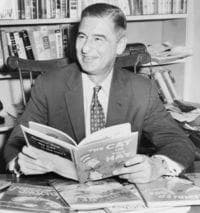
Dr. Seuss, born Theodor Seuss Geisel, was a beloved American children's author and illustrator. He is renowned for his imaginative tales and whimsical rhymes, including iconic works like 'The Cat in the Hat,' 'Green Eggs and Ham,' and 'Oh, the Places You'll Go!'. His unique style and memorable characters have made him a staple in children's literature for generations.







