“Memory, like a house, has many rooms, some lit, some dark, some you never enter.”
— General reflection on the nature of memory and its complexities.

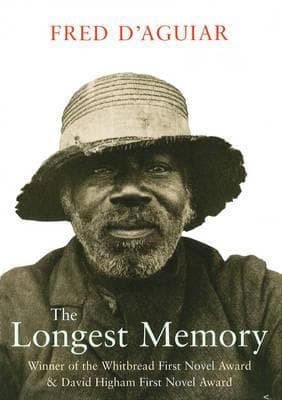
Fred D'Aguiar (1994)
Genre
Literary Fiction / Historical Fiction
Reading Time
150 min
Key Themes
See below
Sign in to track this book
In 1810 Virginia, a fiercely intelligent young slave's bid for freedom and forbidden love for a white girl are tragically intertwined with his father's inadvertent betrayal and the complex loyalties within the plantation.
The story starts with the death of Chapel, a young enslaved man who was whipped to death after trying to run away. His father, Whitechapel, feels deep sorrow and guilt, believing his own actions led to his son's death. The Master, Mr. Whitechapel, speaks at Chapel's funeral, regretting the loss and thinking about his own kindness towards his enslaved people, especially Whitechapel, whom he sees as his most loyal and oldest 'property'. The Master remembers Whitechapel's past, specifically his choice not to run away when he was younger. This strengthens the Master's belief in Whitechapel's loyalty and the 'natural order' of the plantation. This first part sets up the main problem and how much slavery affected both the enslaved and the enslavers.
Chapel, a young enslaved man, secretly falls in love with Lydia, the Master's daughter. Their relationship is secret, built on their shared love for books and learning. Lydia, going against the strict social rules of the antebellum South, teaches Chapel to read and write using books from her father's library. This forbidden education brings Chapel great joy and mental awakening, letting him imagine a life beyond the plantation. But it also gives him a growing wish for freedom and a deep unhappiness with his enslaved life, putting him on a dangerous path that leads to his sad end.
Whitechapel, an elderly enslaved man, is respected by his peers. He believes strongly in submission and endurance as the only ways to survive slavery. He has lived a long life under slavery, seeing the brutal results of rebellion. He often tells stories and gives advice about working hard, obeying the Master, and avoiding actions that might upset the overseers. His advice comes from a wish to protect his community from harm, even if it means giving up personal freedom. This belief often puts him in conflict with younger, more rebellious enslaved people, including his own son, Chapel.
Chapel, driven by his love for Lydia and his wish for freedom, decides to run away from the plantation. He tells his father, Whitechapel, hoping for his approval or at least his silence. However, Whitechapel, afraid for his son's life and his belief that escape is useless, makes the hard choice to tell the Master about Chapel's plans. This act, which Chapel sees as 'betrayal,' comes from Whitechapel's strong belief that escape would only lead to Chapel's death or a worse fate. His actions are a desperate try to protect his son, but they lead to Chapel's capture and severe punishment.
Chapel's escape attempt lasts a short time. The overseer quickly catches him and brings him back to the plantation. As punishment for his rebellion and to make an example for the other enslaved people, the Master orders a severe public whipping. Whitechapel has to watch his son's brutal punishment. Despite his inner pain, he stays calm on the outside, following his practice of showing no emotion. The whipping is constant, and Chapel, weak and without hope, eventually dies from his injuries. This is a direct result of the Master's cruelty and the system of slavery.
After Chapel's death, the Master, Mr. Whitechapel, feels a mix of regret, self-justification, and a brief sense of guilt. He tries to explain his decision to have Chapel whipped, saying it was needed to keep order and stop more uprisings among his enslaved population. He believes he acted within his rights and duties as a slave owner. However, the tragedy of Chapel's death, especially given Whitechapel's perceived loyalty, bothers him. He thinks about the money problems and the disruption to his plantation, but also about the moral difficulties of his position. He does not truly face the inhumanity of his actions.
Lydia, heartbroken by Chapel's death, feels great sorrow and guilt. She feels responsible for his fate, believing her lessons and their forbidden love made him want freedom and ultimately led to his death. Chapel's death deeply breaks her innocence and her idea of her father's kindness. She starts to see the brutal truth of slavery, no longer able to ignore the cruelty and injustice in the system. Her relationship with her father becomes tense, marked by quiet disapproval and a growing disappointment with her world. This makes her face the moral failings of her family and society.
After Chapel's death, Whitechapel is tortured by his memories and the painful question of whether he could have done things differently. He constantly thinks about the past, replaying his decision to tell the Master about Chapel's escape plans. The other enslaved people on the plantation see him with a mix of pity and anger; some see him as a traitor. Whitechapel's inner thoughts show his deep sadness, his regret, and his struggle to make sense of his actions with his love for his son. He feels the weight of his long life, burdened by the 'longest memory' of his people's suffering and his own part in the system.
Throughout the story, there are sections called 'Editor's Commentary' or from other characters' views, such as a newspaper editor or a 'Historian.' These sections give different ideas about slavery, its economic reasons, and the social attitudes of the time. The newspaper editor, for example, praises the Master's actions as a needed way to stop slave rebellion, while also saying how 'humanely' slaves are supposedly treated. These comments highlight the widespread racism and the twisted logic used to support slavery. They contrast sharply with the personal, painful experiences of Whitechapel and Chapel. They make the novel's scope wider than just the plantation.
As the novel goes on, Whitechapel's health and spirit get much worse. He becomes more withdrawn, haunted by his past and his son's death. He spends his days thinking about his life as an enslaved man, questioning his choices and the belief in submission he supported. He deals with the idea of what he leaves behind, wondering what, if anything, he has left. His memories become broken, mixing past and present, as he tries to understand his life and the great injustices he has faced and seen. The novel ends with Whitechapel's quiet, inner struggle, showing the lasting psychological damage of slavery.
The Protagonist
From a respected, stoic elder advocating submission, Whitechapel is broken by his son's death, descending into grief and self-reproach, questioning his life's philosophy.
The Supporting/Catalyst
From an intellectually curious and rebellious young man, Chapel tragically dies in pursuit of freedom, becoming a martyr figure.
The Antagonist
He maintains his self-deception of benevolence despite his actions, experiencing fleeting guilt but never truly confronting the immorality of slavery.
The Supporting
From a naive young woman romantically involved with Chapel, she becomes deeply disillusioned and grief-stricken by his death, realizing the true horror of slavery.
The Supporting
Her character remains consistently resentful of Whitechapel's perceived complicity, reflecting the enduring anger of some enslaved individuals.
The Mentioned/Narrative Voice
Remains a static voice, consistently upholding and justifying the brutal system of slavery.
The Supporting
Consistently portrays a brutal and unfeeling enforcer of the slave system.
The Mentioned/Narrative Voice
Remains a static, academic voice, illustrating how historical narratives can be shaped by societal biases.
The novel deeply looks at memory, especially Whitechapel's 'longest memory,' which includes generations of suffering under slavery. It examines how individual memories form identity and how group memory, often twisted or hidden, affects a community. The many voices—Whitechapel's personal memories, the Master's reasons, the newspaper editor's propaganda, and the Historian's 'objective' account—show how history is argued over and how hard it is to keep truth when there is systemic denial. Whitechapel's pain over his past actions and Chapel's desire for a future free of the past are key to this theme.
“''The past is not what it was.'”
This theme is central to the conflict between Whitechapel and Chapel. Whitechapel represents submission and endurance, believing it is the only way to survive slavery. He has lived a long life by following the Master's will. Chapel, however, shows active resistance and the desire for freedom, helped by his education and love for Lydia. His escape attempt, though sad, is an act of defiance. The novel explores the moral difficulties of both approaches, asking if submission is a form of agreement or a needed survival method, and if resistance, even if it leads to death, offers a form of dignity.
“'Memory is a slave's only possession. It is the only thing that cannot be taken away.'”
The novel clearly shows the deep dehumanization in slavery, affecting both the enslaved and the enslavers. Enslaved people are treated as property, without their names, families, and basic human rights. Chapel's death by whipping is a clear example of this brutality. The Master's self-deception and his inability to see his enslaved people as fully human also show how the system harms the enslaver. The language used, especially in the Master's and newspaper editor's sections, shows how human beings are treated like goods and the psychological harm caused by such a system, leaving lasting scars on Whitechapel's mind.
“'We are to them what they are to us: property. Except we have no property to own.'”
The father-son relationship between Whitechapel and Chapel is at the novel's heart. Whitechapel's choice to tell the Master about Chapel's escape, done out of a desperate wish to protect his son, is seen as a deep betrayal by Chapel and some of the other enslaved people. This act breaks their bond and leaves Whitechapel full of guilt. The theme explores the impossible choices forced on enslaved families, where love and the wish to protect could sadly lead to tragic results within the brutal limits of the system. It highlights the deep emotional wounds slavery caused in family relationships.
“'My son, my only son. I murdered him. I did it. I sold him to the Master.'”
Chapel's secret education, given by Lydia, is a strong symbol of freedom and the search for knowledge. Learning to read and write opens Chapel's mind to possibilities beyond the plantation, making him want freedom and self-determination. This theme shows how education, even when forbidden, can be a tool for fighting oppression. However, it also sadly shows the dangers of such knowledge within a system meant to keep people ignorant and obedient, as Chapel's intellectual awakening ultimately leads to his death.
“'A mind cannot be enslaved. It can only be free.'”
The story is told through various character viewpoints and narrative voices.
The novel employs multiple first-person perspectives and distinct narrative voices, including Whitechapel's internal monologues, the Master's justifications, Lydia's grief, the newspaper editor's propaganda, and a 'Historian's' account. This polyphonic structure allows D'Aguiar to present a multifaceted and often contradictory understanding of slavery, highlighting the subjective nature of truth and memory. It forces the reader to critically evaluate each perspective and piece together a more comprehensive, albeit fragmented, understanding of the events and their impact on different individuals and society.
The story jumps back and forth in time, disrupting chronological order.
While centering on Chapel's death, the narrative frequently shifts between past and present, particularly through Whitechapel's fragmented memories and the Master's recollections. This non-linear structure mirrors the disorienting and traumatic nature of memory under slavery, where past events continually intrude upon the present. It also allows the author to reveal information gradually, building suspense and deepening the reader's understanding of the characters' motivations and the historical context without adhering to a strict chronological progression.
Characters' names carry thematic significance, particularly 'Whitechapel'.
The name 'Whitechapel' is given to both the enslaved patriarch and the Master of the plantation, a deliberate choice that blurs the lines of ownership and identity. It symbolizes the profound interconnectedness of the enslaved and enslaver within the oppressive system, suggesting that the Master's identity is inextricably linked to his ownership of enslaved people. The shared name also highlights the dehumanization of the enslaved, reduced to the name of their 'owner' and the 'property' they represent, rather than their inherent human dignity.
Extensive use of characters' inner thoughts and reflections.
A significant portion of the novel is conveyed through the internal monologues of characters, especially Whitechapel. This device provides intimate access to their deepest fears, regrets, justifications, and philosophies. Whitechapel's tormented reflections on his past actions and his son's death are central to the novel's emotional core, allowing the reader to understand the complex psychological landscape of an enslaved man. The Master's internal justifications for his cruelty also reveal the self-deception inherent in the institution of slavery.
Key phrases and ideas are repeated to emphasize themes.
The novel uses repetition of certain phrases and ideas, such as 'the longest memory' or descriptions of the plantation's daily rhythms, to create a sense of cyclical suffering and the indelible mark of the past. This poetic device reinforces the pervasive nature of slavery's trauma and the difficulty of escaping its psychological grip. The repeated internal questioning by Whitechapel about his actions also highlights his ongoing struggle with guilt and regret, giving the narrative a haunting, almost elegiac quality.
“Memory, like a house, has many rooms, some lit, some dark, some you never enter.”
— General reflection on the nature of memory and its complexities.
“A white man's God is a white man. He don't hear us unless we sing his songs.”
— Whitechapel's cynical view on the master's religion and its relevance to enslaved people.
“The past is a foreign country; they do things differently there.”
— A broader philosophical statement about the distance and difference of historical periods.
“To be without a name is to be without a history, to be without a future.”
— Whitechapel's internal thoughts on the importance of identity and lineage.
“Grief is a ghost that haunts the living, not the dead.”
— Reflecting on the enduring pain of loss experienced by those left behind.
“A man without hope is a man already dead, even if he walks and breathes.”
— Lydia's perspective on the psychological toll of slavery and the importance of hope.
“The longest memory is not the one you keep, but the one that keeps you.”
— A central theme of the book, suggesting that the past profoundly shapes individuals.
“Freedom is not a gift; it is a fight.”
— The unspoken understanding among the enslaved about the nature of their struggle.
“The truth is a heavy burden, but a lie is a crushing one.”
— Whitechapel grappling with the consequences of his actions and the weight of deceit.
“Love does not see color, but society does.”
— Lydia and Chapel's relationship highlighting the societal barriers to love.
“Every lash leaves a scar, not just on the skin, but on the soul.”
— Describing the lasting psychological and emotional damage inflicted by physical abuse.
“To forget is to die twice.”
— Emphasizing the importance of remembering the past, particularly the suffering of ancestors.
“The master's house is built on our backs, brick by bloody brick.”
— A stark image illustrating the foundation of the plantation economy and the exploitation of enslaved people.
“Silence can be a weapon, or it can be a cage.”
— Exploring the dual nature of silence in the context of oppression and survival.
Ready to see how well you understood this book? Take our interactive quiz with 10 questions.







