“It was not a thing that could happen, and so it had happened.”
— Describing the unexpected 'stepping' event that opened up infinite Earths.

Terry Pratchett (2012)
Genre
Fantasy / Science Fiction
Reading Time
360 min
Key Themes
See below
Sign in to track this book
With a simple 'stepper' device, people discover an infinite array of parallel Earths, forcing them to confront the boundless possibilities and implications of a suddenly limitless existence.
On 'Step Day,' a worldwide event happens where many people, especially children and teenagers, begin to use a simple device—often just a potato, a three-way switch, and a wire—to 'step' into parallel Earths. This phenomenon, at first thought to be a mass hallucination, quickly turns out to be real. These parallel worlds, called the Long Earth, mostly lack human life, plants, and animals; they are pristine, untouched versions of Earth. Some people, called 'Natural Steppers,' can step without a device, while others need one. The immediate aftermath is chaotic, with panic, government collapses in some areas, and mass migration as people look for new lives on the new worlds. This leads to a global change in society and resources. Joshua Valienté, a natural stepper living alone, becomes a key figure in this new reality.
Years after Step Day, Joshua Valienté, a 'natural stepper' who prefers being alone in the Long Earth, is contacted by the Black Corporation, a powerful group that quickly used the new reality. He joins a mission to explore deep into the Long Earth. His partner is Lobsang, an advanced Artificial Intelligence that says it is the reincarnation of a Tibetan motorcycle repairman. Lobsang, in a sophisticated airship called 'The Mark Twain,' needs Joshua's natural stepping ability to travel the Long Earth's vast, unknown areas. Their mission is to map, explore, and possibly settle these new Earths, reporting to the Black Corporation's headquarters in Madison, Wisconsin, led by CEO Nelson Azikiwe.
Joshua and Lobsang begin their journey on 'The Mark Twain,' stepping through many parallel Earths. They start by exploring the 'Near Long Earth,' worlds relatively close to 'Datum Earth' (our original Earth). Here, they meet groups of human settlers from Datum Earth, who have formed new communities and societies. Some are ideal, others less so, showing humanity's different ways of starting over. They see various ways people survive, manage resources, and organize society in these new places. Joshua, understanding the Long Earth's details, often connects Lobsang's analytical mind with the unpredictable human elements they meet, while Lobsang records data and navigates the parallel realities.
As 'The Mark Twain' goes further into the Long Earth, Joshua and Lobsang make discoveries: sentient non-human species. They first meet the 'Trolls,' ape-like beings who are good at metalworking and live with certain trees. Trolls are generally peaceful and communicate with gestures and sounds. Later, they find the 'Elves,' more mysterious beings who seem to be from the Long Earth. Elves have advanced mental abilities, including telepathy and telekinesis, and live in harmony with their environment, often in worlds with old forests. These meetings make Joshua and Lobsang rethink what life and intelligence mean beyond Datum Earth, challenging their ideas about the Long Earth being empty.
Going beyond the 'Far Long Earth,' where human settlers are, Joshua and Lobsang find worlds that are increasingly alien and untouched. These worlds often have different geology, air, and unique, non-human plants and animals. The Long Earth's scale and diversity are vast. They also discover the 'Great Divide,' a large, seemingly impassable barrier of worlds not good for human life, often with extreme weather, dangerous creatures, or basic physical differences. This divide acts as a natural limit, stopping human expansion and making Lobsang find new ways to navigate through or around it, extending their journey.
During the journey, Lobsang stays in contact with the Black Corporation, especially its CEO, Nelson Azikiwe. Azikiwe represents the corporate ambition that appeared after Step Day. He sees the Long Earth as a resource to use, sending instructions and demands to Lobsang, often valuing profit and control over ethical exploration. Joshua, seeing the Long Earth's beauty and unique life, becomes less happy with Azikiwe's orders. He starts to question the corporation's real goals and Lobsang's loyalty to them, causing tension between the two explorers as they navigate the Long Earth and their mission's moral issues.
As the journey goes on, Joshua Valienté spends long times alone, thinking about the Long Earth's vastness and humanity's place in it. He thinks about his identity as a natural stepper, always feeling separate from Datum Earth. He sees how human settlements, even those trying to be ideal, bring their own problems and conflicts to the new worlds. This thinking deepens his connection with the Long Earth's natural, untouched parts and contrasts with Lobsang's more practical, data-focused view. Joshua’s experiences with the Trolls and Elves further challenge his human-centered view, making him question the ethics of human expansion and if coexistence with other sentient species is possible.
After years of exploration, having traveled thousands of steps from Datum Earth, Joshua and Lobsang finally turn 'The Mark Twain' back towards home. They have mapped many worlds, met diverse life forms, and gathered much data. Their return is a big event for Datum Earth, as they bring back knowledge and a new understanding of the universe. However, the world they return to has also changed, adapting more to the Long Earth. Joshua struggles to fit back into a society he feels separate from, while Lobsang's data gives the Black Corporation many chances for expansion and use, setting up future conflicts over the Long Earth's control and future.
The Protagonist
Joshua begins as a solitary figure, accepting his role, but evolves into a moral compass, increasingly challenging the corporate exploitation of the Long Earth.
The Supporting
Starting as a purely logical AI, Lobsang develops a more nuanced understanding of humanity and ethics through his partnership with Joshua.
The Antagonist
Azikiwe remains a static character, consistently driven by ambition and profit, serving as a foil to Joshua's developing moral compass.
The Supporting
Monica's arc is largely in the past, her early experiences setting the stage for the Long Earth's emergence, but she continues to observe and adapt to the new normal.
The Supporting
The Trolls' arc is that of being discovered and integrated, however minimally, into humanity's understanding of the Long Earth.
The Supporting
Like the Trolls, the Elves are discovered and their existence expands the understanding of sentience in the Long Earth.
The Supporting
Sally provides companionship and a fresh perspective to Joshua, before continuing her own journey of discovery.
The Mentioned
Captain Franklyn's story serves as an illustrative snapshot, showcasing the initial, disorienting experience of stepping for early individuals.
The core of 'The Long Earth' is the drive to explore the infinite parallel worlds. Joshua and Lobsang's journey shows humanity's curiosity and desire to push boundaries. Each step into a new Earth brings unknown challenges and discoveries, from untouched landscapes to alien life like the Trolls and Elves. This theme is central to the story, as the characters constantly face the Long Earth's vastness and unpredictability, making them adapt and change how they understand existence. The excitement of discovery is balanced with the dangers of the unknown.
“The possibilities are endless. Just be careful what you wish for....”
The novel looks at the results of human expansion into untouched environments. As settlers from Datum Earth colonize the Near Long Earths, they bring their societal problems, greed, and conflicts. Joshua often sees the destruction and exploitation that follows human settlement, comparing it with the untouched beauty of the worlds further out. This theme asks ethical questions about humanity's right to use new resources and the responsibility that comes with settling new frontiers, especially when meeting native sentient species like the Trolls and Elves.
“Every time he saw a human settlement in the Long Earth, Joshua felt a pang of regret. It was like watching a beautiful, untouched canvas slowly being covered in graffiti.”
Joshua Valienté's journey is about his search for identity and belonging. As a 'natural stepper,' he feels separate from Datum Earth and often more at home alone in the Long Earth. His interactions with Lobsang, other human settlers, and especially the Trolls and Elves, make him confront what it means to be human and where his loyalty lies. The theme explores how environment shapes identity and if one can truly belong to an infinite number of worlds, or if stepping creates a constant feeling of being different.
“This wasn't Joshua's world. None of it was his world. In fact, when you got right down to it, he didn't have a world; he had all of them.”
The discovery of Lobsang, an AI claiming reincarnation, and later meeting the Trolls and Elves, challenge humanity's human-centered view of intelligence. Lobsang's unique consciousness blurs the lines between artificial and organic life, while the Trolls and Elves show different forms of sentience, communication, and societal structures. This theme makes readers think about what defines intelligence, consciousness, and 'humanity,' expanding what counts as valuable life in the universe. Joshua's empathy for these non-human species shows a broader definition.
“Lobsang considered this. 'Logic is merely a tool, Joshua. It can be applied to many truths, not just the ones of Datum Earth.'”
The novel shows a contrast between technology, like Lobsang and the Black Corporation, and the Long Earth's untouched natural beauty. The 'Stepper' device, a mix of simple parts and an unknown phenomenon, connects these two worlds. Technology allows exploration, but it also brings the chance for exploitation. Joshua often finds comfort and understanding in the natural world, while Lobsang relies on data and mechanical solutions. This theme explores the tension between technological progress and environmental preservation, asking if humanity can balance innovation with respect for nature.
“He understood the Long Earth. He understood its silences, its dangers, its endless, pristine beauty. It was a language he spoke without words.”
A simple invention enabling travel between parallel Earths.
The Stepper is the foundational plot device, a seemingly rudimentary contraption (often a potato, a switch, and a wire) that allows individuals to 'step' into parallel Earths. Its simplicity belies its profound impact, triggering 'Step Day' and fundamentally altering human civilization. It's both a literal and metaphorical key, unlocking infinite possibilities and driving the entire narrative. The existence of 'natural steppers' like Joshua, who don't require the device, adds another layer, suggesting a natural evolution or innate ability within some humans.
An infinite series of alternate realities accessible by stepping.
The concept of the 'Long Earth' – an infinite chain of parallel Earths, each differing slightly or significantly from Datum Earth – is the primary setting and a major plot device. These worlds are largely pristine and devoid of human life, serving as a blank canvas for human colonization and a source of wonder and danger. The sheer scale of the Long Earth allows for endless exploration, diverse encounters (Trolls, Elves), and moral dilemmas regarding exploitation and preservation, shaping the characters' journeys and the overarching themes.
An advanced AI serving as a companion and data gatherer.
Lobsang, the advanced Artificial Intelligence, functions as both a character and a crucial plot device. As the navigator and record-keeper of 'The Mark Twain,' Lobsang provides the technological backbone for the expedition. His analytical mind, vast knowledge, and ability to process immense amounts of data are indispensable for charting the Long Earth. Furthermore, his unique consciousness (claiming reincarnation) acts as a philosophical device, prompting questions about the nature of intelligence, soul, and what it means to be alive, challenging human-centric perspectives.
The primary vessel for exploration of the Long Earth.
'The Mark Twain' is the airship that serves as Joshua and Lobsang's mobile base and primary mode of transport through the Long Earth. More than just a vehicle, it's a self-contained ecosystem, a symbol of human ingenuity, and a sanctuary in the vast unknown. Its ability to navigate between worlds and sustain its crew makes the deep exploration possible, acting as a technological womb that allows humanity to project itself into the infinite. It is a constant presence, a home in endless wilderness.
“It was not a thing that could happen, and so it had happened.”
— Describing the unexpected 'stepping' event that opened up infinite Earths.
“He was, in fact, a natural born stepper, which was either a gift or a curse, depending on your point of view. Or, more accurately, depending on how many other people were around you.”
— Describing Joshua Valienté's innate ability to 'step' between worlds.
“The problem with having an infinite number of worlds to choose from was that you still had to choose one.”
— Reflecting on the overwhelming choice presented by the Long Earth.
“The more you knew, the more you realized you didn't know.”
— A general observation about expanding knowledge and the Long Earth.
“The universe was not just stranger than we imagine, it was stranger than we can imagine.”
— A common theme in Pratchett's work, applied to the Long Earth's vastness.
“Humanity had always been a migratory species; it just hadn't known it could migrate across dimensions.”
— Discussing the inherent human drive to explore and expand.
“The hardest part of any journey was taking the first step. And then the next one. And the next one after that.”
— Metaphorical advice for the journey through the Long Earth.
“Every world had its own unique smell, a blend of flora, fauna, and whatever geological quirks it possessed.”
— Highlighting the sensory details of exploring new Earths.
“It wasn't that people were bad, it was just that they were people. And people, given enough space, tended to spread out and do their own thing.”
— Observing human nature and the impact of infinite space.
“The greatest discoveries were often made by accident, by someone looking for one thing and finding another.”
— Reflecting on the nature of scientific and exploratory discovery.
“Silence was a thing you learned to appreciate out in the Long Earth. Not just the absence of noise, but the presence of nothing else.”
— Describing the profound quiet of unpopulated worlds.
“The further you went, the less familiar everything became. Until eventually, nothing was familiar at all.”
— Illustrating the sense of increasing alienness in the far Long Earth.
“There was a fundamental difference between a map and the territory it represented. And the Long Earth was all territory.”
— Emphasizing the vast, unchartable nature of the Long Earth.
“You couldn't truly appreciate what you had until you'd seen what you didn't have.”
— A reflection on perspective gained through extensive travel.
“The universe was a big place, and it didn't much care what humans thought of it.”
— A humbling reminder of humanity's place in the grand scheme of things.
Ready to see how well you understood this book? Take our interactive quiz with 10 questions.
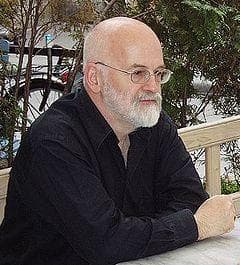
Sir Terence David John Pratchett was an English humorist, satirist, and author of fantasy novels, especially comical works. He is best known for his Discworld series of 41 novels.







