“Every time I go to a restaurant, I think, 'This is the place where I'm going to find my father.'”
— Victor's recurring thought about his absent father.

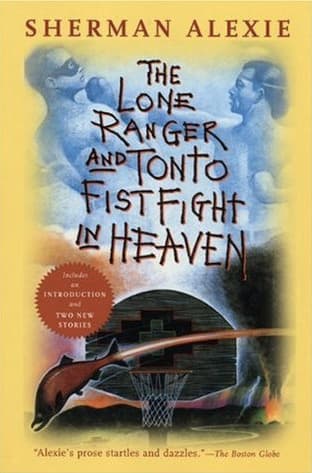
Sherman Alexie (1993)
Genre
Literary Fiction / Young Adult
Reading Time
240 min
Key Themes
See below
Sign in to track this book
Through a darkly comic lens, Sherman Alexie crafts a mosaic of interlinked stories, revealing the grim ironies and enduring spirit of life on the Spokane Indian Reservation, where characters navigate a world of alcohol, basketball, and the haunting echoes of tradition.
Nine-year-old Victor Joseph tells about a New Year's Eve party at his family's home on the Spokane Indian Reservation. The party quickly turns into a drunken fight between his father, Arnold Joseph, and his uncle, Adolph. The two men fight over old problems, fueled by alcohol, while the other adults mostly ignore or join in the chaos. Victor, looking for safety, crawls between his passed-out parents on the floor, hoping their alcoholic fumes might help him sleep. This scene shows the widespread presence of alcohol, violence, and a sense of hopelessness that often marks reservation life, seen through a child's eyes trying to understand his troubled world.
Thomas Builds-the-Fire, a constant storyteller, tells a story about his father, Samuel Builds-the-Fire, and a white woman who picked him up hitchhiking. The woman, who is wealthy and drives a Cadillac, takes Samuel to her home in Spokane. She offers him food and comfort, but the meeting shows a deep cultural and class difference. Thomas guesses about their relationship, suggesting a brief, almost business-like closeness that highlights the complex interactions and misunderstandings between Native Americans and white society. The story emphasizes Thomas's role as a keeper of oral tradition, even when his stories are met with doubt or indifference.
Victor Joseph and his friend Adrian get ready to leave the Spokane Reservation for Seattle, looking for a new life away from familiar problems. Victor thinks about the meaning of the reservation's only, now broken, traffic signal, which used to be a source of both pride and frustration. He thinks about the tension between staying on the reservation, with its comfort and limits, and going into the unknown city world. The story shows the desire for escape and self-reinvention, while also acknowledging the deep ties to home and heritage that make such departures complicated. The traffic signal represents the stagnation and the possibility for change on the reservation.
Victor Joseph and Adrian are at a carnival on the reservation when they meet a white woman named Sadie, who clearly wants an 'Indian' experience. She flirts with them, asking about their lives and showing a romanticized view of Native American culture. The meeting becomes a show for Sadie, as Victor and Adrian play into her stereotypes, making up stories and exaggerating their 'Indianness.' This interaction highlights how outsiders turn Native American identity into an object, and the complex ways reservation residents deal with these expectations, sometimes using them for their own amusement or gain.
Victor Joseph learns his estranged father, Arnold Joseph, died in Phoenix, Arizona. Without money for the trip, Victor reluctantly accepts an offer from Thomas Builds-the-Fire to pay for their travel, if Thomas can go with him. During their journey, Thomas shares stories about Arnold, showing a different, more complex side of Victor's father than Victor remembered. The trip forces Victor to face his complicated feelings towards his father and to make peace with Thomas, whose storytelling Victor often dismisses. This story explores grief, reconciliation, and the power of shared history and stories in understanding family and community.
This story follows Victor Joseph's school experiences from first grade through high school graduation, detailing the challenges and prejudices he faces as a Native American student. In elementary school, teachers and white classmates often single him out or misunderstand him. As he gets older, he faces different levels of racism, from open insults to subtle biases, and struggles with his identity within the mostly white school system. He does well in basketball, finding a sense of belonging there, but ultimately feels a deep disconnect from the mainstream educational path. The story clearly shows the difficulties of navigating two different cultural worlds and the lasting impact of systemic prejudice on Native American youth.
Victor Joseph gets a phone call from his mother, telling him that his father, Arnold Joseph, has returned to the Spokane Reservation after being gone for a long time. This news throws Victor into a mix of emotions, as his relationship with his father is deeply strained and complicated by Arnold's alcoholism and abandonment. The call forces Victor to confront the lingering pain and resentment he feels, as well as a faint hope for reconciliation. The story highlights the lasting impact of family dynamics and the difficulty of forgiving past hurts, especially within the reservation's interconnected community.
Jimmy Many Horses, diagnosed with terminal cancer, deals with his coming death by writing sarcastic letters on stationery that says 'From the Death Bed of James Many Horses III,' though he writes them at his kitchen table. His wife, Norma, supports him with a calm, practical love. Jimmy's letters, full of dark humor and an honest look at his condition, are addressed to various people, including his doctor and the reservation's tribal council. This story shows the resilience, dark humor, and unique ways individuals and families on the reservation face hardship and death, finding dignity even when things are hopeless.
This piece is a series of short, connected scenes and thoughts that challenge romantic or stereotypical ideas of what it means to live on a Native American reservation. The narrator, often sounding like Victor Joseph, compares the perfect images outsiders might have with the harsh realities of poverty, alcoholism, and a struggle for identity. It emphasizes the internal complexities and contradictions of reservation life, highlighting the resilience, humor, and unique culture that exists despite the hardships. The story acts as a commentary on storytelling itself and the difficulty of accurately showing a place and its people.
Victor Joseph remembers a childhood event where he, Thomas Builds-the-Fire, and another boy, Lester FallsApart, accidentally start a fire near the reservation's border. The boys see a mysterious old man who seems to appear and disappear, watching them without getting involved. This incident leaves a lasting impression on Victor, who sees it as a moment of both fear and a strange, almost spiritual connection to the land and its unseen forces. The story looks at the power of shared secrets, the complexities of guilt and innocence in childhood, and the lingering presence of myth and spirituality in the characters' daily lives.
The narrator, a Spokane Indian, finds himself as the only Native American customer in a bar called 'Taki Indian Bar,' a place that ironically mostly serves white customers. He notices the cultural appropriation and casual racism around him, feeling alienated despite the bar's name. A white woman approaches him, expressing a fascination with his 'Indianness,' leading to an uncomfortable interaction. The story explores the challenges of keeping one's identity in a city, the burden of representing one's race, and the persistent stereotypes Native Americans face today.
The story follows the thoughts of a man who believes he is Jesus Christ's half-brother, living on a family farm on the reservation. He struggles with his spiritual beliefs, which mix Christian doctrine and traditional Native American spirituality. His experiences on the reservation, including poverty and alcoholism, shape his unique religious view. He sees similarities between his own struggles and those of Jesus, trying to reconcile his faith with the harsh realities of his life and heritage. This story explores how religion, culture, and personal identity interact within the reservation.
Victor Joseph and Thomas Builds-the-Fire are traveling by train, possibly after getting Victor's father's ashes or just on another journey. As they ride, they think about their shared history, the stories they carry, and the uncertain future. The train journey itself becomes a metaphor for time passing and the connection between their lives and their ancestors' lives. Thomas continues to tell stories, and Victor, though sometimes still resistant, shows a growing appreciation for these stories' power. The story emphasizes their lasting bond and the importance of memory and storytelling in keeping identity and community alive.
Victor Joseph clearly remembers a childhood experience in a fun house at a fair. The distorted mirrors, shifting floors, and confusing paths inside the fun house represent his own confused sense of self and the bewildering realities of life on the reservation. He struggles to find his way out, feeling fear and confusion, which mirrors his larger struggle to understand his identity and find a clear path in a world often full of distortions and challenges. The memory highlights the feeling of being trapped and the search for clarity amid chaos.
This final story offers a combined 'family portrait' of the characters and the Spokane Reservation itself, connecting many of the themes and experiences shown throughout the collection. It reflects on the lasting bonds of family, both biological and communal, and the complex legacy passed down through generations – a mix of pain, resilience, love, and tradition. The story acknowledges the hardships but also celebrates the strength and humor that remain. It acts as a summary, suggesting that despite everything, the community and its stories continue, shaping the identities of those who belong to it.
The Protagonist
Victor gradually moves from resentment and denial towards a more nuanced understanding and acceptance of his family, heritage, and the complexities of his reservation identity, particularly after his father's death.
The Supporting/Protagonist
Thomas remains a consistent figure, his arc focused more on his unwavering commitment to storytelling and his quiet influence on Victor's understanding of their shared heritage.
The Supporting/Mentioned
His arc is largely retrospective, revealed through Victor's memories and Thomas's stories, leading Victor towards a more complex understanding of his father's humanity.
The Supporting
Adrian's arc is less prominent than Victor's, serving more as a constant companion and a representation of shared youthful experiences on the reservation.
The Supporting
His arc is focused on his acceptance of death and his unique way of processing it, showcasing resilience.
The Supporting
Norma's arc is less about personal change and more about her steadfast support and quiet strength in the face of adversity.
The Supporting/Mentioned
His role is primarily to provide a consistent presence in Victor's childhood memories, representing a shared past.
The Mentioned
His arc is entirely within Thomas's storytelling, serving as a historical and metaphorical figure.
The collection explores the complex and often broken sense of identity among Spokane Indians, especially for those living on or near the reservation. Characters like Victor Joseph deal with what it means to be 'Indian' in a modern world, caught between traditional heritage and contemporary American society. They struggle with stereotypes from outsiders (as seen in 'Amusements' and 'The Only Living Indian at Taki Indian Bar') and internal conflicts about loyalty to the reservation versus wanting an outside life ('The Only Traffic Signal...'). The search for belonging often connects with family, community, and the land itself, even with its difficulties.
“What did it mean to be an Indian in this world? It was a question Victor and Thomas had asked themselves a thousand times.”
Storytelling is a crucial act of cultural preservation, healing, and community building. Thomas Builds-the-Fire, though often made fun of, is the constant example of this theme, keeping the past alive through his stories. Stories, whether personal anecdotes or traditional myths, shape how characters understand themselves, their families, and their history. For example, Thomas's stories about Arnold Joseph in 'This Is What It Means to Say Phoenix, Arizona' help Victor rethink his estranged father. Memory, both individual and collective, is not just about facts but about creating meaning and staying connected to heritage when facing loss and assimilation.
“Survival was a story. Story was survival.”
Alcoholism is a widespread and destructive force throughout the collection, shown not as a moral failing but as a systemic issue with deep effects across generations. Victor's father, Arnold Joseph, is a central figure in this theme; his addiction leads to family abandonment and deep emotional scars for Victor ('Every Little Hurricane', 'Telephone Call From Spokane'). The stories show how alcohol contributes to poverty, violence, and despair on the reservation, affecting families and individuals. However, the narrative avoids simple blame, instead exploring the complex reasons for addiction and how characters try to cope, resist, or give in to it.
“Victor crawled between his parents, hoping that the alcohol seeping through their skins might help him sleep.”
Many characters deal with the need for reconciliation, both with others and with their own pasts. Victor's trip to get his father's ashes with Thomas in 'This Is What It Means to Say Phoenix, Arizona' is a powerful look at coming to terms with a difficult parental relationship and forgiving past hurts. The collection suggests that reconciliation is not always about removing pain, but about finding a way to understand and include difficult experiences in one's life. This extends to reconciling with one's heritage and the complex history of Native Americans, finding strength and wisdom amid the trauma.
“How do we forgive our fathers? How do we forgive ourselves?”
Despite the widespread hardships—poverty, racism, and addiction—the stories are full of dark, often surreal humor and a clear spirit of resilience. Characters find ways to laugh when things are hopeless, to create joy, and to endure. Jimmy Many Horses's sarcastic letters from his 'death bed' in 'The Approximate Size of My Favorite Tumor' show this dark humor. The collection highlights the unique ways Spokane Indians deal with their challenging realities, showing their strength, wit, and capacity for love, even when facing the absurdities and injustices of their lives. This theme emphasizes that life on the reservation is not just one thing; it is full of deep suffering and vibrant life.
“We are all dying. It's just a matter of time and how we get there.”
A collection of stories featuring recurring characters and themes, forming a larger narrative.
This collection uses an interconnected short story structure, where individual tales can stand alone but gain greater depth and meaning when read together. Characters like Victor Joseph and Thomas Builds-the-Fire reappear, allowing their relationships and personal histories to evolve and deepen across different narratives. This structure mirrors the oral tradition of storytelling, where individual tales contribute to a larger communal history and understanding. It allows Alexie to explore various facets of reservation life from multiple perspectives while building a cohesive world and character development over time.
Stories often told from the subjective viewpoint of various Spokane characters.
Many stories are narrated in the first person, primarily by Victor Joseph, but also by other characters or an unnamed, communal 'we.' This device provides intimate access to the characters' thoughts, feelings, and experiences, immersing the reader directly into their internal and external worlds. The subjective nature of these narratives highlights individual struggles with identity, memory, and trauma, while also allowing for diverse voices and perspectives on shared experiences within the Spokane community. It creates a sense of authenticity and personal connection to the difficult realities presented.
The blending of everyday reality with fantastical or mythological elements.
Alexie frequently incorporates elements of magical realism and traditional Native American myth into the otherwise starkly realistic portrayal of reservation life. Characters like Thomas Builds-the-Fire embody this, with his seemingly prophetic stories and deep connection to ancestral spirits. Events sometimes defy strict logical explanation, hinting at a spiritual dimension or the enduring power of ancient beliefs. This device enriches the narrative by suggesting that the mundane and the magical coexist, reflecting a worldview where the spiritual is intertwined with the everyday and providing a deeper cultural context for the characters' experiences.
The use of objects, places, or events to represent deeper meanings.
The collection is rich with symbolism, where seemingly ordinary elements carry significant metaphorical weight. The 'only traffic signal on the reservation' in one story symbolizes stagnation, hope, or the potential for change. Basketball often represents an escape, a source of pride, or a metaphor for the struggles of life. Fires can symbolize destruction, purification, or the spark of memory. These symbols deepen the thematic resonance of the stories, allowing Alexie to convey complex ideas and emotions about identity, resilience, and the challenges of reservation life without explicit exposition.
“Every time I go to a restaurant, I think, 'This is the place where I'm going to find my father.'”
— Victor's recurring thought about his absent father.
“Survival is a daily task. Sometimes it's a minute-by-minute task.”
— Reflecting on the constant struggle faced by characters on the reservation.
“We are all a little bit crazy, and we are all a little bit sad.”
— A general observation about the human condition, particularly on the reservation.
“What do you do when you lose everything? You start over.”
— A character's determination after experiencing significant loss.
“Love is like a reservation. It's a place where you're supposed to feel safe, but you never really do.”
— A poignant metaphor comparing love to the complexities of reservation life.
“We are always leaving each other, even when we're standing side by side.”
— A reflection on the transient nature of relationships and the feeling of isolation.
“There are a lot of ways to be a warrior, you know. Not just with a rifle.”
— Thomas Builds-the-Fire's perspective on different forms of strength and resistance.
“Grief is a house where the rooms are always changing.”
— A vivid description of the evolving and unpredictable nature of grief.
“Our parents, they were all alcoholics, but they were good people.”
— Victor's complicated view of his parents and the impact of alcoholism.
“Every Indian in the world is a part of me, and I am a part of every Indian in the world.”
— A powerful statement about shared identity and communal connection.
“Sometimes I think I'm the only Indian who ever felt good about himself.”
— Victor's internal struggle with self-worth and the challenges of his identity.
“The past is like a snake, always coiling around you, trying to bite.”
— Describing the inescapable and often painful influence of history.
“Stories are like people. They change all the time.”
— Thomas Builds-the-Fire's understanding of the dynamic nature of storytelling.
“We were supposed to be the new Indians, but we were still the same old Indians.”
— A reflection on the struggle to break free from generational patterns and stereotypes.
Ready to see how well you understood this book? Take our interactive quiz with 10 questions.
Biography coming soon.







