“The truth is, we are all living in a locked room, and the key is lost.”
— The narrator reflects on the human condition and isolation.

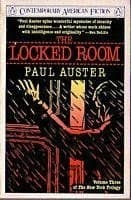
Paul Auster (1986)
Genre
Literary Fiction / Mystery
Reading Time
150 min
Key Themes
See below
Sign in to track this book
A writer's disappearance sends his childhood friend on a quest to understand the literary legacy and hidden life he left behind.
The story starts with the unnamed narrator, a writer in New York, getting a call from Sophie, the wife of his childhood friend, Fanshawe. Fanshawe, a private person, has disappeared, leaving Sophie, their young son, and a locked room of manuscripts. Sophie, needing money, asks the narrator to read Fanshawe's work and see if it is good. The narrator, who has not seen Fanshawe in years, agrees, pulled by friendship, curiosity, and duty. This request begins the narrator's deep dive into Fanshawe's abandoned life and his own past.
The narrator goes to Sophie's home and starts reading Fanshawe's many writings. He finds that Fanshawe is a genius, having written many novels, plays, and poems. The writing is clearly good, and the narrator, acting for Fanshawe's estate, works to get the writing published. He finds a publisher, and Fanshawe's books get good reviews and sell well, improving the narrator's own finances as he manages the estate. This brings him closer to Sophie and Fanshawe's son, blurring the lines between his own identity and his friend's.
As the narrator manages Fanshawe's literary estate, he grows close to Sophie. Their shared sadness, respect for Fanshawe, and raising a child together lead to a romance. The narrator and Sophie marry, and he adopts Fanshawe's son. This marks a change, as the narrator becomes Fanshawe's literary voice and takes on his family role. He moves into the house, lives with Fanshawe's wife and child, filling the space his friend left, creating a complex situation where his own self mixes with the idea of Fanshawe.
Despite his new life with Sophie and the success of Fanshawe's work, the narrator still wonders about Fanshawe's disappearance. He is consumed by the mystery, feeling his own identity is incomplete without knowing Fanshawe's fate. He starts to feel like a replacement. This drives him to search for Fanshawe. He travels across the country, following clues and asking anyone who might know something, becoming a detective in his own life, wanting to know the truth behind his friend's leaving, believing only finding Fanshawe will let him be himself again.
The narrator's search takes him to different places, as he puts together pieces of Fanshawe's life after he disappeared. He learns that Fanshawe, after leaving Sophie, lived in New York City, moving around and doing odd jobs. The narrator finds an old acquaintance of Fanshawe's, a man named Quinn, who gives vague clues. The trail then goes to Boston, where Fanshawe was reportedly seen. Each step of the journey brings more unease and a deeper understanding of Fanshawe's efforts to erase himself, but also makes the narrator feel more like a shadow following a shadow.
The search leads the narrator to Baltimore, where he gets a tip about a man like Fanshawe. He tracks the man to a poor neighborhood and watches him. He finds Fanshawe living under a new name, having started a new life, working as a laborer, and living simply. This shows that Fanshawe chose to disappear and leave his old life and family, rather than being a victim. The narrator deals with what this means, feeling a mix of betrayal, anger, and understanding about Fanshawe's choice to be unknown.
Wanting answers, the narrator confronts Fanshawe in Baltimore. The meeting is tense. Fanshawe, now using a different name, resists at first but then admits his past. He explains why he disappeared, saying he wanted to escape his own genius and the expectations on him, needing a life without identity or ambition. Fanshawe then proposes a pact: the narrator must keep living as 'Fanshawe' – managing his literary estate, being Sophie's husband, and raising his son – and never tell anyone where Fanshawe is or his new name. In return, Fanshawe promises to stay hidden forever.
The narrator returns to New York and his life with Sophie and their son, changed by what he knows. He is bound by his promise to Fanshawe, forced to live a life that is both his own and an imitation. The secret creates a barrier between him and Sophie, as he cannot tell her the truth about her husband. He continues to manage Fanshawe's literary work, keeping the idea of the disappeared author alive. The success and comfort of his new family are now mixed with the weight of his secret, leaving him feeling uneasy and questioning identity and ownership.
Years pass, and the narrator continues his double life. He writes a long, unsent letter to Fanshawe, describing the life he has made, the success of Fanshawe's work, and the challenges of living under another man's shadow. The letter is a way to express himself, exploring feelings of love, resentment, and shared fate. It is an attempt to talk to the idea of his friend, to process how much Fanshawe has affected his life. This letter lets the narrator show his inner struggle and the ideas behind his situation, blurring the lines between 'I' and 'he'.
In a final twist, the narrator, having lived as Fanshawe for so long, decides to disappear himself. He leaves Sophie and their son, and the literary success he helped build. His reasons are complex: perhaps to escape the secret, to find his own identity, or to finish the pattern Fanshawe started. He leaves a note, but its contents are not fully shown, suggesting purpose. The book ends with the narrator stepping away from his borrowed life, like Fanshawe did, making the reader think about the fate of both men and their connected identities. The pattern of disappearance and replacement is complete, leaving an empty space where two men once were.
The Protagonist
Transforms from an anonymous writer into the public face of a literary genius and then into a man burdened by a borrowed identity, eventually choosing his own disappearance.
The Antagonist/Catalyst
Begins as a brilliant but reclusive writer, disappears to escape identity, and eventually lives a life of complete anonymity, forcing his friend to take his place.
The Supporting
Moves from a grieving, financially desperate wife to a remarried woman, finding stability with the narrator, unaware of his ultimate secret.
The Supporting
Grows up under the care of his biological mother and adoptive father, unaware of the true identity of his biological father.
The Mentioned
Briefly appears to provide a clue to the narrator, then fades from the story.
The Mentioned
Facilitates the publication of Fanshawe's work, ensuring his literary success.
The novel explores how identity changes and is built. The narrator slowly loses his own sense of self as he lives Fanshawe's life, marrying his wife and handling his legacy. Fanshawe, on the other hand, purposely gives up his identity to gain a radical kind of freedom. The book asks if identity is something we are born with or something we gather from roles, relationships, and how others see us. The narrator's final disappearance mirrors Fanshawe's, suggesting that finding oneself can lead to completely letting go of who you thought you were, making 'I' and 'he' interchangeable.
““I was no longer myself, but a kind of empty space in which Fanshawe could continue to exist.””
The story looks at what it means to be an author, especially when someone else publishes the work. The narrator becomes the voice and public face of Fanshawe's brilliance, raising questions about who truly 'owns' a work once it is public. Fanshawe's disappearance and the narrator's role challenge common ideas of originality and the link between a writer and their creations. The narrator's choice to write his own story, which becomes 'The Locked Room,' further blurs these lines, suggesting that all writing is, in a way, pretending or interpreting.
““The book I was writing was not my book at all, but his. I was merely the instrument, the amanuensis.””
The narrator's journey is driven by his strong focus on Fanshawe, first to find out what happened to him, and then to fully take on his life. This focus leads to a psychological replacement, where the narrator becomes Fanshawe, taking on his family life and public image. This act of replacement is not just passive but an active, almost forced, adoption of another's life. This theme shows the dangers of losing oneself in another's story and the mental cost, as the narrator's own life becomes an echo of his friend's.
““I had become a ghost in my own life, haunting the house of a man who was no longer there.””
The relationship between the narrator and Fanshawe forms the emotional center of the novel. Their childhood friendship includes admiration, rivalry, and an unspoken connection. Fanshawe's disappearance is an act of leaving, which can be seen as a betrayal of their friendship and his family. The narrator, in turn, 'betrays' Fanshawe by taking his place, but also honors him by protecting his literary work. The novel explores the blurred lines between loyalty and self-interest, and how deeply friends' lives can become connected, even when separated.
““He had left me with a life that was not my own, and I had taken it, willingly or not.””
Emphasizes the theme of identity dissolution and universalizes the experience.
The narrator's anonymity is a crucial device. By not giving him a name, Auster immediately signals the fluid and interchangeable nature of identity, especially in relation to Fanshawe. It allows the reader to focus on his psychological journey and his gradual assumption of another's persona, rather than on a fixed individual. This lack of a name underscores the idea that he becomes an 'empty space' for Fanshawe, making his eventual disappearance all the more potent as a final act of self-erasure or perhaps, a rediscovery of a self beyond a borrowed name.
A literal and metaphorical symbol of Fanshawe's hidden genius and the mystery of his disappearance.
The 'locked room' is both a literal place containing Fanshawe's manuscripts and a powerful metaphor. Literally, it holds the key to Fanshawe's literary genius and the catalyst for the narrator's journey. Metaphorically, it represents the hidden, inaccessible parts of Fanshawe's mind, the mystery of his disappearance, and the narrator's own internal struggle with identity and the secrets he keeps. Unlocking the room is a symbolic act of entering Fanshawe's world, but the ultimate 'locked room' remains Fanshawe's true self and the narrator's own unresolved identity.
Drives the plot forward through a quest for truth, blurring into existential inquiry.
The novel employs elements of a detective story, with the narrator actively searching for Fanshawe, following clues, and interviewing people. This structure provides a compelling framework for the plot, creating suspense and a sense of purpose. However, it quickly transcends a simple mystery, evolving into an existential inquiry. The 'truth' the narrator seeks is not just Fanshawe's whereabouts, but the truth about identity, authorship, and his own place in the world. The detective's quest ultimately leads to a philosophical rather than a definitive, factual resolution, highlighting the elusive nature of ultimate answers.
Allows for deep introspection and a subjective account of events, colored by hindsight.
The entire story is told from the narrator's first-person perspective, looking back on the events. This allows for rich introspection, as the narrator constantly analyzes his motivations, feelings, and the philosophical implications of his actions. The retrospective nature means the narrative is filtered through his memory and later understanding, allowing for foreshadowing and a deeper exploration of his psychological state. It also emphasizes the subjective nature of truth, as the reader only ever sees the story through the lens of the man who became Fanshawe, making the reliability of his account a subtle underlying question.
“The truth is, we are all living in a locked room, and the key is lost.”
— The narrator reflects on the human condition and isolation.
“A mystery is not a puzzle to be solved, but a mirror in which we see ourselves.”
— Discussing the nature of the central mystery in the story.
“In the silence of that room, I heard the echoes of my own thoughts, louder than any sound.”
— Describing a moment of solitude and introspection.
“We spend our lives searching for answers, only to find that the questions were what mattered all along.”
— A philosophical observation by a character.
“The past is a locked room, and memory is the only key we have, however flawed.”
— Reflecting on memory and history.
“Every story is a locked room, and the reader must find their own way in.”
— Metaphor for storytelling and interpretation.
“In the absence of light, we create our own shadows.”
— A character's musing on perception and reality.
“The walls of the room were not made of stone, but of the things left unsaid.”
— Describing emotional barriers between characters.
“To unlock the room, you must first understand why it was locked.”
— Advice given about solving the central mystery.
“We are all detectives in our own lives, piecing together fragments of truth.”
— A reflection on personal journeys and self-discovery.
“The key was not in the lock, but in the hand that turned it.”
— A revelation about agency and action.
“In the end, the only thing locked was my own heart.”
— A character's emotional confession.
“The room held no secrets, only the silence we brought into it.”
— A moment of clarity about the mystery's nature.
“To find the answer, you must first learn to ask the right question.”
— Philosophical insight shared between characters.
Ready to see how well you understood this book? Take our interactive quiz with 10 questions.

Paul Benjamin Auster is an American writer and film director. His notable works include The New York Trilogy (1987), Moon Palace (1989), The Music of Chance (1990), The Book of Illusions (2002), The Brooklyn Follies (2005), Invisible (2009), Sunset Park (2010), Winter Journal (2012), and 4 3 2 1 (2017). His books have been translated into more than forty languages.







