“The thing about locks is that they're designed to keep people out. But they're also designed to let people in.”
— Early in the story, before Mike's full skillset is revealed, hinting at his unique perspective.

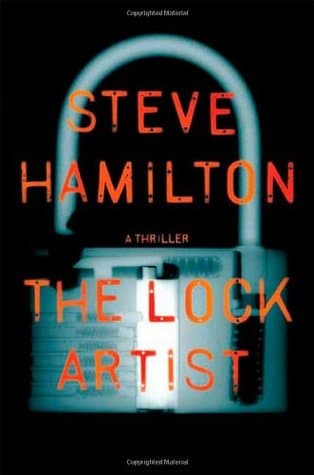
Steve Hamilton (2010)
Genre
Thriller / Mystery / Young Adult
Reading Time
6-8 hours
Key Themes
See below
Sign in to track this book
A mute young man, haunted by a forgotten tragedy, discovers an uncanny talent for opening any lock. This skill thrusts him into a dangerous criminal underworld as he seeks to unlock the secret of his silence and reclaim his past.
Eighteen-year-old Michael Shay, known as 'The Kid,' arrives at a federal detention center in Michigan. He is a mystery, having not spoken in ten years due to a childhood trauma. His silence and a history of petty crimes, mainly breaking and entering, have made him a figure of interest and suspicion. The story immediately shows Michael's unique ability to open any lock, a skill he developed after his trauma. He gets a cell and starts watching the prison's social dynamics, always on guard, his mind full of secrets.
Through flashbacks, the reader goes back ten years into Michael's past. We see him as a happy, talkative eight-year-old boy living with his Uncle Frank and Aunt Peggy. This peaceful scene shatters during a violent home invasion. Michael sees his uncle brutally murdered by two masked men and is forced to hide. The traumatic event, along with finding his aunt's body, leaves him in shock and completely mute. This incident starts his silence and his later focus on locks, which he sees as symbols of control and escape.
Inside the detention center, Michael's reputation as a 'lock artist' precedes him, even though he has never openly shown the skill. An older, influential inmate named Anthony 'Big Tony' DeMarco notices Michael. Big Tony is a powerful figure in the criminal underworld and sees Michael's talent as valuable. He offers Michael a deal: use his skills to help Big Tony's crew outside, and in return, Michael will get protection and a way out of the detention center. This is a tempting offer for a young man desperate for freedom.
Big Tony arranges Michael's early release, and Michael is immediately pulled into the criminal underworld. He is taken to a remote cabin where he meets Big Tony's crew: the impulsive 'Wild Bill' and the more calculating 'Stark.' Their first job is to break into a secure vault holding valuable documents. Michael, despite his inner conflict and desire to escape this life, is forced to comply. He shows his extraordinary talent, carefully picking complex locks and getting past security, proving his worth to the skeptical crew and confirming his unwilling role in their operations.
During one of their jobs, while scouting a location, Michael meets a young local girl named Sarah. She is kind and curious, drawn to Michael's quiet intensity. For the first time in a long while, Michael feels a connection outside the criminal world. Sarah represents a potential escape, a glimpse of a normal life he wants. Their brief interactions contrast sharply with the violence and fear of his life with Big Tony's crew, giving him a fragile hope and strengthening his resolve to find a way out.
The crew's operations become more dangerous. During a high-stakes heist, things go wrong. A betrayal or unexpected security measure leads to a shootout. Wild Bill's impulsiveness makes the situation worse, causing casualties. Michael, caught in the crossfire, realizes he is in serious danger. He escapes the chaos, but he is now a fugitive, hunted by both the authorities and Big Tony's angry crew, who think he might have betrayed them or could expose their operations. His desperate escape marks a turning point in his fight for freedom.
Driven by a strong need for closure and a plan forming, Michael returns to his childhood home in Milford, Michigan. This is where his life changed forever, where his family was murdered, and where his silence began. The house, now abandoned, holds the key to his past and the secret of his muteness. He begins to search the house carefully, reliving the traumatic events, piecing together memories, and looking for any clue that might reveal the identities of the men who destroyed his family.
Through his careful search of the old house, Michael finds a hidden safe and opens it with his skills. Inside, he finds old photographs and documents that reveal the shocking truth about the home invasion. The men who murdered his uncle and aunt were not random intruders but were connected to his uncle's past, possibly involving a criminal enterprise. He identifies one of the killers as 'Wild Bill,' the same volatile member of Big Tony's crew he was forced to work with. This discovery fuels his desire for justice and gives him a clear target for revenge.
Armed with the truth and a careful plan, Michael uses his knowledge of locks and security systems to set a trap. He lures Wild Bill and the other surviving killer to a secluded location, setting up a confrontation where he can finally get his revenge. The climax is tense and violent, with Michael, despite his silence, taking control through his cleverness and preparation. He reveals his identity to Wild Bill, who recognizes him as the 'Miracle Boy' from the past, confirming his guilt.
After the confrontation, justice is served, though by Michael's own hand. The details of the killers' deaths are left somewhat unclear, but Michael's goal is met. Confronting his past and avenging his family finally breaks his ten-year silence. He begins to speak, slowly at first, but with new freedom. The story ends with Michael, though scarred, on a path toward healing and a future free from his past. He can finally connect with others and pursue a life of his own choosing, perhaps even with Sarah.
The Protagonist
Michael transforms from a silent, unwilling participant in crime to an active agent seeking justice, ultimately finding his voice and beginning to heal from his trauma.
The Antagonist
Big Tony remains a static character, a consistent force of corruption and manipulation.
The Antagonist
Wild Bill remains consistently violent and unrepentant, serving as a primary target for Michael's revenge.
The Supporting
Sarah's presence inspires Michael to seek a better future.
The Supporting
Stark's character remains largely static, serving as a foil to Wild Bill and a functional part of the criminal crew.
The Mentioned
Uncle Frank's character is static, serving as the victim whose death propels the plot.
The novel explores the deep impact of childhood trauma, specifically how Michael's witnessing of his family's murder leads to ten years of selective muteness. His silence is not just a physical inability to speak but a psychological defense, a fortress built around his pain. Flashbacks carefully show how his trauma started, how it shaped his identity, and how it pushed him into the criminal underworld. His journey to regain his voice is tied to his journey to confront and resolve his past, as seen when he finally speaks after getting justice for his family.
“I was the Miracle Boy, once upon a time. Later on, the Milford Mute.”
A main theme is Michael's strong pursuit of justice for his murdered family, which often blurs into personal revenge. His silence and forced involvement in crime ironically give him the skills and chances to find his family's killers. The story questions the nature of justice when it is sought outside the legal system. Michael's actions, while morally unclear, come from a deep need for closure and accountability, ending in a violent confrontation where he personally ensures the killers face consequences. This theme shows how far someone will go to fix a broken past.
“Every lock I opened was a practice run for the one lock that mattered: the one that would unlock the truth.”
Michael's journey is a quest to understand who he is beyond his labels ('The Kid,' 'The Lock Artist') and his trauma. His silence has defined him for so long, stopping him from fully forming an identity. Through his forced involvement in crime and his decision to actively pursue his past, Michael starts to shed his passive persona. He discovers his own control, courage, and moral strength. Speaking again at the end symbolizes his reclaiming of self, allowing him to define his own future rather than being defined by his past or his 'unforgivable talent.'
“I was nobody's tool. I was just Michael. And I was coming home.”
This theme appears literally and figuratively throughout the novel. Michael is physically in a detention center and later held by Big Tony's crew. Figuratively, he is a prisoner of his past trauma and his muteness. Locks, which he can open easily, symbolize both his talent for escape and the barriers that hold him. His main goal is freedom—freedom from the criminal life, freedom from his silence, and freedom from his childhood memories. Opening locks becomes a symbol of his struggle to free himself from all forms of captivity.
“You can lock a man up, but you can't lock up his mind.”
Michael narrates his story from a present-day perspective while recounting past events.
The novel employs a framed narrative structure, with Michael Shay narrating his story primarily from his present-day confinement in a federal detention center. This present-day 'frame' allows him to reflect on the past events that led him there, which are told through extensive flashbacks. This device creates suspense, as the reader slowly learns the details of Michael's trauma and his development as a lock artist, while also providing a sense of immediacy and introspection as Michael processes his experiences.
Interspersed memories reveal Michael's traumatic past and the origins of his silence.
Frequent and vivid flashbacks are crucial to understanding Michael's character and motivations. They transport the reader back to his childhood, revealing the horrific home invasion that resulted in his family's murder and his subsequent muteness. These flashbacks are not always linear or complete, mirroring Michael's fragmented memory and trauma, but they gradually piece together the puzzle of his past, building suspense and explaining the profound impact of those events on his present actions and abilities.
Michael's extraordinary talent for opening any lock, a skill born from trauma.
Michael's unique ability to open any lock without a key or combination is the central plot device. It is both a consequence of his trauma (his need to 'unlock' the secrets of his past) and the catalyst for his criminal involvement. This skill makes him invaluable to Big Tony's crew, driving the plot forward by forcing him into dangerous situations. Symbolically, his ability to open physical locks parallels his internal journey to 'unlock' his memories, his voice, and ultimately, his freedom from his past.
Michael's inability to speak, a psychological response to trauma.
Michael's selective mutism is a key plot device that shapes his character and interactions. It forces him to communicate through observation, action, and internal monologue, making him a compelling and enigmatic protagonist. His silence creates tension and mystery, as others struggle to understand him, and it underscores the depth of his trauma. The eventual recovery of his voice at the novel's climax serves as a powerful symbol of his healing and resolution of his past, marking a significant turning point in his arc.
“The thing about locks is that they're designed to keep people out. But they're also designed to let people in.”
— Early in the story, before Mike's full skillset is revealed, hinting at his unique perspective.
“Every lock has a story. Every single one. And if you know how to listen, you can hear it.”
— Mike explaining his almost mystical connection to locks and how he understands their mechanisms.
“Sometimes the best way to hide something is to put it right out in the open.”
— Mike reflecting on misdirection and the art of concealment, applicable to both objects and secrets.
“The past isn't a place you can visit. It's a place you carry with you.”
— Mike grappling with his traumatic past and its continuous influence on his present.
“Silence isn't empty. It's full of everything you're not saying.”
— Mike, a mute, often observes the unspoken communication and tension around him.
“You can't choose your family, but you can choose what you do with them.”
— Mike reflecting on his complicated relationship with his uncle and the choices he makes.
“The hardest part about breaking out is knowing you're going back in.”
— Mike's recurring experience with incarceration and the cyclical nature of his life.
“Being a good listener is sometimes more important than being a good talker.”
— Coming from Mike, who cannot speak, this highlights his strength in observation and understanding.
“There's a difference between being broken and being bent. You can fix bent.”
— A hopeful sentiment about resilience and the possibility of repair, both physical and emotional.
“Sometimes the only way to get what you want is to give up what you have.”
— Mike contemplating the sacrifices he has to make to achieve his goals or protect others.
“A secret is only safe as long as no one knows you have it.”
— Mike's understanding of the precarious nature of secrets and their inevitable exposure.
“The world is full of doors. Some are locked, some are open. And some, you just have to make your own.”
— A metaphor for the challenges and opportunities Mike faces, emphasizing his resourcefulness.
“It's funny how a single moment can change everything. One decision, one mistake, one word.”
— Mike reflecting on the pivotal moments in his life that shaped his destiny.
Ready to see how well you understood this book? Take our interactive quiz with 10 questions.







