“The cage is not the bars, but the space between them.”
— Teza reflects on his imprisonment and the psychological confines of his situation.

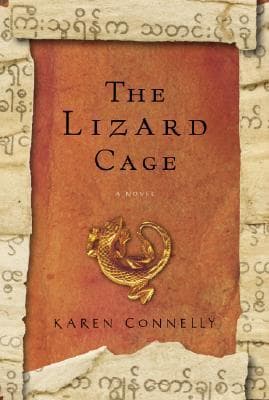
Karen Connelly (2005)
Genre
Literary Fiction / Lifestyle / Historical Fiction / Spirituality
Reading Time
600 min
Key Themes
See below
Sign in to track this book
Imprisoned for protest songs, a Burmese dissident spends seven years in solitary confinement. He uses Buddhist patience to connect with his jailers and forms a freeing friendship with a young orphan within the brutal prison walls.
Teza, a protest singer, is serving his seventh year of a twenty-year sentence in a Burmese prison, confined to a small, dark cell called 'the lizard cage.' He maintains his sanity through mental and spiritual exercises, observing the lizards and insects that share his space. His days are a cycle of hunger, thirst, and the threat of violence from the guards. He recites poetry, practices meditation, and engages in memory games to keep his mind active. His only regular human contact is with the guards, particularly the brutal Major and the young, often indifferent, Little Brother who serves his food. Teza finds meaning and maintains his identity despite deprivation.
A new server, Ko Ko, a fellow prisoner with a criminal past, is assigned to Teza's cell. Ko Ko is more talkative than previous servers and tries to engage Teza in forbidden conversations. He offers small, illicit comforts like extra food or tea, which Teza initially views with suspicion, knowing the severe penalties for such actions. Ko Ko, hoping for leniency and a reward from the Major, tries to get information from Teza about his past and political connections. Despite the danger, Teza, starved for human interaction, finds himself drawn into these cautious exchanges, recognizing both the risk and a faint connection.
Little Brother, a twelve-year-old orphan who has spent his entire life in prison, is one of Teza's primary servers. Initially, the boy is apathetic and hardened by his environment. Teza, through quiet observation and carefully chosen words, begins to educate him. He teaches Little Brother about the outside world, about birds, trees, and the stars, things the boy has never truly seen or understood. Teza shares stories and poems, awakening curiosity in the boy. This slow cultivation of a relationship becomes a source of hope for Teza and a pathway to knowledge and empathy for Little Brother.
Major, the cruel head of the prison, regularly visits Teza's cell, not for interrogation but to psychologically torment him. He tries to erode Teza's resolve by reminding him of his long sentence, the forgotten world outside, and his family's suffering. The Major's tactics range from verbal abuse to physical threats, always aiming to break Teza's spirit and force him to publicly recant his political beliefs. Teza meets these provocations with calm, using his Buddhist training to detach from the Major's cruelty and maintain his inner peace, frustrating the Major.
One day, Ko Ko offers Teza a small piece of paper and a pen. This is a test from Major, hoping Teza will write something incriminating. The temptation is immense for Teza, who wants to record his thoughts, poetry, and memories. He understands the risk, as possession of such items could lead to severe torture or death. After much internal debate, Teza accepts the paper and pen, but instead of writing anything political, he draws a bird, a symbol of freedom and hope. This act of defiance is subtle but powerful, showing his continued resistance without falling into the Major's trap.
Teza falls ill with dysentery and fever. His body weakens, and he is near death. The guards, fearing the political repercussions of a prominent prisoner dying under their watch, provide some minimal medical attention. During this period, Little Brother shows genuine concern, bringing Teza small comforts and showing growing affection. Teza's near-death experience deepens his spiritual resolve and reinforces his connection to the small world of his cell, making him more appreciative of life's simple details and moments of human kindness.
As Teza recovers, his bond with Little Brother strengthens. Teza continues his quiet lessons, teaching the boy to read and write using the smuggled paper and pen, carefully hidden from the guards. He shares stories of his life outside, of music, and of the world's beauty. Little Brother, in turn, begins to protect Teza in small ways, sharing scraps of food, providing information about prison happenings, and showing genuine care. This relationship goes beyond their prisoner-server dynamic, becoming a friendship that offers both solace and meaning within the bleak prison walls.
Ko Ko, seeing Teza's spirit and the growing bond with Little Brother, begins to feel a crisis of conscience. His initial attempts to compromise Teza for personal gain become difficult as he sees Teza's goodness. He starts to subtly defy Major's orders, protecting Teza by not reporting minor infractions and even providing genuine, risky assistance. His interactions with Teza, who treats him with respect despite knowing his intentions, slowly chip away at Ko Ko's hardened exterior, leading him towards quiet redemption and a nascent sense of loyalty to Teza.
Teza, realizing that Little Brother deserves a life outside the prison, begins to plant the idea of escape in the boy's mind. With the reluctant assistance of Ko Ko, who now feels responsible and wants to help, they formulate a dangerous plan. Ko Ko, using his street smarts and connections, gathers information about the prison's weak points and the guards' routines. Teza prepares Little Brother mentally and emotionally, teaching him about the outside world and instilling courage. The plan is full of peril, but the hope of freedom for Little Brother becomes a driving force for all three.
The escape plan is put into action. Little Brother, guided by Teza's instructions and courage, and Ko Ko's practical assistance, manages to slip through the prison's defenses. The escape is tense and dangerous, but the boy's determination, fueled by the promise of a life beyond the walls, sees him through. Teza remains in his cell, his physical imprisonment unchanged, but his spirit is liberated by Little Brother's freedom. He finds peace knowing that a part of him, his teachings and his hope, has escaped into the world, carrying the message of resilience and human connection.
The Protagonist
From a state of physical imprisonment and isolation, Teza finds deeper spiritual freedom and makes a profound impact on others, ultimately achieving a form of liberation through Little Brother's escape.
The Supporting
Transforms from an ignorant, apathetic orphan into a hopeful, educated boy who successfully escapes the prison to find a new life.
The Supporting
Begins as a self-serving opportunist, but through his interactions with Teza, he finds a measure of redemption and actively participates in an act of profound kindness.
The Antagonist
Remains largely unchanged, a symbol of the oppressive regime, but his inability to break Teza highlights his ultimate failure.
The Mentioned
Serve as a constant, unchanging presence, reflecting Teza's internal state and the passage of time.
The Supporting
His presence offers a brief, auditory connection for Teza, and his eventual disappearance reinforces the harsh realities of prison life.
The Mentioned
His teachings remain a constant source of strength and guidance for Teza, demonstrating the enduring power of spiritual wisdom.
The Mentioned
Her memory remains a powerful anchor for Teza, representing the love and life he hopes to return to.
The novel explores the human capacity to endure suffering and maintain hope. Teza, despite solitary confinement, starvation, and psychological torment, refuses to break. He uses meditation, memory, and observation of the natural world (lizards, insects) to preserve his sanity and inner freedom. His spirit inspires those around him, showing that true freedom is an internal state that external forces cannot crush. This theme is central to Teza's character and his influence on Little Brother and Ko Ko.
“My body is a cage, but my mind is free. My body is a cage, but my mind is free.”
Despite enforced isolation, the novel highlights the importance of human connection. Teza's interactions with Little Brother and Ko Ko, though dangerous, become lifelines. His mentorship of Little Brother transforms the boy, giving him hope and a future. Ko Ko, initially self-serving, is moved by Teza's integrity and the bond they form. These connections, however fragile, provide meaning, purpose, and ultimately help Little Brother escape, showing that even in oppressive environments, human empathy can flourish and lead to liberation.
“A man without contact is a man without a soul.”
The book explores the difference between physical imprisonment and spiritual freedom. While Teza is physically caged, his mind and spirit remain free through his Buddhist practices, poetry, and mental exercises. Conversely, characters like Major, though physically free, are imprisoned by their cruelty, fear, and desire for control. Little Brother, initially imprisoned by ignorance and apathy, finds spiritual freedom through Teza's teachings, which then leads to his physical escape. The novel argues that true freedom is an internal state, independent of external circumstances.
“They can cage the bird, but not its song.”
Art, especially music and poetry, is a tool for resistance, memory, and healing. Teza, a protest singer, was imprisoned for his songs, showing the regime's fear of artistic expression. In prison, he recites poetry, creates mental songs, and tells stories to Little Brother, using these forms to maintain his identity, educate, and inspire. Storytelling connects him to his past, to the outside world, and forms the basis of his mentorship, showing how art transcends physical barriers and preserves humanity in the face of oppression.
“A song is a bird, and a bird cannot be held in the hand forever.”
The novel explores human morality, particularly through Ko Ko. Initially, Ko Ko is a morally ambiguous figure, driven by self-interest and willing to betray Teza. However, his interactions with Teza and Little Brother slowly reduce his cynicism, leading him to make choices that are genuinely altruistic and dangerous for himself. His arc suggests that even in a brutal system, individuals can find a path to redemption and choose compassion over self-preservation, showing the transformative power of human influence.
“He had never felt such a thing, this feeling of wanting to do good for another, even at risk to himself.”
Teza's cell, symbolizing both physical confinement and a microcosm of life.
The 'lizard cage' is the name given to Teza's cell, a small, dark, and desolate space. It functions as a powerful symbol of physical imprisonment and the oppressive regime. However, it also becomes a microcosm of life itself for Teza. The lizards and insects that inhabit it represent the natural world, survival, and a focus for Teza's observations and meditations. Through his interaction with this confined space, Teza transforms it from a symbol of despair into a place where he cultivates inner freedom, making the 'cage' a paradoxical symbol of both confinement and liberation.
Teza's use of memory, poetry, and song to maintain his sanity and identity.
Teza's reliance on memory and recitation is a crucial coping mechanism. He meticulously recalls poems, songs, and details from his past life, engaging in complex mental exercises to keep his mind sharp and prevent psychological disintegration. This device highlights the power of the human mind to create its own reality and resist external control. By preserving his memories and artistic heritage, Teza maintains his identity as a singer and a thinking individual, defying the prison's efforts to strip him of his selfhood. It underscores the idea that what's inside a person's head cannot be truly caged.
Representing forbidden knowledge, communication, and the enduring power of creation.
The small piece of paper and a pen, smuggled into Teza's cell by Ko Ko, serve as potent symbols. They represent forbidden knowledge, the power of communication, and the enduring human desire for creation and expression. For Teza, these items are a profound temptation and a dangerous tool. His decision to draw a bird instead of writing political messages signifies his subtle defiance and his focus on hope and freedom. For Little Brother, they become instruments of education and a pathway to the outside world, embodying the transformative power of literacy and the written word.
A constant, longed-for presence, described through Teza's memories and teachings.
The 'outside world' functions as a powerful motif throughout the novel. It is constantly present in Teza's memories, his stories to Little Brother, and the longing of all the prisoners. Teza meticulously describes birds, trees, stars, and the beauty of nature to Little Brother, painting a vivid picture of a world the boy has never known. This motif emphasizes the stark contrast between the prison's harsh reality and the vibrant life beyond its walls, fueling the desire for freedom and highlighting what has been lost or denied. It is the ultimate goal and dream for Little Brother's escape.
“The cage is not the bars, but the space between them.”
— Teza reflects on his imprisonment and the psychological confines of his situation.
“In the darkness, even a small light is a revolution.”
— Describing the hope and resilience found in oppressive conditions.
“Words are the only weapons I have left.”
— Teza, a poet, clings to his art as a means of resistance and survival.
“The lizard does not choose its cage, but it learns to live within it.”
— Metaphor for adapting to circumstances beyond one's control.
“Memory is a country we can never leave.”
— Reflecting on the persistence of the past and personal history.
“Hunger is a teacher that never stops giving lessons.”
— Commenting on the physical and spiritual deprivation in the prison.
“To be forgotten is a death worse than dying.”
— Expressing the fear of obscurity and loss of identity.
“The body may be caged, but the mind can fly over mountains.”
— Teza's inner freedom through imagination and thought.
“Every small kindness is a crack in the wall of hatred.”
— Highlighting the impact of compassion in a brutal environment.
“Silence can be a scream if you listen closely enough.”
— On the unspoken emotions and protests in oppressive silence.
“The sun does not ask permission to rise.”
— Metaphor for natural resilience and inevitability of hope.
“We are all prisoners of something, even if it's just our own minds.”
— Philosophical reflection on universal human constraints.
“A song in a prison is a dangerous thing.”
— On the subversive power of art and expression under tyranny.
“The heart is a stubborn creature; it beats even when it's broken.”
— Describing enduring love and emotional resilience.
Ready to see how well you understood this book? Take our interactive quiz with 10 questions.

Biography coming soon.







