“All children, except one, grow up.”
— The very first line of the book, setting the stage for Peter Pan.

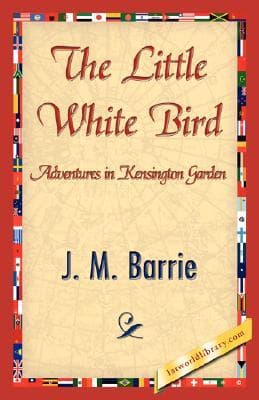
Genre
Fantasy / Children's / Historical Fiction / Young Adult
Reading Time
224 min
Key Themes
See below
Sign in to track this book
In Kensington Gardens, a man who never grew up tells stories of fairies, birds, and the boy who would become Peter Pan, all while dealing with the challenges of fatherhood and imagination.
The story starts with the narrator, a bachelor who enjoys observing life, describing his unusual connection with a young boy named David. David, though not his son, calls him 'father.' The narrator often gets invitations from David's mother, Mrs. Darling, but always declines, preferring to spend time with David on his own terms. He often takes David for walks in Kensington Gardens, sharing stories and his unique philosophy. The narrator enjoys David's innocence and imagination, using their time to share his ideas on childhood, nature, and the magical world he believes exists in the Gardens. He sees David as a window into the pure spirit of youth, a spirit he fears will eventually disappear.
The narrator describes the secret life of Kensington Gardens, a place he believes has magic and its own rules, especially after the gates close at night. He tells David that all babies start as birds, born in Kensington Gardens, and live there until they are ready to fly to their human parents. These 'bird-babies' learn to fly and play among the trees. The most important of these is the Little White Bird, a symbol of innocence and the short time of childhood. The narrator explains that once a baby chooses to leave the Gardens and become human, they slowly forget their bird beginnings, losing their ability to fly and their direct link to this magical world.
The narrator tells the story of Peter Pan, a boy who, unlike other children, flew away from his human home and returned to Kensington Gardens when he was seven days old. Peter, still in his baby clothes, lives among the birds, learning their language and ways. He can play the pipes and has endless adventures. The narrator explains that Peter is special because he refused to grow up, staying a child forever. He interacts with fairies and other magical creatures, becoming a main figure in the secret life of the Gardens. Peter’s story is both charming and a little sad, as he is forever separate from human families, even those who might miss him.
The narrator explains more about Peter Pan's life in Kensington Gardens, describing his time with the fairies. Peter often plays games with them and helps them with their tasks. One day, Peter meets a human girl named Maimie Mannering, who accidentally got locked in the Gardens after closing time. Peter, curious about her, tries to teach her to fly. Maimie, at first scared, eventually connects with Peter. He shows her the hidden wonders of the Gardens and introduces her to some fairies. This meeting shows the mix and possible link between human and magical worlds, with Peter acting as a connection.
As morning nears, Maimie Mannering must choose between staying with Peter and the fairies or returning to her human family. Despite the appeal of eternal childhood and magic, Maimie decides to go back to her mother. She realizes her human family is waiting for her and she belongs with them. Peter, who has grown fond of Maimie, is sad when she leaves. He offers her a thimble as a kiss, a sign of his affection. This event highlights Peter's constant loneliness and the basic difference between his world and the human world. Maimie's return shows the natural pull of growing up and leaving behind the purely imaginative realm.
Throughout the story, the narrator often includes his personal thoughts on parenthood, especially his unique 'fatherhood' to David. He sees himself as a protector of David's innocence, regretting the inevitable loss of childhood wonder. He thinks about how fathers are often distant figures, and that mothers have the true power of creation and connection. He admits his fear of getting too involved, but also his deep affection for David. His 'fatherhood' involves observing and telling stories, rather than typical family life, allowing him to keep a certain distance while still deeply influencing David's imaginative world.
As the story goes on, the narrator notices subtle changes in David. The boy, though still imaginative, starts to show signs of growing up, asking more practical questions and sometimes losing interest in the purely fantastical parts of the Gardens. The narrator observes this with fondness and sadness, knowing that David, like all children, will eventually leave behind the magic of childhood. He tries to share as much of his whimsical wisdom as possible, understanding that his time as David's 'father' in this way is limited. David's gradual maturation emphasizes the main theme of innocence fading.
A notable part of the story is the narrator's unspoken love for Mary, David's mother. He explains that he was once deeply in love with her, but she married another man (David's actual father). This past love explains his unusual connection to David and his hesitation to visit Mary directly. His affection for David is partly an extension of his lasting feelings for Mary. He finds comfort and a form of indirect connection to her through his relationship with her son. This personal history adds a layer of sadness to his thoughts about life, love, and loss.
Throughout the book, the narrator's identity is hinted at but not clearly stated, though there are strong suggestions that he is J.M. Barrie himself. He shares personal stories, philosophies, and a way of telling stories that mirrors Barrie's own. The creation of Peter Pan within this story, presented as a tale told to David, further blurs the line between the fictional narrator and the author. This self-referential aspect allows Barrie to explore his own creative process and his interest in childhood and fantasy, making the narrator a thinly disguised version of himself who is creating the very mythology we are reading.
The 'thimble' and 'kiss' exchange, first seen with Peter Pan and Maimie Mannering, becomes an important symbol. Peter, not understanding human affection, offers a thimble as a 'kiss.' This misunderstanding of adult gestures, yet a genuine attempt at connection, appears in the narrator's own life and his interactions. It represents childhood innocence, where gestures and symbols have different meanings than in the adult world. It shows the gap between a child's understanding and adult customs, and the pure intention that often lies behind children's actions.
The main theme of the story ends with the narrator's sad thoughts on childhood innocence coming to an end. He knows that David, like all children, will eventually lose his ability to see fairies, to believe in the bird-babies, and to fully experience the magical world of Kensington Gardens. This loss is shown as a natural, but regrettable, part of growing up. The narrator tries to keep David's wonder alive for as long as possible through his stories, but ultimately acknowledges that becoming an adult means leaving behind the pure, carefree imagination of youth. He values these moments, knowing they are short-lived.
The narrator finishes his stories by solidifying Peter Pan's place. He suggests that the story he has been telling David, the story of the boy who wouldn't grow up, will continue to be told and remembered. Peter Pan, living forever in Kensington Gardens, becomes a symbol of the lasting spirit of childhood and imagination. Even as David grows up and the narrator's direct influence decreases, the magic of Peter Pan and the Gardens lasts, showing how stories can keep wonder alive in the hearts of children, and in adults who remember their own childhoods.
The Protagonist
The narrator remains largely static, serving as a lens through which the themes are explored, though his reflections on his past love and the fleeting nature of childhood deepen his emotional resonance.
The Supporting
David slowly progresses from pure childlike wonder to the beginnings of a more pragmatic understanding of the world, symbolizing the universal journey out of childhood.
The Supporting
Peter Pan is a static character, eternally a child, symbolizing the unchanging nature of childhood wonder and its inherent separation from the adult world.
The Supporting
Maimie experiences a brief but profound adventure, choosing to return to her human life and thus fulfilling the natural progression out of pure fantasy.
The Supporting
Mary's character is largely static, representing the anchor of family and domesticity, and the object of a past, enduring affection.
The Mentioned
The fairies are static, embodying the timeless magic of the Gardens.
The Mentioned
The Little White Bird serves as a static symbol, embodying the central themes of the story.
This is the main theme of the novel. The narrator often expresses sadness about children losing their wonder and imagination as they get older. He watches David slowly move from believing in magic to a more practical view of the world. Peter Pan represents the wish to avoid this change, staying a child forever. The 'bird-baby' stories support this, suggesting that children lose their wings and memories of their magical origins when they become human. The narrator's stories are an effort to keep this innocence for David, even if only for a short time, as seen when he explains how Maimie Mannering chose to return to her human family, leaving Peter Pan sad.
“For the great thing about Peter is that he can't be made to grow up. He is the only boy in the world who has that secret.”
The entire story builds on the power of imagination and storytelling. The narrator creates detailed myths for Kensington Gardens, filling it with bird-babies, fairies, and Peter Pan. These stories are not just for fun; they are a way for the narrator to understand the world, deal with his loneliness, and connect with David. Telling stories allows him to share his unique view of the world and keep magic alive for David. The stories themselves, especially Peter Pan's origin, show how imagination can shape reality and create lasting legacies, blurring the line between fiction and truth.
“All children, except one, grow up.”
The novel explores a unique kind of parental love through the narrator's connection with David. Though not his biological father, the narrator has a strong influence, guiding David's imagination and sharing wisdom. This 'fatherhood' is about storytelling, observation, and protective affection, rather than typical family life. The narrator's unreturned love for David's mother, Mary, further complicates this, suggesting his bond with David is also a continuation of his feelings for her. This theme highlights that love and family connection can appear in many ways, going beyond typical definitions.
“I was never a father to David in the common meaning of the word. I was his father as Peter Pan was a boy.”
Kensington Gardens is more than just a place; it is a character with a secret, magical life. The narrator describes it as a place where human and magical worlds meet, especially after dark. The trees are conscious, the birds are baby souls, and fairies dance among the flowers. This theme emphasizes the hidden wonders in everyday city spaces, if one has the imagination to see them. It encourages a deeper appreciation for nature and the belief that there is always more to the world than what is obvious, especially through a child's eyes.
“The gates of Kensington Gardens are shut at dusk, and then the fairies come out of their hiding-places and hold their revels.”
The story of Peter Pan is told within the larger narrative of the narrator's relationship with David.
The novel employs a frame narrative, where the primary story of the unnamed narrator's life and his relationship with David acts as the outer frame. Within this frame, the narrator recounts the detailed tales of Kensington Gardens, particularly the origin story of Peter Pan, to David. This structure allows Barrie to explore multiple layers of storytelling and reflection. The outer frame provides a personal, philosophical context for the fantastical inner stories, blurring the lines between reality and imagination, and allowing the narrator to comment on the very act of creation and the nature of childhood.
The narrator invents an elaborate mythology for Kensington Gardens, including the origin of babies as birds.
A significant plot device is the narrator's extensive creation of a unique mythology for Kensington Gardens. This includes the idea that all babies are initially birds who live in the Gardens before flying to their human parents, and the detailed lore surrounding fairies and other magical inhabitants. This device serves to immerse the reader in a world of wonder and to provide a fantastical explanation for the mysteries of life and childhood. It also reflects the narrator's own imaginative mind and his desire to impart a sense of magic to David, making the Gardens a truly enchanted space.
A symbolic exchange that highlights the innocence and misunderstanding between childhood and adulthood.
The 'thimble and the kiss' is a recurring symbolic motif, first introduced when Peter Pan, not understanding human affection, offers Maimie a thimble as a 'kiss.' This device highlights the fundamental differences in understanding between children and adults, and between the magical world and the human world. It represents the innocence of childhood, where gestures hold different meanings, and the purity of intent despite a lack of conventional understanding. It also serves as a poignant reminder of Peter's eternal childhood and his separation from adult emotional complexities.
The narrator's subjective and whimsical perspective shapes the entire story, blending fact and fantasy.
The narrator's perspective is highly subjective and infused with his own philosophical musings and fantastical beliefs, making him an unreliable narrator in a conventional sense. He presents his imaginings about Kensington Gardens and Peter Pan as undeniable truths, blurring the line between what is 'real' within the story and what is a product of his vivid imagination. This device allows Barrie to explore themes of belief, perception, and the power of storytelling itself. The reader is invited to accept the narrator's whimsical worldview, understanding that the 'truth' of the story lies in its emotional and thematic resonance rather than strict factual accuracy.
“All children, except one, grow up.”
— The very first line of the book, setting the stage for Peter Pan.
“To be born is to be wrecked on an island.”
— A philosophical reflection on the nature of existence and individuality.
“When the first baby laughed for the first time, its laugh broke into a million pieces, and they all went skipping about. That was the beginning of fairies.”
— Explaining the origin of fairies, a whimsical and iconic concept.
“It is not in doing what you like, but in liking what you do, that is the secret of happiness.”
— A piece of wisdom offered by the narrator about finding contentment.
“The greatest change that came over the island was not a change in the island itself, but in the attitude of the grown-ups towards it.”
— Discussing how perception changes with age and experience regarding Kensington Gardens.
“You see, children know such a lot now, they soon don't believe in fairies, and every time a child says 'I don't believe in fairies,' there is a fairy somewhere that falls down dead.”
— A poignant explanation of the fragility of belief and the impact of disbelief.
“Of course, he had a mother once, but she was a grown-up, and you know what grown-ups are like; they don't understand.”
— Referring to Peter Pan's early life and the common theme of adults' lack of understanding.
“The world is so complicated, and grown-ups are so very, very clever, but they don't know the most important things.”
— A child's perspective on the perceived wisdom of adults versus true understanding.
“I suppose I always knew that I was not a real boy, but a bird.”
— Peter Pan's self-perception and connection to his avian nature.
“The loveliest of all the birds in the garden was the white bird, and he was the father of all the birds.”
— Introducing the symbolic 'Little White Bird' and its significance in Kensington Gardens.
“There are few things in life more interesting than a baby.”
— The narrator's observation on the captivating nature of infants.
“You must never ask a girl if she would like to be a boy. It is a terrible question.”
— A reflection on gender identity and societal expectations, perhaps ahead of its time.
“I don't know whether you have ever seen a map of a child's mind. There are no lines, no boundaries, only colors and dreams.”
— Describing the imaginative and unconstrained nature of a child's inner world.
“The moment you doubt whether you can fly, you cease for ever to be able to do it.”
— A profound statement about the power of belief and self-doubt, central to the Peter Pan mythos.
Ready to see how well you understood this book? Take our interactive quiz with 10 questions.
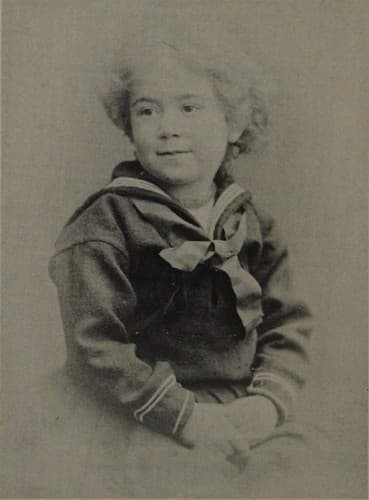
Sir James Matthew Barrie, 1st Baronet, was a Scottish novelist and playwright, best remembered as the creator of Peter Pan. He was born and educated in Scotland and then moved to London, where he wrote several successful novels and plays. There he met the Llewelyn Davies boys, who inspired him to write about a baby boy who has magical adventures in Kensington Gardens, then to write Peter Pan, or The Boy Who Wouldn't Grow Up, a 1904 West End "fairy play" about an ageless boy and an ordinary girl named Wendy who have adventures in the fantasy setting of Neverland.







