“I was neat, clean, shaved and sober, and I didn't care who knew it.”
— Marlowe describing himself at the start of a case.

Raymond Chandler (1949)
Genre
Thriller / Mystery
Reading Time
250 min
Key Themes
See below
Sign in to track this book
In the sun-drenched, shadow-laden world of 1940s Hollywood, Philip Marlowe navigates a serpentine trail of blackmail, drug rings, and escalating murders, all sparked by a seemingly innocent search for a missing brother.
Philip Marlowe's office is visited by Orfamay Quest, a young woman from Manhattan, Kansas. She hires him to find her older brother, Orrin Quest, who she thinks is in Los Angeles. She says Orrin is a simple, good-hearted man, recently out of the Navy, who disappeared after coming to the city. Orfamay gives vague details and a small payment, but her earnestness interests Marlowe. His first investigation leads him to a cheap rooming house, where he learns Orrin was involved with Mavis Weld, a famous movie star, and disappeared after a violent incident.
Marlowe traces Orrin's last known address to the Lido Apartments, a building with a bad reputation. He finds a man named Dr. Lagardie, a quack doctor, dead in an apartment, shot through the eye. Before the police arrive, Marlowe discovers an ice pick, an empty camera, and a woman's scarf. Detective Captain Gregorius and Lieutenant Breeze arrive, immediately suspicious of Marlowe. They question him aggressively, but he maintains his innocence and gives what little information he has. The police believe Marlowe is holding back, making him a primary suspect in the murder, further complicating his search for Orrin and Mavis Weld.
Marlowe learns that Mavis Weld, the film star, was involved with Orrin Quest. He confronts her and her manager, George Dial, at her lavish home. Mavis avoids direct answers and seems to be protecting someone. Marlowe learns that Mavis has a dark secret from her past, a scandal involving Frank Luders and her brother, which is now being used to blackmail her. The murder of Dr. Lagardie, who was likely involved in the blackmail, is connected to this secret. Marlowe realizes Orrin Quest might be more than just a missing brother; he could be a part of a larger, more dangerous game involving Hollywood's crime world.
Marlowe continues to investigate the Lido Apartments murder. He connects the ice pick found at the scene to the murder weapon and thinks about the missing camera. He suspects the camera contained incriminating photographs related to Mavis Weld's past, which were being used for blackmail. He learns that Frank Luders, a minor criminal and photographer, was the blackmailer. Marlowe also realizes that Orrin Quest, far from being the innocent country boy Orfamay described, is violent and gets into trouble. The puzzle pieces suggest a more complex and sinister plot than a simple missing person case.
Marlowe tracks Orrin Quest to Steele's Lodge in the mountains, a remote and somewhat run-down resort. He finds Orrin there, not the innocent man Orfamay described, but a sullen, aggressive individual. Orrin is hiding, clearly involved in something serious. Marlowe confronts him, and Orrin's violent tendencies become clear. Orrin admits to being present during the murder of Dr. Lagardie and says he was working with Frank Luders. He also confesses to having taken the incriminating photos of Mavis Weld. Marlowe realizes Orrin is a dangerous and morally compromised character, far from the naive brother Orfamay presented.
Shortly after Marlowe's encounter with Orrin, Frank Luders, the blackmailer, is found dead. He has been shot, and the police again suspect Marlowe due to his previous involvement and his reputation for being where trouble is. The deaths of Lagardie and Luders, both connected to the blackmail of Mavis Weld, confirm Marlowe's suspicions about a larger criminal enterprise. The police investigation gets more intense, putting more pressure on Marlowe to find the true killer and the mastermind behind the blackmail. He realizes he's dealing with a network of criminals, not just individuals, and that the stakes are getting higher.
Marlowe confronts Orfamay Quest, whose innocent appearance begins to crumble. He discovers she is not as naive as she pretends and has been actively manipulating him and the situation. He learns that the Quest family has a dark history, including a past murder involving Orrin and a family secret that Mavis Weld is connected to. Orfamay's true motive was not simply to find her brother, but to use the situation for money, using her brother's connection to Mavis Weld and the blackmail scheme. The 'sweet young thing' from Kansas is revealed to be a calculating and manipulative individual.
Through investigation and confrontation, Marlowe uncovers the full truth about Mavis Weld. Her real name is Dolores Gonzales, and she is Orrin Quest's sister, not Orfamay's. Mavis (Dolores) and Orrin were involved in a past murder in their hometown, a secret they have been desperate to keep hidden. Dr. Lagardie and Frank Luders were blackmailing Mavis over this secret. Mavis, to protect herself and Orrin, orchestrated the murders of both men. She is a ruthless and desperate woman, driven by a desire to bury her past and maintain her Hollywood career.
Marlowe confronts Mavis Weld with all the evidence he has gathered, exposing her as the mastermind behind the murders of Dr. Lagardie and Frank Luders. He reveals her true identity, Dolores Gonzales, and her family connection to Orrin Quest. Mavis, cornered, confesses to her crimes, driven by a desperate need to protect her secret past and her career. Orrin Quest is implicated as an accomplice. Marlowe, having untangled the complex web of deceit, blackmail, and murder, hands over the evidence to the police, bringing the case to a close. Orfamay Quest, exposed as a manipulative opportunist, faces her own consequences.
The Protagonist
Marlowe maintains his moral compass amidst escalating corruption, ultimately exposing the truth despite personal risk and official suspicion.
The Supporting
Her facade of innocence crumbles, revealing a manipulative and opportunistic individual seeking financial gain.
The Antagonist
Her carefully constructed life as a movie star unravels as her past crimes are exposed, revealing her true, murderous nature.
The Supporting
His true violent and complicit nature is revealed, moving from a missing person to a key figure in the murder plot.
The Supporting
Moves from initial suspicion of Marlowe to a grudging respect and understanding of his methods.
The Supporting
Remains largely antagonistic towards Marlowe, symbolizing the obstacles official law enforcement presents.
The Supporting
Initially protective of Mavis, he struggles to maintain her facade as her secrets are exposed.
The Mentioned
His murder serves as the inciting incident, revealing the dangerous undercurrents of the plot.
The Mentioned
His murder further escalates the stakes, confirming the deadly nature of the blackmail plot.
The novel explores appearance versus reality, especially in Hollywood. Characters like Orfamay Quest present an innocent image, while Mavis Weld (Dolores Gonzales) maintains a glamorous public image that hides a violent past. Marlowe constantly has to uncover layers of deception to find the truth; characters are rarely what they seem. Hollywood's glamour hides corruption, blackmail, and murder, showing how appearances can conceal dark realities. The 'little sister' herself shows this theme.
“What did it matter where you lay once you were dead? In a dirty sump or in a marble tower on top of a high hill. You were dead, you were sleeping the big sleep, you were not waiting for anything, not listening for anything.”
Chandler uses Hollywood to expose its corruption and moral decay. Beneath the dazzling lights, the industry is a breeding ground for blackmail, violence, and deceit. Movie stars like Mavis Weld are products of a system that demands flawless public images, forcing them to extreme lengths to bury their pasts. The pursuit of fame and fortune erodes moral boundaries, leading characters into crime. Marlowe moves through this cynical world, showing the contrast between the city's glamorous facade and its rotten core.
“Hollywood is a town where they raise hell in private and call it a career.”
Philip Marlowe is a cynical hero who, despite working in a morally ambiguous world, follows his own strict ethics. He is often sarcastic and world-weary, aware of the widespread corruption, yet he consistently seeks justice and truth, even when it puts him at odds with criminals and the police. His refusal to be bought or intimidated, and his relentless pursuit of the real story, show his integrity. This theme shows the individual's struggle to maintain morality in a corrupt society, with Marlowe as a beacon of principled action.
“I was a knight in shining armor, and I was going to save the dame. But the dame was a killer. So much for knights.”
The plot is driven by buried family secrets, especially those surrounding Mavis Weld (Dolores Gonzales) and Orrin Quest. Their shared past involves a murder they have gone to great lengths to hide, leading to blackmail, more murders, and a complex web of deceit. The destructive power of these secrets is clear in how they shape the characters' lives, forcing them into desperate actions to prevent exposure. The theme explores how the past can haunt individuals and families, and how attempts to bury it often lead to worse consequences.
“There are always two sides to every story, and sometimes three.”
Deception and manipulation are central to the story; almost every character uses some form of falsehood. Orfamay Quest manipulates Marlowe with her innocent act, Mavis Weld manipulates her public and those around her to protect her identity, and various characters manipulate each other for money or to cover up crimes. Marlowe's main task is to cut through these layers of deceit, making the process of finding the truth hard and dangerous. The theme highlights how common dishonesty is in Marlowe's world and how difficult it is to know true motives.
“It was a question of finding the truth, and the truth was a very slippery thing.”
Marlowe's cynical, observant voice guides the reader through the mystery.
The entire novel is narrated by Philip Marlowe in the first person. This allows the reader direct access to his thoughts, observations, and cynical worldview. His distinctive voice, characterized by sharp wit, metaphorical language, and world-weary introspection, shapes the tone and atmosphere of the story. This narrative device immerses the reader in Marlowe's perspective, making them privy to his deductions, frustrations, and moral code, while also emphasizing the subjective and often unreliable nature of the information he gathers from others. It is crucial for establishing the hard-boiled genre's signature style.
Mavis Weld embodies the dangerous, alluring woman who draws the protagonist into peril.
Mavis Weld serves as a classic femme fatale figure. She is beautiful, glamorous, and initially appears to be a victim, drawing Marlowe into her orbit. However, she is ultimately revealed to be manipulative, ruthless, and deadly, a woman who uses her allure to conceal her criminal activities and protect her secrets. Her character represents the seductive yet destructive power of women in the noir genre, leading the male protagonist into danger and moral compromise. Her dual identity as Dolores Gonzales further emphasizes her deceptive nature.
Misleading clues and characters that divert Marlowe's investigation.
Chandler masterfully employs red herrings and false leads to complicate the mystery and keep the reader guessing. Orfamay Quest's innocent persona is a significant red herring, as is the initial focus on Orrin Quest as a simple missing person. The multiple murder victims, each with their own murky connections, also serve to deflect suspicion and obscure the true mastermind. These misdirections force Marlowe (and the reader) to constantly re-evaluate assumptions and piece together a fragmented truth, highlighting the labyrinthine nature of the criminal underworld he investigates.
The contrast between Hollywood's image and its dark reality.
This device contrasts the public image of Hollywood glamour and wealth with its hidden world of crime, corruption, and moral decay. The lavish homes and celebrity status of characters like Mavis Weld are juxtaposed with the blackmail, drug use, and violence that underpin their existence. Marlowe constantly navigates between these two worlds, revealing how the pursuit of fame can lead to profound moral compromise and how the city's glittering surface hides a rotten core. This contrast serves to critique the superficiality and hypocrisy of the entertainment industry.
“I was neat, clean, shaved and sober, and I didn't care who knew it.”
— Marlowe describing himself at the start of a case.
“There is no trap so deadly as the trap you set for yourself.”
— Marlowe reflecting on the dangers of his own actions.
“The streets were dark with something more than night.”
— Marlowe observing the ominous atmosphere of Los Angeles.
“I'm a romantic. I hear voices crying in the night and I go see what's the matter.”
— Marlowe explaining his motivation as a detective.
“It was a blonde. A blonde to make a bishop kick a hole in a stained-glass window.”
— Marlowe describing an attractive woman he encounters.
“The law isn't justice. It's a very imperfect mechanism.”
— Marlowe commenting on the flaws of the legal system.
“I don't mind if you don't like my manners. I don't like them myself.”
— Marlowe in a confrontational dialogue.
“The tragedy of life, my friend, is not that the beautiful things die young, but that they grow old and mean.”
— Marlowe reflecting on the corruption of beauty over time.
“You can't tell anything about a man by the way he wears his hat.”
— Marlowe dismissing superficial judgments.
“I was as hollow and empty as the spaces between stars.”
— Marlowe describing his emotional state during the investigation.
“The only thing that really bothers me is the margin of error.”
— Marlowe considering the uncertainties in his work.
“She gave me a smile I could feel in my hip pocket.”
— Marlowe reacting to a charming gesture.
“It was a nice little murder. Neat, clean, and almost polite.”
— Marlowe sarcastically describing a crime scene.
“The world was wet and dark, like the inside of a whale.”
— Marlowe painting a vivid picture of a rainy night.
Ready to see how well you understood this book? Take our interactive quiz with 10 questions.
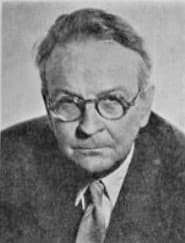
Raymond Thornton Chandler was an American-British novelist and screenwriter. In 1932, at the age of forty-four, Chandler became a detective fiction writer after losing his job as an oil company executive during the Great Depression. His first short story, "Blackmailers Don't Shoot", was published in 1933 in Black Mask, a popular pulp magazine. His first novel, The Big Sleep, was published in 1939. In addition to his short stories, Chandler published seven novels during his lifetime. All but Playback have been made into motion pictures, some more than once. In the year before his death, he was elected president of the Mystery Writers of America.







