“The Little House was very happy as she sat on the hill and watched the countryside around her.”
— The opening lines describing the house's idyllic rural life.

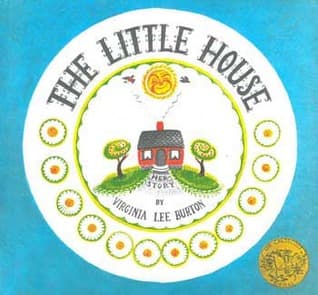
Virginia Lee Burton (1942)
Genre
Fantasy / Children's / Historical Fiction
Reading Time
10 min
Key Themes
See below
Sign in to track this book
A charming little house, once in a daisy field, experiences the passage of time as the city swallows her, only to find her way back to the peaceful countryside she loves.
The story begins with a little house, built sturdy on a small hill in the countryside. She is surrounded by green fields, apple trees, and daisies. From her spot, the Little House can see the sun rise and set, watch the seasons change, and observe the stars at night. She is happy in her quiet setting, enjoying nature's beauty. Her builder tells her she will never be sold, and she believes she will stay there forever, watching the world go by slowly.
As years pass, the Little House sees the seasons' cycle. She sees spring bring new flowers, summer's warmth, autumn's colors, and winter's snow. She observes the same family living in her for generations. Slowly, she starts to notice changes in the distance. A road is paved, then telephone poles appear, followed by a gas station and a small store. These are far away at first, but they are the first signs of the world coming closer to her peaceful life.
The changes happen faster. More houses are built, first small, then bigger, forming rows and streets. The quiet country road outside the Little House becomes a busy highway. Trolley cars start to run, and the Little House sees more people and cars. The fields of daisies and apple trees are replaced by new buildings. She is no longer alone on her hill; other houses now stand close by, blocking her view of the distant mountains and the sky. Nature's sounds are slowly replaced by construction and traffic.
Eventually, the city grows so large it surrounds the Little House. Tall buildings rise on all sides, blocking out the sun and stars she once loved. The air fills with smoke and noise from cars, trucks, and trains. Her green grass is paved over with concrete, and her clear view is now a maze of skyscrapers and electric wires. She feels sad and lonely in the constant activity, missing her quiet country life. The city is very different from the peace she knew, making her feel small and out of place.
As the city changes, the Little House becomes an old, forgotten building. Her paint peels, her windows are dirty, and she looks out of place among the tall, modern buildings. People pass by without seeing her, or they just see her as an old, unwanted structure. She dreams of the days when she was surrounded by nature, feeling sadder and more neglected. The life inside her has faded, and she wonders if she will ever leave the concrete city that has taken her over. Her cheerful look is replaced with weariness.
One day, a woman walks by the Little House and notices its unique design. She feels a sense of familiarity, remembering stories from her great-great-grandmother about a little house on a country hill. Looking closer, she confirms this is the same house. This woman is the great-great-granddaughter of the original builder, and she feels a strong connection to the forgotten house. She sees past the dirt and the city's neglect, recognizing the beauty and history in the old structure.
The great-great-granddaughter decides the Little House does not belong in the noisy city. She believes the house should be back in the quiet countryside, where she can again see the stars and be surrounded by nature. She plans to move the entire house. This is a big job, needing careful planning and special equipment. The woman wants to restore the Little House to her former state and give her the peaceful life she was built for, far from the city.
With much effort, the Little House is lifted onto a large truck and slowly moved through the city streets. People stop to watch, surprised by a moving house. The journey is long, but as they leave the city, the Little House feels hope. She passes familiar places that are now part of the city, and then greener places appear. The air gets cleaner, the sounds lessen, and the Little House feels her old life returning.
Finally, the Little House arrives at her new place: a green hill in the countryside. She is carefully set down, and immediately, she feels at home. The view is beautiful, with fields of daisies, apple trees, and a clear sky. The sounds are birds chirping and wind in the trees, a welcome change from the city's noise. She is repainted and fixed, looking new, but with the wisdom of her many years. The Little House is happy again, fulfilling her original purpose in a peaceful setting.
The Little House lives happily on her new hill, watching the sun rise and set, and the seasons change, just as she did when she was new. She is surrounded by nature, and her windows reflect the blue sky and green trees. She is again a loved home, full of warmth and life. Her journey has come full circle, from a quiet country house, through the city, to a peaceful country home once more. She lives happily, content in her rightful place.
The Protagonist
The Little House transforms from a content country dwelling to a sad, neglected city relic, ultimately finding renewed happiness and purpose by returning to the countryside.
The Supporting
Not applicable, as his role is primarily foundational.
The Supporting
She acts as a benevolent force, bringing about the Little House's salvation and restoration.
The Antagonist (Environmental)
The City grows, transforms, and eventually recedes from the Little House's immediate environment.
The Supporting (Environmental)
The seasons perpetually cycle, contrasting with the linear progression of urban development.
The main theme explores progress and its impact on natural places and peace. The Little House's journey from a country setting to a noisy city shows how city growth can change landscapes, remove nature, and create isolation. The story suggests that while 'progress' brings new things, it often costs peace, beauty, and connection to nature, showing the need for balance.
“''She was just a little house and she was very happy.'”
Nostalgia is a theme, as the Little House constantly remembers and wants her past life in the peaceful countryside. Her sadness in the city comes from her memories of open fields, starry nights, and nature's sounds. This longing shows a common human feeling for simpler, more natural times and a deep connection to one's beginnings. Her return to the country fulfills this longing, showing the happiness in getting back what was lost and returning to one's true 'home.'
“''She missed the field of daisies / and the apple trees dancing in the moonlight.'”
The story shows the importance of recognizing and keeping historical value and a connection to the past. The Little House, though old and broken in the city, has value as a symbol of an older time. Her rescue by the great-great-granddaughter of her builder shows how historical knowledge and appreciation can lead to saving important buildings. It suggests that not everything old should be thrown away for new things, and that keeping links to the past makes the present better.
“''But the little house was very strong and well built. So she was not at all surprised when a great-great-granddaughter of the man who built her saw her and said, 'That's my great-great-grandmother's little house!''”
A main theme is finding and returning to one's proper place. The Little House is happy because she is where she belongs, surrounded by nature. When the city takes her over, she feels out of place, sad, and disconnected from who she is. Her move back to the countryside means a return to belonging, where she can again do what she was meant to do and be happy. This theme connects to the idea that everything, alive or not, does best in an environment that fits its true nature.
“''And she was very happy. She never wanted to live in a city again.'”
Giving human qualities and emotions to the Little House.
The most prominent plot device is the anthropomorphism of the Little House. She is given a face (windows for eyes, a door for a mouth) and experiences human emotions such as happiness, contentment, sadness, loneliness, and hope. This allows young readers to empathize with an inanimate object and understand the abstract concepts of environmental change and the impact of progress through her personal journey. Her feelings drive the narrative and make the story emotionally resonant.
Illustrations and text depicting the gradual transformation of the landscape.
The book masterfully uses both illustrations and text to depict the relentless passage of time and the slow, inexorable growth of the city. Each page turn or new paragraph often signifies years passing, with subtle changes in the landscape (e.g., a dirt road becoming paved, then a highway; few houses becoming many). The visual progression, with buildings steadily encroaching and growing taller, is particularly effective in showing the gradual engulfment of the Little House, making the impact of urbanization tangible.
The story begins and ends with the Little House in a similar, peaceful country setting.
The narrative structure is circular, beginning with the Little House in an idyllic country setting and concluding with her return to a similar, peaceful rural environment. This circularity emphasizes the theme of belonging and the idea that some things are best preserved in their original context. It provides a satisfying resolution, suggesting that while change is inevitable, it is possible to reclaim and restore what is lost, bringing the Little House's journey to a fulfilling full circle.
The Little House as a symbol for nature, simplicity, and the past.
The Little House itself serves as a powerful symbol. Initially, she symbolizes the beauty and tranquility of nature and a simpler way of life. As the city grows around her, she becomes a symbol of nature's vulnerability to urban expansion and the fading past. Her dilapidated state in the city symbolizes neglect and the loss of natural beauty. Her eventual rescue and restoration symbolize hope, the importance of preservation, and the enduring human desire for connection to nature and history.
“The Little House was very happy as she sat on the hill and watched the countryside around her.”
— The opening lines describing the house's idyllic rural life.
“She wondered what it would be like to live in the city.”
— The house's curiosity about urban life as she sees distant lights.
“The city grew and grew until it surrounded the Little House.”
— The gradual encroachment of urbanization on the rural landscape.
“She couldn't see the sun or moon because the lights of the city were too bright.”
— The house's loss of connection to nature in the crowded city.
“The Little House was very sad and lonely.”
— Her feelings after being abandoned and surrounded by skyscrapers.
“One day the great-great-granddaughter of the man who built the Little House saw her.”
— The turning point when a descendant rediscovers the house.
“They moved her out to the country, where she could see the sun and the moon and the stars.”
— The house's relocation back to a rural setting.
“Once again she lived on a hill, surrounded by apple trees.”
— The happy conclusion as the house returns to a peaceful life.
“She was lived in and taken care of and loved.”
— The final lines emphasizing the house's restored purpose and care.
“The seasons came and went, and the Little House watched them from her hill.”
— A recurring motif showing the passage of time and nature's cycles.
“The roads grew from country lanes to paved highways.”
— Illustrating the technological and infrastructural changes over time.
“She saw the first horseless carriage go by.”
— The house witnessing early automobiles, symbolizing modernization.
“The Little House was painted and fixed up, and she looked just as she had long ago.”
— After being moved, the house is restored to its original beauty.
“She was glad to be back in the country where she belonged.”
— The house's contentment after returning to her roots.
Ready to see how well you understood this book? Take our interactive quiz with 10 questions.

Biography coming soon.







