“As long as we have each other, we will be happy.”
— Pa often reassures the family during difficult times.

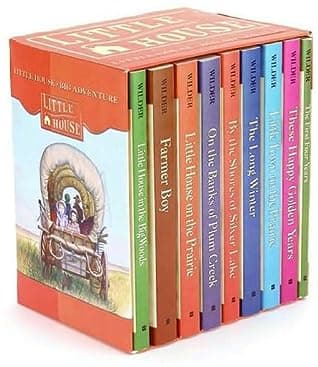
Laura Ingalls Wilder (1971)
Genre
Children's / Historical Fiction / Young Adult
Reading Time
2700 min
Key Themes
See below
Sign in to track this book
Follow Laura Ingalls and her pioneer family as they build a life of resilience, love, and resourcefulness across the American frontier, facing blizzards, grasshopper plagues, and new beginnings with determination.
The story introduces Laura Ingalls, her older sister Mary, baby Carrie, Ma (Caroline), and Pa (Charles), living in a log cabin in the woods of Wisconsin during the 1870s. Their days are filled with pioneer life: Ma churns butter, makes cheese, and sews, while Pa hunts, taps maple trees for syrup, and tells stories while playing his fiddle. They interact with their few neighbors, including local Native American tribes, and face occasional threats from wild animals like bears and wolves. The family prepares for winter by storing food and supplies, celebrating holidays like Christmas with simple, homemade gifts and treats, showing a close-knit, resourceful existence.
This book focuses on Almanzo Wilder, a young boy growing up on a large, successful farm in Malone, New York. Unlike Laura's frontier experience, Almanzo's life involves established agriculture and relative comfort, though it still requires much physical labor. He works with his older siblings, Royal and Eliza Jane, and his parents, learning all aspects of farming, from milking cows and harvesting crops to training horses. Almanzo dreams of owning his own horse, and much of the story follows his efforts to prove his maturity and responsibility to his father. The book details the seasonal routines of farm life, the hearty meals, and the importance of self-sufficiency and family effort.
Seeking more open land, Pa decides to sell their Wisconsin home, and the Ingalls family travels by covered wagon to the Kansas prairie. They cross rivers and vast plains, settling on land Pa believes is outside the designated Indian Territory. There, Pa builds their iconic little house, felling trees, digging a well, and constructing the cabin. Laura and Mary experience the challenges and wonders of the prairie, from encounters with Native Americans to the vast landscapes and the thrill of seeing wild horses. Despite moments of isolation, the family finds joy in their new home and the promise of a future on the frontier.
The Ingalls family moves to Minnesota, settling near Plum Creek. Initially, they live in a dugout home built into the creek bank. Pa soon builds them a house of sawed lumber, planning to pay for it with their first wheat crop. Laura and Mary attend school for the first time, make new friends, and enjoy their new surroundings. However, their hopes are lost when a large swarm of grasshoppers destroys their farm, leaving their fields barren. This disaster makes the family poor, forcing Pa to seek work far from home to support them, showing the unpredictable hardships of pioneer life.
After the grasshopper plague, the Ingalls family leaves Plum Creek and heads west to the Dakota Territory, where Pa has a job working for the railroad. They first live in a surveyor's shanty by Silver Lake. As the railroad moves west, a new town, De Smet, begins to form, and Pa is one of its first settlers, helping to build. Mary, who lost her eyesight due to scarlet fever, begins to adjust. Laura takes on more responsibilities, helping Ma and caring for her younger sisters, Carrie and baby Grace. The family experiences harsh prairie winters and the excitement of a growing community, finding hope in De Smet's development.
The winter of 1880-1881 brings blizzards to De Smet, burying the town in snow for seven months and stopping all train deliveries. The Ingalls family, with other townspeople, faces severe hardship and starvation as supplies run low. Pa gets a small amount of wheat from a distant farmer, but it is not enough. Young Almanzo Wilder, who has also settled in De Smet, and a friend, Cap Garland, risk their lives to travel miles across the snowy prairie to find a hidden store of wheat, bringing it back to save the starving town. The family endures extreme cold, hunger, and isolation, relying on their resilience to survive.
With spring, De Smet revives after the long winter. Laura, now a young woman, enjoys the social life of the growing town, attending parties, church socials, and 'literaries'—community gatherings for readings and debates. She also works hard, sewing shirts with Ma to earn money to send Mary to a college for the blind in Iowa. During this time, Almanzo Wilder begins calling on Laura, driving her to and from social events and spending evenings at the Ingalls home. Their relationship slowly grows amid Laura's responsibilities and her emerging independence, marking a change in her life from child to young adult.
To continue funding Mary's education, Laura takes her first teaching job twelve miles from De Smet. Living away from home for the first time, she faces classroom challenges and homesickness. Her spirits are lifted by Almanzo Wilder, who drives her home every Friday evening for the weekend. Their courtship becomes more serious, with long buggy rides and shared talks strengthening their bond. Despite teaching difficulties and family responsibilities, Laura finds joy and purpose in her work and her growing love for Almanzo, signaling a new chapter in her life.
Laura Ingalls and Almanzo Wilder marry and begin their life together on a homestead near De Smet. Their first four years are marked by hardship. They endure severe storms, including blizzards and hailstorms that destroy crops, leading to financial struggles and unpaid debts. Both Laura and Almanzo suffer serious illnesses, nearly dying from diphtheria, which leaves Almanzo with a permanent disability. Their baby daughter, Rose, is born during these trials. Despite constant setbacks, including a house fire, their love and determination to make a life on the prairie remain strong, showing their resilience and commitment.
Throughout her childhood, Laura Ingalls experiences daily adventures and challenges of pioneer life. From exploring the woods of Wisconsin and the plains of Kansas to enduring grasshopper plagues and harsh winters in Minnesota and Dakota Territory, each move brings lessons. She learns to adapt to new environments, understands self-sufficiency, and sees the development of the American West. Her childhood is marked by a strong family bond, the simple joys of nature, and the continuous effort needed to build a life on the frontier, shaping her into a resilient young woman.
Central to the series is the Ingalls family's unity and support. Through every move, disaster, illness, and financial hardship, Ma and Pa Ingalls provide a stable and loving environment for their daughters, Laura, Mary, Carrie, and Grace. They work together, share resources, offer comfort, and make sacrifices for each other, especially for Mary's education after she loses her sight. This strong family bond is the foundation of their survival and happiness on the frontier, showing how shared burdens and collective effort help them overcome obstacles and maintain hope.
The Ingalls family's journey across the American frontier is a continuous story of migration and settlement. Driven by Pa's desire for new land, better opportunities, and adventure, they move from the Big Woods of Wisconsin to the prairies of Kansas, then to Plum Creek in Minnesota, and finally to the Dakota Territory. Each move means a new beginning and new challenges, showing the relentless spirit of pioneers seeking to build a life in undeveloped areas. Their experiences highlight homesteading, the establishment of new communities like De Smet, and the transformation of wilderness into settled land.
The Protagonist
Laura evolves from a playful, sometimes rebellious child into a responsible, independent young woman, a teacher, and ultimately a wife and mother, embracing the challenges of frontier life.
The Supporting
Pa consistently serves as the family's anchor, adapting to challenges and leading them through various relocations, always driven by the hope of a prosperous future.
The Supporting
Ma remains a steadfast source of strength and comfort, adapting to each new home and hardship with grace and resilience, always prioritizing her family's well-being.
The Supporting
Mary's arc centers on her adaptation to blindness, showcasing her inner strength and the family's collective effort to support her education and independence.
The Supporting
Almanzo develops from a determined farm boy into a courageous young man and a loving, resilient husband who faces immense adversity alongside Laura.
The Supporting
Carrie grows up alongside Laura, adapting to the family's nomadic life and the hardships of the prairie, eventually becoming a teacher herself.
The Supporting
Grace represents the future generation of prairie settlers, growing up in a more established community than her older sisters.
The Supporting
Mr. Edwards's role is largely static, serving as a representation of the solitary, yet ultimately kind, frontiersman.
The Antagonist
Nellie remains a source of conflict for Laura, representing the social jealousies and rivalries of childhood and adolescence.
The collection shows the American frontier experience. It details westward movement, homesteading challenges, and the resourcefulness needed for survival in undeveloped lands. The Ingalls family embodies the pioneer spirit, driven by dreams of self-sufficiency and new beginnings. From building log cabins to facing blizzards and grasshopper plagues, the books highlight the courage, hard work, and adaptability needed to settle the West. This theme is clear in Pa's constant desire for open land and the family's repeated moves, always seeking a better life.
“"The West was new, and no one knew what might happen there. Anything was possible. The West was where the dreams went to live."”
At the heart of the 'Little House' series is the Ingalls family's strength and love. Faced with poverty, disasters, illness, and constant relocation, their bond never breaks. Ma and Pa provide stability and moral guidance, while the children learn to support each other. The family's ability to unite during crises, such as the long winter or Mary's blindness, shows the importance of mutual reliance and emotional support. Their shared experiences create an unbreakable connection, showing that love and unity are essential to overcoming adversity.
““Home is the nicest word there is.””
The books show the Ingalls family's struggle with nature. They battle harsh winters, devastating grasshopper swarms, prairie fires, and dangerous wildlife. Nature provides food through hunting and farming, but also poses threats that test their endurance. The family learns to read weather signs, respect the wilderness, and adapt their lives to its unpredictable rhythms. This theme emphasizes both the beauty and brutality of the natural world and humanity's place within it, showing the balance between survival and environmental harmony.
““The wind sang a wild, lonesome song, and the cold was cruel.””
Despite the basic conditions of frontier life, the Ingalls family, especially Ma, values education and intellectual growth. Laura, Mary, and Carrie attend one-room schoolhouses when possible, and Ma often teaches them at home. Mary's determination to attend a college for the blind, and Laura's journey to become a teacher, highlight the belief that education leads to independence and a richer life, even when practical survival skills are most important. This theme shows a progressive outlook amid the realities of pioneer existence.
““Some people call it studying, but I call it learning.””
The series offers a view of childhood development within pioneer life. Laura's perspective lets readers experience the wonders and hardships of growing up on the frontier through a child's eyes. We see her change from a playful child to a responsible young woman, taking on adult roles and navigating her emotions and social interactions. The books capture the innocence of childhood games, the pains of adolescence, and the gradual acceptance of adult responsibilities, all shaped by the unique environment of the American West.
““The days were like a great book, with new pages always turning.””
The story is told primarily through Laura Ingalls's eyes, immersing the reader in her experiences.
The majority of the 'Little House' books are narrated from Laura Ingalls's limited first-person perspective, allowing readers to intimately experience her thoughts, feelings, and observations as she grows up. This device creates a strong sense of empathy and authenticity, grounding the grand narrative of pioneer life in the personal, day-to-day realities of a child. It also allows for moments of wonder and fear to be filtered through her developing understanding, making the historical events more relatable and immediate.
The narrative often follows the changing seasons, reflecting the cyclical nature of pioneer life and its reliance on the natural world.
The stories are often structured around the changing seasons, from the bounty of summer harvests to the severe challenges of winter. This cyclical pattern emphasizes the close relationship between pioneer life and nature's rhythms, dictating work, travel, and survival. It highlights the constant preparation for the next season and the impact of weather on daily existence, reinforcing the theme of 'Man vs. Nature' and providing a natural framework for the progression of time and events within the narrative.
Pa's fiddle music and storytelling serve as sources of comfort, entertainment, and cultural preservation.
Pa Ingalls's fiddle and his nightly stories are recurring motifs that provide solace, entertainment, and a connection to tradition amidst the harshness of frontier life. The music offers emotional release and a sense of joy, while his stories, often tales of his own adventures or local lore, educate and comfort his daughters. This device emphasizes the importance of art, oral tradition, and familial connection in maintaining spirits and cultural identity in isolated settings, fostering a sense of warmth and security within the Ingalls home.
Repeated physical journeys westward symbolize the search for opportunity and the constant evolution of the frontier.
The Ingalls family's repeated migrations across the American West serve as a central plot device, driving the narrative forward through different geographical settings and challenges. Each journey by covered wagon represents a new beginning, a quest for better land, and the embodiment of the pioneer spirit. This motif highlights the transient nature of early frontier life, the sacrifices involved in seeking opportunity, and the constant adaptation required to establish roots in new, undeveloped territories, making each new 'little house' a temporary but hopeful stop.
“As long as we have each other, we will be happy.”
— Pa often reassures the family during difficult times.
“There was a little log cabin, built of round, unhewn logs, with a door and two windows.”
— Describing the first home in 'Little House in the Big Woods'.
“The wind sang a wild, lonesome song.”
— Laura's observations of nature and the prairie.
“Everything was new and strange and wonderful.”
— Laura's excitement about new experiences and places.
“It was a good world, she thought, where there were such good things.”
— Laura's appreciation for simple pleasures like food and family.
“Hard work and self-reliance were the order of the day.”
— A recurring theme reflecting the pioneer spirit.
“But Laura lay snug in bed and did not worry.”
— Despite hardships, the children often feel safe and secure with their parents.
“She was learning that everything had its time.”
— Laura's growing understanding of life's rhythms and patience.
“Her hair was brown and smooth and she had brown eyes like Ma's.”
— Describing Laura's physical appearance, often linking her to Ma.
“The wild, free prairie was not to be tamed.”
— Reflecting the challenges and untamed nature of the frontier.
“Home was a safe, warm place, and the outside world was full of dangers.”
— The stark contrast between the family's haven and the wilderness.
“It was a big country, and there was room for everyone.”
— The sense of vastness and opportunity in the American West.
“Life was a song, and Pa loved to sing it.”
— Pa's optimistic and joyful outlook on life, often expressed through music.
“The stars were like diamonds scattered on black velvet.”
— Laura's vivid and poetic descriptions of the natural world at night.
Ready to see how well you understood this book? Take our interactive quiz with 10 questions.
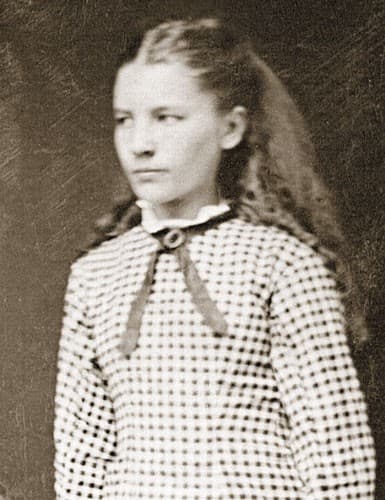
Laura Elizabeth Ingalls Wilder was an American writer. The Little House on the Prairie series of children's books, published between 1932 and 1943, were based on her childhood in a settler and pioneer family.
Dan Gemeinhart
4.5

Kate O'Hearn
4.4

Jeanne Birdsall
4.4

Jen Wang
4.4

Wendelin Van Draanen
4.3

John Marsden
4.3

Chris Van Allsburg
4.3
Jennifer A. Nielsen
4.2