BookBrief
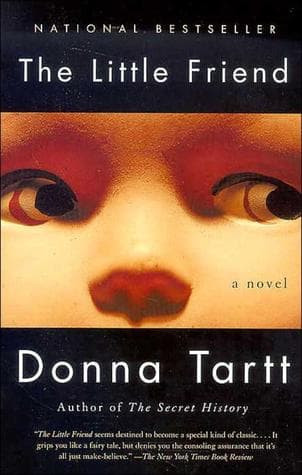
The Little Friend cover
Archivist's Choice

The Little Friend

Donna Tartt (2000)

Genre

Literary Fiction / Mystery

Reading Time

1250 min

Key Themes

See below

Track Your Reading

Sign in to track this book

In a sweltering Mississippi town, a determined girl, haunted by her brother's unsolved murder years earlier, investigates her community and family history, using her intelligence and desire for revenge.

Synopsis

Twelve-year-old Harriet Cleve Dufresnes lives in Alexandria, Mississippi, still affected by the unsolved murder of her older brother, Robin, who was found hanged from a tree when she was a baby. Her family is broken by grief and secrets. Driven by a desire for justice and influenced by adventure stories, Harriet, with her timid friend Hely, decides to investigate Robin's death. Their amateur investigation leads them to suspect Danny Ratliff, a troubled former classmate of Robin's from a poor family. Harriet and Hely plan and carry out a dangerous infiltration into Danny's world, observing him and his family, convinced of his guilt. Their growing surveillance ends in a failed attempt to poison Danny, which throws their lives into chaos. Fearing discovery, they go on a desperate road trip to the river, where they believe Danny will dispose of a 'body'—which turns out to be a dead dog, further involving them in his family's dealings. A tense confrontation with Danny and his intimidating brothers forces Harriet to face the realities of the world and the pointlessness of her childish pursuit of vengeance. The truth about Robin's death, when it finally emerges, is more complex and tragic than Harriet imagined, shattering her ideas of heroism and justice and leaving her to bear the silent burden of a terrible secret.
Reading time
1250 min
Difficulty
Medium
Pacing
Slow
Mood
Atmospheric, Melancholy, Suspenseful, Dark, Nostalgic
✓ Read this if...
You enjoy Southern Gothic atmosphere, intricate character studies, and a slow-burn mystery where the journey is more important than the solution.
✗ Skip this if...
You prefer fast-paced thrillers or mysteries with clear-cut resolutions and morally unambiguous characters.

Plot Summary

The Ghost in the House

Twelve years after the murder of her nine-year-old brother, Robin, Harriet Cleve Dufresnes lives a life marked by the grief and trauma that has paralyzed her family. Robin was found hanged from a tree in their backyard on Mother's Day, a crime that remains unsolved. Harriet, now twelve, lives in a household dominated by her silent mother, Charlotte, and the stern presence of her grandmother, Edie, and great-aunts, who have moved in to help. The family's once grand Alexandria, Mississippi, home is a place of quiet despair, where Robin's memory is a constant presence, and Harriet feels an intense connection to his ghost.

The Pact and the Plan

Driven by her intelligence and an imagination fueled by adventure stories, Harriet becomes convinced that she must solve Robin’s murder. She enlists her best friend, Hely Hull, a timid but devoted boy, into her grand, dangerous scheme. Harriet believes the killer is Danny Ratliff, a troubled young man from a lower-class family, who was a childhood friend of Robin's and was seen near the house that day. She plans their investigation, drawing maps and devising strategies, viewing their quest through the heroic narratives she reads, unaware of the real dangers in her chosen path.

Infiltration and Surveillance

Harriet and Hely begin watching Danny Ratliff, who has recently returned to Alexandria after a time in prison for other charges. They frequently visit the dilapidated Ratliff compound, a place of squalor and threat, under various pretexts, observing Danny and his eccentric, often violent family. Harriet’s visits are a search for justice, but also contain a thrill-seeking element, as she puts herself and Hely in increasingly dangerous situations. Their investigations are clumsy and naive, but Harriet's determination pushes them forward, despite Hely's growing fear of the Ratliffs.

The Poisoning Attempt

Convinced of Danny's guilt and fueled by a child's understanding of justice, Harriet decides that the only way to deal with him is to poison him. She convinces Hely to help her get a deadly snake from a local snake handler, which they intend to use to kill Danny. This plan escalates their dangerous game into a life-threatening endeavor. The attempt goes wrong when Danny's younger brother, Farish, intervenes, leading to a chaotic scene where the snake escapes. The incident leaves Harriet shaken but still determined, solidifying her belief that extreme measures are necessary.

The Road Trip to the River

In a misguided attempt to gather more evidence or confront Danny, Harriet and Hely find themselves accompanying Danny and Farish on a spontaneous, drug-fueled trip to the river. The journey is full of tension and danger, as Danny's erratic behavior and drug use become apparent. Harriet, despite her fear, maintains her courage, while Hely is terrified. The isolated river setting increases the sense of danger, and the children see firsthand the dangerous, unpredictable world of the Ratliffs, far removed from their sheltered existence.

Discovery at the River

During their unsettling trip to the river with Danny and Farish, Harriet and Hely make a disturbing discovery. They find a hidden stash of drugs and money, showing that Danny is involved in drug dealing. This revelation complicates Harriet's simple view of Danny as merely a murderer, forcing her to confront the realities of his life. The discovery also puts them in further danger, as they now know information that could have severe consequences if revealed, making them potential targets for Danny and his associates.

The Confrontation and the Escape

The situation at the river escalates. Danny, increasingly paranoid and under the influence, becomes violent, threatening Harriet and Hely. A tense standoff follows, ending in a harrowing escape for the children. They manage to flee, narrowly avoiding serious harm, showing their resourcefulness and luck. This terrifying experience shatters Harriet's romanticized notions of adventure, forcing her to confront the brutal reality of the world she has entered. Hely is deeply traumatized by the event, and their friendship is strained.

The Shattered Illusion

Following their narrow escape, Harriet begins to process the horrific events. The encounter with Danny leaves her scarred, and her childish ideas of heroism and clear-cut good and evil are shattered. She realizes the danger she put herself and Hely in and the complex, messy nature of the Ratliffs' lives. Her determination to seek justice remains, but her methods and understanding of the world are changed. The innocence she once had is lost, replaced by a darker, more nuanced understanding of human depravity and vulnerability.

The Revelation and the Retreat

Through a series of fragmented conversations and her own persistent inquiries, Harriet finally uncovers the truth about Robin's murder. It is revealed that Danny Ratliff was not the killer. Instead, the true culprit was another, more dangerous individual, a figure connected to the Ratliff family's criminal enterprises. This revelation is a shock to Harriet, who had focused so much on Danny. The actual killer is a more insidious and untouchable figure, making any direct retribution impossible for a child. This knowledge forces Harriet to confront the limits of her power and the pervasive nature of evil.

The Unspoken Burden

Armed with the knowledge of Robin's true killer, Harriet faces an unbearable burden. She realizes that exposing the truth would not only endanger her and her family but also likely lead to no justice, given the killer's connections and the family's fear. The system is too corrupt, too indifferent. She keeps this secret, carrying its weight alone. Her childhood is over, replaced by a solitary understanding of the world’s harsh realities. The book ends with Harriet, now more mature and jaded, living with the unspoken truth, forever marked by her quest and its tragic, unresolved conclusion.

Principal Figures

Harriet Cleve Dufresnes

The Protagonist

Harriet transforms from a naive, adventure-seeking child into a more mature, jaded young woman who understands the complexities and harsh realities of the world, losing her innocence in the process.

Hely Hull

The Supporting

Hely starts as Harriet's loyal sidekick, but his experiences with the Ratliffs leave him deeply traumatized and disillusioned, leading him to question Harriet's judgment and their friendship.

Danny Ratliff

The Antagonist/Misunderstood Figure

Danny remains a troubled figure, but his portrayal shifts from a clear-cut villain in Harriet's eyes to a more complex, pitiable character caught in a cycle of poverty and crime.

Robin Cleve Dufresnes

The Mentioned/Catalyst

Robin's character remains static as he is deceased, but his memory and the mystery of his death evolve in Harriet's understanding.

Charlotte Cleve Dufresnes

The Supporting

Charlotte remains largely static, a symbol of unresolved grief, but her quiet suffering underscores the profound impact of Robin's death.

Edie Cleve

The Supporting

Edie's character largely remains consistent, serving as a pillar of strength and tradition for the family.

Farish Ratliff

The Supporting

Farish remains a relatively static character, serving to humanize the Ratliff family and highlight the pervasive effects of their environment.

Themes & Insights

Loss of Innocence

The novel charts Harriet's journey from naive childhood idealism to a stark understanding of the world's harsh realities. Her quest to solve Robin's murder, initially fueled by adventure stories and a simple view of good and evil, gradually exposes her to the complexities of human nature, poverty, and violence. Scenes like the poisoning attempt and the terrifying encounter with Danny Ratliff at the river directly remove her childish illusions, forcing her to confront the grim, unheroic nature of true evil and the limits of justice.

For the first time in her life, she understood that she was not a character in a book, but a small, frightened girl in a very real, very dangerous world.

Narrator

The Nature of Evil and Justice

The book explores the ambiguity of evil and the elusive nature of justice. Harriet initially assumes a clear villain in Danny Ratliff, reflecting a child's understanding. However, as she investigates deeper, she uncovers a more complex truth: Danny is a product of his environment, and the real killer is a more insidious, untouchable force. The novel suggests that true evil is often systemic and that justice, especially for the poor or marginalized, is rarely straightforward or satisfying. Harriet's inability to bring the real killer to justice highlights the limitations of individual action against entrenched malevolence.

It was not a story with a beginning and an end, but a dark river flowing on forever.

Narrator

Grief and its Paralysis

Robin's unsolved murder casts a long shadow over the entire Dufresnes family, especially Charlotte, Harriet's mother, who is rendered silent by her grief. The family home becomes a place of unspoken pain, where life has largely stopped. This theme explores how unresolved trauma can paralyze individuals and entire families, preventing them from healing or moving forward. Harriet's quest, in part, is an attempt to break free from this family stasis, even if her methods are misguided.

The house was full of ghosts, not just Robin's, but the ghosts of what they had all been before.

Narrator

Class and Race in the American South

The novel portrays the rigid social hierarchies of the rural American South. The contrast between the decaying gentility of the Dufresnes family and the squalor and desperation of the Ratliffs' world highlights deep-seated class and racial divides. Harriet's journey across these boundaries reveals the prejudices and unspoken rules that govern the community. The Ratliffs, as a poor, white family, are immediately suspect, showing how socio-economic status can predetermine guilt or innocence in the eyes of society, and how different laws and expectations apply to different groups.

There were two kinds of people in Alexandria, and the Ratliffs were the other kind.

Narrator

Plot Devices & Literary Techniques

The Unsolved Murder

The central mystery that propels the narrative

Robin's unsolved murder serves as the primary inciting incident and the driving force behind Harriet's actions. It creates the initial atmosphere of grief and stagnation in the Dufresnes household and provides Harriet with a clear, albeit dangerously naive, objective. The mystery itself evolves, shifting from a seemingly straightforward case of a child's death to a more complex web involving drug dealing and deeper criminal connections, reflecting Harriet's own evolving understanding of the world. It is the core puzzle that Harriet believes she must solve to bring peace to her family and herself.

Southern Gothic Atmosphere

A pervasive mood of decay, mystery, and suppressed violence

The novel is steeped in Southern Gothic elements: a decaying mansion, a traumatized family, a dark secret, and a pervasive sense of dread and hidden violence. The setting of Alexandria, Mississippi, with its oppressive heat, overgrown landscapes, and distinct social strata, contributes to this atmosphere. This device creates a sense of foreboding and amplifies the psychological tension, making Harriet's journey feel both grand and deeply unsettling. The Ratliffs' compound, in particular, embodies the grotesque and menacing aspects of this genre.

Coming-of-Age Narrative

The story of a young protagonist's journey from childhood to maturity

While a mystery, 'The Little Friend' is fundamentally a coming-of-age story for Harriet. Her dangerous quest is less about solving a crime and more about her own personal transformation. Through her experiences, she confronts the harsh realities of the adult world, loses her innocence, and gains a deeper, albeit painful, understanding of good, evil, and justice. The plot devices of adventure and mystery serve as a vehicle for her psychological and emotional development, marking her transition from childhood idealism to a more jaded, mature perspective.

The Innocent Suspect

A character who is initially believed to be guilty but is later revealed to be innocent

Danny Ratliff functions as the innocent suspect. Harriet, and to a degree, the community, immediately pin their suspicions on him due to his past behavior, class, and family reputation. This device allows the author to explore themes of prejudice and misjudgment. Danny's perceived guilt drives much of the early plot, but his eventual exoneration forces Harriet, and the reader, to re-evaluate assumptions and confront the more complex, less obvious sources of evil in the story. It highlights the dangers of superficial judgment.

Critical analysis

Notable Quotes

It is a fact that in this world of ours, the most significant events, the ones that change our lives, are often not the ones we prepare for, or even imagine.

Reflecting on the unexpected nature of life-altering events, particularly the murder of Robin.

The past is a place, a country, and it is always there, waiting for us to come back to it.

Harriet's contemplation of how past events continue to shape and haunt the present.

Children, of course, are not children, but little people, and as such they are quite capable of understanding what is going on around them.

A narrative observation on the often underestimated perception and intelligence of children.

Grief is a great eraser, a great simplifier. It reduces the world to one single, overwhelming fact.

Describing the profound and singular impact of grief on the individual's world view.

The truth was, she had always felt a little apart, a little outside of things, even when she was right in the middle of them.

Harriet's feeling of being an outsider, even within her own family.

There are some things, no matter how much you want them to be different, that just are what they are.

A somber realization about the unchangeable nature of certain circumstances or facts.

Fear, she had learned, was a terrible master. It could make you do things you never thought you would.

Harriet's experience with how fear drives actions and decisions.

It was impossible to tell where the truth ended and the embellishment began, or if there had ever been any truth at all.

Reflecting on the unreliable nature of family stories and shared histories.

The past was not merely a set of events, but a living presence, breathing down their necks.

Emphasizing the persistent and oppressive influence of past events on the present.

Sometimes the things you don't know are more dangerous than the things you do.

Hinting at the peril of ignorance and unspoken secrets.

It was a strange feeling, to be so utterly alone in a house full of people.

Harriet's sense of isolation despite being surrounded by her family.

The world was full of terrible things, and you had to be prepared for them.

A practical but grim outlook on life's inherent dangers and the need for readiness.

There was a certain satisfaction in knowing that you had faced something frightening and come out the other side.

Reflecting on the resilience and small victories found in overcoming fear.

Memory, after all, was a tricky thing. It bent and twisted, faded and brightened, according to its own mysterious will.

A contemplation of the unreliable and subjective nature of human memory.

The silence in the house was not empty, but full of things unsaid, of unspoken worries and long-held griefs.

Describing the oppressive atmosphere of unspoken tensions and sorrows in the Cleve family home.

Quiz

Test Your Knowledge

Ready to see how well you understood this book? Take our interactive quiz with 10 questions.

10
Questions
~5
Minutes
?
Best Score

Key Questions (FAQ)

The central mystery revolves around the unsolved murder of Robin Cleve Dufresnes, who was found hanged from a tree in his family's yard on Mother's Day when he was nine years old. Twelve years later, his younger sister Harriet, driven by a desire for justice and resolution, decides to investigate the crime herself.

About the author

Donna Tartt

Donna Louise Tartt is an American novelist and essayist. Her work has been widely critically-acclaimed, and her novel The Goldfinch won the Pulitzer Prize for Fiction and has been adapted into a film.