“And so it happened that the tiny mouse repaid the lion's kindness.”
— The mouse frees the lion from a hunter's net, returning the favor.

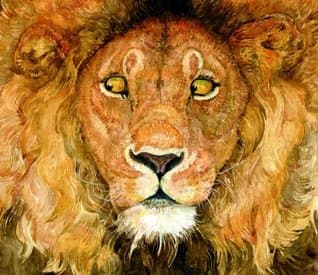
Jerry Pinkney (2009)
Genre
Fantasy / Children's
Reading Time
5 min
Key Themes
See below
Sign in to track this book
In the Serengeti, a mouse spared by a lion later frees the lion from a trap, showing how mercy can undo trouble.
The story begins with a tiny mouse running through the tall grass of the African Serengeti, avoiding an owl. Tired, the mouse seeks shelter and accidentally runs over the paw and then the face of a large, sleeping lion. The lion wakes up and pins the mouse under his paw, looking angry. The mouse, scared, silently begs for its life, its small paws raised. The lion thinks for a moment and decides to be kind. He lifts his paw, letting the thankful mouse run away into the grass. This is an unexpected act of kindness.
Days later, the lion roams the savanna, hunting. He stalks a zebra through the tall grasses. A poacher has set a net trap, hidden in the plants. As the lion charges, he steps into the snare. The heavy net springs up, catching the lion. The lion struggles, roaring in frustration and pain, but the ropes are too strong. He is completely caught, unable to move, his roars echoing across the land, showing his trouble and helplessness.
The trapped lion's roars carry across the savanna. The same mouse the lion spared earlier hears these cries. Knowing the sound, the mouse stops, remembering the lion's kindness. Out of thanks and a sense of duty, the mouse bravely goes towards the roars. It travels through the dangerous land, past other wary animals, determined to reach the struggling lion. The mouse's small size hides its courage as it approaches the great, helpless lion caught in the net.
When it reaches the trapped lion, the mouse sees the net holding the giant. The lion, still struggling and roaring, looks down at the tiny mouse, perhaps surprised. The mouse starts to gnaw at the thick ropes of the net with its sharp teeth. It works hard, focusing on one strand after another. Its small but steady efforts slowly weaken the trap. The lion watches, hope growing in his eyes as he understands what the mouse is doing. The seemingly impossible task slowly becomes possible through tiny, determined bites.
After a long time of gnawing, the mouse cuts enough ropes to make an opening. With a final struggle, the lion pulls himself free from the net. He stands, shaking off the last pieces of the trap, looking at the small mouse that saved him. They have a moment of silent understanding, sharing thanks and unexpected heroism. The lion then lets out a powerful, triumphant roar, not of anger, but of freedom and thanks. The two unlikely friends, the mighty lion and the tiny mouse, stand together, having learned that even a small act of kindness can lead to a great reward.
The Protagonist
From a powerful, somewhat indifferent predator, the Lion evolves into a humbled and grateful creature, recognizing the worth of a small act of kindness.
The Protagonist
The Mouse transforms from a terrified, hunted creature to a brave and instrumental rescuer, proving its own strength and the power of its actions.
The Mentioned
N/A
The Antagonist
N/A
The Mentioned
N/A
The main idea is about the power of kindness, no matter who receives it or if they can return it. The lion's first act of mercy towards the mouse, sparing its life, starts the whole story. The mouse remembers this and later works hard to return the favor. The story shows that kindness is important for everyone, no matter their size, power, or species. Even a small act of kindness can have big, good results.
“A tiny creature's life spared by a mighty king, proving that mercy is a seed that blossoms into unexpected salvation.”
This idea shows how even the smallest or seemingly weakest individuals are valuable and can do great things. The mouse, often ignored, ends up saving the powerful lion. This turns expectations around, showing that physical strength is not the only measure of importance. The mouse's steady work and sharp teeth, though small, are more effective against the trap than the lion's brute force. This shows that different kinds of strength and cleverness are equally valuable.
“Though small in stature, the mouse's courage and ingenuity proved mightier than the hunter's snare.”
The story shows how everyone needs each other. Even the most powerful creatures can need help, and the smallest can give it. The lion, the king of the jungle, depends on the mouse for his freedom. This shows that no one is completely self-sufficient. Acts of generosity often create a cycle of giving back. The mouse's thanks drives its actions, completing a cycle where an initial act of kindness is returned, forming an unlikely bond based on mutual help.
“A shared moment of vulnerability and salvation forged an unbreakable bond between the powerful and the tiny.”
Both the lion and the mouse face problems. The mouse first escapes an owl and then faces the hard task of freeing a trapped lion. The lion, despite his strength, is made helpless by the poacher's trap. The story shows how both characters, in different ways, get past their problems. The lion's struggle and freedom, helped by the mouse's persistence, show struggle, hope, and winning against big challenges. This reinforces the idea that help can come from unexpected places.
“The roar of the mighty, once a cry of despair, transformed into a song of freedom.”
Conveys the entire story through illustrations, relying on visual storytelling.
Pinkney's adaptation is entirely wordless, which is a significant plot device. This forces the reader to interpret the characters' emotions, motivations, and the progression of events solely through the detailed and expressive illustrations. It heightens the universality of the fable, as it transcends language barriers. The absence of text allows the artwork to convey subtle nuances, such as the mouse's fear, the lion's initial contemplation, and their eventual bond, making the visual cues paramount to understanding the plot and themes.
Animals display human-like emotions and motivations, making them relatable.
While remaining animals, the Lion and the Mouse exhibit distinct human-like emotions and motivations. The mouse's pleading gesture, the lion's thoughtful pause before showing mercy, and the shared look of understanding between them are all anthropomorphic elements. This device makes the characters more relatable to human readers, allowing them to connect with the fable's moral lessons about kindness, gratitude, and empathy on a deeper, more personal level. It transforms simple animal interactions into a profound narrative about human virtues.
The stark contrast in size between the lion and the mouse symbolizes power dynamics and unexpected heroism.
The vast difference in physical size between the colossal lion and the tiny mouse is a powerful symbolic device. It initially represents the imbalance of power and the vulnerability of the small. However, this symbolism is inverted when the small mouse, through its specific skills and courage, saves the mighty lion. This reversal underscores the theme that physical might is not the only form of strength and that impact is not dictated by size, reinforcing the idea that even the smallest can achieve great things and that kindness is not measured by the stature of the giver or receiver.
A physical manifestation of external danger and a catalyst for the main conflict.
The poacher's net trap serves as a crucial plot device, representing external danger and the vulnerability of even the most powerful creatures to human interference. It is the mechanism that renders the lion helpless, creating the perfect opportunity for the mouse to repay its debt. The trap is a symbol of confinement and distress, and its intricate design highlights the challenge the mouse must overcome. Its presence escalates the conflict and provides the necessary dramatic tension for the climax of the story.
“And so it happened that the tiny mouse repaid the lion's kindness.”
— The mouse frees the lion from a hunter's net, returning the favor.
“A lion may be great, but even the great can be helpless.”
— The lion is trapped and unable to free himself.
“Do not judge by size alone, for the smallest may prove the mightiest.”
— The mouse demonstrates its ability to help the lion.
“Kindness is never wasted.”
— The lion spares the mouse, which later saves him.
“In the heart of the jungle, even a roar can be a plea.”
— The lion roars in distress when caught.
“The bonds of the forest are woven by acts, not words.”
— The story emphasizes actions over promises.
“Freedom given is freedom earned.”
— The lion releases the mouse, leading to his own rescue.
“A tiny gnaw can cut through the strongest rope.”
— The mouse chews through the net to free the lion.
“No creature is too small to make a difference.”
— The mouse's role in the lion's rescue.
“The jungle remembers every kindness and every cruelty.”
— Implied moral about the interconnectedness of actions.
“Sometimes, the mightiest need the meekest.”
— The lion relies on the mouse for rescue.
“A roar of gratitude echoes longer than one of anger.”
— The lion thanks the mouse after being freed.
“In saving another, we often save ourselves.”
— The lion's act of mercy leads to his own salvation.
“The net that binds can be undone by the smallest friend.”
— The mouse freeing the lion from the trap.
Ready to see how well you understood this book? Take our interactive quiz with 10 questions.
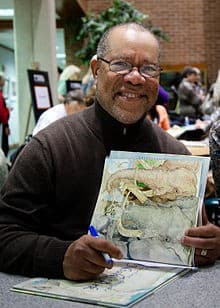
Biography coming soon.







