“There is no client as scary as an innocent man.”
— Mickey Haller reflecting on the nature of his defense work.

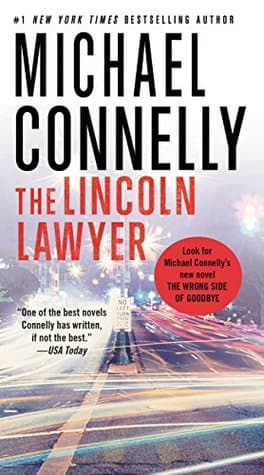
Michael Connelly (2005)
Genre
Thriller / Mystery
Reading Time
9-10 hours
Key Themes
See below
Sign in to track this book
A cynical defense attorney, who operates from the back of his Lincoln, finds his world of legal manipulation upended when a high-profile case forces him to confront a pure evil that threatens to consume his own life.
Mickey Haller, a defense attorney who operates out of his Lincoln Town Car, is struggling financially when he receives a call for a high-paying client, Louis Roulet. Roulet, a wealthy Beverly Hills real estate agent, is accused of assaulting a prostitute named Gloria Dayton (also known as Donna Rourke). Roulet says he is innocent, claiming Dayton tried to extort him. Haller initially believes Roulet, seeing him as a potential 'franchise case' that could significantly boost his career and finances. He takes the case, using his usual blend of negotiation and manipulation, and begins to prepare Roulet's defense, which involves discrediting Dayton and using the weaknesses in the prosecution's case.
As Haller examines Roulet's case, he notices disturbing similarities with a previous case he handled years ago: the murder of prostitute Martha Renteria, for which his former client, Jesus Menendez, was convicted. Both victims were prostitutes, both were beaten, and both cases involved a knife. Haller's investigator, Raul Levin, finds a knife in Roulet's home that matches the description of the weapon used in the Renteria murder. This discovery, along with Roulet's calm demeanor and inconsistencies in his story, begins to change Haller's initial belief in his client's innocence, causing him deep unease.
Mickey Haller sends his investigator, Raul Levin, to re-examine the Menendez case in light of the new evidence. Levin discovers that Roulet had previously been questioned about Martha Renteria's murder but had been cleared because of an alibi provided by his mother. Before Levin can reveal his full findings, he is murdered. Haller is devastated and understands that Levin was killed because he got too close to the truth. This event confirms Haller's growing suspicion that Roulet is not only guilty of the assault on Gloria Dayton but is also the killer of Martha Renteria, and a dangerous psychopath. Haller realizes he is now representing a cold-blooded murderer.
Haller finds himself in an impossible ethical situation: attorney-client privilege prevents him from directly telling authorities about Roulet's guilt, yet he cannot knowingly allow an innocent man, Jesus Menendez, to remain in prison while a killer walks free. He also realizes Roulet is manipulating him, having chosen Haller specifically because he was Menendez's former lawyer. Haller devises a complex and dangerous plan. He decides to use the Roulet trial to force the truth out, even if it means putting himself in jeopardy. His goal is to get Roulet convicted of the assault while also setting the stage for Menendez's exoneration.
Haller's plan involves subtly guiding the prosecution, led by Deputy District Attorney Ted Minton, towards the evidence connecting Roulet to the Renteria murder. He 'accidentally' leaves a copy of the police report from the Renteria case, with a key detail highlighted, where Minton can find it. He also uses his ex-wife, Maggie McPherson, a prosecutor, as an unwitting way to pass information. Haller knows that once the prosecution sees the connection, they will investigate further, eventually leading them to realize Roulet's involvement in the Renteria case and potentially freeing Menendez.
During the trial, Haller plans events to expose Roulet. He calls Roulet's mother, Mary Windsor, to the stand, knowing she will lie to protect her son by reaffirming his alibi for the Renteria murder. However, Haller has provided an anonymous tip to the police, leading them to discover the truth about the alibi. When Roulet takes the stand, Haller's cross-examination, while seemingly defending him, subtly pushes him to reveal his manipulative and violent nature. Haller also knows that if Roulet is acquitted of the assault, he cannot be tried again for the same crime (double jeopardy), making it important to get him convicted.
Under Haller's questioning, and fueled by his own arrogance and anger, Louis Roulet dramatically confesses on the stand that he murdered Martha Renteria and that he also killed Raul Levin. This confession, though a strategic victory for Haller, immediately places him in extreme danger. Roulet, realizing he's been outmaneuvered, threatens Haller directly in the courtroom. The confession leads to a mistrial in the Dayton case, but more importantly, it provides the necessary evidence to link Roulet to the Renteria murder and clear Jesus Menendez. However, Roulet's rage means Haller is now a target.
Following Roulet's confession, he is immediately arrested for the murder of Martha Renteria and the murder of Raul Levin. Jesus Menendez is subsequently released from prison, his innocence finally proven. While justice is served, Haller knows his ordeal is not over. Roulet's powerful and manipulative mother, Mary Windsor, who orchestrated the false alibi, is furious and vows revenge against Haller. She makes veiled threats, indicating she will use her influence and resources to make Haller's life difficult, if not worse. Haller, though relieved, must now live with the constant threat of retaliation from the Windsor family.
Mickey Haller thinks about how much the Roulet case changed him. He nearly lost his life, his investigator was murdered, and his relationships with his ex-wife Maggie and daughter Hayley were strained. He realizes the true nature of evil he encountered. Despite the danger and the personal toll, Haller ultimately finds a new sense of purpose and a deeper understanding of justice. He continues his work as a defense attorney, still operating from his Lincoln, but now with a heightened awareness of the darkness that can lurk beneath the surface of his cases, and the constant vigilance required to navigate it.
The Protagonist
Haller moves from a cynical, detached lawyer focused on winning to a man willing to risk his life to ensure true justice, facing his past and a dangerous present.
The Antagonist
Roulet's arc reveals his true nature from a seemingly innocent client to a confessed serial killer, ultimately leading to his downfall.
The Supporting
Maggie remains a steadfast moral compass for Haller, navigating their complicated professional and personal relationship.
The Supporting
Levin's arc is cut short by his murder, serving as a catalyst for Haller's commitment to justice.
The Supporting
Dayton's role is primarily as the initial victim, whose assault leads to the unraveling of Roulet's past crimes.
The Supporting
Menendez's arc moves from a wrongly imprisoned man to a finally exonerated individual, thanks to Haller's efforts.
The Antagonist
Windsor's arc highlights her descent into complicity and her unwavering, destructive loyalty to her son.
The Supporting
Minton's arc sees him moving from prosecuting an assault case to uncovering a serial killer, aided by Haller's covert actions.
The Supporting
Hayley remains a constant in Haller's life, representing his personal anchor and motivation.
The novel explores the tension between strict legal procedure and true justice. Mickey Haller, initially focused on manipulating the law to achieve good outcomes for his clients, is forced to confront a situation where the law (attorney-client privilege) directly obstructs justice (freeing an innocent man and convicting a killer). His actions show that sometimes, to achieve real justice, one must operate in the grey areas of the law, even at great personal risk. The case of Jesus Menendez shows how the legal system can fail, while Roulet's case shows how the privileged can exploit it.
“I had spent my whole life afraid that I wouldn’t recognize innocence if it stood right in front of me. But what I should have been on the watch for was evil.”
Mickey Haller's character arc is defined by his struggle with moral compromise. He often takes on clients he knows are guilty, viewing his job as a game of negotiation. The Roulet case, however, forces him into an extreme moral dilemma: protect his client (a serial killer) or ensure justice for an innocent man and the victims. His decision to actively work against his client, while ethically difficult for a lawyer, represents a form of personal redemption. He moves from a cynical pragmatist to a man willing to sacrifice his career and life for a higher moral purpose, though through unconventional and dangerous means.
“Every lawyer has a case that changes him, that makes him look at the world differently. This was mine.”
The novel portrays evil not as a caricature, but as a chillingly calm and manipulative force embodied by Louis Roulet. Roulet's wealth, charm, and intelligence make his depravity even more terrifying. He is a predator who enjoys the psychological torment of his victims and his lawyer. The murder of Raul Levin shows the real consequences of this evil. Mickey Haller's confrontation with Roulet forces him to acknowledge that pure evil exists, and it can hide behind a facade of respectability, challenging his jaded view of human nature.
“He was evil, pure and simple. And I had been his lawyer.”
Manipulation is a central theme, present in both the criminal acts and the legal defense. Louis Roulet manipulates everyone, from his mother to the justice system itself. Mickey Haller, a master of manipulation in his own right, must use his skills to outmaneuver Roulet. Haller's entire strategy to expose Roulet is a complex web of legal and psychological manipulation, where he 'plays' the prosecution and even his own client. The story shows how information, perception, and control can be used as powerful weapons in the pursuit of both crime and justice.
“I was the puppet master, but I was also the puppet on a string, dancing to Roulet's tune.”
The theme of family legacy is present through Mickey Haller's identity as the son of a legendary defense attorney and his relationships with his ex-wives and daughter. His father's shadow influences Mickey's career choices and his understanding of the law. The dynamic with Maggie McPherson and Hayley grounds Mickey, reminding him of the personal stakes beyond his cases. The Roulet case also involves a twisted family legacy, with Mary Windsor's fierce, destructive protection of her son echoing a dark form of familial loyalty and complicity in evil.
“My father always said that the law was a grand game of chess. I was just trying to keep my king from being checkmated.”
A mobile office symbolizing Haller's unconventional and adaptable approach to law.
Mickey Haller's Lincoln Town Car serves as his primary office, symbolizing his unconventional, mobile, and often improvisational approach to law. It represents his 'street lawyer' persona, distinct from the traditional, stationary law firms. The car is not just a mode of transport but a functional workspace, a symbol of his independence, and a reflection of his pragmatic, always-on-the-move style. It underscores his ability to adapt to any situation and his hands-on involvement with his clients and the legal landscape of Los Angeles.
A legal constraint that drives Haller's dangerous and indirect plan for justice.
Attorney-client privilege is a crucial plot device that creates Mickey Haller's central dilemma. Once Roulet confesses his guilt to Haller, Haller is legally bound to keep that information confidential, even if it means an innocent man (Menendez) remains imprisoned and a killer walks free. This privilege forces Haller to devise an elaborate, high-risk plan to expose Roulet indirectly, without violating his professional ethics. It heightens the stakes and showcases Haller's ingenuity in navigating the strictures of the legal system to achieve a morally just outcome.
A high-profile, lucrative case that initially blinds Haller to the true danger.
The 'franchise case' refers to a high-paying, high-profile case that can make a lawyer's career. Louis Roulet's case is initially presented as Haller's 'franchise case,' enticing him with the promise of financial stability and professional recognition. This device highlights Haller's initial motivations, which are more about self-interest than justice. It also serves as a red herring, lulling both Haller and the reader into a false sense of security before the true, darker nature of the case is revealed, making the twist even more impactful.
A mirroring of an old case that exposes Roulet's pattern and connects him to a prior murder.
The striking similarities between the assault on Gloria Dayton and the unsolved murder of Martha Renteria, for which Jesus Menendez was convicted, serve as a critical plot device. This parallel allows Haller to connect Roulet to a past crime, revealing his pattern of behavior and his true identity as a serial killer. The memory of Menendez, an innocent man Haller previously defended, fuels Haller's determination to see justice done, creating a personal stake in the outcome beyond the immediate case. It highlights the long-term impact of a lawyer's past on their present.
A shocking event that confirms Roulet's ruthlessness and escalates the personal danger for Haller.
The brutal murder of Raul Levin, Mickey Haller's trusted investigator, is a pivotal plot device. It immediately confirms Haller's growing suspicions about Roulet's true nature and his capacity for extreme violence. Levin's death transforms the case from a professional challenge into a deeply personal vendetta for Haller, driving him to take extraordinary risks. It also serves as a stark warning to Haller about the danger he is in, raising the stakes dramatically and forcing him to act decisively and cunningly to survive and achieve justice.
“There is no client as scary as an innocent man.”
— Mickey Haller reflecting on the nature of his defense work.
“The law is not about truth. It's about negotiation.”
— Haller explaining his pragmatic view of the legal system.
“I'm a Lincoln Lawyer. I work out of the backseat of my car.”
— Haller describing his unconventional practice.
“The scariest client is the one who has nothing to lose.”
— Haller's observation about dangerous clients.
“In my business, you have to have a short memory.”
— Haller on moving past difficult cases.
“A lawyer with a conscience is one who keeps his mouth shut.”
— Haller's cynical take on legal ethics.
“The truth is relative, especially in a courtroom.”
— Haller discussing the subjective nature of legal truth.
“I don't defend guilty people, I defend the Constitution.”
— Haller justifying his work defending clients.
“Sometimes the best defense is a good bluff.”
— Haller on legal strategy and tactics.
“The wheels of justice turn slowly, but they grind exceedingly fine.”
— Haller quoting an adage about the legal process.
“In this line of work, you learn to trust no one.”
— Haller's lesson from his experiences.
“A good lawyer knows the law; a great lawyer knows the judge.”
— Haller on the importance of relationships in law.
“The only thing worse than a guilty client is an innocent one who looks guilty.”
— Haller on the challenges of defense work.
“Justice is blind, but she has a good memory.”
— Haller reflecting on the long-term impact of legal decisions.
Ready to see how well you understood this book? Take our interactive quiz with 10 questions.

Biography coming soon.







