“The greatest tragedy in mankind's history is the demise of the instantly available, absolutely infallible, and universally understood public toilet.”
— A humorous observation about the practicalities of a future society.

Arthur C. Clarke (2000)
Genre
Fantasy / Science Fiction
Reading Time
10-12 hours (approx. 384 pages)
Key Themes
See below
Sign in to track this book
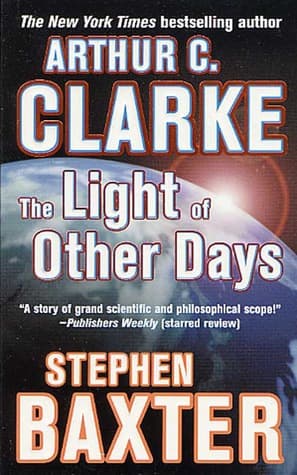
In a world where quantum entanglement makes privacy impossible by letting everyone see through walls and across the globe, humanity deals with the sudden loss of secrets, only to find this same technology can rewind time, showing every past mistake and success.
The story begins with Hiram Patterson, a determined industrialist, founding the Wormhole Corporation. He hires Kate Manzoni, a bright but naive young scientist, to develop new technology based on quantum entanglement and wormholes. Their first goal is to create a 'Wormcam' that allows instant, real-time viewing of any place on Earth, bypassing physical barriers. Patterson sees this as the ultimate tool for openness and control, believing it will end crime and secrets. Kate, driven by scientific curiosity, grows concerned about the ethics as the technology's power becomes clear, but Patterson's ambition pushes the project forward despite her worries.
Wormcam technology shrinks and becomes available to everyone through personal devices and public screens. Privacy, as humanity knew it, disappears overnight. Every part of the globe, every room, and every person's life becomes instantly viewable by anyone with a Wormcam. Society first reacts with chaos: a large increase in crime as people use the new transparency, followed by a period of major social adjustment. Governments struggle, old laws become useless, and human behavior changes as people adapt to constant observation. Patterson, despite the upheaval, sees this as a necessary, if difficult, step toward a more 'honest' world, believing humanity will benefit from this forced transparency.
After universal transparency, informal social groups appear to regulate behavior. Groups called 'The Watchers' or 'The Eyes' use Wormcam technology to monitor people and publicly shame those who do not follow social norms. This creates a new social control where reputation and public image are most important. People become very aware of their every action, leading to strict conformity and a loss of spontaneity. Kate Manzoni watches this change with growing sadness, realizing Patterson's vision is a chilling world of constant judgment and self-censorship. The initial chaos gives way to a strange, enforced order.
As research continues, a new, unexpected ability of the Wormhole technology is found: the ability to see not just the present, but also the past. By changing the wormhole's time properties, scientists realize they can access any moment in history, observing events as they happened. This discovery is even bigger than real-time surveillance. Patterson, thrilled, sees this as the ultimate historical record, a way to uncover all truths and rewrite history with perfect accuracy. Kate is horrified, understanding that this power could permanently change humanity's view of itself and its origins, possibly erasing myths, religions, and personal stories that define human culture.
The temporal Wormcam is used to view major historical events. The assassination of JFK, the crucifixion of Christ, the building of the pyramids — all are seen clearly. Many old historical theories are confirmed, while others are completely disproven. Religious faiths are especially shaken as the facts of their founding stories are revealed. This causes widespread existential crises, as humanity deals with the loss of comforting myths and the harsh facts of history. Kate Manzoni, despite her initial fears, feels drawn to the scientific purity of uncovering truth, even as she sees the devastating social effects of these revelations.
Driven by a strong desire for knowledge, the Wormhole Corporation uses its resources to view older and older pasts. Scientists, carefully, track the evolution of life on Earth, seeing the first single-celled organisms, the development of complex life forms, and the extinction events that shaped the planet. This scientific effort provides a unique understanding of biological history, confirming evolutionary theories with clear visual proof. The sheer scale and detail of these observations change humanity's understanding of its place in the universe, highlighting the randomness and grandeur of cosmic evolution, further reducing human-centered views.
The Wormcam's reach extends to the very beginning of the universe. Scientists, led by Kate Manzoni, manage to observe the Big Bang, seeing the initial singularity and the fast expansion of spacetime. This ultimate observation provides deep cosmological insights, confirming basic physics theories and revealing the raw birth of existence. The experience is both amazing and frightening, showing the universe's immense power and indifference. This event marks the peak of scientific achievement for the Wormhole Corporation, but it also leaves humanity with a feeling of deep insignificance and a universe stripped of its remaining mysteries.
As the Wormcam's abilities reach their peak, Hiram Patterson, now an old man, thinks about the world he created. He sees a changed humanity, living under constant observation, with all its secrets exposed. While he still believes in the good of truth and transparency, he also recognizes the huge psychological cost and the loss of individual freedom. He deals with the unexpected results of his ambition, understanding that while he provided ultimate knowledge, he also took away much of what made human existence unique and private. His legacy is one of unmatched technological progress combined with major social disruption, showing the dual nature of absolute knowledge.
In a world without external privacy, humanity adapts by retreating into their own minds. People develop complex mental skills to protect their thoughts and feelings, creating internal safe places where the Wormcam cannot go. This leads to a society of very thoughtful and mentally disciplined individuals, but also one where real external connection becomes harder. The focus shifts from outward display to inner growth, a silent resistance against the control of observation. Kate Manzoni observes this evolution, realizing that while physical privacy is gone, humanity has found a new, perhaps deeper, form of personal space within themselves.
Decades pass, and the Wormcam becomes a normal, almost unnoticed, part of human life. While still able to view any time and place, its newness fades, and people learn to live with its constant presence. It becomes a tool for education, historical research, and even entertainment, rather than just surveillance. Society reaches a new balance, where the initial shock of lost privacy has become acceptance, and new social norms have appeared. The story ends with a sense of how humans adapt, suggesting that even the biggest technological changes eventually become normal, and humanity continues its journey, forever changed by the light of other days.
The Protagonist/Antagonist
Patterson begins as an unyielding visionary, but by the end, he grapples with the full, complex consequences of his creation, acknowledging its profound and often negative impact on human nature.
The Protagonist
Kate evolves from a naive scientist to a key architect of humanity's future, confronting the ethical dilemmas of her creations and ultimately becoming a leader in understanding universal truths.
The Supporting
David observes society's transformation, initially with alarm, then with a gradual, if uneasy, acceptance of the new normal.
The Supporting
Thorne remains a dedicated scientist, focused on the technical challenges and discoveries, largely unburdened by the philosophical implications.
The Mentioned
They emerge as a powerful, anonymous force, shaping social behavior in the early days of the Wormcam, eventually becoming a less overt but still present influence.
The main theme explores the effects of total transparency. The novel details how the instant, universal Wormcam destroys personal privacy, leading to initial chaos, a rise in crime, and a complete change in human behavior. People adapt by living 'public' lives, creating internal safe places, and forming new social rules where reputation is key. This theme questions whether absolute truth and transparency are good or bad for the human spirit, as seen when David Manzoni observes the stifling conformity that replaces natural human interaction.
“For the first time in history, everyone knew everything about everyone else. And the results were not at all what Patterson had predicted.”
The book examines humanity's relationship with truth, especially through the temporal Wormcam. By allowing observation of any past event, the technology provides undeniable historical facts, challenging old myths, religious beliefs, and personal stories. This causes existential crises as humanity deals with the loss of comforting fictions and the stark reality of its origins. Kate Manzoni's scientific drive to uncover these truths, even at social cost, shows the human desire for knowledge, while the resulting social upheaval demonstrates the complex, sometimes painful, effects of complete historical clarity, from confirming the Big Bang to disproving religious miracles.
“When you could look back and see the past, there was no longer any room for faith, or even for speculation. Only for fact.”
The novel consistently looks at the ethical problems in scientific progress, especially when driven by powerful people like Hiram Patterson. Kate Manzoni's inner struggles show the conflict between scientific curiosity and moral duty. The story questions whether seeking knowledge, however groundbreaking, justifies removing basic human rights like privacy or destabilizing society. It makes readers consider the responsibility of scientists and inventors to foresee and lessen the social impacts of their creations, instead of just pursuing what is technologically possible.
“We've given them the ultimate truth, Kate thought, but we've also taken away their last refuge.”
Despite the major changes caused by the Wormcam, humanity shows remarkable ability to adapt. After initial chaos, people find new ways to live, socialize, and even keep some personal space by retreating into their inner worlds. This theme highlights humanity's capacity to evolve and cope with new challenges, turning what was once seen as an oppressive technology into a normal, though ever-present, part of life. The story suggests that even the biggest disruptions eventually become normal, and the human spirit finds new ways to express itself and connect.
“Privacy, it turned out, was not just a physical space. It was a state of mind, and that, the Wormcam could never touch.”
A device enabling real-time and temporal observation through quantum wormholes.
The Wormcam is the central plot device, a revolutionary technology based on quantum entanglement and wormholes. Initially, it allows instantaneous, omnidirectional, real-time observation of any point on Earth, bypassing physical barriers. Later, its capabilities extend to viewing any moment in the past. It serves as the catalyst for all major plot developments, driving the conflict, societal changes, and scientific discoveries. Its dual function—real-time surveillance and temporal viewing—allows the narrative to explore both the immediate impact of lost privacy and the profound implications of absolute historical knowledge.
The complete and instantaneous eradication of personal secrecy.
This device is a direct consequence of the Wormcam's initial rollout. It's not a physical object but a societal condition that acts as a powerful narrative engine. The complete absence of privacy forces humanity to adapt fundamentally, leading to new social norms, psychological changes, and the emergence of 'The Watchers.' It creates a pervasive tension throughout the early parts of the story, highlighting the human need for personal space and the psychological toll of constant observation, ultimately forcing a redefinition of what it means to be human in a transparent world.
The ability to view any moment in history, as it actually happened.
As an extension of the Wormcam's capabilities, temporal observation is a crucial plot device that shifts the narrative from societal surveillance to profound philosophical and scientific inquiry. It allows the story to explore themes of truth, history, and the nature of reality by providing irrefutable visual evidence of past events, from the crucifixion to the Big Bang. This device generates immense intellectual and existential conflict, forcing characters and readers to confront the implications of absolute knowledge and the dismantling of long-held beliefs and myths.
“The greatest tragedy in mankind's history is the demise of the instantly available, absolutely infallible, and universally understood public toilet.”
— A humorous observation about the practicalities of a future society.
“There are some things that even the most advanced technology cannot duplicate, and one of them is the sense of wonder.”
— Discussing the limitations of technology despite its advancements.
“The past, after all, is just a story we tell ourselves.”
— Reflecting on the subjective nature of history and memory.
“Every age has its dragons.”
— A philosophical statement about recurring challenges throughout history.
“The universe is full of wonders, but they are not always where we expect to find them.”
— Encouraging an open mind to discovery and exploration.
“The most important discoveries are often made by accident.”
— Highlighting the role of serendipity in scientific advancement.
“Knowledge is power, but imagination is even more so.”
— Pondering the relative importance of facts versus creative thought.
“We are all prisoners of our own perspectives.”
— An observation about the inherent biases in human understanding.
“Sometimes the greatest freedom is to accept what cannot be changed.”
— A stoic reflection on acceptance and inner peace.
“The future is not something we enter. The future is something we create.”
— Emphasizing human agency in shaping the course of events.
“Even in the age of instant information, the human heart remains a mystery.”
— Contrasting technological advancement with enduring human complexities.
“The only way to discover the limits of the possible is to go beyond them into the impossible.”
— A call for bold exploration and pushing boundaries.
“Perhaps the most valuable thing we can do is simply to observe.”
— Suggesting the importance of passive observation in gaining understanding.
“Time, after all, is merely a dimension, not an unstoppable river.”
— A speculative thought on the nature of time and its potential manipulability.
Ready to see how well you understood this book? Take our interactive quiz with 10 questions.
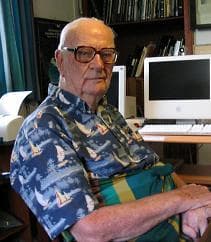
Sir Arthur Charles Clarke was an English science fiction writer, science writer, futurist, inventor, undersea explorer, and television series host.







