“The past is never dead. It's not even past.”
— A recurring theme about the lingering effects of war and memory.

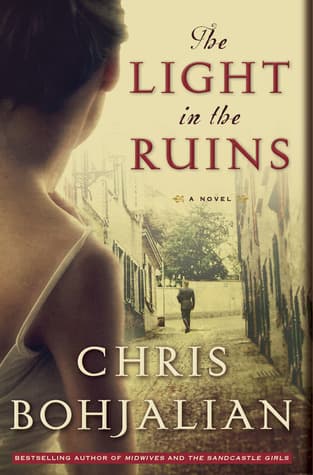
Chris Bohjalian (2013)
Genre
Thriller / Historical Fiction / Mystery
Reading Time
6-8 hours
Key Themes
See below
Sign in to track this book
In war-torn Tuscany, a noble family's villa turns from refuge to prison under Nazi rule; years later, a serial killer targets the survivors, forcing a haunted detective to uncover dark secrets tied to her own past.
In 1943, the aristocratic Rosati family lives in their old villa in Tuscany, believing it offers safety from World War II. Eighteen-year-old Cristina Rosati enjoys a privileged, somewhat isolated life, spending her days swimming and caring for her young niece, Alessia, and nephew, Antonio. Her older sister, Emilia, is married to Raffaello, a well-known local doctor. Their father, the Marchese, is the head of the family. This fragile peace first breaks when a German lieutenant, Alistair, and an Italian soldier arrive to inspect an Etruscan tomb on their land, showing the war is getting closer and the Rosatis' control is lessening. Alistair, however, shows interest in Cristina, starting an unexpected and risky courtship.
Twelve years later, in 1955 Florence, police investigator Serafina Bettini is called to a gruesome crime scene. Alessia Rosati, now an adult, has been brutally murdered, found with her throat cut and a disturbing detail: a bird's nest over her heart. Serafina, a war survivor with her own hidden scars, feels a personal link to the case, though she does not immediately understand why. The murder shocks the community, and Serafina, known for her sharp mind and careful approach, starts her investigation, looking into the victim's life and the Rosati family's past, which is full of wartime secrets and tragedy.
Back in 1943, the German presence at the Rosati villa grows. Lieutenant Alistair, despite his polite manner and growing fondness for Cristina, leads soldiers who take over parts of the estate. The family must host them, their sanctuary becoming a gilded cage. Tensions rise as the soldiers' demands become more intrusive. Cristina finds herself drawn to Alistair, a forbidden attraction that complicates the family's already dangerous situation. The Marchese and Raffaello resent the occupation but cannot resist, while Emilia tries to protect her children from the harsh realities of war.
In 1955, the murders continue. Raffaello Rosati, Alessia's uncle and a respected doctor, is found dead in a similar way – throat cut, bird's nest on his chest. This second murder confirms Serafina's belief that the killer is systematically targeting the remaining Rosati family members. She realizes the motive must come from wartime events. Serafina interviews the remaining family, including Antonio, now a troubled young man, and Emilia, who is grieving and withdrawn. The investigation becomes a race to uncover the wartime secrets that are now taking lives.
During the German occupation, Cristina's relationship with Alistair deepens, despite the dangers and moral questions. She feels conflicted, torn between her family's loyalty and her growing feelings for the enemy officer. At the same time, Cristina begins to engage in small acts of resistance, passing information or aid to local partisans, often using her position to her advantage. Her actions are secret, known only to a few, and put her in great personal danger. This dual life during the war shows the complex moral situation of the time and her changing character.
As Serafina looks deeper into the Rosatis' past, her own painful war memories resurface. It is revealed that Serafina, as a young girl, was connected to the partisan movement and interacted with the Rosati family during the German occupation. She remembers bits of events and certain people, though the full picture remains unclear due to trauma and time. This personal stake in the investigation makes her more determined to catch the killer, as she realizes the crimes are not just about the Rosatis, but also about the lasting effects of her own past and the collective trauma of wartime Italy.
The story shifts back to the war, showing the increasing brutality of the German occupation. The Rosatis see firsthand the horrors committed by the Nazis, ending in a terrible massacre in a nearby village, Sant'Anna. This event deeply affects Cristina and the family, destroying any remaining thoughts of safety or neutrality. The villa becomes a silent witness to great suffering, and the family must make impossible choices, leading to deep resentments and secrets that will last for years. The massacre is a turning point, fueling desires for revenge.
In 1955, the Marchese Rosati, the family patriarch, becomes the third victim, mirroring the previous murders. With three family members dead, panic sets in. Antonio Rosati, now a volatile and emotionally fragile young man, becomes a main suspect due to his erratic behavior, his known dislike for his grandfather, and his struggles with alcoholism and war trauma. Serafina, however, suspects there is more to the story. She knows Antonio suffered greatly during the war, and his grief and anger are real, but she needs to look beyond the obvious to find the true killer.
The wartime story reveals a devastating betrayal within the Rosati household. One of the family members, under pressure or for self-preservation, betrays members of the Italian resistance or even their own family to the Germans. This act, born from fear and desperation, leads directly to the capture, torture, or death of innocent people, including those close to Serafina. This betrayal is the reason for the present-day murders, creating a strong motive for revenge that has been simmering for over a decade. The betrayer's identity is a closely guarded secret, known only to a few.
Through careful investigation, interviews, and piecing together fragmented memories, Serafina finally uncovers the full extent of the Rosati family's wartime secrets. She discovers the betrayer's identity and the horrific consequences of that betrayal. The bird's nests at the crime scenes are a symbolic act, linking back to a specific wartime event or promise. Serafina realizes the killer is not a random psychopath but someone deeply hurt by the Rosatis' actions during the war, seeking justice or revenge for a great loss. The killer is someone closely connected to the events of 1943.
Serafina confronts the killer, who is revealed to be someone unexpected, driven by grief and a desire for vengeance from the wartime betrayal. The confrontation is tense and emotional, with the killer explaining their motives and the deep, unhealed wounds that fueled their actions. Serafina, understanding the killer's pain but upholding the law, brings them to justice. The ending reflects on the lasting effects of war, the complexities of justice, and the difficulty of finding peace after deep trauma. The truth, however painful, finally brings some closure to the surviving characters.
The Protagonist
Serafina moves from a detached investigator to one deeply personally invested, ultimately confronting her own wartime trauma to solve the case.
The Protagonist
Cristina evolves from a privileged innocent to a woman hardened by war and forced into morally ambiguous decisions, carrying immense guilt and secrets.
The Supporting
Alistair's character remains somewhat static in his devotion to Cristina, but his moral compromises deepen as the war progresses.
The Supporting
Emilia endures immense loss and trauma, living with the weight of family secrets and the devastating consequences of war.
The Victim
Alessia's arc is cut short by her murder, serving as a symbolic representation of the enduring scars of war.
The Victim/Supporting
Raffaello's arc demonstrates the personal cost of war and the enduring impact of betrayal, culminating in his tragic murder.
The Supporting/Suspect
Antonio descends into alcoholism and despair due to his wartime trauma, becoming a tragic figure and a red herring in the murder investigation.
The Victim/Supporting
The Marchese's arc reflects the decline of an old order and the fatal consequences of wartime decisions and hidden truths.
The novel shows how the trauma and moral compromises of World War II continue to affect individuals and families decades later. Serafina's hidden scars and fragmented memories, Antonio's alcoholism and instability, and the Rosati family's collective grief and hidden secrets all come directly from their wartime experiences. The present-day murders are a direct result of a betrayal and horrors committed during the occupation, showing that the past is never truly buried, and the cost of survival can be paid for generations. The peaceful Tuscan landscape hides deep emotional wounds that remain.
“The past, Serafina thought, was a wound that refused to heal for some. For others, it was a predator.”
Characters often face impossible choices during war, blurring the lines between right and wrong, heroism and collaboration. Cristina's romance with Alistair, while also helping the resistance, shows this complexity. The Rosati family's efforts to protect their villa and themselves often involve compromises that lead to devastating results later. The novel explores the unclear areas of human behavior under extreme pressure, where survival sometimes requires actions that, in peacetime, would be unforgivable. This theme challenges simple ideas of good and evil.
“Sometimes, to survive, you had to make choices that would haunt you forever.”
The central mystery of the 1955 murders is driven by a search for payback stemming from wartime wrongs. The killer believes they are getting justice for a deep betrayal and loss, yet their actions become brutal revenge. Serafina, as an investigator, seeks legal justice, but she also understands the deep emotional reasons for the killer's motives. The novel makes us think about whether true justice can ever be achieved for wartime horrors, and if revenge, however understandable, can ever truly heal past wounds.
“The law may forget, but the heart remembers every wound.”
The story often explores how unreliable and fragmented memory is, especially when dealing with trauma. Serafina struggles to put together her own wartime past, which is key to solving the murders. The Rosati family members also hold different versions of events, hiding painful truths or selectively remembering. Uncovering the 'truth' is a difficult process, showing how personal bias, trauma, and time can warp historical events. The novel suggests that collective memory can be as elusive as individual memory, but is important for healing.
“Memory was a fickle thing, a mosaic of what you chose to keep and what you were forced to forget.”
Alternating chapters between 1943 (wartime) and 1955 (murder investigation).
This device creates suspense and allows the reader to gradually uncover the historical context that directly informs the present-day mystery. The 1955 storyline, featuring Serafina Bettini's investigation, drives the plot forward, while the 1943 storyline, centered on Cristina Rosati and the German occupation, reveals the foundational events and secrets. The parallel narratives build tension by showing the 'what' in the present and slowly revealing the 'why' from the past, culminating in a powerful convergence of timelines and truths.
A symbolic object left at each murder scene, hinting at the killer's motive.
The bird's nest found over the heart of each Rosati victim serves as a crucial symbolic clue. Initially, it's a perplexing detail, but as the story unfolds, its meaning becomes deeply tied to a specific event or promise from the 1943 timeline. This motif functions as a breadcrumb trail for Serafina and the reader, guiding them towards the killer's identity and their profound, personal motive. It evokes themes of home, sanctuary, vulnerability, and loss, directly linking the present crimes to a past betrayal or tragedy related to these concepts.
An ancient burial site on the Rosati property, serving as both a plot point and a symbol.
The Etruscan tomb on the Rosati estate is initially a point of interest for the German soldiers, signaling their arrival and the family's loss of privacy. Later, it becomes a symbolic representation of buried secrets and the past literally rising to haunt the present. Ancient history and buried truths mirror the Rosati family's own hidden wartime actions and the secrets they've tried to inter. It underscores the idea that even the most ancient of histories can influence current events, and that the past, like the tomb, can hold dangerous secrets.
“The past is never dead. It's not even past.”
— A recurring theme about the lingering effects of war and memory.
“Sometimes the things we think we know are just stories we tell ourselves to make sense of the world.”
— Exploring the subjective nature of truth and memory, especially after trauma.
“Grief, I was learning, was not a river that flowed in one direction. It was a tide, coming in and going out, sometimes gentle, sometimes a tsunami.”
— Reflections on the unpredictable and overwhelming nature of grief.
“There are some places, some moments, that are so drenched in history, so soaked in blood, that you can almost feel the echoes of what happened there.”
— Describing the palpable historical weight of certain locations, particularly in Italy during WWII.
“Love, even the most profound, can be twisted by fear and desperation.”
— Examining how extreme circumstances can warp human emotions and relationships.
“The most dangerous lies are the ones we tell ourselves.”
— Highlighting self-deception and its role in protecting oneself from painful truths.
“Justice, true justice, is rarely clean or simple. It's often a messy, complicated thing, born of pain and compromise.”
— Contemplating the complexities of achieving justice in the aftermath of atrocities.
“The ruins weren't just stones; they were the bones of a beautiful past, a past that had been brutally murdered.”
— A poignant description of the physical and emotional destruction left by war.
“Sometimes, the only way to move forward is to look back, no matter how painful it is.”
— Emphasizing the necessity of confronting the past to heal and progress.
“Secrets have a way of festering, of poisoning everything around them, until they're brought into the light.”
— Exploring the corrosive nature of hidden truths and their impact on individuals and families.
“Even in the darkest times, there are flickers of light, moments of unexpected kindness or beauty.”
— A message of hope and resilience amidst the backdrop of war and tragedy.
“The weight of what we don't say can be heavier than the words themselves.”
— Discussing the burden of unspoken truths and the impact of silence.
“To forget is to betray not only the dead but also the living, who need to learn from their mistakes.”
— A strong statement on the importance of remembrance and learning from history.
“The human heart is a resilient, baffling thing, capable of both immense cruelty and profound love.”
— Reflecting on the duality of human nature, especially under duress.
Ready to see how well you understood this book? Take our interactive quiz with 10 questions.

Chris Bohjalian is a prolific author known for his gripping novels that often explore complex moral and ethical dilemmas. His works, including the bestselling 'Midwives,' 'The Double Bind,' and 'The Guest Room,' have garnered critical acclaim and a dedicated readership. Bohjalian's writing is often characterized by its suspenseful plots, well-developed characters, and insightful social commentary.







