“The past was like a sea, and we were all just trying to stay afloat in it.”
— Daniel reflects on the weight of past events.

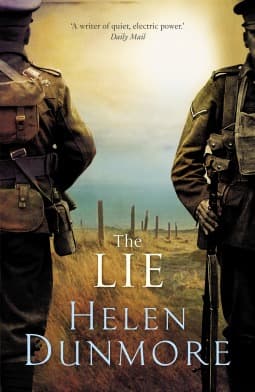
Helen Dunmore (2014)
Genre
Thriller / Mystery
Reading Time
360 min
Key Themes
See below
Sign in to track this book
A WWI survivor returns to Cornwall, haunted by the trenches and a love forged in their fires, only to find peace shattered by a past lie's unforeseen consequences.
Daniel Branwell, a young man who survived the trenches of World War I, returns to his childhood home in Cornwall in early spring 1920. He is an orphan; his parents died while he was at war, and his family farm is derelict. Daniel is deeply scarred by his experiences, both the horrors of battle and his intense relationship with a fellow soldier, Frederick. He feels a deep sense of loss and displacement, finding little comfort in the familiar landscape. His memories of Frederick, especially their shared desire to return to Cornwall, are vivid, making the present feel less real than his brutal wartime past.
While exploring his ruined family farm, Daniel meets a young woman. She introduces herself as Sarah, Frederick's sister, explaining that she has been living in Daniel's derelict cottage, believing it abandoned. Sarah is a gentle figure who shares Daniel's grief for Frederick. She speaks of Frederick with deep affection and similar longing, which draws Daniel to her. Their shared loss creates an instant, powerful bond, and Daniel feels a strange comfort and familiarity with her, as if she is a living echo of his lost friend. This encounter is both comforting and a further entanglement in his past.
Daniel and Sarah decide to live together in the cottage, finding solace in their shared grief for Frederick. They begin to rebuild the dilapidated cottage and cultivate a small garden, creating a fragile semblance of domesticity. Daniel finds himself increasingly reliant on Sarah's presence; she seems to understand his unspoken pain and the depths of his wartime trauma. Their relationship is built on shared memories and a mutual devotion to Frederick's memory. Daniel sees Sarah as pure and innocent, a contrast to the brutal world he left behind, and he feels a deep protectiveness towards her.
An old woman from the nearby village, Mrs. Cross, a distant relative of Daniel's, visits the cottage. She is a sharp-eyed, traditional woman who expresses concern and suspicion about Sarah's presence and her relationship with Daniel. Mrs. Cross questions Sarah's origins and her claim to be Frederick's sister, implying something is wrong. Her skepticism introduces discord into Daniel and Sarah's carefully constructed world, making Daniel defensive of Sarah and their unconventional life. Mrs. Cross's presence suggests the truth will unravel.
As they spend more time together, Daniel notices subtle inconsistencies in Sarah's stories about her life with Frederick. Her memories, though vivid, sometimes lack specific details or contradict previous statements. Small discrepancies about their childhood or family background begin to trouble Daniel. He dismisses these initial doubts, attributing them to war trauma and unreliable memory, both his own and Sarah's. However, a seed of unease is planted, slowly growing in his mind, making him question the perfect, shared narrative they have built around Frederick's memory.
Daniel discovers an old photograph among Frederick's belongings that he brought back from the war. The photograph shows Frederick with a woman, but it is not Sarah. This discovery shatters Daniel's constructed reality. The woman in the photograph is clearly Frederick's real sister, and she looks nothing like Sarah. The truth of Sarah's deception begins to dawn on Daniel, bringing a wave of betrayal and confusion. The photograph is proof that Sarah is not who she claims to be, forcing Daniel to confront the lie at the heart of their relationship.
Daniel confronts Sarah with the photograph and his suspicions. Under pressure, Sarah breaks down and confesses her true identity: she is not Frederick's sister. She reveals her real name is Elsie, and she was a young woman Frederick knew before the war. She explains that she was pregnant with Frederick's child when he left for the front, and after his death, she was destitute and alone. Driven by desperation and a deep longing for a connection to Frederick, she fabricated the identity of his sister to gain acceptance and a home with Daniel, whom she knew was Frederick's closest friend.
Soon after her confession, Elsie goes into labor and gives birth to Frederick's baby, a son. The child's birth, a tangible link to Frederick, deeply impacts Daniel. He is torn between his feelings of betrayal and a deep, almost instinctual connection to the infant. The baby represents Frederick's legacy and a continuation of the intense bond Daniel shared with his fallen comrade. Despite the lie, Daniel feels a responsibility towards Elsie and the child, recognizing their vulnerability. The baby forces Daniel to re-evaluate his understanding of love, loss, and family.
Despite the initial shock and betrayal, Daniel chooses to stay with Elsie and the baby. He recognizes Elsie's deep desperation and her genuine love for Frederick, which mirrors his own. They begin to form a new family, built not on deceit, but on shared grief, mutual need, and Frederick's undeniable son. Daniel takes on the role of a father figure, finding a purpose he thought lost in the war. Their life together is unconventional, marked by the past's echoes, but it offers a fragile hope for healing and a future beyond the war's shadows.
Even as Daniel and Elsie build their new life, the lie and the war's trauma continue to cast long shadows. Daniel grapples with his complex feelings for Elsie, a mix of affection, resentment, and a strange bond forged through deceit and shared loss. Elsie lives with the constant fear of her deception being fully exposed, especially to Mrs. Cross, who remains suspicious. Their fragile peace is always threatened by the past, but they learn to navigate it together, finding strength in their unconventional family unit and their shared commitment to Frederick's memory and their child. Their love shows resilience amidst deep trauma.
The Protagonist
Daniel moves from a state of profound grief and emotional numbness to reluctantly embracing a new, unconventional family, finding a new purpose despite the foundational lie.
The Deuteragonist/Antagonist (initially)
Elsie transforms from a deceptive survivor into a mother who, despite her past actions, finds a genuine, if complicated, form of love and family.
The Supporting/Mentioned
His death is the inciting incident, and his memory continues to shape the lives of the living characters, representing both loss and a fragile link to the past.
The Supporting
Remains a static character, representing the unchanging societal judgment that Daniel and Elsie must navigate.
The Supporting
Represents the potential for a future and the enduring legacy of the past, transforming the dynamics between Daniel and Elsie.
The novel explores the psychological and emotional scars left by World War I. Daniel's shell shock, his inability to connect with the present, and his constant reliving of trench warfare show the lasting impact of combat. The war has stripped him of his family, home, and sense of self, leaving him adrift. His intense bond with Frederick, forged in war, highlights how extreme circumstances can create profound, unforgettable relationships, often more real than civilian life. The entire narrative is steeped in the melancholy and disorientation that followed the Great War, showing how the past haunts its survivors.
“He carried the war with him, a weight in his bones, a landscape in his mind.”
The story explores how love and grief intertwine with memory, often blurring truth and illusion. Daniel's love for Frederick is linked with his grief, making Frederick's memory almost more real than the living. Elsie's love for Frederick and her grief drive her to create a fabricated reality. Both characters cling to the past, using memory as a coping mechanism, even if it means living a lie. The novel suggests that memory can be fluid, shaped by emotional need and the desire to preserve what is lost, even at the cost of objective truth.
“Memory was a strange thing, a landscape constantly shifting, rebuilt to suit the heart's need.”
The central theme is the nature of truth and the consequences of deception. Elsie's lie about her identity starts the entire plot, built on a desperate need for survival and connection. The novel explores the ethical complexities of such a lie: is it justifiable given Elsie's circumstances? Daniel, in turn, finds himself complicit in maintaining the lie, grappling with his own moral compass. The story suggests that while truth can be painful, deception, even when well-intentioned, creates a fragile foundation that is always at risk of crumbling, forcing characters to confront uncomfortable realities about themselves and their relationships.
“A lie was a living thing, breathing and growing, demanding its own space.”
The novel challenges traditional notions of family, presenting an unconventional unit forged out of trauma and deception. Daniel and Elsie, initially brought together by a lie and shared grief for Frederick, eventually form a family with Frederick's child. Their bond is not based on conventional marriage or kinship, but on mutual need, shared history, and a commitment to nurturing new life. The story explores how family can be redefined by circumstance, love, and responsibility, demonstrating resilience in creating connections where none were expected, even if those connections are born from a complicated past.
“They were a family now, though not in any way he would have imagined.”
Daniel's perspective is clouded by trauma and emotional need.
Daniel's narration is often colored by his shell shock, grief, and longing, making his perception of events and characters, particularly Elsie, initially unreliable. His memories of the war and Frederick are intensely vivid, often more real than his present, which can lead him to overlook inconsistencies in Elsie's story. This device keeps the reader immersed in Daniel's subjective experience, allowing the big reveal of Elsie's true identity to be as shocking to the reader as it is to Daniel, highlighting the power of emotional truth over factual accuracy.
Subtle clues hint at Elsie's deception.
The novel employs subtle foreshadowing through Mrs. Cross's suspicions and the minor inconsistencies in 'Sarah's' stories. Mrs. Cross's probing questions about Sarah's background and her lack of specific family details plant seeds of doubt. These small, almost imperceptible hints build a sense of unease for the reader, even as Daniel dismisses them. This device heightens the tension and makes the eventual revelation of Elsie's true identity both surprising and, in retrospect, inevitable, demonstrating how the truth, no matter how buried, eventually surfaces.
The derelict cottage and its garden represent rebuilding and fragile hope.
The dilapidated cottage that Daniel and Elsie inhabit symbolizes their own broken lives and the effort required to rebuild after the war. As they clear the land and cultivate a garden, it mirrors their attempt to cultivate a new life and a new relationship out of the ruins of their pasts. The garden, with its growth and vulnerability, represents the fragile hope and the continuous effort needed to sustain their unconventional family. It is a physical manifestation of their shared labor and their commitment to a future, however uncertain.
A physical object that serves as undeniable proof and catalyst for truth.
The photograph of Frederick with his true sister is a crucial plot device. It is a tangible, irrefutable piece of evidence that shatters Daniel's illusions and forces the confrontation with Elsie. Unlike Daniel's subjective memories or Elsie's fabricated stories, the photograph provides objective proof, serving as the turning point in the narrative. It represents the undeniable power of truth to emerge, even when buried under layers of deception and emotional need, and acts as the catalyst for Elsie's confession and the subsequent re-evaluation of their relationship.
“The past was like a sea, and we were all just trying to stay afloat in it.”
— Daniel reflects on the weight of past events.
“A lie, once told, has a way of growing roots, twisting itself around everything.”
— The narrator considers the pervasive nature of deceit.
“Sometimes the greatest betrayals come from those you trust the most.”
— Reflecting on a personal betrayal.
“The silence between us was heavy with all the things we weren't saying.”
— A tense moment of unspoken truths.
“Fear has a smell, a taste, and it clings to you like a shroud.”
— Describing the overwhelming feeling of fear.
“You can never truly escape what you've done, no matter how far you run.”
— A character grapples with the inescapable nature of their actions.
“The truth was a weapon, and sometimes it did more damage than any lie.”
— Considering the destructive power of truth.
“Every secret is a burden, weighing you down until you can barely breathe.”
— The psychological toll of keeping secrets.
“We build our lives on foundations of sand, hoping they won't crumble.”
— A philosophical observation on the fragility of life.
“The past isn't just behind us; it's woven into every moment of our present.”
— Reflecting on the enduring influence of the past.
“There are some things you can never unsee, never un-know.”
— The indelible impact of disturbing discoveries.
“Desperation makes you do things you never thought you were capable of.”
— A character driven to extreme actions by desperation.
“The world keeps turning, oblivious to the storms raging inside us.”
— A poignant reflection on personal suffering amidst an indifferent world.
“Some wounds never truly heal; they just scar over, waiting to be reopened.”
— Discussing the lingering effects of old traumas.
Ready to see how well you understood this book? Take our interactive quiz with 10 questions.

Biography coming soon.







