“The wind was a living thing, and it had a voice.”
— Early in the story, as Fergus is making his way through the harsh Canadian landscape, emphasizing the raw power of nature.

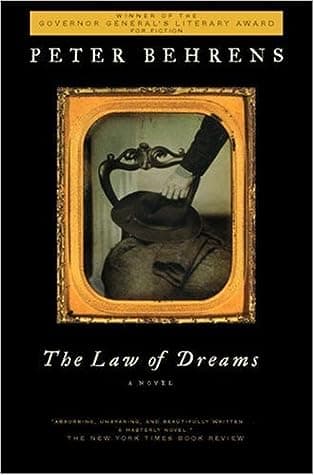
Peter Behrens (2006)
Genre
Literary Fiction / Historical Fiction
Reading Time
10-12 hours
Key Themes
See below
Sign in to track this book
During the 1847 Irish Famine, a young man named Fergus travels across Ireland, Britain, and the Atlantic, facing violence, desire, and the start of the industrial age alongside a generation shaped by disaster and neglect.
In 1847, the Great Famine hits Ireland, destroying fifteen-year-old Fergus O'Brien's life. In Kilhassy, County Clare, his family is among the first to suffer from the potato blight. His father, a tenant farmer, is at first defiant but soon gives in to starvation and disease. The village becomes empty, its people dead, dying, or fleeing. Fergus sees the horror firsthand, including starved bodies and widespread hopelessness. His mother's health quickly worsens, and his younger sister, Una, also shows signs of the famine. This initial trauma sends Fergus on a desperate journey for survival, forcing him to leave his home and face a world changed by disaster.
As his family weakens and the community breaks apart, Fergus makes the hard choice to leave Kilhassy. His mother, near death, tells him to go, to find a way to live, a choice that deeply affects him. He carries little more than his clothes and a deep sense of loss. His first travels are without purpose, driven by hunger and a vague hope of finding food or safety. He meets other desperate people, some kind, many cruel, all struggling against the same forces. This time is marked by extreme hardship, forcing Fergus to scavenge and beg. This takes away his innocence and shows him the harsh realities of a famine-stricken land where human life means little.
Driven by hunger, Fergus eventually ends up at a workhouse, a place meant to help but often a death trap. Conditions are terrible: overcrowding, disease, and not enough food. He sees the staff's random cruelty and the inmates' despair. He manages to escape, showing his growing will to live. Back on the road, he joins different groups of wanderers, some of whom are thieves. He quickly learns to be careful, to fight for scraps, and to trust no one fully. These encounters toughen him, teaching him the harsh rules of the road and the constant threat of violence. This shapes his understanding of survival in a world without compassion.
Fergus's journey changes when he meets a group of young British soldiers, barely older than himself, marching through the ruined countryside. At first cautious, Fergus is drawn to their order and the chance of food. He forms a bond with some of them, especially a young drummer boy named Billy, who shares a similar youthfulness despite their different backgrounds. This connection gives Fergus a temporary break from complete poverty but also shows him the casual brutality of military life and the tensions between the Irish people and their British rulers. He watches their drills and routines, gaining a new view of power and authority in a chaotic world.
Hoping for a better life and facing constant starvation, Fergus makes his way to a port. Through sheer will and luck, he gets passage on a coffin ship going to Liverpool. The journey across the Irish Sea is terrible, with crowded conditions, widespread disease, and constant fear of death. He sees the despair of his fellow passengers, many of whom are sick and dying. In Liverpool, he finds a different kind of poverty: the crowded, poor streets of an industrial city, far from the rural land he knew. The city's lack of care for Irish immigrants is clear, forcing Fergus to quickly adapt to this new, harsh environment.
In Liverpool, Fergus enters the dirty, dangerous world of the urban poor. He struggles to find work, often stealing or scavenging to survive. The city is a confusing maze of docks, factories, and crowded buildings, a sharp contrast to Ireland's open fields. He meets many different people: street toughs, prostitutes, and other Irish immigrants, all fighting for a meager life. He learns the brutal order of the streets and the constant threat of violence. His experiences deepen his understanding of human strength and depravity, as he sees both kind acts and great cruelty in the struggle for survival in the growing industrial heartland.
Fergus eventually joins a small group of young, displaced people in Liverpool, including a clever and resourceful girl named Maggie. Maggie, sharp and independent, becomes important in his life as a companion and a possible love interest. Together, they navigate the city's dangers, sharing their resources and wits to survive. This new 'family' gives Fergus a sense of belonging he has not felt since leaving Ireland, offering protection and friendship. Their shared hardships create a strong bond, and Fergus begins to feel a fragile hope among the despair, learning the power of group survival.
Stories of America, 'the Boston states,' offering land and opportunity, spread quickly among Irish immigrants in Liverpool. This dream becomes a strong motivation for Fergus and his new companions. They begin to plan and save, each helping to reach the goal of getting passage across the Atlantic. The journey has many challenges, as they must avoid authorities, navigate the dangerous docks, and overcome financial hurdles. The idea of America is not just an escape from poverty and famine, but a chance for a true new beginning, a place where they might finally shape their own lives, free from their past.
Fergus, Maggie, and their companions finally get passage on an emigrant ship to America. The transatlantic journey is even harder than the trip to Liverpool. The ships are known for being crowded, dirty, and disease-ridden, earning them the name 'coffin ships.' Fergus sees more death and suffering, as typhus and other illnesses kill many passengers. He and Maggie rely on each other for support, their bond growing stronger during the shared ordeal. The vast ocean and uncertain destination weigh heavily, but the hope of a new life sustains them through the unbearable conditions, pushing them to their limits.
After a terrible journey, Fergus and Maggie arrive in Boston, their bodies weak but their spirits still hopeful for a new start. However, 'the Boston states' are not the immediate paradise they imagined. They face prejudice, struggle to find work, and adapt to a new culture. The streets are not easy, and opportunities are hard-won. Yet, there is a clear sense of possibility, a sharp contrast to the suffocating despair of Ireland. Fergus, now a young man shaped by great hardship, begins to navigate this new place, carrying his past but determined to build a future, holding onto the promise of a life free from famine and oppression.
The Protagonist
From an innocent boy, Fergus transforms into a hardened survivor, learning to navigate a cruel world while retaining a core of empathy and a yearning for belonging.
The Supporting
Maggie's arc is one of sustained resilience, demonstrating her ability to adapt and survive while forming deep emotional bonds.
The Supporting
Una's arc is tragic, symbolizing the innocent lives consumed by the famine, her memory serving as a driving force for Fergus.
The Supporting
Billy's arc is a brief but impactful one, highlighting the shared humanity across divides and the innocence lost in wartime.
The Supporting
Her arc is tragic, serving as the initial catalyst for Fergus's journey and a lingering memory of his lost home and family.
The Supporting
His arc is one of tragic decline, symbolizing the destruction of the traditional Irish way of life by the famine.
The Antagonist
Static, serving as a symbol of institutional cruelty and indifference.
The Mentioned
Their collective arc reinforces the theme of survival at any cost and the moral decay brought about by extreme conditions.
This theme explores the human will to live against great odds. Fergus's journey shows the body's and spirit's ability to survive starvation, violence, and deep loss. From searching for food in famine-hit Ireland to navigating Liverpool's dangerous streets and the horrors of a coffin ship, Fergus constantly adapts and fights for his life. This theme is clear in his escape from the workhouse and his drive to reach America, showing the strong spirit of those who refused to give up hope.
“The law of dreams, he knew now, was to keep moving, to keep breathing, to keep the blood warm.”
Fergus's journey is a harsh coming-of-age story, sped up by the famine. He starts as an innocent boy and quickly learns about violence, death, and sexual awakening. Losing his family, especially his sister Una, deeply separates him from his childhood. His encounters with thieves, soldiers, and the urban poor force him to face humanity's darker side and lose his youthful innocence, changing him into a tough but still human survivor. This theme is clear in his first acts of self-defense and his growing understanding of the world's unclear morals.
“He had seen too much, done too much, to ever be that boy again.”
The novel clearly shows the Great Famine's devastating effects and the lack of care from political powers. It highlights not just starvation but also the resulting disease, displacement, and social breakdown. The 'coffin ships' and the terrible workhouses are symbols of the era's brutality and the systematic neglect faced by the Irish. The story does not avoid the violence, cruelty, and moral compromises forced on people, showing how historical disaster can strip away humanity and expose the raw fight for existence, as seen in how immigrants were treated in Liverpool.
“The blight was not merely on the potato; it was on the land, on the people, on the very soul of Ireland.”
Away from his home, Fergus constantly searches for a place where he can feel safe and belong. His journey has temporary alliances and brief connections, from his family in Kilhassy to short friendships with soldiers, and later his bond with Maggie and their small group in Liverpool. America, 'the Boston states,' becomes the ultimate symbol of a potential new home, a place to rebuild and find stability. This desire for belonging drives his difficult transatlantic journey, representing a universal human need even in extreme hardship.
“Home was not a place anymore, but a memory, a ghost that haunted his every step.”
Despite the great despair and brutality, the novel explores the lasting human need for love and connection. Fergus's deep affection for his family, especially his sister Una, motivates his early survival. Later, his growing relationship with Maggie becomes an important source of comfort, strength, and hope. Their bond offers a contrast to the widespread suffering, showing how emotional connection can sustain people through the darkest times. These relationships, though fragile, provide moments of tenderness and a reason to keep fighting for a future, as seen in their mutual support during the difficult sea crossings.
“In the vast, cold world, her hand in his was a small, fierce fire.”
Fergus's physical journey mirrors his internal transformation and the historical migration of the Irish.
Fergus's epic passage from rural Ireland through Britain and across the Atlantic is more than just a physical movement; it is a profound metaphor for his internal development, from innocence to experience. Each stage of the journey – the famine roads, the workhouse, Liverpool's docks, the 'coffin ships' – represents a new trial and a new lesson learned. Simultaneously, it serves as a powerful representation of the mass exodus of the Irish during the Famine, embodying the collective experience of displacement, hardship, and the desperate search for a new life.
Vivid descriptions of sights, sounds, and smells immerse the reader in the harsh realities of the era.
Behrens employs rich and often visceral sensory imagery to transport the reader directly into the historical setting. The descriptions of the famine's stench, the sight of emaciated bodies, the sounds of suffering, the taste of meager food, and the feel of the cold, damp conditions are meticulously rendered. This detailed sensory language creates an immersive and often uncomfortable experience, allowing the reader to viscerally understand the suffering and the environment in which Fergus struggles. It grounds the historical narrative in a deeply personal and immediate way.
A recurring symbol of death, desperation, and the treacherous path to a new life.
The 'coffin ship' appears twice in Fergus's journey – first to Liverpool, then to America – serving as a potent symbol. It represents the extreme desperation of the emigrants, willing to risk death for the chance of survival. It embodies the horrific conditions, disease, and loss of life that characterized these transatlantic voyages. The ship is a liminal space, a floating purgatory between a dying world and an uncertain future, highlighting the immense sacrifices and dangers inherent in the pursuit of a new life during the famine era. It underscores the high cost of hope.
Subtle hints and symbolic dreams subtly suggest future events and the weight of Fergus's destiny.
Throughout the narrative, there are subtle instances of foreshadowing, often presented through Fergus's dreams or the superstitious beliefs of the characters. These elements, like the recurring image of his mother or visions of a better land, hint at future challenges or offer glimpses of hope. They serve to deepen the psychological landscape of the protagonist and connect his personal journey to a larger, almost mythic, struggle for survival and destiny. This device adds a layer of depth and often a melancholic beauty to the brutal realism of the plot.
“The wind was a living thing, and it had a voice.”
— Early in the story, as Fergus is making his way through the harsh Canadian landscape, emphasizing the raw power of nature.
“He carried the weight of a thousand sorrows, and the lightness of a thousand dreams.”
— Describing Fergus's emotional state, a mix of past trauma and future hope, during a reflective moment.
“Memory is a landscape you carry with you, whether you want to or not.”
— Fergus contemplating the inescapable nature of his past and the events that shaped him.
“The world was a map of hunger, and he was just another line drawn on it.”
— A stark realization of the widespread poverty and his own vulnerable position as an immigrant.
“Love was a fragile thing, easily broken, but worth the risk of its shattering.”
— Fergus reflecting on his relationships and the inherent risks and rewards of emotional connection.
“There was a language in the land itself, if you only knew how to listen.”
— Fergus learning to adapt to the wilderness and understand its signs for survival.
“He learned that freedom was not just the absence of chains, but the presence of choice.”
— A profound realization about the true meaning of liberty after escaping various forms of confinement.
“Grief was a river, and you could either drown in it or learn to swim.”
— Fergus processing the loss of his family and the necessity of finding a way to move forward.
“Every step was a prayer, every breath a testament to being alive.”
— During a particularly arduous journey, highlighting Fergus's determination and will to survive.
“The past was a shadow that lengthened with every new dawn.”
— Fergus acknowledging that his history continues to influence his present, no matter how far he travels.
“He understood then that true belonging was not a place, but a feeling shared.”
— A moment of connection with other characters, realizing the importance of human bonds over geographical location.
“The silence of the snow was a sound all its own, profound and ancient.”
— Describing the stark beauty and overwhelming presence of the winter landscape.
“Hope was a dangerous thing, but more dangerous still was living without it.”
— Fergus weighing the risks of allowing himself to hope against the despair of giving up.
“He was a man made of journeys, each one leaving its mark upon his soul.”
— A summary of Fergus's character and the cumulative effect of his many travels and experiences.
“The future was a wild horse, and all you could do was try to hold on.”
— Reflecting on the unpredictable nature of life and the need to face it with courage.
Ready to see how well you understood this book? Take our interactive quiz with 10 questions.

Biography coming soon.







