“When you have nothing left to lose, you have everything to gain.”
— Elodie's reflection on her life and the desperate situation of the Resistance.

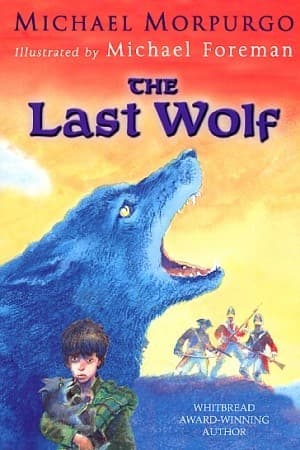
Michael Morpurgo (2002)
Genre
Children's / Historical Fiction / Young Adult
Reading Time
90 min
Key Themes
See below
Sign in to track this book
In the Scottish Highlands of Bonnie Prince Charlie, an orphaned boy and his wolf cub form a bond as they navigate a war-torn land, learning that belonging sometimes means letting go.
The story begins in the Scottish Highlands in 1746, during the chaos after the Battle of Culloden. Ten-year-old Robbie McLeod lives a simple life with his family. One day, while he and his father are hunting, they see Redcoat soldiers, led by a cruel Captain, kill everyone in their village, including Robbie's mother and baby sister. Robbie's father, wounded, tells Robbie to run and find his uncle in the north before he dies. Robbie, alone and traumatized, starts a dangerous journey with only a small pouch and the weight of his family's destruction.
As Robbie travels the desolate Scottish land, he finds a den where a mother wolf and her cubs are dead, likely from the same Redcoat violence or starvation. To his surprise, one small, whimpering cub is alive. Feeling a deep connection to the orphaned creature, like his own loss, Robbie decides to take the cub with him. He names the wolf 'Mog.' They begin their journey together, sharing Robbie's meager food and giving each other much-needed companionship in a hostile world. This bond becomes the core of Robbie's survival.
Robbie and Mog spend months on the run, facing harsh weather, hunger, and the constant threat of Redcoat patrols and other dangers. Robbie learns to hunt and forage, guided by Mog's instincts. Mog, in turn, grows from a cub into a strong wolf, always loyal and protective of Robbie. Their life is nomadic and dangerous, forcing Robbie to grow up fast. They develop a silent understanding, relying on each other for survival and comfort as they travel north, still hoping to find Robbie's uncle.
During their travels, Robbie and Mog meet English settlers who have moved into the Highlands, bringing their fears and biases. The settlers see Mog and immediately view him as a dangerous threat to their animals and children. They organize a hunt to kill the wolf. Robbie, desperate to protect his friend, cleverly creates a distraction, leading the hunters away from Mog. They escape, but the event shows the growing danger Mog faces from people and the deep-seated fear of wolves among the new inhabitants of the land.
After years of wandering, Robbie, now a teenager, and a full-grown Mog finally find his Uncle Hamish's remote croft in the far north. Hamish, a gruff but kind man, is surprised but happy to see his nephew alive. He welcomes Robbie, but Mog's presence causes initial concern due to the wolf's size and wild nature. However, seeing Robbie and Mog's deep bond, and Mog's gentle nature toward Robbie, Hamish reluctantly allows the wolf to stay, understanding that Mog is a part of Robbie's life and survival.
Robbie starts to adjust to life on the croft, helping Uncle Hamish with the sheep and daily chores. He finds a sense of peace and stability he hasn't known since childhood. Mog stays close, often waiting for Robbie outside the croft or joining him on tasks. However, as Mog becomes bolder and sometimes frightens the sheep or is seen by other villagers, the tension around his presence grows. The local community, wary of wolves and their perceived threat to animals, begins to voice concerns, putting pressure on Hamish and Robbie.
The villagers' fear of Mog increases after sheep disappearances and sightings of the wolf near their homes, even though Mog has never directly harmed their flocks. They form a hunting party, determined to kill Mog. Uncle Hamish tries to defend Robbie and Mog, but the villagers are set on their plan. Robbie is heartbroken, realizing that Mog's wild nature and the villagers' fear mean Mog can never truly be safe living among humans. He knows he must make a difficult choice to protect his friend.
With a heavy heart, Robbie decides that Mog must return to the wild, where he belongs and can live free from human harm. He takes Mog deep into the mountains, to a secluded, wild valley where he believes Mog can thrive. Their journey is silent and filled with unspoken sadness. Robbie spends one last night with Mog, cherishing their bond. In the morning, with tears in his eyes, he says his final goodbye, leaving Mog with a piece of meat before turning back toward the croft. His heart aches with the loss but also with hope for Mog's freedom.
The story shifts to Mog's perspective, showing his initial confusion and loneliness after Robbie leaves. However, his instincts soon take over. He explores his new territory, hunts successfully, and eventually meets another lone wolf. They bond, form a pack, and have cubs, starting a new line in the Scottish wilderness. Mog, the last wolf of his kind known to Robbie, becomes a father to a new wild population, fulfilling his natural destiny and ensuring his species continues in the Highlands.
Robbie lives out his life on the croft, eventually taking over from Uncle Hamish. He marries and has children, building a peaceful existence. Yet, he never forgets Mog. He often visits the wild valley where he left his friend, sometimes seeing wolves in the distance — perhaps Mog's descendants. He tells his children and grandchildren stories of Mog, ensuring the wolf's memory and the wild spirit of the Highlands live on through generations. Robbie understands that true love sometimes means letting go, allowing those you care for to find their true home and purpose.
The Protagonist
Robbie transforms from a traumatized orphan dependent on his father to a self-sufficient individual who ultimately makes the selfless decision to free his beloved companion, finding his own peace in human society while honoring his wild past.
The Supporting Character
Mog grows from a helpless cub into a magnificent wolf, forming an extraordinary bond with a human, only to eventually return to his natural wild state, finding a mate and ensuring the continuation of his species.
The Supporting Character
Hamish reluctantly accepts Mog into his home, eventually understanding the unique bond between Robbie and the wolf, and supports Robbie's difficult decision.
The Antagonist (implied)
The Captain's role is primarily catalytic; he does not have a personal arc within the story but represents the oppressive force that Robbie and Mog are fleeing.
The Supporting Character (brief)
His death acts as the inciting incident for Robbie's journey and is a foundational memory for the protagonist.
The Mentioned/Antagonistic Force
Their collective fear escalates, forcing the central conflict regarding Mog's fate.
The main theme explores the deep and unique connection that can form between a person and an animal, especially during hard times. Robbie and Mog's relationship is more than just friendship; they are family, relying on each other for survival, comfort, and protection. This bond is formed through loss and kept alive through years of hardship. It shows the emotional depth and understanding possible between species, suggesting that love and loyalty have no limits. The scene where Robbie first finds Mog and takes him in, both orphans, clearly establishes this theme.
“He was an orphan too, just like me. And I knew, knew in my heart, that we belonged together.”
The story begins with great loss — Robbie's entire family is killed, and Mog loses his wolf family. Both characters experience deep sadness. The story then follows their journey of coping with this loss, not by forgetting, but by finding strength and purpose in their shared survival. Robbie's resilience is clear in his ability to endure hardship, learn new skills, and continue his journey despite great trauma. His lasting memory of his family, combined with his will to live, shows the human spirit's ability to overcome tragedy. The initial massacre scene and Robbie's flight are strong examples.
“I had nothing left to lose, it seemed, except my life. But I wanted to live. I had to live.”
This theme explores the natural conflict between the wild and the growing human world. Mog represents Scotland's wild spirit, a creature of instinct and freedom, while Robbie's journey eventually leads him back toward human settlement and the desire for a stable home. The fear and prejudice of the villagers toward Mog highlight how wild animals and human society can clash, especially when resources are competed for. The story suggests that the wild has its own rightful place, separate from human control, and that sometimes, love means letting go to protect that wildness. The conflict with the English settlers and later the villagers clearly shows this.
“He was a wolf, after all, and the Highlands were his home. Not a croft, not a village.”
Robbie's journey is a search for home and a sense of belonging after being violently uprooted. He finds a temporary 'home' in his relationship with Mog, in their shared travels, and eventually with Uncle Hamish. However, the story subtly explores different kinds of home: a physical place, a bond with another living creature, and ultimately, a spiritual connection to one's roots and the land. Mog's 'home' is naturally the wild, and Robbie's ultimate act of love is to ensure Mog can return to his true home. Robbie eventually builds his own human home, but carries Mog's wild spirit within him. Arriving at Uncle Hamish's croft is a significant point in this search.
“A home. A real home, after all these years. And yet, I knew, Mog could never truly share it.”
Mog serves as a foil to Robbie, highlighting their differences and similarities.
Mog, the wolf, acts as a foil to Robbie. While both are orphans and survivors, Mog embodies raw, untamed nature and instinct, whereas Robbie represents humanity's capacity for complex emotions, memory, and the desire for social connection. Their differences highlight their shared journey and the unique nature of their bond. Mog's wildness ultimately forces Robbie to confront the limits of their shared life, leading to the selfless act of release, which defines Robbie's maturity.
The wolf symbolizes the wild, untamed spirit of Scotland and its vanishing past.
Mog, as 'The Last Wolf,' symbolizes not only the literal species but also the wild, untamed spirit of the Scottish Highlands that was being systematically suppressed by the English after the Jacobite rebellions. His existence represents a connection to an ancient, free past that is slowly being eroded by human settlement and 'civilization.' His survival and eventual return to the wild, finding a mate, offers a hopeful symbol of the enduring power of nature and the possibility of resurgence.
Robbie's journey details his growth from a boy to a young man.
The entire story functions as a coming-of-age narrative for Robbie. He begins as an innocent child, forced into a brutal reality. His journey with Mog, the constant need for survival, and the difficult decisions he faces, all contribute to his rapid maturation. The ultimate act of letting Mog go signifies his transition from boyhood dependence to a selfless, mature understanding of love and responsibility. His eventual establishment of his own family reinforces this theme of growth and finding his place in the world.
Early events hint at the inevitable separation of Robbie and Mog.
Subtle instances of foreshadowing, such as the encounters with English settlers who fear wolves, or the increasing tension from villagers as Mog grows, hint at the eventual necessity of Robbie and Mog's separation. These moments build a sense of impending conflict, making the final decision both heartbreaking and understandable. The incompatibility of Mog's wild nature with human society is established early, preparing the reader for the inevitable parting.
“When you have nothing left to lose, you have everything to gain.”
— Elodie's reflection on her life and the desperate situation of the Resistance.
“The forest was our friend, our protector, our provider. And sometimes, our tomb.”
— Describing the dual nature of the forest for the Resistance fighters.
“Even in the darkest times, there are flickers of light, if you only know where to look.”
— Elodie finding small moments of beauty or kindness amidst the war.
“A wolf does not choose its path, it is born to it. Just like some of us.”
— Comparing the predetermined fate of the wolf to the circumstances of war.
“Silence can be a weapon, or a shield. We learned to use both.”
— Discussing the tactical use of silence by the Resistance.
“The past is never truly gone, it just waits for you to remember it.”
— Elodie reflecting on her memories and the impact of history.
“Sometimes the greatest courage is simply to keep going, even when you want to stop.”
— Describing the everyday bravery of those living through the occupation.
“We were not just fighting for ourselves, but for the echoes of all those who came before us, and all those who would come after.”
— Explaining the broader motivations behind the Resistance's struggle.
“To be truly free, you must first be free in your mind.”
— A philosophical thought on the nature of freedom beyond physical liberation.
“The hardest part was not the hunger, or the cold, but the constant fear that gnawed at your soul.”
— Detailing the psychological toll of living under occupation.
“A promise made in the dark is still a promise, and sometimes, it's the only thing that keeps you alive.”
— Highlighting the importance of trust and commitments in dire situations.
“The mountains listened to our secrets, and kept them safe.”
— Personifying the natural landscape as a confidante for the Resistance.
“We were all just trying to survive, to find a way back to who we were, or who we hoped to be.”
— A universal sentiment of the characters during wartime.
“Sometimes, a small act of kindness can be a revolution in itself.”
— Emphasizing the power of compassion amidst widespread cruelty.
Ready to see how well you understood this book? Take our interactive quiz with 10 questions.

Biography coming soon.
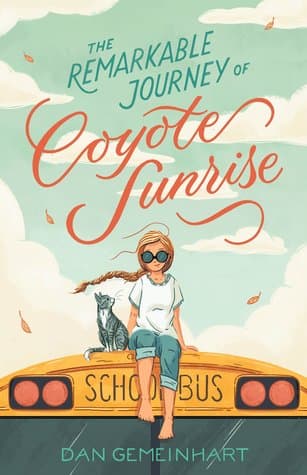
Dan Gemeinhart
4.5
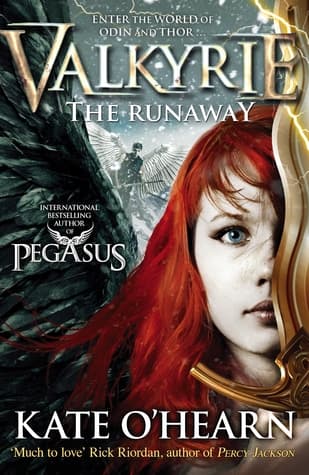
Kate O'Hearn
4.4

Jeanne Birdsall
4.4

Jen Wang
4.4
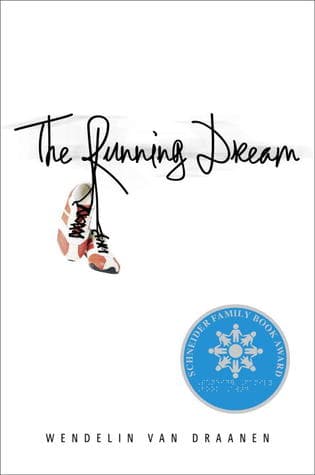
Wendelin Van Draanen
4.3

John Marsden
4.3

Chris Van Allsburg
4.3
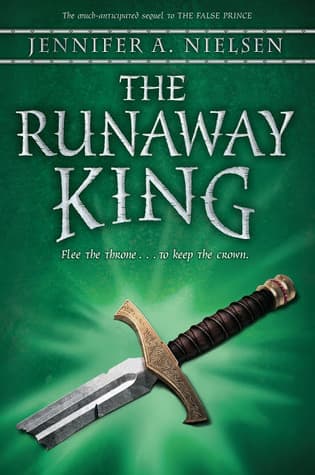
Jennifer A. Nielsen
4.2