BookBrief
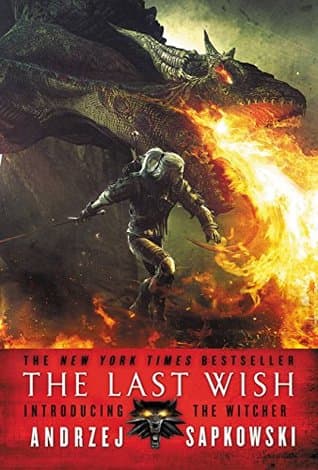
The Last Wish cover
Archivist's Choice

The Last Wish

Andrzej Sapkowski

Genre

Fantasy

Reading Time

360 min

Key Themes

See below

Track Your Reading

Sign in to track this book

Geralt of Rivia, a monster hunter, navigates a world where the line between man and beast blurs, forcing him to confront what is good and evil in himself and the 'monsters' he hunts.

Synopsis

Geralt of Rivia, a Witcher—a magically enhanced monster hunter—travels the Continent, taking on contracts to slay beasts. Intertwined short stories, framed by 'The Voice of Reason' segments where Geralt reflects on his past, show a morally ambiguous world. He battles ghouls, strigas, and other creatures, often finding that humans are the true monsters. Geralt deals with political intrigue, prejudice against non-humans and Witchers, and the complex nature of destiny. He forms a bond with the bard Dandelion and meets Yennefer of Vengerberg, a powerful sorceress, for the first time, beginning their tumultuous relationship. The collection ends with 'The Last Wish,' where Geralt's destiny becomes entwined with Yennefer's and a djinn's magic.
Reading time
360 min
Difficulty
Medium
Pacing
Variable
Mood
Gritty, Dark, Adventurous, Philosophical, Humorous
✓ Read this if...
You enjoy dark fantasy, morally grey protagonists, monster hunting, and a collection of interconnected short stories that build a rich world.
✗ Skip this if...
You prefer a single, continuous narrative rather than episodic adventures, or if you dislike morally ambiguous characters and grim themes.

Plot Summary

The Voice of Reason 1

Geralt of Rivia, a Witcher, recovers in the temple of Melitele after severe injuries from a striga. Nenneke, the high priestess, cares for him, but Geralt is restless, troubled by nightmares and memories. The framing narrative, 'The Voice of Reason,' mixes his recovery with flashbacks to various monster-hunting contracts. In this first part, Geralt remembers meeting Iola, a silent novice at the temple, and his talks with Nenneke about his calling and the nature of good and evil where monsters are often misunderstood and humans can be more monstrous.

The Witcher

Geralt arrives in Vizima, the capital of Temeria, to deal with a striga terrorizing the city. King Foltest's daughter, Adda, was born cursed and transforms into a monstrous striga at night, preying on people. Geralt learns that Foltest, despite the danger, refuses to let anyone kill her, hoping for a cure. Geralt accepts the contract, but instead of slaying the creature, he aims to lift the curse. He spends a night in the old royal palace, the striga's lair, confronting the creature until dawn, breaking the curse and restoring Adda to human form, though she remains feral.

The Voice of Reason 2

Back at the temple, Geralt continues his recovery and talks with Nenneke. She questions him about the moral ambiguities of his work, especially his involvement in political schemes and the unforeseen results of his actions. Geralt recounts Princess Adda's story, highlighting his decision to save her instead of killing her, despite the risk. He reflects on the Witcher's code and its limits, dealing with the concept of lesser evils and the difficulty of staying neutral in a world full of complex moral choices. Iola, the novice, continues to watch him silently.

A Grain of Truth

While traveling, Geralt finds two dead merchants. Following tracks, he reaches a secluded manor inhabited by Nivellen, a man cursed to look like a beast. Nivellen lives with several monstrous, but seemingly harmless, female companions – a rusalka, a bruxa, and a vampire. He admits to having raped a priestess, leading to his transformation. Geralt first suspects Nivellen, but soon realizes that one of Nivellen's companions, Vereena, a bruxa, is the true monster, responsible for the murders. Geralt confronts and kills Vereena, which breaks Nivellen's curse, restoring him to human form.

The Voice of Reason 3

Geralt continues his recovery, thinking about Nivellen's story. He discusses with Nenneke the blurred lines between human and monster, and how appearances can deceive. He considers how Nivellen, despite his monstrous form, showed more humanity than many 'normal' people, while Vereena, beautiful and alluring, was truly evil. Nenneke challenges Geralt's detached view, urging him to acknowledge the emotional cost of his work. Geralt feels a growing connection with Iola, who, despite her silence, seems to understand him. Geralt wonders if he will ever escape the consequences of his actions.

The Lesser Evil

Geralt arrives in Blaviken and meets the sorcerer Stregobor, who asks for his help. Stregobor believes Princess Renfri, a cursed 'Black Sun' child, will bring destruction and wants Geralt to kill her. Renfri, now a bandit leader known as Shrike, comes to Blaviken, seeking revenge on Stregobor. Geralt tries to mediate, urging Renfri to stop her violent path. However, Renfri plans to massacre the townspeople to draw Stregobor out. Faced with choosing between a potential future evil and an immediate atrocity, Geralt kills Renfri and her gang in the marketplace to prevent the massacre, earning him the name 'Butcher of Blaviken'.

The Voice of Reason 4

The 'Butcher of Blaviken' incident troubles Geralt. He tells Nenneke about the traumatic event, expressing his despair at being forced into a situation where all choices were terrible. He questions the 'lesser evil' idea, feeling that he only chose the most immediate evil. Nenneke tries to comfort him, reminding him of his intention to save innocent lives. Geralt feels the weight of public opinion and the permanent stain on his reputation. Iola, seeing his pain, offers silent comfort, deepening their unspoken bond. Geralt wonders if he will ever escape the results of his actions.

A Question of Price

Geralt attends the wedding feast of Queen Calanthe's daughter, Pavetta, in Cintra. A mysterious knight named Duny, cursed to appear as a hedgehog-like creature, crashes the feast, claiming Pavetta as his bride due to the Law of Surprise, having saved her father years ago. Geralt intervenes when Calanthe's knights attack Duny. Pavetta reveals her love for Duny and her latent magical powers manifest violently. Geralt helps calm the situation, and the curse on Duny breaks when Calanthe accepts their union. As a reward, Duny offers Geralt anything, and Geralt invokes the Law of Surprise, unknowingly claiming the unborn Ciri.

The Voice of Reason 5

As his recovery ends, Geralt thinks about the Law of Surprise and his fated connection to Ciri. He tells Nenneke he is skeptical about destiny, despite his life being shaped by such events. He admits his fear of claiming Ciri, a child he has never met, and the responsibility it brings. Nenneke, who believes in destiny, urges him to accept his fate. Geralt decides to leave the temple and avoid Cintra, hoping to circumvent destiny, but a sense of unease remains, hinting at future events.

The Edge of the World

Geralt and his bard Dandelion journey to a remote valley to investigate a 'devil' stealing crops. They meet Toruviel, an elven archer, and her community, who struggle against human encroachment and the loss of their way of life. They find the 'devil' is a sylvan named Torque, who is being coerced by an ancient entity known as the 'Queen of the Fields' to steal for her. Geralt, seeing the sylvan is not malicious, tries to resolve the situation peacefully. After a confrontation with Torque and the unseen Queen's influence, Geralt and Dandelion leave, letting the sylvan face his fate.

The Last Wish

While fishing, Dandelion accidentally unleashes a djinn from an ancient artifact. The djinn, a powerful elemental, injures Dandelion and causes chaos. Geralt, trying to save Dandelion, seeks help from the sorceress Yennefer of Vengerberg, known for her beauty and magic. Yennefer, recognizing the djinn's power, tries to capture it for herself. A magical battle occurs between Yennefer and the djinn, putting Dandelion's life in danger. To save Yennefer from the djinn's power, Geralt makes his third and final wish: a wish that binds his destiny with Yennefer's, creating a strong, though difficult, bond between them.

Principal Figures

Geralt of Rivia

The Protagonist

Geralt begins as a detached, professional monster hunter, but through his encounters, he grapples with the complexities of good and evil, eventually accepting his fated connection to Ciri and forming a deep, if tumultuous, bond with Yennefer.

Nenneke

The Supporting

Nenneke maintains her role as a steadfast guide and moral compass for Geralt, providing a consistent anchor in his tumultuous life.

Dandelion (Jaskier)

The Supporting

Dandelion remains a loyal, if somewhat chaotic, companion to Geralt, inadvertently catalyzing key events and providing emotional support.

Yennefer of Vengerberg

The Supporting

Yennefer is introduced as a powerful, independent sorceress seeking to harness a djinn, leading to her fated, tumultuous bond with Geralt.

Renfri

The Supporting

Renfri's arc is a tragic descent into violence driven by persecution, culminating in her death at Geralt's hands, forcing him to choose the 'lesser evil'.

King Foltest

The Mentioned

Foltest's character is static, defined by his unwavering paternal love and hope for his cursed daughter.

Ciri (Cirilla Fiona Elen Riannon)

The Mentioned

Ciri is introduced as the fated 'Child Surprise', establishing her destiny and future importance to Geralt, though her direct involvement is minimal in this book.

Nivellen

The Supporting

Nivellen's arc is one of initial monstrous appearance masking humanity, culminating in his curse being broken through the death of his true, monstrous love.

Themes & Insights

The Ambiguity of Morality and the 'Lesser Evil'

This theme is central to Geralt's character and his struggles. The world of 'The Last Wish' is rarely simple; good and evil are often mixed, and choices are rarely clear. Geralt often finds himself in situations where he must choose between two terrible options, leading him to question the idea of a 'lesser evil.' This is clearest in 'The Lesser Evil' story, where Geralt kills Renfri and her gang to prevent a greater massacre, branding him the 'Butcher of Blaviken.' He deals with the idea that even good intentions can lead to terrible outcomes and that neutrality is often impossible.

''Evil is evil, Stregobor,' said the Witcher seriously, 'Lesser, greater, middling, it's all the same. Proportions are negotiated, boundaries blurred. I'm not a pious hermit. I haven't done only good in my life. But if I'm to choose between one evil and another, I'd rather not choose at all.'

Geralt of Rivia

Destiny vs. Free Will

The concept of destiny, especially the 'Law of Surprise,' is a powerful theme. Geralt, despite his cynicism and attempts to avoid fate, is repeatedly drawn into events that seem predetermined. His claiming of Ciri through the Law of Surprise in 'A Question of Price' shows this theme, setting up the larger saga. The narrative questions whether characters truly have control or if their lives are merely following a set path. Geralt's struggle is often against the idea of destiny, yet he cannot escape its pull, especially in his bond with Yennefer in 'The Last Wish' and his connection to Ciri.

''You're trying to escape destiny,' Nenneke smiled. 'It's hard work, isn't it?'

Nenneke

Prejudice and Othering

The book explores how societies label and treat those seen as 'other,' whether non-humans, cursed people, or those with unique abilities. Witchers themselves are outcast and feared, despite being necessary protectors. Monsters are often not evil but results of curses or misunderstandings, while humans often show more cruelty and prejudice. 'A Grain of Truth' shows this, where Nivellen, despite his monstrous form, shows humanity, while the beautiful Vereena is truly evil. Similarly, Renfri is persecuted due to the 'Black Sun' prophecy, leading to her tragic transformation into a bandit, showing how fear and prejudice can create the very monsters they dread.

''People,' Geralt said, 'like to invent monsters and monstrosities. Then they are less afraid.'

Geralt of Rivia

Love and Its Complexities

Love in 'The Last Wish' is rarely simple. It appears in various forms: King Foltest's strong paternal love for his cursed daughter, Nivellen's desperate, tragic love for the monstrous Vereena, and the tumultuous, fated bond between Geralt and Yennefer. These relationships are often complicated by curses, magic, and difficult choices. Geralt's final wish in 'The Last Wish' binds him to Yennefer, creating a powerful, lasting, yet often challenging love that goes beyond conventional romance, suggesting that true love can be forged in unexpected and magical ways, often requiring sacrifice and acceptance of fate.

''And what if that love is a curse?' she whispered. 'What if it's a trap?'

Yennefer of Vengerberg

Plot Devices & Literary Techniques

The Law of Surprise

A mystical custom where a savior claims an unpaid debt by asking for 'that which you find at home yet don't expect.'

The Law of Surprise is a pivotal plot device that binds destinies. It's an ancient custom where a person saved by another offers 'that which he already has but does not know,' often resulting in an unexpected child being claimed. This device directly connects Geralt to Ciri in 'A Question of Price,' establishing their fated relationship and setting the stage for the entire saga. It underscores the theme of destiny, as characters are unknowingly bound to future events by invoking this seemingly innocuous tradition, highlighting the unpredictable and powerful forces at play in their world.

The 'Voice of Reason' Framing Narrative

Interspersed chapters showing Geralt's recovery and reflections, providing context for the short stories.

The 'Voice of Reason' segments serve as a framing device, weaving together the seemingly disparate short stories into a cohesive narrative. Set during Geralt's recovery at the Temple of Melitele, these chapters allow him to reflect on his past adventures, discuss his moral dilemmas with Nenneke, and process the emotional toll of his work. This structure provides internal monologue, character development for Geralt, and thematic exploration, deepening the reader's understanding of his motivations and struggles while also foreshadowing future events and relationships, particularly his bond with Ciri and Yennefer.

Cursed Transformations

Characters transformed into monstrous forms due to magic or circumstance.

Cursed transformations are a recurring plot device that drives several key stories. Examples include Princess Adda becoming a striga ('The Witcher') and Nivellen's beastly form ('A Grain of Truth'). These curses serve to create literal 'monsters' that Geralt must confront, but often reveal that the true evil lies not in the monstrous appearance but in human actions or intentions. They challenge Geralt's perception of good and evil, forcing him to look beyond the surface and determine whether a creature is truly malicious or merely a victim of circumstance, often leading to a cure rather than a kill.

The Djinn's Wishes

Granting three wishes, with the final wish having significant, often unforeseen, consequences.

The djinn and its three wishes are the central plot device in the titular story, 'The Last Wish.' The power of the wishes, particularly the final one, directly binds Geralt and Yennefer's destinies. This device explores the themes of fate and the unintended consequences of magic. Geralt's final, unspoken wish is implied to be a desire to bind his fate with Yennefer's, not merely to save her, creating their tumultuous, fated relationship. It's a classic magical trope used to establish a powerful, lasting connection between two protagonists, ensuring their paths will continually intertwine.

Critical analysis

Notable Quotes

Evil is evil, Stregobor. Lesser, greater, middling, it's all the same. Proportions are negotiated, boundaries blurred. I'm not a pious hermit. I haven't done only good in my life. But if I'm to choose between one evil and another, I'd rather not choose at all.

Geralt's refusal to interfere in the Striga curse, believing there is no 'lesser evil.'

People like to invent monsters and monstrosities. Then they invent whole theories to explain them. 'The world is full of evil, so we have monsters.' But it's not true. The world is full of good and evil, and the monsters are just a part of it.

Geralt reflecting on the nature of monsters and human perception.

If I have to choose between not choosing at all and choosing some evil, I choose not to choose.

Geralt reiterating his stance on 'lesser evil' during the discussion with Stregobor.

There's a grain of truth in every fairy tale.

Geralt's pragmatic view on folklore and legends.

People are like that. They like to invent monsters and monstrosities. Then they invent whole theories to explain them. 'The world is full of evil, so we have monsters.' But it's not true. The world is full of good and evil, and the monsters are just a part of it. Some monsters are just people. Some people are just monsters.

Geralt's cynical observation about human nature and the definition of monsters.

Destiny? Some people call it fate. Others call it coincidence. I call it bollocks.

Geralt's initial skepticism and cynicism regarding the concept of destiny.

I'm not saying it's not complicated. I'm saying it's not that complicated.

Geralt's blunt assessment of a seemingly complex situation.

To be a witcher is to make a choice. Not a choice between good and evil. A choice between what is and what is not. Between life and death. Between what you must do and what you must not.

Geralt defining the role and responsibility of a witcher.

There is no such thing as a lesser evil. Evil is evil.

Geralt's core philosophical stance, repeated in various contexts.

I am not a hero. I'm a witcher. I kill monsters. But I don't kill people for money. Or for fun.

Geralt clarifying his profession and moral boundaries.

Only a monster for a monster. Only a monster to kill a monster.

Geralt explaining the necessary ruthlessness in his work.

What do you know about good and evil? I've seen both. And they're not as different as you think.

Geralt's jaded perspective on the blurred lines between good and evil.

The world doesn't need a hero. It needs a professional.

Geralt's self-description, emphasizing his pragmatic approach over idealistic heroism.

You are a monster, for all your pretty words.

Geralt's accusation towards a character who hides their true nature behind pleasantries.

Every legend has its source in fact. And every fact can be twisted into a legend.

Geralt's understanding of how stories and myths evolve from reality.

Quiz

Test Your Knowledge

Ready to see how well you understood this book? Take our interactive quiz with 10 questions.

10
Questions
~5
Minutes
?
Best Score

Key Questions (FAQ)

'The Last Wish' introduces Geralt of Rivia, a Witcher, who travels the Continent taking contracts to kill monsters. The book is a collection of interconnected short stories, often reinterpreting classic fairy tales with a darker, more morally ambiguous tone, showcasing Geralt's unique profession and his struggle with his own humanity and the prejudices of the world.

About the author

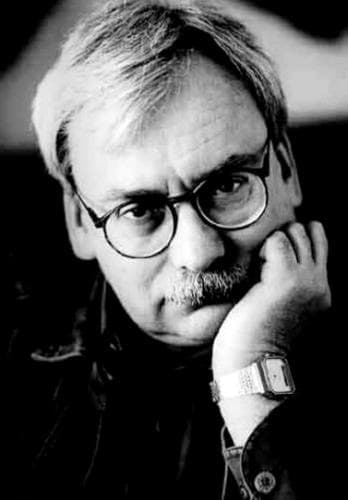
Andrzej Sapkowski

Andrzej Sapkowski is a Polish fantasy writer, best known for his "The Witcher" series, which includes "The Last Wish" and "Blood of Elves." The series gained international recognition and inspired a popular video game franchise and a Netflix television adaptation. Sapkowski's work is celebrated for its complex characters and dark, Slavic-inspired mythology.