“The war, it seems to him, is not just something fought overseas, but something that has invaded their very air, their conversations, their dreams.”
— Reflecting on the pervasive impact of World War I on the isolated town of Commonwealth.

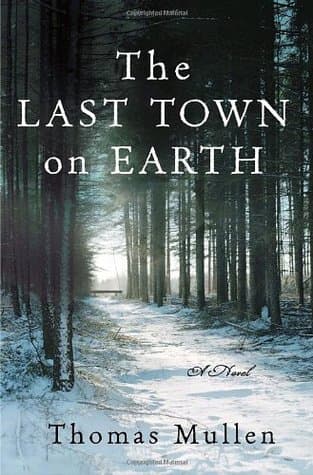
Thomas Mullen (2006)
Genre
Literary Fiction / Historical Fiction
Reading Time
9 hours 45 min
Key Themes
See below
Sign in to track this book
During the 1918 flu pandemic, a guard in an isolated Pacific Northwest mill town turns away a sick soldier, sparking a moral crisis that threatens to destroy the community's utopian ideals.
The novel introduces Philip Worthy as a young man with a difficult past, adopted by Charles Worthy, the founder of Commonwealth. Charles established the town as a socialist ideal, a haven for workers free from capitalist exploitation, deep in the Pacific Northwest forests. Philip, having experienced hardship, finds a sense of belonging and purpose within the tight-knit, idealistic community. He works at the mill alongside other townspeople, learning about the communal values and self-sufficiency that define Commonwealth. The town thrives on its isolation and the shared vision of its inhabitants, believing themselves to be a model of a better way of life, untouched by the outside world, yet aware of global conflicts.
As World War I rages in Europe, its distant effects begin to reach the isolated Commonwealth. Newspapers bring news of battles and patriotic fervor, but also of a mysterious, deadly illness sweeping across the globe – the Spanish Flu. While the town initially feels protected by its remote location, fear and paranoia begin. The town's residents, led by Charles Worthy, debate how to respond to these external threats. Discussions arise about patriotism, loyalty, and the potential for spies, challenging Commonwealth's pacifist and anti-establishment ideals. The flu, in particular, becomes a looming, invisible enemy that threatens to breach their sanctuary, forcing the community to consider drastic measures for self-preservation.
Faced with the escalating flu epidemic, which is devastating nearby towns and cities, the citizens of Commonwealth hold a town meeting. After debate, they vote to quarantine their community, cutting off all access to the outside world. This decision is driven by a desire to protect their families and their way of life from the deadly contagion. Guards are posted at the single road leading into and out of town, with Philip Worthy among those chosen for this duty. The quarantine is seen as a necessary, if extreme, measure to preserve their health and the town's utopian experiment, transforming Commonwealth from a haven into a fortress.
One cold, rainy night, Philip is on guard duty when a lone figure appears on the road: a young, emaciated soldier, clearly ill and exhausted, begging for sanctuary. The soldier claims to be returning home and unaware of the quarantine, pleading for food, warmth, and medical attention. Philip is torn between his duty to protect Commonwealth and his compassion for the suffering man. The soldier's desperate state and the moral dilemma it presents weigh heavily on Philip, forcing him to confront the harsh realities of their isolation and the human cost of their ideals. This encounter becomes the turning point for Philip and the town, setting in motion a chain of irreversible events.
The tense standoff between Philip and the soldier escalates. The soldier, increasingly desperate and delirious, attempts to force his way past the quarantine line. In a moment of panic, Philip fires his rifle. The shot kills the soldier. The immediate aftermath is one of shock for Philip. The sound of the gunshot echoes through the quiet forest, marking the violent breach of Commonwealth's peaceful existence. This single act, whether self-defense or a tragic mistake, irrevocably alters the town's path, bringing the harsh realities of the outside world directly to their doorstep and challenging the foundation of their communal values.
The soldier's death throws Commonwealth into turmoil. Charles Worthy and the town council must decide how to handle the situation, which quickly divides the community. Some, like Philip's adoptive mother, believe Philip acted in self-defense and should be supported. Others are horrified by the violence and question the morality of their quarantine, viewing Philip's actions as a betrayal of their pacifist principles. The incident exposes deep cracks in the town's unity, as fear, guilt, and moral outrage clash. The initial ideal of a harmonious community begins to unravel under the pressure of this crisis, turning neighbor against neighbor and challenging Charles Worthy's leadership.
News of the soldier's death, though initially contained, eventually reaches federal authorities. A contingent of U.S. Marshals arrives at Commonwealth's quarantine line, demanding entry and an investigation into the shooting. Their arrival is a direct confrontation between Commonwealth's self-governance and federal law. The marshals, driven by wartime patriotism and a suspicion of the town's socialist leanings, view Commonwealth with distrust. Charles Worthy attempts to negotiate, asserting the town's right to self-preservation, but the federal presence is a powerful intrusion that further destabilizes the community and threatens its existence. The town is forced to consider how far they are willing to go to maintain their independence.
Philip is eventually taken into custody and faces a trial for the soldier's death. The trial becomes a public spectacle, with the outside world portraying Commonwealth as an unpatriotic, isolationist collective that murdered a returning war hero. The media sensationalizes the story, painting Charles Worthy's ideals as dangerous and anti-American. Inside Commonwealth, the trial further polarizes the residents, some feeling betrayed by Philip, others defending him and their town's right to self-preservation. Philip struggles with guilt and the weight of the town's fate resting on his shoulders, while Charles Worthy tries to protect his adopted son and the town's reputation amidst the growing hostility.
While the town is embroiled in the legal and moral fallout of the shooting, the inevitable happens: the Spanish Flu eventually finds its way into Commonwealth. The quarantine, once a symbol of their strength, proves futile. Residents begin to fall ill, and the town's limited medical resources are quickly overwhelmed. The disease spreads rapidly, causing widespread panic, sickness, and death. The community, already fractured by internal conflicts and external pressures, now faces an even more devastating enemy. The flu's arrival highlights the tragic irony of their initial, desperate measure to protect themselves, showing the limitations of human control against a force of nature.
The combined pressures of the flu epidemic, the external legal battles, and the internal divisions prove too much for Commonwealth. The utopian experiment begins to disintegrate. People die from the flu, the mill struggles, and many residents, disillusioned and fearful, begin to leave. Charles Worthy's leadership is questioned, and his vision for the town falters. Philip, having endured the trial and witnessed the collapse of his home, experiences loss and disillusionment. The once idealistic community slowly empties and loses its purpose, becoming a shadow of its former self, showing the fragility of even the most well-intentioned human endeavors in the face of overwhelming adversity.
The Protagonist
Philip transforms from an idealistic, somewhat naive young man into a haunted individual grappling with profound guilt and the tragic loss of his community's innocence and existence.
The Supporting/Antagonist (ideologically)
Charles begins as a confident, unwavering leader but ends as a man whose grand vision crumbles under the weight of external pressures and internal dissent, leaving him disillusioned.
The Supporting
Helen remains a steadfast source of moral strength and compassion, even as her ideals and family are tested by tragedy, ultimately embodying resilience amidst loss.
The Mentioned/Catalyst
Not a character with an arc, but his brief appearance and death serve as the inciting incident, forever changing the course of the story.
The Supporting
Millwright's pragmatism hardens into a more self-interested and divisive stance as the town faces increasing pressure, reflecting the erosion of communal unity.
The Supporting
Reverend Millard's faith and moral certainty are profoundly challenged and shaken by the town's descent into violence and disease, forcing him to confront the limits of spiritual comfort.
The Antagonist (collective)
Not individual characters, but their collective actions serve as the external antagonist, systematically dismantling Commonwealth's autonomy and ideals.
The Supporting
Dr. Vance's initial hope of protecting the town through medical quarantine gives way to a grim struggle against an overwhelming epidemic, highlighting the limits of medicine.
The novel explores how Commonwealth's ideals—socialism, pacifism, communal harmony—are tested and shattered by external pressures and human mistakes. The town's attempt to create a perfect society, free from exploitation and conflict, proves unsustainable. The quarantine, meant to protect their ideals, instead isolates them and makes them vulnerable to misunderstanding. The events following the soldier's death, particularly the internal divisions and the flu outbreak, show how easily even well-intentioned utopias can collapse under fear, violence, and reality.
“''They had built a wall against the world, and in doing so, had created a world within a wall, where the air grew thin with unexamined principles.''”
A central theme is the difficult choice between personal compassion and the need for collective survival. Philip Worthy's dilemma at the gate, facing a sick, desperate soldier, shows this conflict. His individual empathy is pitted against his duty to protect the town's quarantine and its existence. The town's collective decision to quarantine itself also highlights this, prioritizing community health over individual suffering outside its borders. The novel questions whether a community can maintain its moral integrity when forced to make such choices for preservation, and if the cost of survival can ever be justified.
“''How much of your soul could you sacrifice to save the body of your community?''”
Commonwealth's physical and ideological isolation is a defining characteristic, initially seen as a strength, a shield against the corrupting influences of the outside world—war, capitalism, and disease. However, the novel shows the futility and danger of such isolation. The war still creates paranoia, the flu still breaches their defenses, and their attempt to separate themselves leads to misunderstanding, hostility, and a violent confrontation with federal authority. The story emphasizes the fundamental interconnectedness of humanity, demonstrating that no community, regardless of its ideals or physical barriers, can truly stand alone against global forces and human nature.
“''They had believed themselves an island, but the tide of the world rose just the same, threatening to engulf them.''”
The novel explores the complex and often conflicting definitions of patriotism and loyalty, especially during wartime. Commonwealth's pacifist and socialist ideals are viewed with suspicion by the outside world, which equates loyalty with unquestioning support for the war effort. The federal marshals' investigation is fueled by this suspicion, seeing the town's isolation as unpatriotic. Within Commonwealth, loyalty is to the community and its founding principles. Philip's shooting of the soldier, who is a returning war hero, directly challenges these differing loyalties and forces the town to confront how their actions are perceived and judged by a world with very different values.
“''Was true loyalty to a flag, or to the principles that made a community worth defending?''”
The 1918 flu epidemic serves as a powerful backdrop and driving force, showing its devastating impact not just on physical health but on social cohesion and moral frameworks. The fear of contagion pushes Commonwealth to extreme measures, leading to the quarantine and the tragic events that follow. The disease itself, when it eventually breaches the town's defenses, exposes the limits of human control and the fragility of societal structures. The epidemic acts as a crucible, forcing characters to confront their deepest fears and values, ultimately contributing to the breakdown of their utopian experiment.
“''The invisible enemy was the most terrifying, for it turned every breath into a gamble, every touch into a threat.''”
A physical and symbolic barrier that defines the town's isolation.
The quarantine serves as both a literal plot device—the physical barrier around Commonwealth—and a powerful symbol. It is the direct cause of the central conflict, as it leads to the confrontation between Philip and the soldier. Symbolically, it represents the town's attempt to isolate itself from the perceived evils of the outside world, including war and disease. Its eventual failure, when the flu breaches it, highlights the futility of such absolute isolation and the interconnectedness of human experience. It also acts as a pressure cooker, intensifying internal conflicts.
An inciting incident that shatters the town's peace and tests its ideals.
The arrival of the unnamed, sick soldier at Commonwealth's gate is the primary inciting incident of the novel. His presence immediately forces Philip and the town to confront the harsh realities of their quarantine and their ideals. He is a catalyst for violence, guilt, and the subsequent external and internal conflicts that lead to the town's downfall. The soldier, though brief in his appearance, embodies the suffering world that Commonwealth sought to exclude, making his death a symbolically potent act that irrevocably alters the town's fate.
The economic heart of Commonwealth, symbolizing its communal labor and self-sufficiency.
The mill is the economic foundation of Commonwealth, representing its commitment to communal labor, self-sufficiency, and freedom from capitalist exploitation. It is where most of the townspeople work, fostering a sense of shared purpose and identity. As a plot device, its continued operation is crucial for the town's survival. When the flu strikes, and the town faces external pressures, the mill's viability becomes a measure of Commonwealth's resilience, and its eventual decline mirrors the disintegration of the utopian ideal it represents. It grounds the abstract ideals in tangible, everyday work.
A remote, natural environment that enables and isolates the utopian community.
The deep, mist-shrouded forests of the Pacific Northwest serve as a crucial setting. Physically, it provides the isolation necessary for Commonwealth to exist as a separate entity, enabling its utopian experiment. Symbolically, the rugged, untamed nature reflects the raw human emotions and struggles that unfold within the town. The remoteness contributes to the town's initial sense of security and self-reliance, but also makes it vulnerable to external judgment and difficult for its ideals to be understood by the wider world. The natural environment is both a sanctuary and a prison.
“The war, it seems to him, is not just something fought overseas, but something that has invaded their very air, their conversations, their dreams.”
— Reflecting on the pervasive impact of World War I on the isolated town of Commonwealth.
“They were trying to build a new world, a better world, and sometimes that meant tearing down the old one, brick by brick.”
— Describing the utopian, albeit fragile, ideals of the socialist community.
“Fear, he realized, was a more potent weapon than any rifle. It could turn neighbor against neighbor, brother against brother.”
— A character's realization about the power of fear during the influenza pandemic.
“How easily the line between safety and prison could blur, especially when everyone believed they were doing the right thing.”
— Reflecting on the town's strict quarantine measures and the loss of individual freedoms.
“The truth, he was learning, was rarely simple, and often it was a matter of perspective.”
— A young man grappling with conflicting narratives and loyalties within the town.
“Even in a town built on ideals, human nature had a way of asserting itself, with all its flaws and contradictions.”
— Observing the imperfections and conflicts within the supposedly ideal community.
“The silence was not empty, but filled with the unspoken anxieties of a town holding its breath.”
— During a tense period of waiting and uncertainty amid the pandemic.
“They had wanted to be free of the world's troubles, but the world, it seemed, had a way of finding them.”
— Realizing the impossibility of complete isolation from external events and conflicts.
“History, he thought, was not just about grand events, but about the small, everyday choices that people made.”
— A character's contemplation on the making of history through individual actions.
“Loyalty, he discovered, was a complex thing, often tested by circumstances and personal conviction.”
— Exploring the theme of loyalty as characters face difficult decisions.
“The future was a blank page, and they were, for better or worse, writing it themselves.”
— A sense of agency and responsibility in shaping their destiny.
“Sometimes, the hardest thing to do was to question what everyone else believed to be right.”
— A character's struggle with conformity and independent thought.
“The wind carried not just the scent of pine and damp earth, but the ghosts of what might have been, and what was yet to come.”
— A poignant reflection on the past and future of the town.
Ready to see how well you understood this book? Take our interactive quiz with 10 questions.







