“The past is a ghost, the future a dream, and all we ever have is now.”
— Ethan reflects on the nature of time and reality in Wayward Pines.

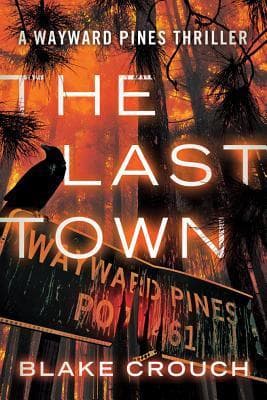
Blake Crouch (2014)
Genre
Thriller / Mystery / Science Fiction
Reading Time
294 min
Key Themes
See below
Sign in to track this book
In the controlled town of Wayward Pines, a Secret Service agent learns a terrifying truth: humanity's last refuge is a cage protecting it from a monstrous reality, now threatening to break through.
Secret Service agent Ethan Burke, after weeks of manipulation in Wayward Pines, Idaho, escapes the town's perimeter with his son, Ben. They go through the wilderness beyond the electrified fence, pursued by Wayward Pines security. During their escape, Ethan and Ben encounter terrifying creatures called 'abbies' (aberrations), confirming warnings about the outside world. They also find abandoned, ruined cities, suggesting a global catastrophe. Ethan eventually learns the truth from a hidden bunker: Wayward Pines is the last human settlement, built by David Pilcher, and it is 2,000 years in the future. The abbies are mutated descendants of humanity.
Ethan and Ben are captured and brought to David Pilcher's underground facility, where Ethan learns the full truth. Pilcher explains he foresaw humanity's self-destruction from environmental collapse and war. He started 'Project Archangel,' cryogenically freezing a select group of people, including himself, and awakening them 2,000 years later. Wayward Pines was built as a controlled environment to preserve the human race, with the fence protecting them from the abbies. Pilcher says his extreme methods, including strict rules and executions, are necessary for humanity's survival. He emphasizes that knowing the past or the world's true nature would cause panic and destroy the fragile society.
While Ethan deals with the truth, Ben goes to the 'First Generation' school. This program teaches children born in Wayward Pines Pilcher's ideas. They learn that Pilcher is their savior, the creator of their safe world, and that the outside is a dangerous wasteland. The First Generation, led by Jason Higgins, is loyal to Wayward Pines and its rules, acting as Pilcher's enforcers and future leaders. Ben, having seen the outside world with Ethan, struggles with this information but is pressured to conform, especially by Jason, who watches him closely.
Meanwhile, Theresa Burke, Ethan's wife, investigates Wayward Pines, unaware of the full truth her husband has found. She works with Adam Hassler, a former colleague of Ethan's, who also seems trapped in Wayward Pines. Theresa discovers more about the town's surveillance, resident disappearances, and the control by Sheriff Pope and Nurse Pam. She sees the townspeople's fear and compliance, and suspects something more sinister than a simple cult, though she does not yet understand Pilcher's deception. Her efforts bring her closer to the truth, putting her in more danger.
Pilcher offers Ethan a choice: be Sheriff and help maintain order, or face consequences. He makes it clear that his family's safety depends on his cooperation. Ethan, now knowing Wayward Pines' existence and the abbies, struggles with this moral problem. He sees the need for Pilcher's mission but dislikes the control and lies. He realizes that keeping the illusion is important for the town's survival, yet his conscience fights against hiding the truth and freedom. He accepts the role, but secretly plans to protect his family and change things from within.
During a time of tension, a breach occurs in the electrified fence protecting Wayward Pines. A horde of abbies enters the town, causing terror and chaos. The town's defenses, made to keep residents in, are overwhelmed by the number of creatures. Residents are attacked, and the illusion of safety is broken. This event makes Ethan act, using his Secret Service training to organize a defense and protect the townspeople, while Pilcher's security forces try to stop the attack.
Amidst the abbie invasion, Ethan Burke becomes the leader. He takes charge, coordinating the remaining security forces and able-bodied townspeople to fight the abbies. He ensures Theresa and Ben's safety, guiding them to a secure place. Knowing the fence is broken and the abbies are too many, Ethan realizes a desperate act is needed to save the remaining population. He sacrifices himself, setting explosives to destroy the facility and the attacking abbies, creating a final barrier to protect the survivors. His act allows a small group to escape to an inner sanctuary.
After Ethan's sacrifice, a small group of survivors, including Theresa and Ben, emerge from the damaged Wayward Pines. The town is in ruins, but the abbie threat is temporarily contained. However, the lack of leadership and the trauma of the invasion leave the adults disoriented. The First Generation, led by Jason Higgins, takes control. Having been taught Pilcher's ideas, they assert their authority, ready to rebuild Wayward Pines according to Pilcher's original vision, but with a more ruthless approach. Humanity's future rests with these young leaders, leaving Theresa and Ben in a difficult situation.
The Protagonist
Ethan transforms from a man desperately trying to escape a perceived prison to a reluctant leader who sacrifices himself to save humanity's last remnant.
The Supporting
Theresa evolves from a worried wife searching for her husband to a survivor fighting for her son in a post-apocalyptic world.
The Supporting
Ben transitions from a confused and rebellious teenager to a survivor struggling to reconcile the truth with the indoctrination of the First Generation.
The Antagonist
Pilcher remains steadfast in his vision, a man driven by a singular, self-appointed mission to save humanity, regardless of the cost to individual freedom.
The Supporting
Pam's character remains consistently loyal to Pilcher, embodying the absolute authority and ruthlessness of his regime.
The Supporting
Pope serves as an initial obstacle and enforcer, his authority eventually usurped by Ethan, but his methods foreshadow the town's true nature.
The Supporting
Jason develops from an indoctrinated youth to the ruthless and absolute leader of Wayward Pines' future, fulfilling Pilcher's vision with fanaticism.
The Supporting
Hassler transitions from a seemingly helpless resident to a knowledgeable survivor, offering aid to Theresa and adapting to the grim reality.
The Supporting
Kate, initially appearing resigned to Wayward Pines, reveals her underlying desire for freedom and acts as a reluctant helper to Ethan.
The novel's main theme is the difference between Wayward Pines' illusion of a normal town and the truth of its post-apocalyptic existence. Pilcher believes the illusion is necessary for humanity's survival, arguing that the truth would cause society to collapse. Ethan, however, fights for the truth, even as he understands the lie's necessity. This theme appears in the town's strict rules, the hidden information, and what happens when the truth about the abbies and the year 4014 is revealed. The novel asks if ignorance is bliss or a dangerous base for society.
““They needed to believe the lie. They had to. Otherwise, they wouldn’t survive.””
This theme explores the moral limits people will cross for humanity's survival. David Pilcher's project is based on the idea that any cost, including control, manipulation, and murder, is justified if humanity continues to exist. Ethan, though horrified by Pilcher's methods, eventually sees the harsh necessity of some measures against the abbies. The novel makes readers consider individual freedom versus group survival, and if a future built on such sacrifices is worth it.
““There are no choices here, Ethan. Only survival.””
Wayward Pines is an example of a society built on absolute control, where an unseen authority dictates every part of life. The town's rules, surveillance, and quick punishments remove residents' free will, supposedly for their own good. Ethan's struggle is a fight for independence and the right to make choices, even dangerous ones. The First Generation's indoctrination shows how easily free will can be suppressed for obedience to a perceived greater good. The abbie invasion eventually breaks this control, but the First Generation tries to re-establish it.
““You don’t make choices here, Ethan. We make them for you.””
The novel looks at what it means to be human in extreme situations. It explores humanity's capacity for both cleverness and cruelty, seen in Pilcher's vision and methods. The 'abbies'—mutated descendants of humanity—make people rethink what humanity is and how fragile its existence can be. The townspeople, without their past and manipulated, show how human society works under pressure. The First Generation, raised in this controlled environment, represents a new, potentially frightening, evolution of human nature shaped by Pilcher's ideas.
““We are the last of them, Ethan. The last tiny ember of humanity.””
Used to disorient the protagonist and the reader, slowly revealing the truth.
Ethan Burke wakes up in Wayward Pines with partial amnesia, unable to fully recall the events leading to his arrival. This device is crucial for building suspense and mystery, as both Ethan and the reader are forced to piece together the bizarre reality of Wayward Pines from a disoriented perspective. It allows the town's true nature to be unveiled gradually, enhancing the shock and confusion as more details emerge about its purpose and the outside world. The memory loss also serves to highlight the psychological manipulation employed by Pilcher's regime.
A physical and symbolic barrier separating Wayward Pines from the terrifying unknown.
The electrified fence serves as a literal barrier protecting Wayward Pines from the abbies, but also a potent symbol of the town's isolation and the truth being kept from its inhabitants. For the townspeople, it's a boundary they are forbidden to cross, enforced by deadly means. For Ethan, it represents the ultimate obstacle to freedom and the key to understanding the town's secrets. Its eventual breach marks a pivotal moment, shattering the illusion of safety and forcing a direct confrontation with the post-apocalyptic reality.
A group of indoctrinated youth representing the future of Pilcher's society.
The First Generation is a plot device used to explore the themes of control, indoctrination, and the shaping of future society. These children, born and raised within Wayward Pines, are taught Pilcher's ideology as absolute truth, becoming fiercely loyal and ruthless enforcers of his vision. They represent the success of Pilcher's social engineering and the potential for a new, fanatical form of humanity. Their emergence as the new leaders at the end of the book signifies the continuation of Pilcher's legacy, albeit with a more extreme interpretation, and a chilling vision for the future.
The monstrous, mutated creatures representing the devolved future of humanity.
The Abbies are the terrifying, mutated descendants of humanity that inhabit the world outside Wayward Pines. They serve as the primary external threat, justifying Pilcher's extreme measures and the existence of the town. As a plot device, they are the ultimate reveal of the novel's science fiction premise – that Wayward Pines exists 2,000 years in the future after humanity's self-destruction. Their appearance transforms the narrative from a psychological thriller into a post-apocalyptic survival story, forcing characters and readers to confront the horrific consequences of humanity's past actions and the fragility of its future.
“The past is a ghost, the future a dream, and all we ever have is now.”
— Ethan reflects on the nature of time and reality in Wayward Pines.
“Sometimes the only way to stay sane is to go a little crazy.”
— A character discusses coping with the oppressive environment of the town.
“Fear is a prison, but so is hope when it's misplaced.”
— Commentary on the psychological traps faced by the residents.
“In a world of lies, the truth becomes the most dangerous weapon.”
— Ethan uncovers secrets about Wayward Pines and its purpose.
“We're all just trying to find our way back to something we lost.”
— Reflection on the characters' motivations and the town's allure.
“The end of the world isn't an event; it's a process.”
— Describing the gradual collapse and transformation in the story.
“Memory is a fragile thing, easily reshaped by those in power.”
— Highlighting the manipulation of memories in Wayward Pines.
“Survival isn't about strength; it's about adaptation.”
— A lesson learned by characters facing the town's threats.
“The greatest mysteries are the ones we carry inside ourselves.”
— Ethan ponders the inner conflicts and secrets of the residents.
“In the silence, you can hear the echoes of what might have been.”
— Atmospheric moment describing the eerie quiet of the town.
“Freedom is an illusion when every choice is predetermined.”
— Critique of the controlled environment and lack of free will.
“The line between monster and savior is thinner than we think.”
— Moral ambiguity in characters' actions to protect the town.
“We build walls to keep the world out, but they end up caging us in.”
— Metaphor for the isolation and confinement in Wayward Pines.
Ready to see how well you understood this book? Take our interactive quiz with 10 questions.
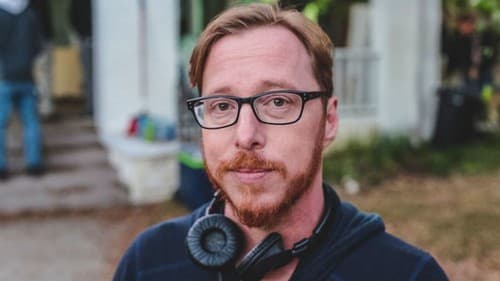
Blake Crouch is a celebrated author known for his mind-bending thrillers that blend speculative fiction with high-stakes action. His notable works include the 'Wayward Pines' trilogy, 'Recursion,' and 'Dark Matter,' all praised for their intricate plots and compelling characters. Crouch's writing often explores complex scientific concepts and their profound impact on humanity.







