“There are three sides to every story: yours, mine, and the truth.”
— A recurring theme about the subjectivity of memory and narrative.

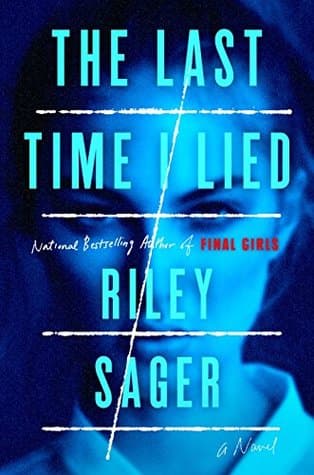
Riley Sager (2018)
Genre
Thriller / Mystery
Reading Time
7-8 hours
Key Themes
See below
Sign in to track this book
Fifteen years after her friends vanished from a summer camp, an artist returns to the grounds as an instructor, unearthing a web of lies and clues that threaten to expose the camp's dark secrets and put her life at risk.
Fifteen years ago, a young Emma Davis attends Camp Nightingale for the first time. She shares a cabin with three older campers: Vivian, Natalie, and Allison. One night, after playing 'Two Truths and a Lie,' Emma wakes to see the other three girls quietly leaving the cabin. Vivian, the leader, turns back, shushes Emma, and closes the door. Emma falls back asleep, thinking they are playing a prank. The next morning, the girls are gone without a trace. A large search begins, but Vivian, Natalie, and Allison are never found, and the mystery closes the camp.
Fifteen years later, Emma Davis is a successful artist in New York City, known for her eerie landscape paintings with ghostly figures in white dresses, inspired by her past at Camp Nightingale. Francesca Harris-White, the wealthy owner of Camp Nightingale, sees Emma's work and recognizes the connection. Francesca, who inherited the camp, is reopening it and invites Emma to be a painting instructor for the summer. Emma accepts, seeing a chance to find out what happened, despite her fears and the dark memories the camp brings back.
When Emma arrives at the newly renovated Camp Nightingale, she is assigned the same cabin she shared with Vivian, Natalie, and Allison. The camp feels familiar yet subtly changed. She soon finds a hidden security camera pointed directly at her cabin, making her question Francesca's real reasons for inviting her. As she moves around the camp, Emma starts having clear flashbacks and finds clues left by Vivian, including strange symbols and notes hidden in books. These clues hint at a darker history for the camp than she imagined and suggest Vivian knew more than she let on.
Emma looks into the camp's records and local history, putting together the story of the Harris-White family. She learns about the original founders, a private couple, and discovers that the camp was not just a summer retreat but had a more cult-like past, especially with the 'White Dresses' girls' program, which focused on purity. Vivian's clues become more important, showing that the disappearance was not random but linked to the camp's hidden rituals and the Harris-White family's secrets. This suggests the girls found something they shouldn't have.
As Emma continues her investigation, she confronts Francesca, who remains vague and defensive, her answers often conflicting. Emma also talks with other long-time camp staff, like the groundskeeper, who seem to know more than they say and are very loyal to Francesca. The security camera, the locked rooms, and the atmosphere of secrecy convince Emma that Francesca is covering something up, either to protect the camp's reputation or to hide her own involvement. Emma feels more isolated and threatened, realizing she is part of a dangerous situation.
Through fragmented memories and Vivian's clues, Emma reconstructs the night of the disappearance. She remembers the last game of 'Two Truths and a Lie' they played. Vivian's 'lie' was actually a truth: 'I know a secret about this camp that could get us all killed.' This changes Emma's understanding, suggesting the girls were not just playing but were investigating something dangerous. The game becomes a key piece, revealing Vivian's desperate attempt to warn Emma and her friends about the danger they faced.
Emma finally confronts Francesca, sharing all her discoveries about the camp's dark history and the Harris-White family's role. It is revealed that Francesca's mother, a former 'White Dresses' girl, was part of a twisted ritual and that Francesca was involved in keeping the secret. The disappearance of Vivian, Natalie, and Allison was not an accident, but a move to silence them after they uncovered the truth about the camp's past and its ongoing sinister practices, possibly involving the trafficking of young girls under the guise of an elite program.
The confrontation escalates, and Emma is in danger. Francesca, desperate to protect her family's legacy and her own role, tries to silence Emma for good. A struggle happens within the isolated camp, mirroring the terror of Emma's childhood. Emma uses her intelligence and knowledge of the camp's layout to escape Francesca, fighting for her life against the woman who has been planning to cover up the past for years. The final confrontation brings Emma face-to-face with the deadly results of her investigation.
In a key moment, Emma's repressed memories return, revealing the complete truth of what happened fifteen years ago. It was not just Vivian, Natalie, and Allison who left the cabin; Emma herself, in a sleepwalking state from a drugged drink, was a witness, and perhaps an unwitting participant, in a ritual abduction. The 'White Dresses' were not just a uniform but a symbol of the girls chosen for these dark purposes. Emma realizes that a cult-like group within the camp, led by members of the Harris-White family, took the girls, and her memory was suppressed to protect those responsible.
Having fully recovered her memories and survived the ordeal, Emma gathers clear evidence against Francesca and the Harris-White family. The truth about the cult activities, the trafficking of girls, and the cover-up of the original disappearance is finally revealed. Francesca and her accomplices are arrested, and the dark legacy of Camp Nightingale comes to light. Emma, though deeply scarred, finds some peace. She continues her art, now with a new understanding of her past, turning her trauma into powerful, honest storytelling through her paintings, ensuring the truth is not forgotten.
The Protagonist
Emma transforms from a traumatized, passive survivor into an active investigator who confronts her past and exposes the truth, finding a form of peace.
The Supporting/Victim
Though absent for most of the narrative, Vivian's character is revealed through her past actions and clues, showing her progression from curious camper to a brave truth-seeker.
The Antagonist
Francesca's arc reveals her as the primary antagonist, unraveling her facade to expose her as a key figure in the cover-up and perpetuation of the camp's dark practices.
The Supporting/Victim
Her character remains largely static, serving as a symbol of the unresolved past and the tragic consequences of the camp's secrets.
The Supporting/Victim
Similar to Natalie, Allison's character primarily serves as a catalyst for Emma's journey, embodying the unresolved grief and mystery.
The Supporting
His character maintains his secretive loyalty throughout, serving as an obstacle to Emma's investigation and a symbol of the camp's deeply ingrained secrets.
The novel explores how traumatic events can be suppressed and how their return affects a person. Emma's inability to fully remember the night her friends disappeared is central to the mystery. Her art is an unconscious way for her to express these buried memories, and her return to Camp Nightingale forces her to face and unlock the full truth, showing how the mind protects itself and the pain of remembering. This appears in her fragmented flashbacks and the symbolic nature of her paintings.
““Sometimes the past is a ghost. Sometimes it’s a monster.””
Camp Nightingale, which looks like a perfect summer retreat, hides a sinister history. Similarly, Francesca Harris-White, appearing as a kind patron, is revealed to be a ruthless antagonist. The 'Two Truths and a Lie' game itself works as a metaphor for this theme, where what seems true is a lie, and the hidden 'lie' holds the key to reality. This theme highlights the idea that beauty can hide evil, challenging the reader to look beyond the surface, as Emma must do to find the truth.
““The biggest lies are often told in silence.””
Emma's art is not just a job but a coping mechanism and a way to process her trauma. Her paintings, with their dark trees and ghostly figures, directly show her repressed memories and anxieties. By returning to the camp and investigating, her art changes from reflecting trauma to being a tool for discovery, as her insights from painting help her interpret clues and understand hidden stories. Ultimately, her art helps expose the truth and ensure justice.
““My paintings were always about the missing girls. They just didn’t know it yet.””
The novel shows the loss of innocence for both Emma and the missing girls. Camp Nightingale, a place usually linked with childhood joy, is corrupted by dark rituals, manipulation, and the exploitation of young girls. The 'White Dresses' program, first presented as a path to purity, is shown to be a sinister front. The disappearance of Vivian, Natalie, and Allison represents the ultimate violation of childhood innocence, and Emma's journey aims to bring some justice for that lost purity.
““Camp Nightingale was supposed to be a place of sunshine and laughter. Instead, it became a graveyard of secrets.””
Emma's fragmented and repressed memories obscure the full truth of the past.
Emma Davis serves as an unreliable narrator due to her repressed memories of the night her friends disappeared. Her trauma has caused her to block out crucial details, leading her (and the reader) to initially believe a simpler, less sinister version of events. This device creates suspense and allows for a shocking revelation as her memories slowly return, challenging everything she thought she knew and forcing a re-evaluation of earlier clues and character interactions. It highlights the psychological impact of trauma.
A seemingly innocent game that foreshadows the novel's central theme of deception.
The children's game 'Two Truths and a Lie' is a recurring motif and a significant plot device. It directly relates to the novel's core theme of deception and hidden truths. Vivian's final 'lie' in the game turns out to be a crucial truth, acting as a direct clue left for Emma. The game’s structure mirrors the narrative itself, where the reader must discern what is real and what is fabricated, both in Emma's memories and in the present-day events at Camp Nightingale.
Hidden messages and unsettling details hint at the camp's dark past.
The novel employs numerous cryptic clues, primarily left by Vivian, such as symbols, notes in books, and seemingly innocuous statements that take on new meaning as Emma investigates. Additionally, unsettling details in the present-day camp, like the hidden security camera and the groundsman's evasiveness, serve as foreshadowing. These elements build suspense, guide Emma's investigation, and slowly reveal the sinister nature of Camp Nightingale and the Harris-White family, allowing the reader to piece together the mystery alongside the protagonist.
The remote camp creates a claustrophobic and vulnerable atmosphere.
The remote and isolated setting of Camp Nightingale is a classic thriller device. Its distance from civilization enhances the sense of vulnerability and claustrophobia for Emma, especially as she uncovers its dark secrets. The natural surroundings, while beautiful, also contribute to the eerie atmosphere, making escape feel difficult. This isolation allows the antagonists to operate with less scrutiny and heightens the stakes for Emma as she realizes she is trapped within the very place that holds the key to her trauma.
“There are three sides to every story: yours, mine, and the truth.”
— A recurring theme about the subjectivity of memory and narrative.
“Every lie we tell creates a debt, and that debt eventually has to be paid.”
— The protagonist reflecting on the consequences of past deceptions.
“The past is never really past. It’s always there, lurking, waiting to pounce.”
— The protagonist's struggle to escape the events of her childhood.
“Sometimes the things we think we remember aren't what actually happened.”
— A key idea related to unreliable narration and the fallibility of memory.
“Grief is a funny thing. It sneaks up on you when you least expect it, even years later.”
— The protagonist dealing with unresolved grief from a past loss.
“We all have secrets. Some are just buried deeper than others.”
— A general observation about human nature and hidden truths.
“Fear has a way of making you see things that aren't there, and ignore the things that are.”
— The protagonist's heightened state of anxiety influencing her perceptions.
“The only thing worse than a lie is the truth you don't want to hear.”
— A character confronting an uncomfortable reality.
“Some friendships are forged in fire, and some are just destined to burn.”
— Reflecting on the intense and often destructive relationships at camp.
“You can run from your past, but you can't outrun it.”
— The protagonist's realization that her past will always catch up to her.
“The mind is a powerful thing. It can protect you, but it can also betray you.”
— Exploring the psychological aspects of memory and trauma.
“Sometimes the most dangerous people are the ones who seem the most harmless.”
— A common thriller trope about hidden evil, relevant to the character dynamics.
“A secret is only a secret if you keep it to yourself.”
— The protagonist grappling with whether to reveal hidden information.
“The truth is rarely simple, and often much messier than we want it to be.”
— A reflection on the complexity of the mystery's resolution.
Ready to see how well you understood this book? Take our interactive quiz with 10 questions.

Biography coming soon.







