“I'm not saying I'm going to be a professional wrestler, but I'm just saying I have the build for it.”
— Greg contemplates his physical attributes.

Jeff Kinney (2008)
Genre
Children's / Young Adult
Reading Time
90 min
Key Themes
See below
Sign in to track this book
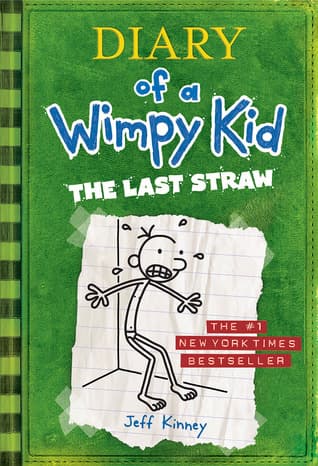
Greg Heffley must navigate his father's attempts to toughen him up with sports and 'manly' activities, or face the ultimate threat: military academy.
The book begins with Greg Heffley thinking about his New Year's resolutions, mainly to stop eating so much candy. He soon gives this up, realizing that being an 'individual' means not following trends. He also talks about his school's 'Positive Behavior' program, where students earn plastic beads for good deeds. Older kids, though, take these beads. Greg tries to earn beads by helping Mrs. Craig, but he accidentally breaks her car antenna, which leads to a bad mark. This early chapter shows Greg's self-serving nature and his ability to turn good intentions into problems. This sets up his challenges throughout the book.
Frank Heffley, Greg's dad, becomes more and more upset with Greg's 'wimpy' behavior, like reading comics and playing video games. He decides to enroll Greg in different activities to make him more masculine. This starts with signing Greg up for soccer, which Greg hates. Frank wants a son who shows traditional male qualities, which is very different from Greg's preferred quiet life. This pressure from his father becomes the main problem, driving many of Greg's later troubles and his attempts to avoid his father's expectations.
Greg's soccer experience goes badly. He tries to avoid playing by hiding behind the goalie or faking an injury. His dad, Frank, is often there, yelling instructions and showing his disappointment. During one game, Greg accidentally scores a goal for the other team, to Frank's dismay. In P.E. class, Greg also has trouble with the 'mile run,' faking injuries or cutting corners. These events show Greg's lack of athletic skill and his dislike of sports challenges. This further makes his father believe Greg needs to 'toughen up.'
Frank tries another way to connect with Greg and teach him 'manly' qualities by taking him to a Civil War reenactment. Greg is bored and uninterested, which annoys Frank. During the reenactment, Greg gets separated from his father. He ends up hiding in a portable toilet, which a reenactor then accidentally tips over. This embarrassing event further strains Greg and Frank's relationship. Frank sees it as another example of Greg's weakness and inability to take part in traditionally masculine activities. The event strengthens Greg's dislike for his father's interests.
For Manny's birthday, Greg's mom decides to have a 'potty training' themed party, which Greg finds shameful. During the party, Greg is supposed to help Manny, but he is distracted. Later, Greg tries to hide a comic book from his dad, Frank, who does not like his reading choices. Frank mistakenly thinks Greg is trying to hide something about Manny's potty training, which leads to an awkward and embarrassing argument. This event further shows the communication problems and misunderstanding between Greg and his father. This is made worse by Frank's existing ideas about Greg's 'wimpy' nature.
Frank Heffley reaches his limit with Greg's resistance. After several disappointments, Frank gives an ultimatum: if Greg does not start showing more effort and 'toughening up,' he will be sent to Spag Union, a strict military academy, for the summer. This threat is a big turning point. It forces Greg to face the possible results of his actions and starts a desperate effort to avoid the military school. The thought of Spag Union scares Greg, making him try to meet his father's expectations, even if he does not want to.
Scared of Spag Union, Greg tries hard to impress his dad. He attempts to get involved in the 'Positive Behavior' program at school again, hoping to show responsibility. He also tries to join the 'Fathers and Sons' camping trip, even though he usually dislikes outdoor activities. Greg even thinks about joining the Boy Scouts, but his reasons are only to avoid military school, not because he is truly interested. These forced attempts are often awkward and unconvincing, as Greg struggles to truly show the traits his father wants.
Greg and Rowley go on a wilderness lodge trip with Rowley's dad, Mr. Jefferson, who is very outdoorsy and 'manly.' This further shows Greg's shortcomings in his father's eyes. Greg tries to impress Mr. Jefferson by pretending to know a lot about nature, but his attempts are clearly fake. He struggles with basic outdoor tasks and finds the experience uncomfortable. Later, Greg reluctantly considers joining the Boy Scouts, hoping it will calm Frank. However, his scout meeting goes badly. It ends with him accidentally setting off a fire alarm during a knot-tying exercise.
To avoid Spag Union, Greg learns about Hardscrabble Farms. Frank implies it was a tough place that built character when he went there as a boy. Greg decides to visit it, hoping to get some 'toughness' points. But Hardscrabble Farms has become a petting zoo and tourist spot. Greg is shocked by the commercialization and lack of 'toughness.' He accidentally causes a problem with a goat, leading to another embarrassing event. This again fails to impress his father and strengthens Greg's image as 'wimpy.'
Despite Greg's failures, he avoids being sent to Spag Union. This is mainly because of Rowley. Rowley, invited to Spag Union himself, declines, saying he does not want to go without Greg. This unexpected act of friendship, along with Frank realizing Greg is still just a kid, makes Frank change his mind. Greg gets to enjoy a normal summer, free from military school rules. The book ends with Greg thinking about his summer. He has just barely escaped his father's attempts to 'toughen him up,' and he has largely stayed the same.
The Protagonist
Greg largely remains unchanged, successfully resisting his father's attempts to 'toughen him up' and maintaining his wimpy ways.
The Supporting Character / Antagonist
He begins the book determined to change Greg but ultimately comes to a reluctant acceptance of Greg's nature, at least for the time being.
The Supporting Character
She consistently tries to maintain peace and nurture her family, often playing a mediating role.
The Supporting Character
He remains consistently kind and loyal, even when Greg doesn't deserve it, showing a quiet strength in his friendship.
The Supporting Character
Rodrick remains consistent in his role as the annoying older brother, largely unchanged by the events.
The Supporting Character
Manny remains a typical spoiled younger sibling, oblivious to the family dynamics he influences.
The Supporting Character
He consistently embodies responsible fatherhood and outdoor enthusiasm, serving as a foil to Greg's father's struggles.
The Mentioned Character
Her brief interaction with Greg serves to kickstart a series of mishaps for him.
The Mentioned Character
He is a recurring source of frustration for Greg during soccer season.
The book's main idea is Greg's struggle between being a 'wimpy' kid and his father's wish for him to be 'manly.' Greg does not want to change, preferring his comfortable, quiet life. His attempts to fit in, like joining soccer or visiting Hardscrabble Farms, are always half-hearted and fail. This reinforces his belief that he is not suited for traditional masculine activities. The book suggests a message of self-acceptance, as Greg stays true to himself, even if it means being 'wimpy.'
“I've always been a big believer in the idea that if you're going to do something, you should do it right. But that doesn't mean you have to do it at all.”
A main theme is the conflict between Frank Heffley's hopes for his son and Greg's actual personality and desires. Frank puts his own ideas of masculinity onto Greg, pushing him into activities Greg dislikes. This causes much tension and misunderstanding, as Frank struggles to accept Greg as he is. Greg, in turn, feels pressured and misunderstood, which leads to his complex plans to avoid his father's demands. The book humorously shows the challenges parents face when raising children who do not fit their ideas.
“Dad's always trying to get me to do stuff that's gonna 'toughen me up.' But all his ideas just make me feel more like a wimp.”
The friendship between Greg and Rowley is a repeated theme, showing its difficulties. Greg often uses Rowley's kind nature and manipulates him, yet Rowley stays very loyal. This loyalty ultimately saves Greg from military school. Rowley's choice not to go without him sways Frank. The theme questions if their friendship is one-sided while also showing the value of Rowley's constant support. It suggests that even a flawed friendship can have big effects.
“I guess having a best friend means you have to put up with a lot of stuff.”
The book looks at different parts of childhood, from school programs to family life and awkward sports. Greg's resistance to 'growing up' in the way his father sees it is a key part. He holds onto his childish comforts and avoids responsibilities. This shows a common wish to stay in a carefree youth. The story captures the humor and frustrations of moving from childhood to adolescence, especially when outside pressures try to rush or control that change.
“The problem with New Year's resolutions is that they never last. And that's fine by me, because I like being an individual.”
Throughout the book, Greg often tries to avoid the results of his actions. He fakes injuries in P.E. or blames others for his mistakes. However, the threat of military school is a real and unavoidable consequence that forces him to deal with his behavior, even if he does not want to. While he escapes the worst punishment, the theme shows how the fear of being held responsible can make someone act, even someone as resistant as Greg.
“When Dad said 'Spag Union,' I knew he wasn't messing around this time. That place sounded like a nightmare.”
The narrative is presented as Greg's personal journal entries, complete with hand-drawn illustrations.
The entire story is told through Greg Heffley's first-person perspective in his journal. This device allows readers direct access to Greg's unfiltered thoughts, skewed logic, and humorous observations. The accompanying stick-figure drawings serve as visual aids, enhancing the comedic timing and Greg's unique perspective on events. This format makes Greg a highly unreliable narrator, as his interpretations of events are often self-serving, adding to the book's humor and character development by revealing his true motivations and insecurities.
Greg's continuous and predictable failures in 'manly' endeavors.
A prominent plot device is the recurring pattern of Greg's attempts at 'manly' activities (soccer, Civil War reenactment, wilderness lodge) inevitably ending in disaster or humiliation. This establishes a comedic rhythm and reinforces Greg's character as fundamentally unsuited for such pursuits. Each failure further exasperates Frank and deepens the central conflict, while also highlighting Greg's consistent resistance to change, making his eventual escape from military school more satisfying for him.
Frank's threat to send Greg to military school.
The threat of Spag Union military academy serves as the primary external motivator for Greg's actions in the latter half of the book. It creates a clear deadline and high stakes, forcing Greg out of his usual passive resistance and into active (though often misguided) attempts to impress his father. This device escalates the conflict between father and son, providing a strong narrative drive and a tangible consequence that Greg desperately wants to avoid, shaping his decisions and schemes.
Characters who highlight Greg's traits through contrast.
Rowley Jefferson and Mr. Jefferson serve as foil characters. Rowley, with his innocent and genuinely good-natured personality, contrasts sharply with Greg's cynical and manipulative tendencies, often making Greg's flaws more apparent. Mr. Jefferson, being an exemplary 'manly' and responsible father, highlights Frank Heffley's struggles with Greg and Greg's own lack of traditional masculine traits, emphasizing the very qualities Frank wishes Greg possessed. These contrasts enrich the character dynamics and thematic exploration.
“I'm not saying I'm going to be a professional wrestler, but I'm just saying I have the build for it.”
— Greg contemplates his physical attributes.
“The only reason I'm not going to be a millionaire is because I don't have enough good ideas.”
— Greg reflects on his financial prospects.
“I think the only person in the world who could beat me at video games is me.”
— Greg's confidence in his gaming skills.
“Sometimes I think the only reason Mom and Dad had me was so they'd have someone to yell at.”
— Greg's perspective on his parents' motivations.
“I'm starting to think that school is just a way for adults to get rid of their kids for seven hours a day.”
— Greg's cynical view of school.
“It's not that I don't like homework, it's just that I don't like doing it.”
— Greg's classic stance on homework.
“I always thought that when I grew up, I'd be able to eat whatever I want. Turns out, that's not true.”
— Greg's realization about adult freedom.
“Having a little brother is like having a pet that can talk back.”
— Greg's comparison of Manny to a pet.
“The worst part about being a kid is that you don't have any money.”
— Greg laments the financial limitations of childhood.
“I wish there was a button you could push to make people stop talking.”
— Greg's desire for peace and quiet.
“It's pretty much impossible to look cool when you're wearing a snowsuit.”
— Greg's fashion concerns in winter.
“I'm starting to think that the whole 'good grades get you into a good college' thing is a myth.”
— Greg's skepticism about academic success.
“If I had a dollar for every time someone told me to 'act my age,' I'd be rich.”
— Greg's frustration with adult expectations.
“Sometimes I feel like I'm the only normal person in my family.”
— Greg's perception of his family's quirks.
Ready to see how well you understood this book? Take our interactive quiz with 10 questions.
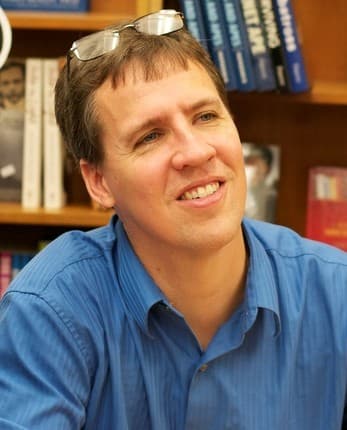
Jeffrey Patrick Kinney is an American author and cartoonist, best known as the creator of the children's book series Diary of a Wimpy Kid. He also created the child-oriented website Poptropica.
Dan Gemeinhart
4.5
Kate O'Hearn
4.4

Jeanne Birdsall
4.4

Jen Wang
4.4
Wendelin Van Draanen
4.3

John Marsden
4.3

Chris Van Allsburg
4.3
Jennifer A. Nielsen
4.2