“When you have a child, you are yourself reborn. You become a child again, and everything is new.”
— Misha reflecting on his mother's advice about parenthood.

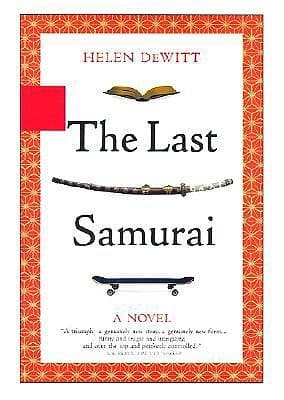
Helen DeWitt (2000)
Genre
Literary Fiction / Historical Fiction
Reading Time
12-15 hours
Key Themes
See below
Sign in to track this book
A child prodigy, raised on ancient languages and Kurosawa's 'Seven Samurai,' looks for his absent father, forcing him to balance his ordered intellectual world with the messy realities of human emotion.
Sibylla, an American living in London, is an intelligent but struggling writer. She raises her son, Ludo, alone, keeping his father's identity a secret. From a young age, Ludo shows extraordinary language and intellectual abilities. Sibylla, not liking conventional education, creates a rigorous, unconventional curriculum for him. It focuses on classical languages like Ancient Greek and Hebrew, advanced mathematics, and, importantly, repeated viewings and analyses of Akira Kurosawa's film, 'Seven Samurai'. Their home is chaotic but intellectually stimulating, filled with books and Sibylla's attempts to write, often under financial pressure.
Sibylla believes that 'Seven Samurai' provides ideal male role models and a way to understand human nature, which Ludo's absent biological father cannot. They watch the film many times, discussing its characters, themes, and story in detail. Ludo internalizes the samurai's codes of honor, courage, and self-sacrifice, seeing the world through the film's moral universe. This film immersion replaces a traditional father figure, shaping Ludo's view of masculinity and heroism, and fueling his growing intellectual curiosity about the world beyond their flat.
Ludo's intellectual development speeds up. By age four, he reads Homer in the original Greek. He quickly moves on to Hebrew, Japanese, Old Norse, and Inuit, showing an innate talent for language structures. At the same time, Sibylla introduces him to advanced mathematics, including Fourier analysis and Laplace transformations, which he understands easily. His learning often surpasses Sibylla's teaching ability, forcing her to constantly find new materials and methods. This intense intellectual focus isolates Ludo from typical childhood experiences but gives him a vast, if unconventional, body of knowledge.
As Ludo grows, his questions about his father become more frequent. Sibylla avoids the topic, offering vague or philosophical responses, often linking fatherhood to the heroic figures in 'Seven Samurai'. She believes that focusing on ideal figures is better than revealing a potentially disappointing reality. However, Ludo's logical mind, trained to seek answers and connections, finds this paternal void increasingly unsatisfying. His intellectual pursuits, while rich, cannot fully substitute for the basic human curiosity about his origins, starting his eventual quest.
Around age eight, Ludo's frustration with Sibylla's evasiveness peaks. He realizes that his vast knowledge of languages and mathematics does not provide the answer to this personal mystery. Using his intellect and observation skills, he starts to piece together clues from Sibylla's casual remarks, old letters, and photographs. He deduces that his father is likely one of several men Sibylla knew during her time at Oxford or in her early writing career. This marks a shift, as Ludo moves from passive learning to active, independent investigation, driven by a personal quest.
Ludo's initial investigations lead him to Professor Bennington, a scholar Sibylla often mentioned from her Oxford days. He finds an old photograph and some correspondence that suggest a past relationship. Ludo, with his directness, plans to meet Bennington. He sends him a sophisticated letter, seemingly seeking academic advice, but subtly designed to reveal his precocity and draw attention. His hope is that Bennington, recognizing Sibylla's intellect in his own, might confirm his paternity or at least offer a lead, pushing Ludo further into the complex adult world.
Ludo's quest leads him to a series of men, each identified as a possible father based on the few clues he has. These men are often academics, writers, or intellectuals who had some past connection with Sibylla. However, each encounter proves disappointing. The men are often self-absorbed, emotionally stunted, or simply not the heroic figures Ludo has imagined from 'Seven Samurai'. He meets a pretentious poet, a jaded academic, and other individuals who do not live up to the idealized image of a father, forcing Ludo to confront the messy realities of human character.
As Ludo meets more potential fathers, the gap between his idealized vision of masculinity, shaped by Kurosawa's film, and the flawed, ordinary men he encounters widens. The samurai were noble, courageous, and committed; the men he finds are often petty, self-involved, or unremarkable. This difference forces Ludo to confront the complexities of the real world, where heroism is rare and people are rarely as grand as the characters in his beloved film. This realization is both painful and an important part of his growing up, moving him beyond purely intellectual understanding to emotional experience.
Ludo's pursuit of his father indirectly forces Sibylla to confront her own past. His questions and actions bring up memories of her relationships, her intellectual ambitions, and the compromises she made. Her reluctance to name Ludo's father comes from a mix of protecting him from a disappointing truth, her own unresolved feelings, and a desire to maintain her unconventional educational philosophy. As Ludo pushes further, Sibylla's carefully constructed world of intellectual isolation begins to crack, revealing her vulnerabilities and the emotional weight of her choices.
After many dead ends and emotional disappointments, Ludo eventually uncovers the truth about his biological father. The revelation is not a grand, heroic moment but a quiet, often anticlimactic one, reflecting the mundane reality of his origins rather than the epic scale of his intellectual journey. The man is not a samurai, nor a genius, but an ordinary individual. This discovery, while perhaps not what he initially hoped for, brings closure. Ludo begins to understand that identity is not solely defined by genetics or idealized figures but by one's own experiences and choices, accepting the complexity of his parentage and moving forward.
The Protagonist/Mother
Sibylla moves from a position of intellectual control and emotional secrecy to a more vulnerable acceptance of her past and the limitations of her carefully constructed world.
The Protagonist/Son
Ludo evolves from a purely intellectual, sheltered prodigy into a young man who confronts the messy realities of human relationships and the difference between idealized knowledge and lived experience.
The Supporting/Potential Father
Bennington serves as a catalyst for Ludo's quest, representing the initial, more idealized type of father figure Ludo envisions, before the reality of other candidates sets in.
The Mentioned/Archetype
As an archetype, Kanbei's 'arc' is static within Ludo's mind, serving as an unchanging ideal that Ludo must ultimately reconcile with the flawed humanity he encounters.
The Mentioned/Archetype
Like Kanbei, Kikuchiyo's 'arc' is fixed as an archetype, providing Ludo with a different facet of masculinity to consider in contrast to his real-world interactions.
The Supporting/Mentioned
These characters cumulatively represent Ludo's journey from idealized expectation to the acceptance of flawed reality, collectively shaping his understanding of real-world masculinity.
The novel explores the benefits and drawbacks of a highly unconventional, self-directed education. Sibylla's intense teaching of Ludo, focusing on classical languages, advanced mathematics, and film analysis, creates a brilliant mind but also isolates him. The theme questions whether such an intense curriculum truly prepares a child for the 'messy world of adults' or merely gives them a vast, yet sometimes impractical, body of knowledge. It also shows the intellectual joy and freedom that can come from learning outside rigid systems, as seen in Ludo's quick mastery of complex subjects.
““The problem with conventional education was that it trained you to answer questions, not to ask them.””
Ludo's search for his biological father drives the second half of the novel. This quest is not just about finding a name but about understanding his origins, his place in the world, and reconciling his idealized notions of fatherhood (shaped by 'Seven Samurai') with the reality of flawed human beings. The absence of a father creates a void that even Ludo's vast intellectual ability cannot fill, pushing him to seek emotional and familial truths beyond pure knowledge. His journey is a classic coming-of-age arc, moving from intellectual certainty to emotional complexity.
““He knew Homer, he knew Hebrew, he knew Japanese. But he didn't know who his father was.””
A main theme is the tension between idealized concepts and messy reality. Ludo's understanding of heroism, morality, and masculinity is largely shaped by the noble samurai of Kurosawa's film. When he looks for his father, he meets a series of men who are ordinary, flawed, and often disappointing, sharply contrasting with his cinematic heroes. This forces Ludo, and implicitly Sibylla, to deal with the limitations of intellectual ideals when faced with the complexities of human nature, relationships, and the mundane aspects of life. The novel suggests that true understanding comes from combining both perspectives.
““The world, Ludo was discovering, was not a Kurosawa film. It was less heroic, less grand, and considerably more ambiguous.””
Language is not just a subject of study but a way Ludo and Sibylla understand the world. Ludo's mastery of many languages, from ancient Greek to Japanese, shows a deep appreciation for structure, nuance, and different ways of seeing reality. Logic and analysis are central to their intellectual approach, allowing Ludo to deconstruct complex texts and mathematical problems. However, the novel also questions the limits of pure logic when faced with emotional truths and the irrationalities of human behavior, showing how language can both clarify and obscure.
““Every language was a universe, a different way of ordering the chaos.””
The novel explores how parents, through their choices and philosophies, shape their children. Sibylla's deliberate, unconventional education greatly influences Ludo's intellectual development and worldview. Her secrecy about his father also directly causes his quest, showing how unresolved parental issues can impact a child's search for identity. The book examines the legacy parents pass on, whether through intentional teaching, withheld information, or the environment they create, and how children deal with and ultimately move beyond these influences to forge their own paths.
““She had given him the world, but not his place in it.””
A classic literary trope driving the protagonist's quest for identity and origin.
The absent father is the central mystery and primary plot catalyst. Sibylla's refusal to name Ludo's biological father creates a void that Ludo, despite his vast intellectual knowledge, feels compelled to fill. This absence sparks his journey of discovery, forcing him out of his intellectual bubble and into the complexities of human relationships and the real world. It serves as a powerful symbol for the incompleteness of knowledge without personal connection, and the fundamental human need for origin and belonging.
Akira Kurosawa's film serves as a recurring symbol, a moral compass, and a lens through which Ludo understands the world.
'Seven Samurai' is more than just a film; it is a foundational text in Ludo's education. Sibylla uses it to teach him about heroism, morality, leadership, and the complexities of human nature. The film's characters, particularly Kanbei and Kikuchiyo, become archetypes against which Ludo measures potential father figures and the world around him. This motif highlights the contrast between idealized cinematic narratives and messy reality, and acts as a constant reference point for Ludo's ethical and emotional development throughout his quest.
The extreme intellectual development of Ludo, shaped by Sibylla's unconventional educational methods.
This device focuses on Ludo's extraordinary intelligence and the unique, intense educational environment Sibylla creates for him. It allows the novel to explore themes of genius, the nature of learning, and the potential isolation that can come with being intellectually exceptional. The hothousing narrative sets Ludo apart, explaining his unique worldview and his ability to pursue his quest with remarkable analytical skill. It also raises questions about the balance between intellectual development and emotional, social integration, and the potential pitfalls of an education detached from conventional experiences.
The use of letters and written communication to advance the plot and reveal character.
While not solely an epistolary novel, letters play a crucial role, particularly in Ludo's quest. Ludo writes highly sophisticated letters to potential fathers, ostensibly seeking academic advice but subtly designed to reveal his precocity and elicit responses that might confirm paternity. These letters showcase his formidable intellect and his strategic approach to his personal mission. They also serve as a narrative device to introduce new characters and propel the plot forward, bridging the gap between Ludo's isolated world and the external one he seeks to penetrate.
“When you have a child, you are yourself reborn. You become a child again, and everything is new.”
— Misha reflecting on his mother's advice about parenthood.
“The greatest gift a parent can give their child is not to protect them from the world, but to teach them how to live in it.”
— Satoshi's philosophy on raising his son, Ludo.
“Language is not just words; it is a way of seeing the world, a way of thinking, a way of being.”
— Ludo's mother, Sibylla, discussing the importance of learning different languages.
“To truly understand someone, you must try to see the world through their eyes, even if their world is vastly different from your own.”
— Sibylla's advice to Ludo about empathy and understanding other cultures.
“Mathematics is not just numbers; it is a language, a poetry of logic and reason.”
— Ludo's early fascination with mathematics and its inherent beauty.
“The world is full of wonders, but you have to know how to look for them.”
— A recurring theme as Ludo explores various subjects and ideas.
“Every answer only leads to more questions, and that is the true joy of learning.”
— Ludo's insatiable intellectual curiosity.
“Sometimes the most profound truths are found in the simplest things.”
— Sibylla's observation about life and philosophy.
“To be truly free, you must first free your mind from the constraints of convention.”
— Satoshi's radical approach to education and living.
“The past is not a burden, but a foundation on which we build our future.”
— A reflection on heritage and the influence of history.
“Love is not about possession, but about allowing the other to be fully themselves.”
— Sibylla's understanding of a healthy relationship.
“The search for meaning is a journey, not a destination.”
— Ludo's ongoing quest for understanding throughout the novel.
“It is not enough to know; you must also apply what you know.”
— A lesson learned by Ludo about the practical application of knowledge.
“The greatest adventures are often found within the pages of a book.”
— Ludo's early life spent immersed in literature and learning.
Ready to see how well you understood this book? Take our interactive quiz with 10 questions.

Biography coming soon.







