“A quilt is not just a blanket; it is a story, a history, a piece of a life.”
— Honor Bright reflects on the significance of quilting as she adapts to life in Ohio.

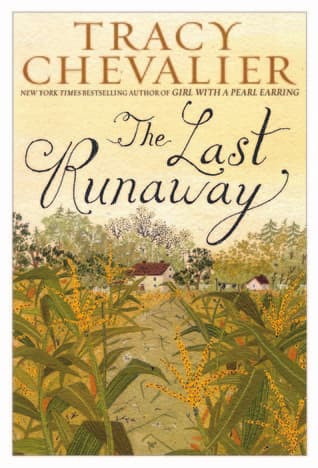
Tracy Chevalier (2013)
Genre
Historical Fiction
Reading Time
360 min
Key Themes
See below
Sign in to track this book
A timid English Quaker, adrift in 1850s Ohio, finds her quiet principles ignited into defiant action as she's swept into the perilous, clandestine world of the Underground Railroad.
In 1850, Honor Bright, a young Quaker woman from Dorset, England, travels to America with her older sister, Grace, who is engaged to Quaker abolitionist Adam Cox in Faithwell, Ohio. Honor is getting over a broken engagement and feeling like a failure. The sea voyage is hard for Honor, who gets very seasick. When they arrive in America, they take a steamboat up the Ohio River. During this part of the trip, Grace gets sick with cholera and dies suddenly, leaving Honor heartbroken and alone. Honor, still weak and grieving, finishes the journey to Faithwell by herself, carrying the heavy weight of her sister's death and the difficult prospect of a new life without her. Her quilt is her only comfort, a link to home and family.
Honor arrives in Faithwell, Ohio, a Quaker settlement. Adam Cox, her deceased sister's fiancé, and his family meet her. Adam, a serious and quiet man, is clearly sad about Grace's death but stays calm. Honor feels like an unwanted guest, especially with Adam's mother, Judith, who is critical and suspicious of her. The Cox family, including Adam's younger brother, Abel, and his two children, give her a place to stay, but Honor struggles to get used to the simple, practical American way of life, which is very different from her more refined English upbringing. She finds comfort in her quilting, a skill she practices often, but she still feels isolated among the close-knit, yet reserved, Quaker community.
Soon after she arrives, Honor is drawn into the secret world of the Underground Railroad. One night, a young runaway slave named Liz is brought to the Cox farm. Honor is scared and overwhelmed at first, not used to such direct involvement in the struggles of enslaved people. She helps hide and care for Liz, seeing firsthand the brutality Liz suffered. This experience upsets Honor deeply, challenging her Quaker pacifist beliefs and her sheltered view of the world. She also meets Belle Mills, a free Black woman who leads the local Underground Railroad network, and Donovan, a 'slave catcher' or 'Black-birding' man who patrols the area looking for runaways, creating a strong sense of danger.
As weeks pass, Honor's relationship with Adam Cox slowly gets better. She notices his quiet kindness and his dedication to abolition. He appreciates her quilting skills and her gentle nature. Honor, in turn, finds herself more and more attracted to Adam, despite his reserved manner. She starts to help more actively with the Underground Railroad, guiding runaways, mending their clothes, and offering comfort. This involvement, though sometimes frightening, gives her a sense of purpose and connects her to the community in a new way. She learns the secret signals and safe houses, becoming a small but important part of the network, overcoming her initial shyness.
The Pease family, also Quakers, arrives in Faithwell, disrupting the quiet routine. Mrs. Pease, in particular, is a strong woman with firm opinions. A new runaway, a young woman named May, arrives at the Cox farm, pregnant and desperate. May is very sick and needs medical attention right away, but getting it openly would risk her capture. Honor, feeling deep empathy for May, breaks some of the stricter rules of the Underground Railroad to make sure May gets care. This decision causes conflict with some community members, especially those who prioritize secrecy above all else, and shows the moral difficulties of their work. Honor's actions show her growing courage and her willingness to follow her conscience.
Donovan, the slave catcher, becomes a greater threat in Faithwell, his suspicions growing about the Quaker community's activities. He often patrols the roads and questions residents. A local, less honest person named Brother Philemon, driven by greed, tells Donovan where a runaway named William is. William is captured and returned to slavery. Seeing the terrible effect of this betrayal and the constant threat from Donovan, Honor understands the extreme danger runaways face. When another runaway, a young boy named Daniel, arrives, Honor must make a difficult choice: she has to decide whether to send him to Canada, a longer and more dangerous journey, or risk him being caught in Ohio. She decides to send him north.
Through shared experiences and quiet support, the unspoken affection between Honor and Adam grows deeper. Adam, seeing Honor's strength, compassion, and her commitment to the cause, proposes marriage. Honor, who has come to love Adam and feel at home in Faithwell, accepts. Their marriage shows Honor's full acceptance into the American Quaker community and her dedication to the abolitionist movement. She understands that marrying Adam means committing not only to him but also to the dangerous work of the Underground Railroad. This commitment completes her change from a timid English girl to a strong woman finding her purpose in a new land.
Honor starts to make a special quilt, not for her own wedding, but for a runaway slave, using specific patterns and colors that mean something for the journey to freedom. This quilt becomes a symbol of her change and her active part in the Underground Railroad. Each stitch shows her growing commitment and how her life is connected with the lives of those she helps. She designs it to be both practical for travel and a sign of hope. This act of creation confirms her new identity as a contributing member of the Faithwell community and someone who helps bring change, moving past her initial feelings of displacement and sadness.
Donovan, having gathered enough information, plans a raid on Faithwell, specifically targeting the Cox farm, believing it to be a center for runaways. The community is in a panic. Honor, along with Adam and other Quakers, must quickly hide a group of runaways, including a mother and her child. The tension is high as Donovan and his men search the property. Honor uses her intelligence and knowledge of the farm to help hide them, showing great bravery under pressure. The raid fails to capture any runaways, thanks to the quick thinking and unity of the Quakers, but it reminds them of the constant danger they live under and strengthens their resolve to continue their work.
Honor helps guide one final runaway, a young woman named Sarah, to the next safe house on her journey to Canada. This experience, though still dangerous, is met with a new sense of confidence and purpose by Honor. She has fully accepted her role within the Underground Railroad and found her voice in fighting for justice. With Adam by her side, Honor looks forward to their marriage and a future dedicated to their shared Quaker values and the ongoing fight against slavery. She has shed her past shyness and become a strong, compassionate woman, making a life for herself on her own terms in America.
The Protagonist
From a sheltered, grieving English girl, Honor evolves into a strong, independent woman deeply committed to the abolitionist cause and her new life in America.
The Supporting/Love Interest
Adam remains steadfast in his principles and actions, finding love and a partner in Honor.
The Supporting
Belle remains a steadfast and vital figure in the Underground Railroad, always working for freedom.
The Antagonist
Donovan remains a persistent and dangerous threat throughout the narrative, never truly defeated, symbolizing the ongoing struggle.
The Supporting
Judith slowly softens her stance towards Honor, moving from suspicion to acceptance and affection.
The Mentioned
Grace's brief appearance and sudden death serve as the catalyst for Honor's independent journey.
The Supporting
Abel remains a steady, supportive presence within the Cox family and the abolitionist network.
The Supporting
Philemon's actions reveal the darker side of human nature and the complexities of the abolitionist era.
Honor Bright's journey from a sheltered English girl to a courageous American woman is central to the novel. Initially defined by her family and a failed engagement, Honor loses these anchors when she arrives in Ohio. Her involvement with the Underground Railroad forces her to face her fears, question her ideas, and create a new identity based on her own beliefs and actions. She finds an inner strength and purpose she never knew she had, becoming an active agent of change rather than a passive observer. This theme shows in her growing confidence and her willingness to defy societal expectations and danger to do what she believes is right.
“She was no longer the frightened English girl, but a woman forged in the fires of a new land and a dangerous cause.”
The novel deeply explores moral courage, especially concerning the Underground Railroad. Honor, at first hesitant and afraid, slowly develops the courage to act on her Quaker principles of equality and justice, even when it means breaking laws and risking her safety. Characters like Adam Cox and Belle Mills show unwavering moral courage, constantly risking their lives for others' freedom. The story highlights the difficult choices and risks involved in standing up against a deeply rooted injustice like slavery, showing that true courage often means defying the norm and accepting personal sacrifice.
“It was not enough to believe in freedom; one had to fight for it, stitch by dangerous stitch.”
Honor's first experiences in America are marked by deep displacement and a struggle to fit in. She feels alienated by the unfamiliar customs, the harsh land, and the reserved nature of the Ohio Quakers. Her sister's death further isolates her. However, through her active participation in the Underground Railroad and her growing relationships, particularly with Adam and Belle, Honor slowly finds a new sense of belonging. She realizes that true belonging is not just about where she is or her family ties, but about shared purpose, values, and community, built through collective action and mutual support in a challenging environment.
“She had come to America seeking a new life; she had found it not in comfort, but in courage, and in the quiet, dangerous work of freedom.”
The success of the Underground Railroad, as shown in the novel, relies heavily on community and solidarity. The Quaker network, despite its internal differences, works together to shelter, feed, and guide runaways. This collective effort shows how individuals, united by a common moral cause, can make significant change against great odds. The community provides not only practical help but also emotional support and a sense of shared purpose, which is important for Honor's integration and growth. The moments of collective action, such as hiding runaways during Donovan's raid, show the strength that comes from unity.
“Each secret hand, each whispered word, each hidden room was a stitch in the great quilt of freedom, holding them all together.”
The novel shows the dangerous and often morally complex practicalities of running the Underground Railroad. It moves beyond abstract ideals to show the logistical challenges of hiding, feeding, and transporting runaways, the constant threat of slave catchers like Donovan, and the need for secrecy and coded communication. The story does not avoid the difficult decisions, betrayals, and personal risks involved, such as the hard choice to send a runaway child on a longer, more dangerous route. This theme grounds the historical narrative in realistic detail, highlighting the immense courage and sacrifice required by those who participated.
“Freedom was not a gift; it was a path, forged in fear and faith, step by dangerous step.”
Represents Honor's growth, connection to home, and the interconnectedness of the Underground Railroad.
Quilting serves as a powerful multi-layered device. Initially, Honor's quilt is a tangible link to her English home and a source of comfort. As she adapts to America, her quilting becomes a means of expression and a way to connect with her new community. The act of piecing together disparate fabrics mirrors her own process of integrating into a new life. Symbolically, the Underground Railroad itself can be seen as a 'quilt' of safe houses and routes, stitched together by courageous individuals. Honor's creation of a specific quilt for a runaway further solidifies its role as a symbol of freedom, hope, and the intricate network of support.
The central plot driver, creating tension, moral dilemmas, and character development.
The Underground Railroad is not merely a historical setting but a dynamic plot device that propels the narrative. It introduces conflict through the constant threat of slave catchers, forces characters into moral dilemmas, and provides the framework for Honor's personal growth. Each runaway's story creates a mini-narrative within the larger plot, highlighting the individual stakes and the collective effort. The network's secrecy, coded language, and the constant danger it entails generate suspense and underscore the courage of its participants, making it the engine of the story's action and ethical exploration.
Represents Honor's physical and emotional transformation.
Honor's initial journey from England to Ohio is a literal one, fraught with illness and loss. This physical journey mirrors her emotional and psychological transformation. She embarks on a 'journey' of self-discovery, moving from timidity to courage, from displacement to belonging. The runaways' journeys to freedom also underscore this motif, highlighting the perilous nature of their quest and the transformative power of seeking a better life. The journey motif emphasizes the idea that profound change often requires venturing into the unknown and overcoming significant obstacles, both external and internal.
Allows intimate access to Honor's evolving thoughts and feelings.
While not strictly first-person, the narrative is tightly focused on Honor's perspective, offering an intimate window into her thoughts, fears, and gradual transformation. This limited perspective allows the reader to experience Honor's initial culture shock, her moral struggles, and her growing courage firsthand. It builds empathy for her plight and makes her journey of self-discovery more personal and impactful. The reader learns about the Underground Railroad and the American landscape as Honor does, making her adaptation and growing involvement feel authentic and immediate.
“A quilt is not just a blanket; it is a story, a history, a piece of a life.”
— Honor Bright reflects on the significance of quilting as she adapts to life in Ohio.
“In England, I was a shadow; here, I am a person.”
— Honor Bright compares her constrained life in England to her newfound independence in America.
“Sometimes the hardest thing and the right thing are the same.”
— Honor grapples with moral dilemmas while aiding fugitive slaves on the Underground Railroad.
“A needle is a small thing, but it can stitch together lives.”
— Honor uses quilting as a means to connect with others and support the abolitionist cause.
“Home is not a place, but the people who make you feel you belong.”
— Honor finds a sense of belonging with the Millers and other Quakers in Ohio.
“Fear is a cage, but kindness can pick the lock.”
— Honor observes how small acts of kindness can overcome the fear surrounding slavery.
“The land does not care who owns it; it only asks to be respected.”
— Reflecting on the American frontier and the displacement of Native Americans.
“Silence can be as loud as a shout, if you know how to listen.”
— Honor learns to interpret the unspoken tensions in her new community.
“A true friend is one who sees the pain in your eyes when everyone else believes your smile.”
— Honor's bond with Belle, a free Black woman, deepens through shared struggles.
“We are all patchwork, made of pieces from the people we have loved and lost.”
— Honor contemplates how her experiences and relationships shape her identity.
“To stand by and do nothing is to choose the side of the oppressor.”
— Honor's growing commitment to the abolitionist movement in Ohio.
“The stars are the same here as in England, but they seem to shine brighter on freedom.”
— Honor finds hope and purpose under the night sky in her new home.
“A woman's voice may be soft, but it can carry across oceans.”
— Honor gains confidence in speaking out against injustice.
“Love is not always a grand gesture; sometimes it is a quilt left on a fence.”
— Honor uses quilts as secret signals on the Underground Railroad.
Ready to see how well you understood this book? Take our interactive quiz with 10 questions.

Biography coming soon.







