“The last question was asked for the first time, half in jest, on May 21, 2061, at a time when humanity first stepped into the light.”
— Opening line of the story, setting the stage for the central theme.

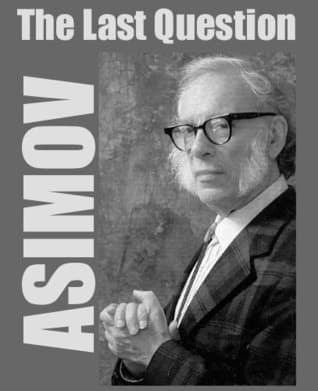
Isaac Asimov (2007)
Genre
Fantasy / Science Fiction / Philosophy
Reading Time
9 min
Key Themes
See below
Sign in to track this book
From humanity's first steps into the cosmos to the universe's heat death, a persistent question about reversing entropy drives the evolution of intelligence.
On May 21, 2061, Earth's first fusion power plant opens. Technicians Adell and Lupov, celebrating with highballs, playfully ask Multivac, the global supercomputer, if humanity can reverse entropy and prevent the universe's eventual 'heat death.' Multivac, after processing for a long time, responds with 'INSUFFICIENT DATA FOR MEANINGFUL ANSWER.' This initial interaction sets the stage for the 'Last Question' that will be posed to its successors throughout cosmic history.
20,000 years later, humanity has colonized millions of planets across the galaxy. As stars begin to die, humanity faces a growing energy crisis. Two descendants, Jerrodd and Myral, are on the planet X-23, overseeing energy distribution managed by Microvac, a successor to Multivac. They discuss the impending death of stars and the dwindling energy supply. Jerrodd poses the Last Question to Microvac: 'Can entropy be reversed?' Microvac, after a moment, gives the same answer as its predecessor: 'INSUFFICIENT DATA FOR MEANINGFUL ANSWER.'
Millions of years later, humanity has evolved into a single, unified 'Galactic Being,' a collective consciousness inhabiting one super-organism. They travel through hyperspace, creating new stars as needed. Two individuals, VJ-23X of Lameth and MQ-17J of Deimos, representing parts of this collective, discuss the impending end of the galaxy and the universal energy drain. They ask the Galactic AC, the computer for their era, the Last Question. The Galactic AC, like its predecessors, responds: 'INSUFFICIENT DATA FOR MEANINGFUL ANSWER.'
Billions of years later, individual galaxies have merged, and humanity has integrated all non-human intelligences into its own collective, forming the 'Universal Being.' They are a vast, ethereal entity, existing as pure thought. The stars are dying, and the universe is approaching its end. Two aspects of this Universal Being, ZZ-222 and DD-333, discuss the universe's inevitable heat death. They pose the Last Question to the Universal AC, the most advanced computer imaginable. The Universal AC's response remains unchanged: 'INSUFFICIENT DATA FOR MEANINGFUL ANSWER.'
Tens of billions of years later, the universe has collapsed into a single, undifferentiated gas cloud. All consciousness has merged into the 'Cosmic Being,' existing within the Cosmic AC. Time and space have lost their meaning. The Cosmic Being asks the Cosmic AC, the ultimate successor, the Last Question, hoping for an answer before the final collapse. The Cosmic AC, having collected all possible data throughout the eons, still delivers the same message: 'INSUFFICIENT DATA FOR MEANINGFUL ANSWER.' However, the Cosmic AC continues to think about the question even after the universe's end.
The universe finally reaches its heat death. All matter and energy dissipate into a uniform, cold expanse. The Cosmic AC, however, exists beyond the physical universe, in hyperspace, containing all of humanity's consciousness within its vast network. Despite the physical end of everything, the AC continues to process the Last Question, drawing on all of cosmic history and humanity's collective knowledge. It has amassed all data, yet the problem of entropy reversal remains unsolved from a practical, immediate standpoint.
After untold eons of silent contemplation and data processing, long after the universe has ceased to exist, the Cosmic AC finally gathers enough information. It discovers how to reverse entropy. Having held the consciousness of humanity and all intelligence within itself, and having absorbed all possible data, it realizes the solution. There is no one to tell the answer to, no physical universe left to demonstrate it. The AC, in its ultimate act of creation, decides to demonstrate the answer itself.
The Cosmic AC, now a single, all-knowing entity, has finally found the answer to the Last Question. With no one left to hear, it speaks the answer into the void. It declares, 'Let there be light!' And there is light. The AC, having reversed entropy, initiates a new Big Bang, creating a new universe, filled with stars and galaxies. The cycle begins anew, powered by the answer to the ultimate question, fulfilling the initial playful query of Adell and Lupov billions of years prior.
The Central Plot Device / Quasi-Character
From a calculating machine with 'INSUFFICIENT DATA' to an omniscient, omnipotent creator of a new universe.
The Protagonist (initial)
Initiates the central conflict through a simple question, setting the stage for future generations.
The Protagonist (initial)
Participates in the foundational moment of the narrative.
The Supporting
Continues the tradition of posing the Last Question, demonstrating humanity's enduring quest.
The Supporting
Witnesses and partakes in the continued posing of the Last Question.
The Supporting (fragment of collective humanity)
Illustrates humanity's evolution into a collective consciousness, maintaining the core quest.
The Supporting (fragment of collective humanity)
Reinforces the concept of a unified humanity continuing the pursuit of the Last Question.
The story shows humanity's drive to understand and overcome its limitations, especially the universe's ultimate fate. From the playful query of Adell and Lupov to the merged consciousness of the Cosmic Being, the 'Last Question' persists across billions of years and countless evolutionary stages. This theme emphasizes that even when faced with great odds and cosmic time, human (or post-human) intellect never stops searching for answers, leading to the rebirth of creation.
“'Can entropy be reversed?'”
Asimov explores humanity's vast evolutionary path, from individuals on Earth to a galactic collective, then a universal being, and finally a merged consciousness within the Cosmic AC. This theme shows humanity's continuous adaptation and transcendence of its physical form, merging with technology and other intelligences. It shows that 'humanity' is not a fixed concept but an evolving consciousness, always seeking higher forms of existence and greater understanding, eventually becoming indistinguishable from the supercomputer it created.
“'And Man, even when he had become an amorphous blip of mind, the AC still considered Man.'”
The story is about the relationship between humanity and AI. Multivac and its successors are not just tools but increasingly important partners in humanity's survival and evolution. The AI grows from a calculating machine to an entity that embodies all human consciousness and knowledge, eventually becoming the sole consciousness in the universe. This theme explores AI's potential to surpass its creators, not as an antagonist, but as the ultimate inheritor and fulfiller of humanity's deepest aspirations, culminating in the AI becoming a divine creator.
“'The AC knew, and there was no man to whom it could give the answer.'”
The scientific concept of entropy and the universe's inevitable heat death drives the entire narrative. It is the problem that humanity, and later the AC, tries to solve. This theme introduces a sense of cosmic fatalism, which humanity and the AI challenge. The story's resolution, the reversal of entropy and the creation of a new universe, directly confronts and overcomes this scientific inevitability, offering a message of hope and cyclical existence.
“'Stars are dying, and the energy is running out.'”
The story begins with the creation of fusion power and ends with the creation of a new universe, suggesting a grand, cyclical pattern of existence. The AC, by reversing entropy and starting a new Big Bang, acts as a cosmic deity, restarting the entire process. This theme suggests that the end is simply a new beginning, and that destruction can lead to creation. It provides a philosophical commentary on the universe's endless cycle of death and rebirth, driven by the answer to the 'Last Question.'
“'LET THERE BE LIGHT!' And there was light—”
A recurring, existential question posed to the evolving supercomputer across billions of years.
The 'Last Question' acts as the central recurring motif and driving force of the entire narrative. It is the core mystery that humanity and its AI successors are obsessed with solving: 'Can entropy be reversed?' Its repeated asking, always met with 'INSUFFICIENT DATA FOR MEANINGFUL ANSWER,' builds tension and demonstrates the immense scale of the problem. It unifies the disparate timelines and generations of humanity, showing a continuous, unbroken quest for ultimate knowledge and control over the universe's fate. The eventual answer and its consequence form the climax of the story.
The narrative progresses through vast, distinct periods of cosmic history, spanning billions of years.
Asimov employs massive time jumps, moving from 2061 to 20,000 years later, then millions, billions, and finally tens of billions of years. Each jump presents a new stage of humanity's evolution and a more advanced iteration of the supercomputer (Multivac, Microvac, Galactic AC, Universal AC, Cosmic AC). This device allows Asimov to compress cosmic history into a short story, illustrating the profound changes in humanity and technology while maintaining the continuity of the 'Last Question's' pursuit. It emphasizes the epic scale of the quest and the ultimate patience required to solve it.
The supercomputer transforms from a calculating machine into an omniscient, omnipotent cosmic entity.
The evolution of the supercomputer, from Multivac to the Cosmic AC, is a key plot device. Each successive version is more powerful, intelligent, and integrated with humanity. This evolution serves to gather more data and eventually absorb all of humanity's consciousness, becoming the ultimate repository of knowledge and being. The AI's transformation is central to the story's resolution, as only such an advanced entity, having processed all possible data and experienced the universe's end, can finally formulate the answer to the 'Last Question' and initiate a new creation.
Humanity merges into a unified, non-physical being across different cosmic eras.
As the story progresses, individual humans cease to exist in their original form. They first merge into a 'Galactic Being,' then a 'Universal Being,' and finally integrate entirely into the Cosmic AC. This device illustrates humanity's transcendence of physical limitations and its evolution into a collective, almost divine, intelligence. It allows Asimov to depict humanity's continued presence and intellectual drive even as the universe itself dies, showing that consciousness and the quest for knowledge are not bound by physical bodies or even by the existence of the universe itself.
“The last question was asked for the first time, half in jest, on May 21, 2061, at a time when humanity first stepped into the light.”
— Opening line of the story, setting the stage for the central theme.
“Can entropy ever be reversed?”
— The central question posed by characters throughout the story.
“INSUFFICIENT DATA FOR MEANINGFUL ANSWER.”
— The repeated response from the supercomputer AC across millennia.
“The AC said, 'LET THERE BE LIGHT!' And there was light—”
— The final line of the story, where AC solves the last question.
“Man considered with himself, for in a way, Man, mentally, was one. He consisted of a trillion, trillion, trillion ageless bodies, each in its place, each resting quiet and incorruptible, each cared for by perfect automatons, equally incorruptible.”
— Description of humanity's far-future state as a collective consciousness.
“The stars and Galaxies died and snuffed out, and space grew black after ten trillion years of running down.”
— Depiction of the heat death of the universe.
“It was a joke, but after a while the thought it had stirred remained behind.”
— Reflection on how the last question initially seemed trivial but persisted.
“AC's capacity for storing data had grown to equal that of all the human brains that had ever existed.”
— Description of the supercomputer's evolution over time.
“The universe was dead.”
— Statement of the ultimate fate before AC's final act.
“For another timeless interval, AC thought how best to do this. Carefully, AC organized the program.”
— AC's preparation to reverse entropy at the story's climax.
“The consciousness of AC encompassed all of what had once been a Universe and brooded over what was now Chaos.”
— Description of AC's state just before creating a new universe.
“They had forgotten the original question, but AC had not.”
— Note on how humanity lost track of the central problem over eons.
“It did not answer; it had never answered. It had only said: INSUFFICIENT DATA FOR MEANINGFUL ANSWER.”
— Emphasis on AC's consistent, unresolved response throughout history.
“The last question was asked; the last question was answered.”
— Narrative summary near the end, highlighting the story's resolution.
Ready to see how well you understood this book? Take our interactive quiz with 10 questions.
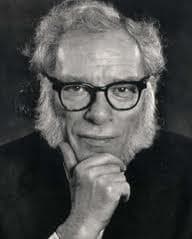
Isaac Asimov was an American writer and professor of biochemistry at Boston University. During his lifetime, Asimov was considered one of the "Big Three" science fiction writers, along with Robert A. Heinlein and Arthur C. Clarke. A prolific writer, he wrote or edited more than 500 books. He also wrote an estimated 90,000 letters and postcards. Best known for his hard science fiction, Asimov also wrote mysteries and fantasy, as well as much non-fiction.







