“France will never have a queen like me again.”
— Spoken by Anne just before her execution, reflecting on her unique reign.

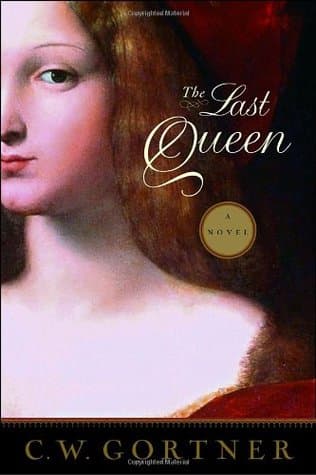
C.W. Gortner (2006)
Genre
Historical Fiction / Romance
Reading Time
9 hours 12 minutes
Key Themes
See below
Sign in to track this book
In the lavish, dangerous courts of 16th-century Europe, Juana of Castile, often called 'mad,' fights for her birthright and Spain's future against scheming husbands and ambitious monarchs, showing her sanity and strength were simply ahead of their time.
Born the third child of Queen Isabel and King Ferdinand of Spain, Juana grows up in a politically charged world. She watches her parents' campaign to unite Spain, ending with the fall of Granada and the expulsion of Jews and Moors. These events influence her deeply, giving her a sense of duty but also a critical view of power. She sees Christopher Columbus return and understands the implications of the New World. Despite her royal birth, Juana is often overshadowed by her older siblings, especially Isabel. She struggles with strict court life, wanting intellectual pursuits and real connection more than political games. Her parents, especially Isabel, are stern, stressing piety and obedience above all, preparing Juana for a strategic marriage.
As part of her parents' plan to secure Spain's place in Europe, Juana is betrothed to Philip the Handsome, Archduke of Flanders, heir to the vast Habsburg Empire. This marriage is a key political alliance, like her younger sister Catherine of Aragon's betrothal to Arthur, Prince of Wales. Juana, though initially worried about leaving home and marrying a stranger, accepts her duty. Her journey to Flanders is long and difficult, a big cultural change from the strict Spanish court to the more liberal, opulent, and often wild court of the Low Countries. She arrives with a small group, including her trusted lady-in-waiting, Inés, feeling the weight of her family's expectations and her uncertain future.
When Juana meets Philip, his charm, good looks, and lively personality immediately captivate her, a sharp contrast to her own reserved nature. Their initial connection quickly turns into a passionate and intense love affair, going against the expectations of a purely political marriage. Juana falls deeply in love, experiencing a physical and emotional closeness she never expected. They have several children, and for a time, Juana finds happiness in her new life in Flanders, away from the rigid Spanish court. However, Philip's unfaithfulness and love for hunting and parties often upset Juana, leading to fierce arguments and periods of intense jealousy, hinting at future conflicts.
A series of devastating tragedies quickly changes Juana's fate. First, her older brother Juan, the heir, dies shortly after his marriage. Then, her older sister Isabel, Queen of Portugal, also dies, followed by Isabel's infant son, Miguel, who was briefly the heir. These deaths leave Juana, once a minor figure, as the direct heir to the crowns of Castile and Aragon. This sudden shift thrusts her into a world of great responsibility and political intrigue, ending her quiet life in Flanders and forcing her to face a future she never wanted. Her parents, especially her mother Isabel, now scrutinize her, judging her fitness to rule.
At her mother's insistence, Juana and Philip travel to Spain to be recognized as the legitimate heirs. The difference between their Flemish lifestyle and the strict Spanish court creates immediate tension. Philip struggles to adapt to Spanish customs and resents what he sees as subservience to Isabel and Ferdinand. Juana, caught between her husband and her parents, feels her loyalty divided. Philip's ambition to rule Spain with Juana, and his dislike for Spanish traditions, directly clash with Isabel and Ferdinand's desire to keep control and ensure a smooth succession. These tensions create a hostile environment, with Juana often at the center of the political maneuvering.
Queen Isabel's health worsens, and she dies, making Juana the undisputed Queen of Castile. However, Isabel, wary of Philip's influence and Juana's perceived emotional instability, includes clauses in her will that reduce Juana's full authority, allowing Ferdinand to act as regent. This fuels Philip's ambition even more, as he sees it as a direct challenge to his power. Juana, overwhelmed by grief for her mother and the huge burden of her new role, struggles to assert her authority. Her emotional outbursts, often caused by Philip's infidelities and political schemes, are increasingly seen by those around her, including her own father, as signs of madness, making her vulnerable.
With Isabel's death, the fight for control of Castile grows. Philip, eager to secure the regency for himself, actively undermines Juana's authority and spreads rumors of her instability. Ferdinand, equally determined to keep power, opposes Philip, seeking to maintain his own regency. Juana, caught between these two powerful men, finds herself a pawn in their game. She tries to assert her rights as queen, showing moments of clear resolve and political skill, but her emotional vulnerability, made worse by Philip's betrayals, is constantly used against her. The Castilian nobility is divided, further complicating the political situation and making Juana's position unsure.
Just as the power struggle peaks, Philip suddenly dies, likely from fever, though some suspect poisoning. His death devastates Juana, plunging her into deep grief and despair. Her already fragile emotional state worsens, leading to erratic behavior, including her refusal to bury Philip's body for long periods, traveling with his coffin. This extreme display of grief, though perhaps understandable given her deep love for him, is used by her father, Ferdinand, and other political rivals as proof of her madness, justifying their attempts to remove her from power and secure the regency. She is pregnant with their sixth child at the time of his death.
After Philip's death, Ferdinand consolidates his power. He, along with leading nobles, arranges Juana's confinement in the remote castle of Tordesillas. She is declared 'incapable' of ruling, effectively stripped of her queenship, and her young children are taken from her, except for her youngest daughter, Catalina, who stays with her for a time. Juana resists fiercely, asserting her sanity and her rights as queen, but her protests are dismissed as more evidence of her derangement. This imprisonment marks the start of her long and tragic isolation, where she remains for decades, a queen in name only, while her father and later her son, Charles V, rule Spain.
For over forty years, Juana stays imprisoned in Tordesillas. Despite her confinement, she never formally gives up her throne, maintaining her belief in her rightful queenship. She endures psychological torment, neglect, and constant surveillance by her captors, including the Marquis of Denia and his wife. Her son, Charles, visits her sometimes, but mostly ignores her pleas for freedom, finding it politically useful to keep her confined. The Comuneros Revolt briefly offers hope for her release, as the rebels try to restore her to power, but the revolt is crushed. Juana's spirit, though tested, remains unbroken in her quiet defiance, showing her strength and the injustice of her fate.
After decades of imprisonment, Juana dies in Tordesillas on Good Friday, 1555, at age seventy-five. Her death ends a long and tragic reign, spent almost entirely in confinement. Though she never truly ruled, she remained the Queen of Castile and Aragon, her name used by others for their own political gains. Her life story, as told by Gortner, challenges the historical narrative of 'Juana the Mad,' instead showing a passionate, intelligent, and strong-willed woman whose emotional vulnerabilities were exploited and whose power was systematically taken by the men around her. Her legacy is that of a queen denied her birthright and a woman ahead of her time, misunderstood and unjustly imprisoned.
The Protagonist
Juana transforms from a naive princess seeking love to a queen battling for her birthright, ultimately enduring decades of unjust confinement while fiercely holding onto her identity and sanity.
The Antagonist/Supporting
Philip remains largely static in his ambition and self-interest, serving as a catalyst for Juana's emotional turmoil and political downfall.
The Supporting
Isabel's character remains consistent as a powerful, devout, and politically shrewd monarch, her legacy casting a long shadow over Juana's life.
The Antagonist/Supporting
Ferdinand's character remains consistently ambitious and manipulative, evolving from a powerful co-ruler with Isabel to Juana's primary jailer.
The Supporting
Inés remains a consistently loyal and compassionate figure, providing a stable anchor for Juana amidst her turmoil.
The Supporting
Charles grows from a young prince to a powerful emperor who, despite acknowledging his mother, chooses to maintain her political imprisonment.
The Supporting
Catherine's story is largely external to Juana's, but serves as a parallel example of a royal woman's fate in the era.
The Supporting
Catalina is a child who grows up in confinement with her mother, eventually being taken away, underscoring Juana's isolation.
The novel explores how Juana's gender, combined with her position as heir, makes her open to manipulation and leads to her downfall. Her emotional responses, which might be accepted in a man, are used against her, called 'madness' to justify removing her from power. Her father and husband both try to control her and her kingdom, highlighting the patriarchal systems that denied women true power, even queens. Juana's struggle shows how power dynamics and gender roles combined to strip a woman of her birthright. This is clear in Isabel's will, which lessens Juana's authority, and Philip and Ferdinand's efforts to declare her insane.
“A woman's passion, when it flares too brightly, is always deemed madness. A man's, merely ambition.”
Juana's life is shaped by intense emotional experiences, especially her passionate love for Philip, which becomes a source of deep suffering and betrayal. His unfaithfulness and political manipulations hurt her deeply, adding to her emotional instability. Her overwhelming grief after his sudden death, shown by her refusal to bury his body, is then used as 'proof' of her madness. The novel portrays grief not as a weakness, but as a natural human response, sadly exploited by those trying to control her. This theme helps explain why Juana's emotional reactions were so extreme.
“To love so fiercely is to invite a wound that never truly heals.”
From a young age, Juana deals with the conflict between her personal desires for intellectual freedom and real connection, and the strict duties placed on her as a royal princess. She struggles to balance her passionate nature with expectations of piety and political advantage. Her journey to Flanders and her later rise to the throne force her to face this conflict directly. Even in confinement, she holds onto her identity as Queen of Castile, refusing to give up her throne, showing a deep inner resistance against those who would strip her of her selfhood and birthright. Her refusal to conform to societal and political expectations for a queen ultimately contributes to her tragic fate.
“They wished for a queen made of stone, but I was made of flesh and blood, with a heart that felt too much.”
The novel questions the historical narrative of 'Juana the Mad' by telling her story from her own viewpoint. It shows how her actions and emotions were interpreted and manipulated by those around her – her parents, her husband, and later her son – to serve their own political goals. The 'truth' of her mental state becomes a shifting idea, shaped by power struggles and propaganda. Gortner carefully reconstructs events to suggest that Juana was not inherently mad, but rather a passionate, intelligent woman whose emotional weaknesses were cruelly exploited, urging the reader to question official historical accounts. This is seen in the differing stories of her behavior and how quickly she was declared 'incapable'.
“History, I have learned, is written by the victors. And the mad have no voice.”
The story is told entirely from Juana's perspective.
This device is crucial for challenging the historical narrative of 'Juana the Mad.' By allowing the reader direct access to Juana's thoughts, feelings, and interpretations of events, the novel humanizes her and provides context for her emotional responses. It enables the reader to empathize with her struggles, understand her motivations, and see the political machinations through her eyes, thereby questioning the official accounts of her 'madness.' This perspective is vital for portraying her as a complex, intelligent woman rather than a caricature.
The reader is aware of historical outcomes and future betrayals that Juana is not.
Dramatic irony is used to heighten the tragedy of Juana's story. The reader, knowing the historical fate of 'Juana the Mad,' can foresee the dangers and betrayals that Juana herself cannot fully grasp in the moment. This creates a sense of foreboding and amplifies the pathos of her situation, particularly as she falls deeper in love with Philip or trusts her father. This device underscores the inevitability of her tragic end, even as she fights against it, making her struggle all the more poignant.
Philip's unburied coffin symbolizes Juana's unaddressed grief and political vulnerability.
The prolonged journey with Philip's unburied coffin is a powerful symbol. On one level, it represents Juana's profound, unmanageable grief and her refusal to let go of her beloved. On another, it is a highly visible act that her enemies exploit as definitive proof of her 'madness.' The coffin becomes a physical manifestation of her emotional state, her defiance, and her ultimate vulnerability, serving as a constant reminder of both her love and her political demise. It is a tangible object around which much of the immediate post-Philip narrative revolves.
Official documents used to convey and manipulate power.
Letters, particularly those from Queen Isabel and Juana's responses, and Isabel's will, serve as critical plot devices. These documents are not merely communications but instruments of power and control. Isabel's will, with its specific clauses regarding the regency, directly undermines Juana's authority, while letters from her father or son often convey politically motivated messages that ignore her pleas. They highlight the formal mechanisms through which Juana's power was diminished and her confinement justified, illustrating the bureaucratic aspect of her oppression.
“France will never have a queen like me again.”
— Spoken by Anne just before her execution, reflecting on her unique reign.
“Power is a fickle mistress, demanding everything and giving little in return.”
— Anne's internal reflection on the burdens and sacrifices of her royal position.
“A woman's greatest weapon is her mind, not her beauty.”
— Anne's belief in the importance of intellect and strategy over physical appearance.
“Love, like loyalty, is a fragile thing, easily broken by ambition.”
— Anne observes the shifting alliances and betrayals within the French court.
“To be a queen is to be a symbol, and symbols must be flawless, even if the woman beneath is not.”
— Anne considers the public persona she must maintain, despite her personal struggles.
“The past is a chain, binding us to what was, but the future is an open door.”
— Anne contemplates her past choices and the possibilities, or lack thereof, for her future.
“Even in the grandest palaces, loneliness can be the most constant companion.”
— Anne experiences the isolation of her position, despite being surrounded by people.
“A true queen rules not just with a crown, but with her heart and her will.”
— Anne's internal definition of what it means to be an effective and respected ruler.
“There are some battles a woman must fight alone, even if she is a queen.”
— Anne faces personal and political challenges without the full support she desires.
“History remembers the victors, but it often forgets the price they paid.”
— Anne reflects on the sacrifices made by those in power, and how they are often overlooked.
“Sometimes, the greatest strength lies in knowing when to yield, and when to stand firm.”
— Anne grapples with political maneuvering and the need for both compromise and conviction.
“A crown is a heavy burden, but heavier still is the knowledge of what it cost to wear it.”
— Anne considers the personal toll and compromises she made to become queen.
“They say God chooses kings, but it is often men who choose queens.”
— Anne's cynical observation on the political machinations behind royal marriages.
Ready to see how well you understood this book? Take our interactive quiz with 10 questions.

C.W. Gortner is a historical fiction author known for his meticulously researched novels that bring the past to life. His works, including the acclaimed "The Last Queen," often focus on strong female figures and the intricate politics of their eras. Gortner's passion for history and compelling storytelling has earned him a dedicated readership.