“The world is ending, and we’re still expected to pay our parking tickets.”
— Hank Palace reflecting on the mundane aspects of life amidst the impending apocalypse.

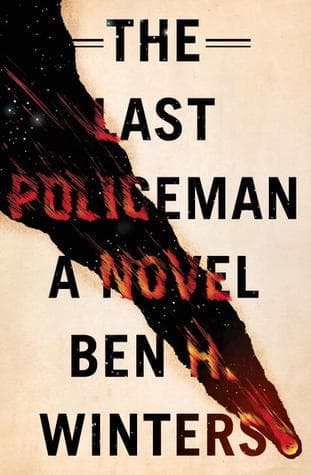
Ben H. Winters (2012)
Genre
Thriller / Mystery / Science Fiction
Reading Time
360 min
Key Themes
See below
Sign in to track this book
As an asteroid hurtles towards Earth, a detective remains committed to solving a suspicious death amidst society's collapse.
Detective Hank Palace arrives at a hanging scene in a run-down hotel room. The victim is Peter Zell, an insurance salesman. The world is six months from an asteroid impact, and society is quickly breaking down. Most people, including Palace's colleagues, see Zell's death as another suicide. But Palace notices details: Zell's hands are clean despite the dusty room, and there's a faint almond smell, which he thinks is cyanide. His partner, Detective Freddie Caplan, dismisses his concerns. Palace, driven by duty, decides to investigate, despite the apparent pointlessness.
Palace investigates Zell's life, learning he was an informant for a powerful, secret group called the 'Concatenation.' This group is said to have a 'Contingency Plan' for surviving the asteroid. Palace visits Zell's sister, Naomi, who seems upset but also secretive. He learns Zell had a girlfriend, Laura, a bartender, and was obsessed with the Concatenation. Palace finds a hidden compartment in Zell's apartment, but the document he was likely hiding is gone. This missing document, along with the Concatenation's existence, strengthens Palace's belief that Zell's death was not a simple suicide.
Palace continues to follow leads, visiting Laura at her bar. She says Zell was increasingly worried about the Concatenation and its leader, Carlyle. Laura also mentions Zell's belief that the Concatenation was hiding a way to survive the impact. Palace tries to get into a Concatenation meeting, pretending to be a new recruit. He observes their rituals and strong belief in Carlyle's leadership. Here, he learns Zell had been trying to expose the Concatenation's secrets, especially about the 'Contingency Plan,' which many members think is a literal escape from Earth.
As Palace gets closer to the truth, he experiences unsettling events. His apartment is broken into, but nothing is stolen, suggesting a warning. He receives an anonymous call telling him to drop the case. These incidents confirm his suspicion that powerful forces are involved. He tells his sister, Nico, a recovering addict, who is more focused on her own survival and joining a doomsday cult. Despite the growing threats and societal collapse, Palace stays firm, believing that upholding justice, even in these final months, is most important.
Palace confronts Carlyle, the Concatenation's leader. Carlyle reveals the 'Contingency Plan' is not an escape, but a philosophical idea: a story designed to give members purpose and a 'meaningful' death. They believe that by doing specific acts of 'virtue' and 'service' in the remaining months, they can achieve spiritual transcendence. Carlyle admits Zell discovered the plan was a lie and intended to expose it, which is why he was killed. Carlyle tries to recruit Palace, appealing to his sense of order and purpose.
Palace realizes Zell was murdered to stop him from exposing the Concatenation's deception. He connects the clues, recognizing the almond smell. He confronts Naomi, Zell's sister, who admits to poisoning Zell with cyanide and then staging the hanging as a suicide. She says she was a loyal Concatenation member and believed Zell's actions would destroy others' faith, leading to chaos. She saw his exposure of the 'Contingency Plan' as a betrayal of their shared hope and a threat to the fragile order Carlyle had made.
Palace arrests Naomi for Peter Zell's murder. Making an arrest, doing paperwork, and processing a criminal feels absurd in a world with only weeks left. Naomi shows no regret, believing her actions were justified to protect the Concatenation's 'hope.' Palace considers the meaning of his actions. He solved the case and brought a killer to justice, but the world is still ending. The legal system, like all other institutions, is falling apart, and Naomi's punishment will likely never be fully carried out. He finds a strange comfort in having finished his duty.
With the case closed, Palace returns to his routine, which feels increasingly strange. He continues to report for duty, even as fewer people show up. He visits his sister, Nico, who is now fully involved in a doomsday cult, finding her own peace. Palace thinks about hope, justice, and humanity's last days. He recognizes that his dedication to his job, even when it seemed pointless, was his way of staying human and resisting the widespread nihilism. He finds quiet dignity in being 'the last policeman,' upholding the law until the very end.
As the asteroid gets closer, society continues to fray. Utilities fail, food becomes scarce, and civil unrest increases. Palace observes how people cope: some embrace hedonism, others turn to religion, and many simply give up. He sees the city emptying as people seek comfort or escape. He reflects on the irony of solving a murder when millions are about to die. Despite the despair, Palace finds a quiet resolve in his commitment to his personal code, a point of order in a world descending into chaos.
In the novel's final moments, the asteroid is days away. Palace is one of the few officers still reporting for duty. He has accepted the coming doom, finding a strange purpose in his continued adherence to his role. He thinks about the meaning of his investigation, not just for Peter Zell, but for himself and for the idea of justice. The final scenes show him awaiting the impact, having fulfilled his duty to the very last. He has chosen to face the end with integrity, showing the enduring human spirit even at extinction's edge.
The Protagonist
Palace begins as a man clinging to duty, but through his investigation, he solidifies his internal conviction that meaning can be found in integrity, even when external structures collapse.
The Victim
Zell's arc is largely revealed posthumously, showing his transformation from a hopeful believer in the Concatenation to a disillusioned truth-seeker.
The Antagonist
Naomi's arc reveals her descent into fanaticism, culminating in murder to protect her chosen faith.
The Supporting
Carlyle remains steadfast in his mission to provide a structured 'hope' for his followers, revealing the calculated nature of his leadership.
The Supporting
Caplan moves from cynical resignation to a grudging respect for duty, subtly influenced by Palace's unwavering commitment.
The Supporting
Nico's arc shows her continued search for external meaning and belonging, culminating in her full immersion in a doomsday cult.
The Supporting
Laura provides a window into Zell's state of mind before his death, playing a crucial role in advancing Palace's investigation.
The Mentioned
The Chief's arc is static, reflecting the general decline of authority and purpose within established institutions.
This theme explores how people and society deal with purpose and existence when facing an undeniable end. Hank Palace finds meaning in duty and justice, even if it seems pointless, contrasting with others' hedonism, religious fervor, or apathy. The Concatenation, with its fake 'Contingency Plan,' shows humanity's desperate need for a comforting story, even a false one, to find meaning. The novel questions what gives life value when its duration is short and fixed.
“What does it matter? What's the point? That's the question everyone asks, and everyone answers in their own way.”
The novel's main conflict is between Hank Palace's commitment to his police duty and the widespread despair that has taken over the world. While others leave their jobs, give in to nihilism, or seek escape, Palace holds onto law and order. His dedication is both an act of defiance against the apocalypse and a personal way of coping. The theme highlights the importance of individual choice and moral belief even when external structures and motivations collapse, as seen when Palace continues his investigation despite Caplan's initial lack of interest and the Chief's disinterest.
“Someone has to do the job. Someone has to care.”
The novel examines the nature of hope, especially false hope. The Concatenation offers its members a 'Contingency Plan' for spiritual transcendence, which is eventually revealed to be a lie. This shows how people will cling to any story that offers comfort, even if it is untrue. Peter Zell's disappointment and subsequent murder highlight the danger of exposing such deceptions. The theme questions whether a comforting lie is better than a harsh truth when facing an existential threat, and the moral implications of manipulating people's need for hope.
“Better a beautiful lie than an ugly truth, when the truth means nothing but oblivion.”
The approaching asteroid impact serves as a clear background for observing civilization's rapid breakdown. The novel details the collapse of institutions, the abandonment of social rules, and individuals' varied responses to certain doom. From widespread suicides and hedonism to the rise of cults and infrastructure failure, the story paints a grim picture of societal decay. However, Palace's persistence, and even the Concatenation's attempt to create a new order, show a darker side of human resilience – the drive to find or create meaning even in the face of ultimate destruction.
“The world was ending, but the trash still needed to be taken out. Or not. It was all a matter of choice now.”
A ticking clock and a symbol of inevitable doom.
The asteroid, nicknamed 'The Big One,' functions as the ultimate ticking clock, creating an inescapable sense of urgency and despair. It's not a threat that can be averted, but a guaranteed end, fundamentally altering human behavior and societal structures. This device provides the unique pre-apocalyptic setting, allowing the author to explore themes of meaning, duty, and societal collapse. It justifies the widespread apathy and makes Palace's dedication seem all the more extraordinary or absurd.
A secret society offering false hope, driving the mystery's central conflict.
This secret organization serves as a red herring and the primary source of the conspiracy in the murder mystery. It represents humanity's desperate need for a narrative, a purpose, or an escape when faced with certain destruction. The 'Contingency Plan' is a crucial MacGuffin, initially believed to be a literal survival plan, but later revealed to be a philosophical deception. This device allows the novel to explore themes of hope, belief, and the ethics of deception.
A classic archetype subverted by a pre-apocalyptic setting.
Detective Hank Palace embodies the archetype of the determined, principled detective who pursues truth and justice against all odds. However, this device is subverted by the pre-apocalyptic setting. His unwavering dedication, usually admirable, becomes a point of contention and even absurdity in a world where justice seems meaningless. This subversion highlights the core themes of the novel, questioning the purpose of traditional heroism and duty when the world is ending.
Intimate perspective into the protagonist's moral struggle.
The story is told from Hank Palace's first-person perspective, providing direct access to his thoughts, moral dilemmas, and observations of a disintegrating world. This intimate viewpoint allows the reader to deeply empathize with his struggle to maintain purpose and sanity. It emphasizes his isolation as 'the last policeman' who cares, and allows for a nuanced exploration of his internal conflict between personal despair and professional duty, making his choices more impactful.
“The world is ending, and we’re still expected to pay our parking tickets.”
— Hank Palace reflecting on the mundane aspects of life amidst the impending apocalypse.
“When the world ends, it won't be with a bang, but with a lot of people trying to get their security deposit back.”
— A cynical observation about human nature and priorities as the asteroid approaches.
“People are still people, even with an asteroid hurtling towards them.”
— Hank's realization that fundamental human behaviors persist despite the impending doom.
“I'm a cop. It's what I do. It's all I've ever wanted to do.”
— Hank's unwavering commitment to his duty, even when society is unraveling.
“The end of the world is a great excuse for a lot of things.”
— Hank observing how some people are using the impending doom to justify their actions or desires.
“There are still crimes to solve, even if there won't be anyone left to appreciate the solution.”
— Hank's internal monologue about the seemingly futile nature of his work.
“It’s not about finding justice anymore. It’s about finding meaning.”
— A shift in Hank's perspective as the world's end draws near, emphasizing a deeper quest.
“Hope is a dangerous thing, especially when it’s false.”
— A somber reflection on the dangers of clinging to unrealistic expectations.
“The only thing worse than a world ending is a world ending with unanswered questions.”
— Highlighting Hank's drive for closure and resolution, even in the face of annihilation.
“You can’t just stop being a cop because the world is ending. It’s in your blood.”
— A colleague's observation about Hank's inherent nature and dedication.
“We're all just trying to make sense of something that makes no sense.”
— A general observation about the human struggle to comprehend the incomprehensible.
“It’s not about saving the world. It’s about doing what’s right, for as long as you can.”
— Hank's simplified, yet profound, philosophy on his remaining time.
“Some secrets don't want to stay buried, even at the end of the world.”
— A thematic statement about the persistent nature of truth and revelation.
Ready to see how well you understood this book? Take our interactive quiz with 10 questions.

Ben H. Winters is an American author known for his genre-bending fiction. His notable works include the critically acclaimed 'The Last Policeman' trilogy, a dystopian mystery, and the speculative thriller 'Underground Airlines.' Winters' writing often explores societal themes through engaging narrative structures and unique premises.







